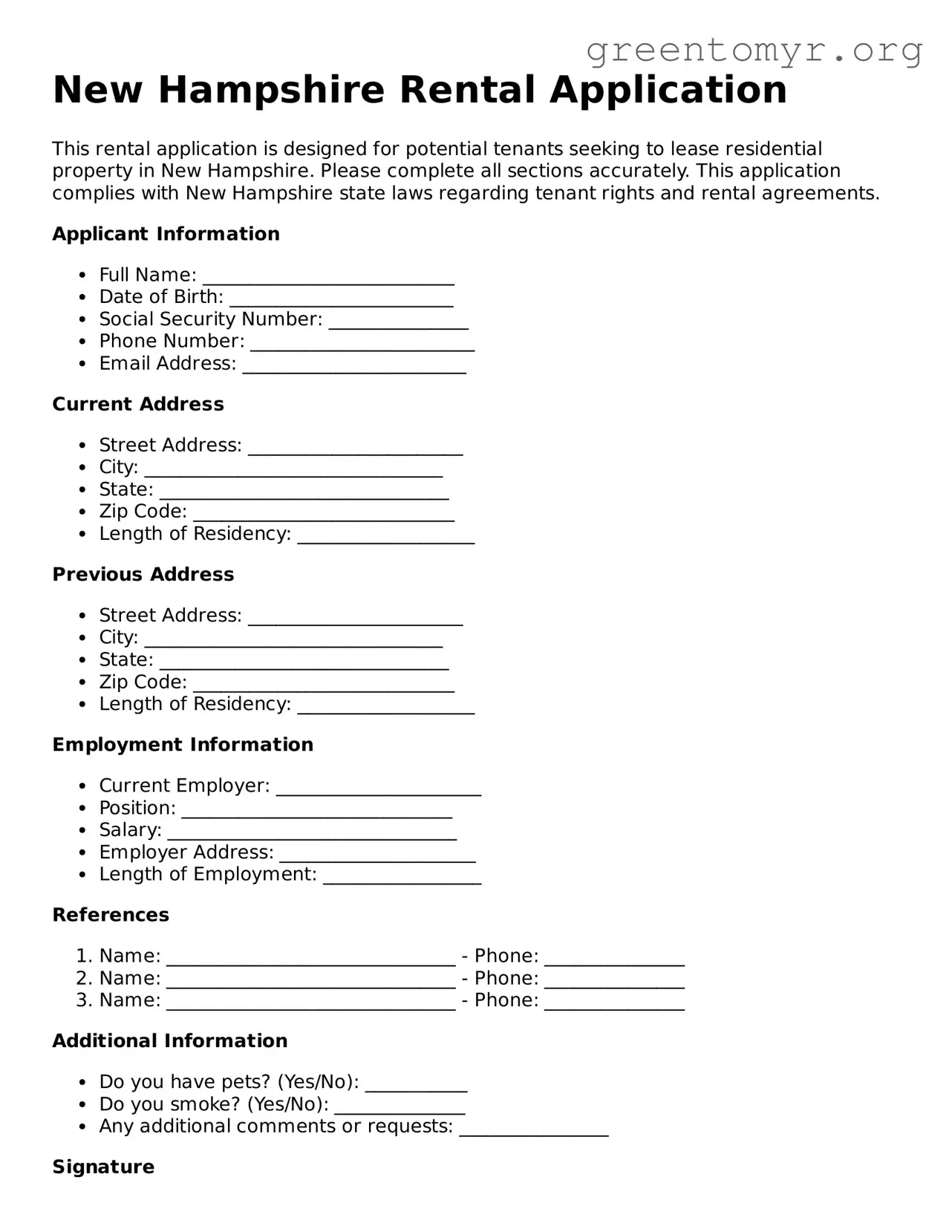
In New Hampshire, the rental application form serves as a critical tool for both landlords and prospective tenants, facilitating the leasing process and ensuring that each party's interests are protected. This form typically includes essential information such as the applicant's personal details, employment history, and rental history, allowing landlords to assess the suitability of potential tenants. Additionally, it often requires applicants to provide references and consent to background checks, which help landlords make informed decisions. Important financial information, such as income verification and credit history, may also be requested to gauge the applicant's ability to meet rental obligations. Furthermore, the form may outline specific terms and conditions related to the rental agreement, ensuring transparency from the outset. Understanding the components of the New Hampshire rental application form is vital for anyone navigating the rental market, as it lays the groundwork for a successful landlord-tenant relationship.
New Hampshire Rental Application
This rental application is designed for potential tenants seeking to lease residential property in New Hampshire. Please complete all sections accurately. This application complies with New Hampshire state laws regarding tenant rights and rental agreements.
Applicant Information
Current Address
Previous Address
Employment Information
References
Additional Information
Signature
By signing below, I certify that the information provided is accurate and complete to the best of my knowledge. I authorize the landlord to verify the information provided in this application.
Signature: ____________________________ Date: _______________
| Fact Name | Description |
|---|---|
| Purpose | The New Hampshire Rental Application form is used by landlords to screen potential tenants. |
| Required Information | Applicants typically need to provide personal details, rental history, and employment information. |
| Application Fee | Landlords may charge an application fee, but it must be reasonable and disclosed upfront. |
| Background Checks | Landlords often conduct background checks, which may include credit history and criminal records. |
| Fair Housing Laws | The application process must comply with federal and state fair housing laws to prevent discrimination. |
| Governing Law | The New Hampshire Revised Statutes Annotated (RSA) 540-A governs rental applications and tenant screening. |
| Privacy Considerations | Landlords must handle applicants' personal information confidentially and securely. |
| Approval Process | After reviewing applications, landlords will notify applicants of their approval or denial status. |
Completing the New Hampshire Rental Application form is an important step in the rental process. After filling out this form, the landlord or property manager will review your information to determine your eligibility for the rental property. It's essential to provide accurate and complete information to facilitate this process.
The New Hampshire Rental Application form is a document that potential tenants fill out when applying to rent a property. It collects essential information about the applicant, including personal details, rental history, employment information, and references. This form helps landlords assess the suitability of applicants for their rental properties.
When completing the rental application, you will typically need to provide the following information:
Many landlords charge an application fee to cover the costs of processing the application, such as background and credit checks. This fee can vary widely, so it’s important to ask the landlord about the amount before submitting your application. Keep in mind that this fee is typically non-refundable, even if your application is not approved.
The processing time for a rental application can vary. Generally, it may take anywhere from a few hours to several days, depending on the landlord's policies and the thoroughness of the background checks. It is advisable to follow up with the landlord if you have not received a response within a reasonable timeframe.
A poor credit history can impact your chances of being approved for a rental. However, landlords may consider other factors, such as your rental history, employment stability, and income level. Some landlords may also allow you to provide a co-signer or pay a higher security deposit to mitigate concerns about your credit history.
Yes, you can typically withdraw your application, but it is best to do so as soon as you make that decision. Communicate directly with the landlord or property manager to inform them of your intent to withdraw. Be aware that any application fees may not be refunded.
If you encounter any difficulties while completing the rental application, do not hesitate to reach out to the landlord or property manager for assistance. They can provide clarification on any confusing sections and help ensure that your application is completed correctly.
When filling out a rental application in New Hampshire, many individuals unintentionally make mistakes that can hinder their chances of securing a rental property. One common error is failing to provide complete and accurate information. Landlords rely on this information to assess potential tenants. If an applicant leaves sections blank or provides inconsistent details, it raises red flags. Always double-check that every field is filled out and that the information matches other documents, such as your ID or credit report.
Another frequent mistake involves not disclosing necessary financial information. Renters often underestimate the importance of transparency regarding income and credit history. Landlords want to ensure that tenants can meet their financial obligations. Omitting income details or providing vague estimates can lead to distrust. It’s better to be upfront about your financial situation, even if it isn’t perfect.
Additionally, some applicants overlook the significance of references. Many rental applications ask for personal or professional references. Failing to provide these or neglecting to inform your references that they might be contacted can create a poor impression. References serve as a testament to your character and reliability. Make sure to choose individuals who can speak positively about your rental history and character.
Lastly, applicants often forget to review their application before submission. This oversight can lead to typographical errors or missed information that could be detrimental. A simple review can catch mistakes that may seem minor but could impact a landlord's decision. Taking a moment to proofread can demonstrate diligence and attention to detail, qualities that landlords appreciate in prospective tenants.
When applying for a rental property in New Hampshire, several forms and documents often accompany the Rental Application form. These documents help landlords assess potential tenants and streamline the leasing process. Below is a list of commonly used forms that may be required or beneficial during this process.
Having these forms ready can facilitate a smoother rental application process. Each document serves a specific purpose, ensuring that both landlords and tenants have the necessary information to make informed decisions. Being prepared with these forms can help applicants stand out and secure their desired rental property.
Lease Agreement: A lease agreement outlines the terms and conditions of renting a property. Like a rental application, it collects personal information and details about the tenant's rental history.
Tenant Screening Form: This form is used by landlords to evaluate potential tenants. Similar to a rental application, it gathers information about income, employment, and rental history to assess eligibility.
Background Check Consent Form: This document allows landlords to conduct background checks on applicants. It shares similarities with rental applications in that it requires personal information and consent for verification.
Credit Application: A credit application is used to assess an applicant's creditworthiness. It often requests financial information and history, much like a rental application does.
Employment Verification Form: This form is used to confirm an applicant's employment status. It parallels the rental application by requiring details about income and job history.
Guarantor Application: A guarantor application is submitted by someone who agrees to take responsibility for the lease if the tenant cannot. It collects similar information as the rental application, focusing on financial stability.
Pet Application: If a rental property allows pets, a pet application may be required. It gathers information about the pet, similar to how a rental application collects information about the tenant.
Move-In Checklist: A move-in checklist documents the condition of the property at the time of occupancy. While it serves a different purpose, it is similar in that it involves the tenant's details and the rental property.
When filling out the New Hampshire Rental Application form, following certain guidelines can help ensure a smooth process. Here are eight essential dos and don'ts:
Many people have misunderstandings about the New Hampshire Rental Application form. Here are nine common misconceptions, along with clarifications to help you better understand the process.
While many landlords request a credit report, it is not a legal requirement. Some may choose to conduct their own background checks instead.
Each landlord or property management company may have their own specific application form. It's important to read the requirements for each property.
Application fees are typically non-refundable, even if the application is denied. Always confirm the fee policy before applying.
Falsifying information can lead to denial of the application or eviction later. Honesty is crucial in the application process.
Landlords can inquire about criminal history, but they must follow specific laws regarding how this information is used in the decision-making process.
A co-signer may be required in some cases, especially if the applicant has a limited credit history. However, this is not a universal requirement.
Applicants can often update their information before the landlord makes a decision. Communication is key if changes are needed.
Meeting the criteria does not guarantee approval. Landlords may consider other factors, such as the number of applications they receive.
While credit and income are important, landlords may also consider rental history, references, and personal interviews.
Understanding these misconceptions can make the rental application process smoother and more transparent. Always read the application carefully and ask questions if needed.
When filling out and using the New Hampshire Rental Application form, there are several important considerations to keep in mind. Understanding these can help streamline the process and ensure that you present yourself as a strong candidate for rental housing.
By keeping these key points in mind, you can navigate the rental application process with greater confidence and clarity.