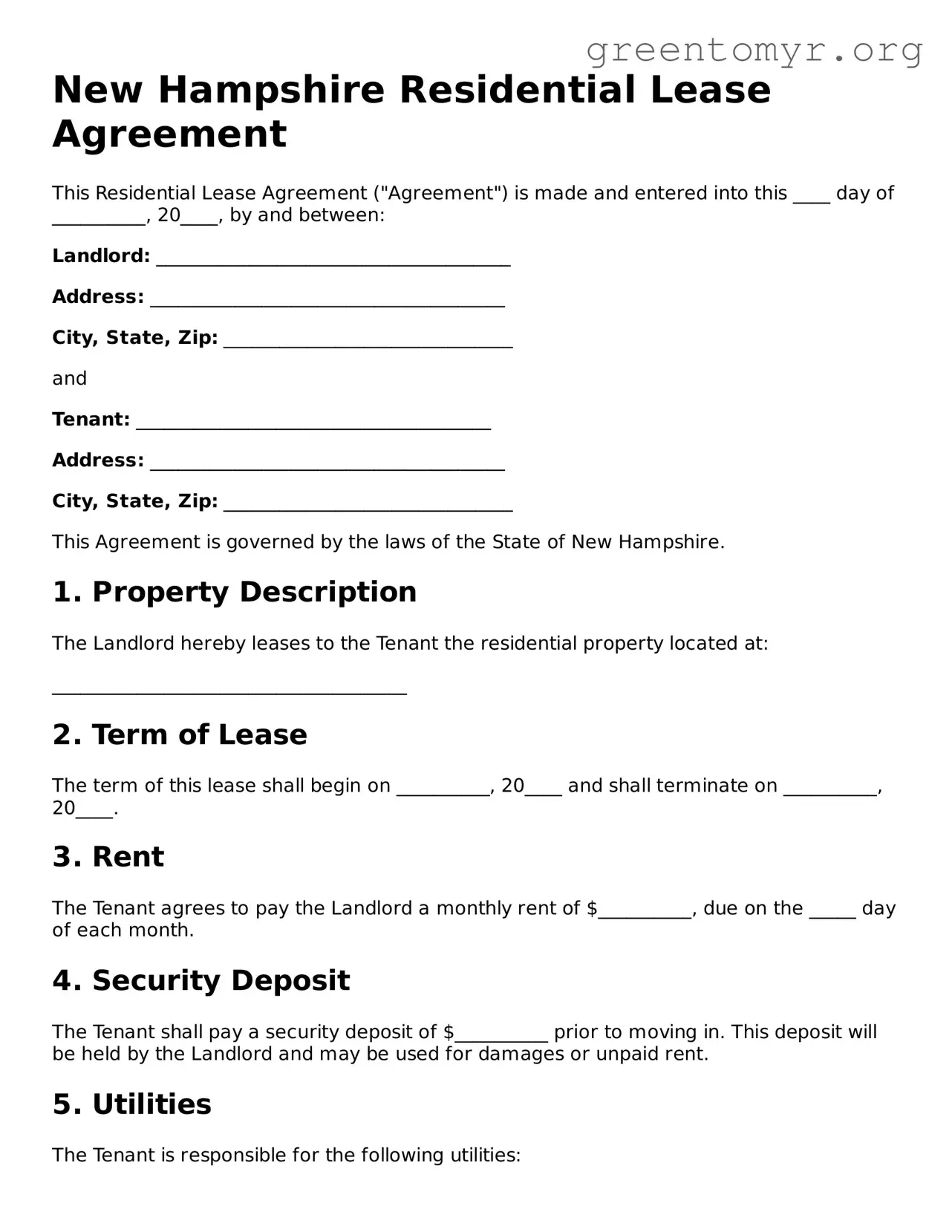
When entering into a rental agreement in New Hampshire, understanding the Residential Lease Agreement form is essential for both landlords and tenants. This document serves as a comprehensive blueprint for the rental relationship, outlining key details such as the duration of the lease, the monthly rent amount, and the security deposit requirements. It also addresses the responsibilities of both parties, including maintenance obligations and rules regarding pets or alterations to the property. Furthermore, the agreement typically includes provisions for late fees, termination procedures, and the process for renewing or ending the lease. By clearly laying out these terms, the Residential Lease Agreement helps prevent misunderstandings and disputes, fostering a more harmonious living arrangement. Knowing how to navigate this form is crucial for anyone involved in renting a property in the Granite State, ensuring that both landlords and tenants are protected and informed throughout the rental period.
New Hampshire Residential Lease Agreement
This Residential Lease Agreement ("Agreement") is made and entered into this ____ day of __________, 20____, by and between:
Landlord: ______________________________________
Address: ______________________________________
City, State, Zip: _______________________________
and
Tenant: ______________________________________
Address: ______________________________________
City, State, Zip: _______________________________
This Agreement is governed by the laws of the State of New Hampshire.
1. Property Description
The Landlord hereby leases to the Tenant the residential property located at:
______________________________________
2. Term of Lease
The term of this lease shall begin on __________, 20____ and shall terminate on __________, 20____.
3. Rent
The Tenant agrees to pay the Landlord a monthly rent of $__________, due on the _____ day of each month.
4. Security Deposit
The Tenant shall pay a security deposit of $__________ prior to moving in. This deposit will be held by the Landlord and may be used for damages or unpaid rent.
5. Utilities
The Tenant is responsible for the following utilities:
6. Maintenance and Repairs
The Tenant agrees to maintain the property in good condition. The Tenant shall notify the Landlord of any needed repairs.
7. Pets
Allowed: Yes / No (circle one)
8. Termination
Either party may terminate this Agreement by providing a written notice of _____ days.
9. Governing Law
This Agreement shall be governed by the laws of the State of New Hampshire.
IN WITNESS WHEREOF, the parties hereto have executed this Residential Lease Agreement as of the date first above written.
Landlord Signature: ___________________________
Date: ______________________________________
Tenant Signature: ____________________________
Date: ______________________________________
| Fact Name | Details |
|---|---|
| Governing Law | The New Hampshire Residential Lease Agreement is governed by New Hampshire state law, specifically RSA 540-A and RSA 540-B. |
| Parties Involved | The agreement involves a landlord and a tenant, both of whom must be clearly identified in the document. |
| Property Description | A detailed description of the rental property must be included, specifying the address and type of dwelling. |
| Lease Term | The lease term should be clearly stated, whether it is for a fixed period or month-to-month. |
| Rent Amount | The total rent amount and payment schedule must be specified, including due dates and acceptable payment methods. |
| Security Deposit | The agreement must outline the amount of the security deposit and the conditions for its return. |
| Utilities | It should specify which utilities are included in the rent and which are the tenant's responsibility. |
| Maintenance Responsibilities | The responsibilities for property maintenance and repairs should be clearly defined for both parties. |
| Termination Notice | The notice period required for lease termination must be included, typically 30 days for month-to-month leases. |
| Signatures | Both parties must sign and date the agreement for it to be legally binding. |
Filling out the New Hampshire Residential Lease Agreement form is an essential step in establishing a rental relationship. This form outlines the terms and conditions of the lease, ensuring that both the landlord and tenant have a clear understanding of their rights and responsibilities. Here’s how to complete the form accurately.
Once the form is filled out, both the landlord and tenant should keep a signed copy for their records. This ensures that everyone is on the same page regarding the lease terms and helps prevent future disputes.
A New Hampshire Residential Lease Agreement is a legally binding contract between a landlord and a tenant. This document outlines the terms under which a tenant agrees to rent a property from the landlord. It typically includes details such as the rental amount, duration of the lease, and responsibilities of both parties.
When drafting a lease agreement, it is important to include the following key elements:
Lease terms can vary widely. Common durations include:
Each option has its advantages. Month-to-month leases offer flexibility, while longer terms provide stability for both parties.
Generally, landlords cannot increase rent until the lease term ends. However, if the lease is month-to-month, the landlord may raise the rent with proper notice, usually 30 days. Always check the specific terms in the lease agreement for any stipulations regarding rent increases.
If a tenant wishes to terminate the lease early, they should review the lease agreement for any clauses regarding early termination. In many cases, tenants may be required to pay a penalty or continue paying rent until a new tenant is found. Communication with the landlord is crucial to navigate this situation.
Yes, New Hampshire has specific laws that govern residential leases. These laws cover various aspects, including security deposits, eviction processes, and tenant rights. It is essential for both landlords and tenants to familiarize themselves with these laws to ensure compliance and protect their rights.
A security deposit is a sum of money paid by the tenant to the landlord to cover potential damages or unpaid rent. In New Hampshire, landlords can charge a security deposit equal to one month's rent. The landlord must return the deposit within 30 days after the lease ends, minus any deductions for damages or unpaid rent.
Tenants typically cannot make alterations to the property without the landlord's permission. Any changes, such as painting walls or installing fixtures, should be discussed and agreed upon in writing to avoid disputes.
If a tenant encounters issues with their landlord, such as maintenance problems or disputes over lease terms, they should first try to resolve the matter through open communication. If that fails, tenants can seek assistance from local housing authorities or legal aid organizations for guidance on their rights and options.
Filling out the New Hampshire Residential Lease Agreement form can be a straightforward process, but many people make common mistakes that can lead to complications later on. One frequent error is failing to provide accurate tenant information. It’s crucial to include the full legal names of all tenants who will reside in the property. Omitting a tenant’s name can create issues regarding liability and obligations under the lease. Always double-check that the names match the identification documents.
Another mistake often made is neglecting to specify the lease term clearly. Whether the lease is for a fixed term or month-to-month, this detail must be explicitly stated. Leaving this section vague can lead to misunderstandings about when the lease begins and ends. It’s advisable to clearly outline the start and end dates to avoid any confusion or disputes down the line.
Additionally, many individuals overlook the importance of detailing the rent amount and payment terms. Simply stating the rent is insufficient. You should specify how much rent is due, when it is due each month, and acceptable payment methods. This clarity helps prevent late payments and ensures that both parties understand their financial obligations. Furthermore, including information about late fees can serve as a deterrent against late payments.
Lastly, people often forget to include the security deposit details. It is essential to state the amount of the deposit, the conditions under which it will be returned, and any deductions that may apply. This section protects both the landlord and the tenant by establishing clear expectations. A well-defined security deposit clause can help avoid disputes when the lease ends.
When entering into a residential lease agreement in New Hampshire, several additional forms and documents may be necessary to ensure a smooth rental process. These documents help clarify responsibilities, outline rules, and protect the rights of both landlords and tenants. Below is a list of common forms that are often used alongside the New Hampshire Residential Lease Agreement.
Understanding these documents can help both landlords and tenants navigate the rental process more effectively. Each form plays a crucial role in protecting the interests of all parties involved, ensuring a clear and fair rental experience.
When filling out the New Hampshire Residential Lease Agreement form, it’s important to approach the task with care. Here’s a helpful list of dos and don’ts to guide you through the process.
Following these guidelines can help you avoid common pitfalls and ensure a smoother leasing experience. Good luck with your new home!
Many people have misunderstandings about the New Hampshire Residential Lease Agreement form. Here are seven common misconceptions:
Some believe the lease agreement is standard for all rentals. In reality, it should be tailored to fit the specific needs of the landlord and tenant.
Many think that a verbal agreement is sufficient. However, having a written lease protects both parties and clarifies expectations.
While many terms can be negotiated, some aspects, such as local laws and regulations, must be adhered to.
Some tenants believe that landlords cannot ask for a security deposit. In New Hampshire, landlords often require a security deposit to cover potential damages.
It is a misconception that only landlords can modify the lease. Tenants can request changes, and both parties must agree to any amendments.
Some think that if a lease is not signed, it is not binding. However, a tenant's occupancy can create an implied lease agreement.
Many assume that all leases are for a year. Leases can be short-term, long-term, or month-to-month, depending on the agreement.
When entering into a rental agreement in New Hampshire, understanding the Residential Lease Agreement form is crucial. Below are key takeaways to consider: