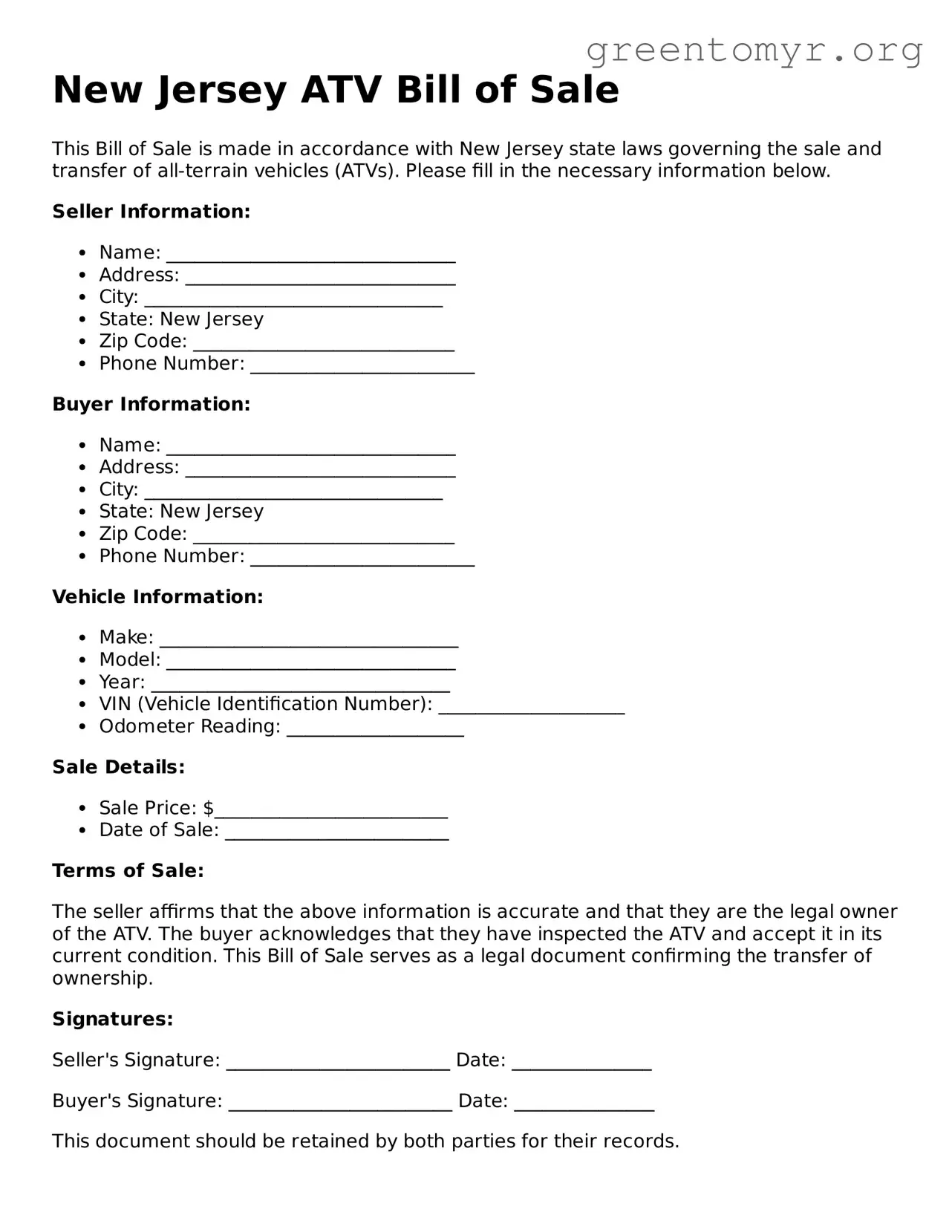
In New Jersey, the ATV Bill of Sale form serves as a crucial document for anyone involved in the buying or selling of all-terrain vehicles. This form not only provides a record of the transaction but also helps protect both the buyer and the seller by documenting essential details. Key components of the form include the names and addresses of both parties, a description of the ATV being sold, and the sale price. Additionally, the form often requires the seller to disclose any liens on the vehicle, ensuring that the buyer is fully informed before making a purchase. By completing this form, individuals can establish clear ownership and facilitate a smooth transfer of the vehicle. It is important to note that having a properly filled-out Bill of Sale can also assist in future registration processes with the New Jersey Motor Vehicle Commission. Understanding these aspects is vital for anyone looking to navigate the ATV market in New Jersey effectively.
New Jersey ATV Bill of Sale
This Bill of Sale is made in accordance with New Jersey state laws governing the sale and transfer of all-terrain vehicles (ATVs). Please fill in the necessary information below.
Seller Information:
Buyer Information:
Vehicle Information:
Sale Details:
Terms of Sale:
The seller affirms that the above information is accurate and that they are the legal owner of the ATV. The buyer acknowledges that they have inspected the ATV and accept it in its current condition. This Bill of Sale serves as a legal document confirming the transfer of ownership.
Signatures:
Seller's Signature: ________________________ Date: _______________
Buyer's Signature: ________________________ Date: _______________
This document should be retained by both parties for their records.
| Fact Name | Details |
|---|---|
| Purpose | The New Jersey ATV Bill of Sale form is used to document the sale of an all-terrain vehicle (ATV) between a seller and a buyer. |
| Governing Law | The form is governed by New Jersey state laws regarding the sale and transfer of motor vehicles. |
| Required Information | The form must include the names and addresses of both the buyer and the seller, along with the ATV's make, model, year, and Vehicle Identification Number (VIN). |
| Signatures | Both parties must sign the form to validate the sale. This ensures that the transaction is legally binding. |
| Notarization | While notarization is not required, it is recommended for added legal protection and verification. |
| Record Keeping | Both the buyer and seller should keep a copy of the signed Bill of Sale for their records. This can help resolve any future disputes. |
| Transfer of Ownership | The Bill of Sale serves as proof of ownership transfer and may be required when registering the ATV with the state. |
Completing the New Jersey ATV Bill of Sale form is a straightforward process that helps ensure a smooth transfer of ownership for all parties involved. Once the form is filled out correctly, it can be submitted to the appropriate authorities or kept for personal records. Here are the steps to guide you through the process.
An ATV Bill of Sale is a legal document that records the sale and transfer of ownership of an all-terrain vehicle (ATV) in New Jersey. It includes important details such as the names of the buyer and seller, the vehicle's identification number (VIN), and the sale price. This document serves as proof of the transaction and can be important for registration purposes.
You need an ATV Bill of Sale to establish legal ownership of the vehicle. This document protects both the buyer and seller by providing a record of the transaction. It can also be required when registering the ATV with the state or for insurance purposes. Having a Bill of Sale can help prevent disputes regarding ownership in the future.
The ATV Bill of Sale should include the following information:
Including all this information helps ensure the document is valid and can be used for future reference.
Yes, an ATV Bill of Sale is typically required for registration in New Jersey. When you go to register your ATV with the New Jersey Motor Vehicle Commission (MVC), you will need to present the Bill of Sale along with other documents. This helps confirm that you are the legal owner of the vehicle.
Yes, you can create your own ATV Bill of Sale. However, it is essential to ensure that it includes all the necessary information to be legally binding. You can find templates online or use a basic format that covers all required details. If you prefer, you may also consider consulting a legal professional to ensure everything is accurate.
If you lose your ATV Bill of Sale, it is advisable to try to obtain a copy from the seller if possible. If that is not an option, you may need to create a new Bill of Sale that reflects the original transaction. Keep in mind that having a record of the sale is important for proving ownership, especially if you plan to register the ATV or sell it in the future.
When filling out the New Jersey ATV Bill of Sale form, individuals often encounter common pitfalls that can lead to complications down the line. One frequent mistake is failing to include the correct vehicle identification number (VIN). The VIN is crucial for identifying the specific ATV being sold. If this number is incorrect or missing, it can create confusion regarding ownership and registration.
Another common error is neglecting to provide complete information about both the buyer and the seller. This includes names, addresses, and contact information. Incomplete details can lead to disputes about ownership and may hinder the registration process. It's essential to ensure that all personal information is accurate and up-to-date.
Many people also overlook the importance of including the sale price. The Bill of Sale should clearly state the amount paid for the ATV. Without this information, it can be challenging to establish the transaction's legitimacy. Additionally, not documenting the date of sale can complicate matters related to taxes and registration.
Some individuals mistakenly assume that a signature is not necessary. However, both parties should sign the document to validate the transaction. A lack of signatures can lead to disputes later, as it may be unclear whether both parties agreed to the sale.
Another frequent mistake is not keeping a copy of the completed Bill of Sale. After filling out the form, it’s important for both the buyer and seller to retain a copy for their records. This document serves as proof of the transaction and can be essential for future reference.
People sometimes forget to check the form for errors before submitting it. Typos or incorrect information can lead to delays or issues during the registration process. Taking a moment to review the document can save a lot of time and hassle later.
In some cases, individuals fail to understand the specific requirements for their county or municipality. Different areas may have unique regulations regarding the sale of ATVs. Researching local laws can help avoid potential issues.
Additionally, not including any necessary disclosures can be a significant oversight. If the ATV has any known issues or defects, these should be clearly stated in the Bill of Sale. Transparency helps build trust between the buyer and seller and can prevent future disputes.
Some sellers mistakenly believe that the Bill of Sale is the only document required for the transaction. However, it’s essential to ensure that all relevant paperwork, such as title transfers, is completed as well. Missing documents can complicate the registration process.
Lastly, people often underestimate the importance of understanding the implications of the sale. It’s vital to recognize that selling an ATV involves legal responsibilities. Both parties should be aware of what the sale entails, including any potential liabilities that may arise after the transaction.
When buying or selling an all-terrain vehicle (ATV) in New Jersey, the ATV Bill of Sale form is an essential document. However, several other forms and documents may accompany this transaction to ensure a smooth and legally compliant process. Here’s a list of related documents that are often used alongside the ATV Bill of Sale.
Having these documents ready can facilitate a hassle-free transaction and help both parties avoid potential legal issues. Always ensure that all paperwork is completed accurately and kept for future reference.
When filling out the New Jersey ATV Bill of Sale form, it is essential to approach the task with care. Below are five important considerations to keep in mind.
By following these guidelines, you can help ensure a smooth and successful transaction when buying or selling an ATV in New Jersey.
When it comes to the New Jersey ATV Bill of Sale form, several misconceptions can lead to confusion among buyers and sellers. Understanding these common misunderstandings can help ensure a smoother transaction. Here are ten misconceptions explained:
Understanding these misconceptions can help ensure that all parties involved in an ATV sale in New Jersey are well-informed and prepared for a successful transaction.
When dealing with the New Jersey ATV Bill of Sale form, there are several important points to keep in mind. Understanding these key takeaways can simplify the process and ensure compliance with state regulations.
By following these guidelines, you can navigate the ATV Bill of Sale process in New Jersey with greater ease and confidence.