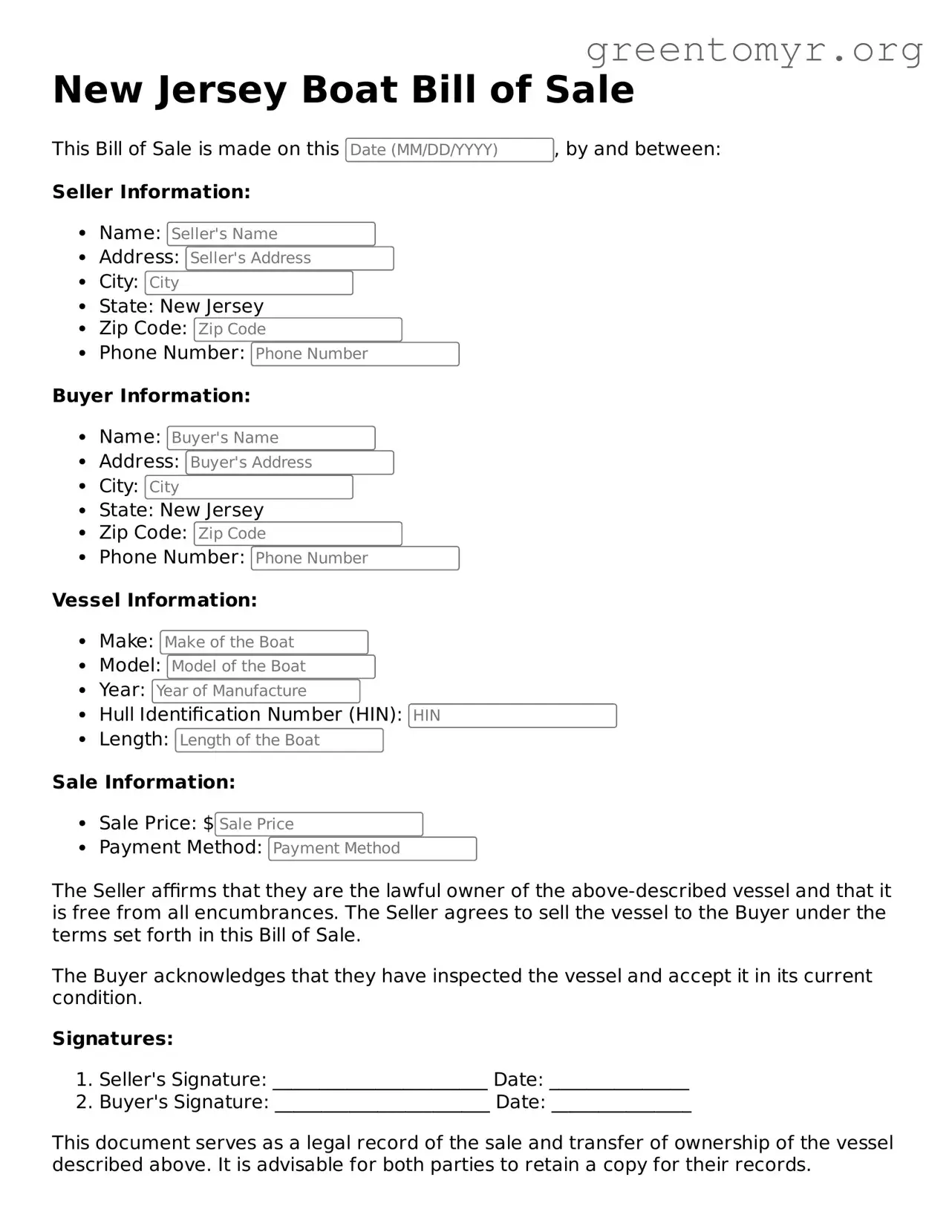
When buying or selling a boat in New Jersey, having a properly completed Boat Bill of Sale form is essential for both parties involved in the transaction. This document serves as proof of ownership transfer and outlines key details about the vessel, including its make, model, year, and hull identification number. Additionally, the form captures the sale price and the date of the transaction, providing a clear record for future reference. Both the buyer and seller must sign the document, ensuring that the agreement is binding and legally recognized. By using this form, individuals can avoid potential disputes and simplify the registration process with the New Jersey Motor Vehicle Commission. Understanding the components and importance of the Boat Bill of Sale can facilitate a smoother transaction and protect the interests of both buyers and sellers in the state.
New Jersey Boat Bill of Sale
This Bill of Sale is made on this , by and between:
Seller Information:
Buyer Information:
Vessel Information:
Sale Information:
The Seller affirms that they are the lawful owner of the above-described vessel and that it is free from all encumbrances. The Seller agrees to sell the vessel to the Buyer under the terms set forth in this Bill of Sale.
The Buyer acknowledges that they have inspected the vessel and accept it in its current condition.
Signatures:
This document serves as a legal record of the sale and transfer of ownership of the vessel described above. It is advisable for both parties to retain a copy for their records.
| Fact Name | Description |
|---|---|
| Purpose | The New Jersey Boat Bill of Sale form serves as a legal document to record the sale and transfer of ownership of a boat. |
| Governing Law | This form is governed by New Jersey Statutes Title 12, specifically the regulations related to vessels and boating. |
| Required Information | The form typically requires details such as the seller's and buyer's names, addresses, boat description, and sale price. |
| Notarization | Although notarization is not mandatory, having the form notarized can provide additional legal protection. |
| Usage | This form is essential for registering the boat with the New Jersey Division of Fish and Wildlife. |
| Record Keeping | Both the buyer and seller should keep a copy of the completed Bill of Sale for their records. |
Filling out the New Jersey Boat Bill of Sale form is an important step in the process of transferring ownership of a boat. Once completed, this document will serve as a record of the transaction between the buyer and the seller, ensuring that both parties have a clear understanding of the sale. Below are the steps to accurately fill out the form.
After filling out the form, ensure that both parties have copies for their records. This will help in future transactions or if any questions arise regarding the sale.
A New Jersey Boat Bill of Sale is a legal document that records the transfer of ownership of a boat from one party to another. This form serves as proof of the transaction and outlines essential details about the boat, the buyer, and the seller. It is crucial for ensuring that both parties have a clear understanding of the sale and protects their rights in the event of a dispute.
A Boat Bill of Sale is important for several reasons:
A typical New Jersey Boat Bill of Sale includes the following information:
While a Boat Bill of Sale is not legally required for every transaction in New Jersey, it is highly recommended. Without this document, buyers may face challenges in proving ownership when registering the boat or in case of disputes. Additionally, some boat registration agencies may require a Bill of Sale for processing ownership transfers.
Yes, you can create your own Boat Bill of Sale as long as it includes all necessary information and is signed by both parties. There are also templates available online that can help ensure you include all relevant details. However, it is advisable to review the document for compliance with New Jersey laws before finalizing the sale.
In New Jersey, notarization of the Boat Bill of Sale is not a requirement. However, having the document notarized can add an extra layer of protection for both parties, as it verifies the identities of the signers and the authenticity of the signatures. This can be particularly helpful if disputes arise in the future.
After completing the Boat Bill of Sale, both the buyer and seller should keep a copy for their records. The buyer should also take the document to the local motor vehicle agency or the appropriate authority to register the boat in their name. This step is essential for ensuring that the boat is legally recognized under the new ownership.
If issues arise after the sale, such as undisclosed defects or disputes over ownership, the Boat Bill of Sale can serve as a critical piece of evidence. It is important to address any concerns promptly and, if necessary, seek legal advice to understand your rights and options. Maintaining clear communication with the other party can often help resolve issues amicably.
Filling out the New Jersey Boat Bill of Sale form can seem straightforward, but many individuals make common mistakes that can lead to complications. One frequent error is failing to include all necessary information. The form requires specific details about the boat, such as the hull identification number, make, model, and year. Omitting any of these details can create confusion and may delay the transfer of ownership.
Another common mistake is incorrect or incomplete signatures. Both the seller and buyer must sign the document for it to be legally binding. If either party neglects to sign or if the signatures do not match the names printed on the form, the transaction could be challenged later. It is essential to ensure that all required signatures are present and correctly executed.
People often overlook the importance of providing accurate contact information. The form should include the current addresses and phone numbers of both the buyer and seller. Inaccurate or outdated contact details can hinder communication and complicate any future correspondence regarding the sale.
Additionally, many individuals fail to keep a copy of the completed Bill of Sale. This document serves as proof of the transaction and is crucial for both parties. Without a copy, the buyer may face difficulties in registering the boat, while the seller may need to prove that the sale occurred, especially if disputes arise later.
Finally, some people do not take the time to review the form thoroughly before submission. Errors in spelling, numbers, or other details can lead to misunderstandings. Taking a moment to double-check the entire form can prevent these issues and ensure a smoother transfer process.
The New Jersey Boat Bill of Sale form serves as a critical document for the transfer of ownership of a boat. However, several other forms and documents may accompany this bill of sale to ensure a smooth transaction and compliance with state regulations. Below is a list of these essential documents.
Utilizing these documents in conjunction with the New Jersey Boat Bill of Sale form can facilitate a clear and legally sound transfer of boat ownership. Each document plays a role in ensuring that both parties fulfill their obligations and that the transaction adheres to state laws.
The Boat Bill of Sale is an important document for anyone buying or selling a boat. However, it shares similarities with several other documents that serve similar purposes in different contexts. Here’s a look at ten documents that are comparable to the Boat Bill of Sale:
Each of these documents plays a crucial role in their respective transactions, ensuring clarity and legal protection for both parties involved. Understanding these similarities can help you navigate the process of buying or selling various types of property.
When filling out the New Jersey Boat Bill of Sale form, it's important to follow certain guidelines to ensure a smooth transaction. Here are some dos and don'ts to consider:
The New Jersey Boat Bill of Sale form is an essential document for anyone buying or selling a boat in the state. However, several misconceptions often arise regarding its use and requirements. Here are six common misunderstandings:
This is incorrect. Regardless of the boat's size, a Bill of Sale is recommended for all transactions. It serves as proof of ownership and can protect both parties in case of disputes.
While verbal agreements may seem convenient, they lack legal enforceability. A written Bill of Sale provides clear documentation of the transaction, which is crucial for both buyers and sellers.
This misconception overlooks the fact that a Bill of Sale is beneficial even for unregistered boats. It can facilitate future registration and help establish ownership history.
Notarization is not a requirement for the New Jersey Boat Bill of Sale. However, having it notarized can add an extra layer of security and authenticity to the document.
Both the buyer and the seller should sign the Bill of Sale. This ensures that both parties acknowledge the terms of the sale and agree to the transfer of ownership.
This is a common myth. Even when transferring a boat as a gift, a Bill of Sale is advisable. It helps clarify ownership and can prevent future legal issues.
Understanding these misconceptions can help ensure a smooth transaction when buying or selling a boat in New Jersey. Proper documentation is vital, and the Boat Bill of Sale plays a crucial role in that process.
When dealing with the New Jersey Boat Bill of Sale form, there are several important points to keep in mind. Understanding these key takeaways can help ensure a smooth transaction.
By following these guidelines, individuals can navigate the process of buying or selling a boat in New Jersey with confidence.