When entering into a commercial lease in New Jersey, understanding the nuances of the Commercial Lease Agreement form is crucial for both landlords and tenants. This legally binding document outlines the terms and conditions governing the rental of commercial property, ensuring that both parties are protected throughout the lease period. Key aspects of the form include the lease duration, rental payment terms, and security deposit requirements. Additionally, it addresses maintenance responsibilities, permissible uses of the property, and provisions for lease termination. By clearly defining these elements, the agreement helps prevent disputes and fosters a positive landlord-tenant relationship. Whether you are a seasoned business owner or a new entrepreneur, familiarity with this form will empower you to make informed decisions and negotiate effectively.
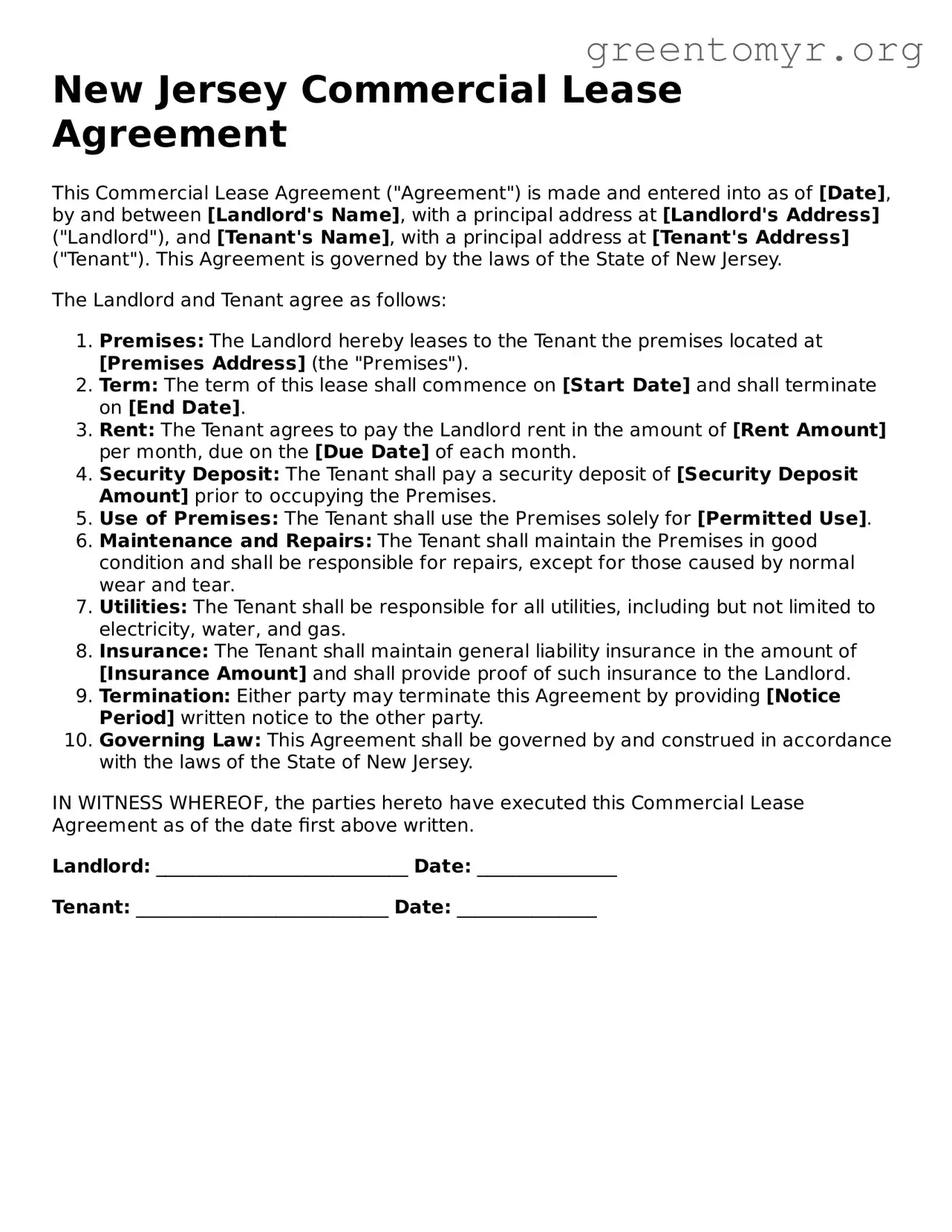
New Jersey Commercial Lease Agreement
This Commercial Lease Agreement ("Agreement") is made and entered into as of [Date], by and between [Landlord's Name], with a principal address at [Landlord's Address] ("Landlord"), and [Tenant's Name], with a principal address at [Tenant's Address] ("Tenant"). This Agreement is governed by the laws of the State of New Jersey.
The Landlord and Tenant agree as follows:
IN WITNESS WHEREOF, the parties hereto have executed this Commercial Lease Agreement as of the date first above written.
Landlord: ___________________________ Date: _______________
Tenant: ___________________________ Date: _______________
| Fact Name | Description |
|---|---|
| Governing Law | The New Jersey Commercial Lease Agreement is governed by the laws of the State of New Jersey. |
| Parties Involved | The lease agreement typically involves a landlord (lessor) and a tenant (lessee). |
| Property Description | The form requires a clear description of the commercial property being leased. |
| Lease Term | The duration of the lease must be specified, including start and end dates. |
| Rent Payment | The agreement outlines the amount of rent, payment schedule, and accepted payment methods. |
| Security Deposit | Details regarding the security deposit, including amount and conditions for its return, are included. |
| Maintenance Responsibilities | The responsibilities for property maintenance and repairs are defined in the lease. |
Filling out the New Jersey Commercial Lease Agreement form is a straightforward process. This document outlines the terms and conditions of the lease between the landlord and tenant, ensuring both parties understand their rights and responsibilities. Follow these steps carefully to complete the form accurately.
After completing these steps, ensure that both parties retain a copy of the signed agreement for their records. This will help prevent any misunderstandings in the future.
A New Jersey Commercial Lease Agreement is a legally binding document that outlines the terms and conditions under which a landlord rents commercial property to a tenant. This agreement specifies the rights and responsibilities of both parties, including rent payment, property maintenance, and lease duration.
Key components typically include:
Rent can be structured in various ways. Common structures include:
Yes, a Commercial Lease Agreement can be modified. Both the landlord and tenant must agree to any changes. It is advisable to document these modifications in writing to ensure clarity and prevent disputes in the future.
If a tenant wishes to terminate the lease early, they should first review the termination clause in the agreement. This clause outlines the conditions and any penalties for early termination. Communication with the landlord is crucial, as they may be open to negotiation or offer alternatives.
Yes, New Jersey has specific laws and regulations that govern commercial leases. These laws cover various aspects, including security deposits, eviction procedures, and tenant rights. It is important for both landlords and tenants to be aware of these laws to ensure compliance and protect their rights.
If a tenant believes their rights have been violated, they should first document any incidents and gather relevant evidence. Next, they should attempt to resolve the issue directly with the landlord. If this does not lead to a satisfactory resolution, seeking legal advice may be necessary to explore further options, including potential claims or mediation.
When filling out a New Jersey Commercial Lease Agreement, many individuals make common mistakes that can lead to misunderstandings or disputes later on. One of the most frequent errors is failing to clearly define the rental term. It’s crucial to specify the start and end dates of the lease. Without this information, both parties may have different interpretations of the lease duration, leading to potential conflicts.
Another common mistake is neglecting to detail the rent payment structure. This includes not only the amount due but also the frequency of payments. For instance, specifying whether rent is due monthly, quarterly, or annually is essential. Additionally, omitting information about late fees or grace periods can create confusion and financial strain.
Some individuals overlook the importance of including maintenance responsibilities. It's vital to outline who is responsible for repairs and upkeep of the property. If this is not clearly stated, disputes may arise regarding who should handle specific issues, such as plumbing or electrical problems.
Additionally, failing to address the use of the property can lead to complications. The lease should clearly state what activities are permitted on the premises. This prevents misunderstandings about whether certain businesses or practices are allowed, which can be crucial for both landlords and tenants.
Another mistake is not reviewing the lease for compliance with local laws and regulations. New Jersey has specific rules governing commercial leases, and failing to adhere to these can result in legal issues. It’s important to ensure that the lease complies with zoning laws and other applicable regulations.
Some people also forget to include provisions for renewal or termination of the lease. Clearly outlining the process for renewing the lease or terminating it early can save both parties from future headaches. This includes specifying how much notice must be given before either party decides to end the agreement.
Not addressing security deposits is another oversight. The lease should specify the amount of the security deposit, the conditions under which it may be withheld, and the timeline for its return after the lease ends. This clarity can help prevent disputes over the deposit at the end of the lease term.
Lastly, many individuals fail to include a dispute resolution clause. It’s beneficial to outline how disputes will be handled should they arise. This could involve mediation or arbitration, providing a clear path to resolution without resorting to litigation.
When entering into a commercial lease agreement in New Jersey, several other forms and documents may be necessary to ensure a smooth transaction. These documents help clarify terms, protect rights, and outline responsibilities for both landlords and tenants. Below is a list of common forms used alongside the New Jersey Commercial Lease Agreement.
Understanding these documents can help both landlords and tenants navigate the complexities of commercial leasing in New Jersey. Each form plays a crucial role in protecting interests and ensuring that all parties are on the same page throughout the leasing process.
Residential Lease Agreement: Similar to a Commercial Lease Agreement, a Residential Lease Agreement outlines the terms under which a landlord rents property to a tenant for residential purposes. Both documents specify rental amounts, duration, and responsibilities of each party.
Sublease Agreement: A Sublease Agreement allows a tenant to rent out part or all of their leased space to another party. Like a Commercial Lease Agreement, it details the terms of the rental, including duration and payment, but it involves an existing tenant and a subtenant.
Lease Option Agreement: This document gives a tenant the option to purchase the property they are leasing. Similar to a Commercial Lease Agreement, it includes rental terms, but also specifies conditions under which the tenant can buy the property.
Property Management Agreement: This agreement outlines the responsibilities of a property manager in relation to a commercial property. It shares similarities with a Commercial Lease Agreement in that both documents define roles and expectations concerning property management and tenant relations.
Business Lease Agreement: This type of agreement is tailored specifically for businesses renting space for operations. It includes similar terms as a Commercial Lease Agreement, such as rental rates and maintenance responsibilities, but focuses on the needs of a business entity.
Ground Lease Agreement: A Ground Lease Agreement involves leasing land for a long period, often for commercial development. Like a Commercial Lease Agreement, it establishes terms for use and payment, but is specifically focused on the land rather than a building.
When filling out the New Jersey Commercial Lease Agreement form, attention to detail is crucial. Here are some important dos and don’ts to keep in mind:
Understanding the New Jersey Commercial Lease Agreement can be challenging, and misconceptions often lead to confusion. Here’s a list of common misunderstandings about this important document:
This is not true. Each lease can vary significantly based on the specific needs of the landlord and tenant, as well as the nature of the business being conducted.
While verbal agreements can be made, they often lack enforceability. A written lease provides clear terms and protections for both parties.
Many aspects of a lease can be negotiated, including maintenance responsibilities, lease duration, and renewal options. It’s important to discuss all terms.
Leases can often be amended. If circumstances change, both parties can agree to modify certain terms, but this should always be documented in writing.
While many landlords require a security deposit, it’s not a universal rule. Some landlords may waive this requirement based on the tenant's financial stability.
Most leases specify permitted uses. It’s crucial to understand these limitations to avoid violating the lease agreement.
This depends on the lease terms. Some agreements may place repair responsibilities on tenants, especially for minor issues or specific areas of the property.
While many leases have fixed terms, some may include options for early termination under specific conditions. Always read the lease carefully.
Seeking legal advice can be invaluable. A professional can help clarify terms and ensure that the lease meets your needs and protects your interests.
Amendments can be made if both parties agree. It’s important to document any changes in writing to ensure they are enforceable.
By addressing these misconceptions, you can navigate the complexities of the New Jersey Commercial Lease Agreement with greater confidence and understanding.
When filling out and using the New Jersey Commercial Lease Agreement form, it is essential to keep several key points in mind. Understanding these aspects can help ensure a smooth leasing process and protect your interests.
By keeping these takeaways in mind, you can navigate the New Jersey Commercial Lease Agreement more effectively and with greater confidence.