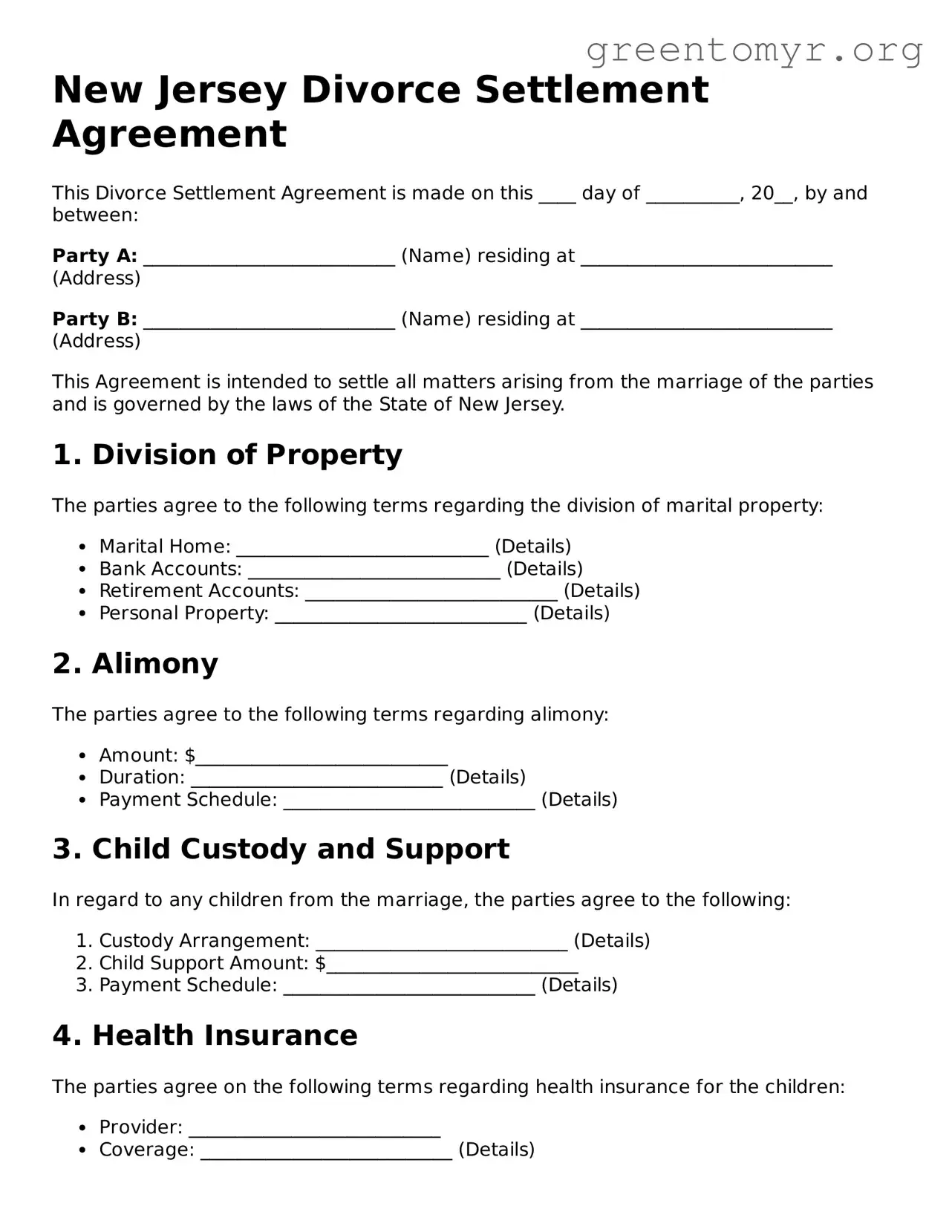
When navigating the complexities of divorce in New Jersey, one crucial document often comes into play: the Divorce Settlement Agreement form. This form serves as a comprehensive outline of the terms agreed upon by both parties, covering essential aspects such as property division, alimony, child custody, and child support. It aims to ensure that both individuals have a clear understanding of their rights and responsibilities moving forward. By detailing how assets will be split and outlining arrangements for any children involved, this agreement helps to minimize potential conflicts and misunderstandings. The Divorce Settlement Agreement not only reflects the mutual decisions made by both spouses but also provides a framework that the court can enforce, making it a vital part of the divorce process in New Jersey. Understanding its components and significance can pave the way for a smoother transition into the next chapter of life.
New Jersey Divorce Settlement Agreement
This Divorce Settlement Agreement is made on this ____ day of __________, 20__, by and between:
Party A: ___________________________ (Name) residing at ___________________________ (Address)
Party B: ___________________________ (Name) residing at ___________________________ (Address)
This Agreement is intended to settle all matters arising from the marriage of the parties and is governed by the laws of the State of New Jersey.
1. Division of Property
The parties agree to the following terms regarding the division of marital property:
2. Alimony
The parties agree to the following terms regarding alimony:
3. Child Custody and Support
In regard to any children from the marriage, the parties agree to the following:
4. Health Insurance
The parties agree on the following terms regarding health insurance for the children:
5. Miscellaneous Provisions
The parties agree to the following additional terms:
IN WITNESS WHEREOF, the parties have executed this Divorce Settlement Agreement as of the date first above written.
Party A Signature: ___________________________
Date: ___________________________
Party B Signature: ___________________________
Date: ___________________________
| Fact Name | Description |
|---|---|
| Governing Law | The New Jersey Divorce Settlement Agreement is governed by the New Jersey Statutes Annotated (N.J.S.A.) 2A:34-2 et seq. |
| Purpose | This form outlines the terms of the divorce settlement, including asset division, alimony, and child custody arrangements. |
| Filing Requirement | Both parties must sign the agreement, and it must be filed with the court as part of the divorce proceedings. |
| Mutual Agreement | The settlement must be mutually agreed upon by both parties to be considered valid. |
| Modification | Once filed, the agreement can only be modified by mutual consent of both parties or by court order. |
| Legal Representation | While not required, it is advisable for both parties to seek legal representation to ensure their rights are protected. |
Completing the New Jersey Divorce Settlement Agreement form is a crucial step in finalizing your divorce. This document outlines the terms agreed upon by both parties regarding property division, child custody, and support. Once filled out, you’ll be ready to submit it to the court, moving you closer to a resolution.
A New Jersey Divorce Settlement Agreement is a legal document that outlines the terms and conditions agreed upon by both parties during a divorce. This agreement typically addresses key issues such as the division of assets, child custody arrangements, child support, and spousal support. It serves as a binding contract that both parties must adhere to once it is finalized and approved by the court.
The Divorce Settlement Agreement is crucial for several reasons. Firstly, it helps clarify the rights and responsibilities of each party, reducing the likelihood of future disputes. Secondly, having a written agreement can expedite the divorce process, as it provides the court with a clear understanding of the terms both parties have accepted. Lastly, it ensures that both parties are on the same page regarding financial and custodial matters, fostering a smoother transition into post-divorce life.
When drafting a Divorce Settlement Agreement, it is essential to cover several key components, including:
Finalizing a Divorce Settlement Agreement involves several steps. After both parties have negotiated and agreed upon the terms, the agreement must be drafted in writing. Once the document is prepared, both parties should review it carefully. After ensuring that all terms are satisfactory, the agreement is signed by both parties. Finally, the signed agreement is submitted to the court for approval. Once the court reviews and approves the agreement, it becomes legally binding.
Yes, a Divorce Settlement Agreement can be modified under certain circumstances. If there is a significant change in circumstances—such as a job loss, a change in income, or a change in the needs of the children—either party may petition the court for a modification. It is important to note that modifications must be approved by the court to be enforceable. Therefore, parties should keep documentation of any changes that may warrant a revision of the original agreement.
While it is not mandatory to have a lawyer to create a Divorce Settlement Agreement, it is highly advisable. A lawyer can provide valuable guidance throughout the process, ensuring that all legal requirements are met and that the agreement is fair and comprehensive. Additionally, having legal representation can help prevent potential disputes in the future by addressing all necessary aspects of the divorce settlement.
Filling out the New Jersey Divorce Settlement Agreement form can be a complex process. Many people make common mistakes that can lead to complications later on. One frequent error is failing to provide complete and accurate information. This includes not including all relevant financial details, such as income, assets, and debts. Incomplete information can result in disputes or delays in the divorce process.
Another mistake is not understanding the implications of the agreements made in the form. Individuals may agree to terms without fully grasping how those decisions will affect their future. For instance, agreeing to a certain amount of child support or alimony without considering long-term financial obligations can create difficulties down the line. It’s essential to think critically about each decision.
Additionally, people often overlook the importance of legal advice. Some individuals attempt to fill out the form without consulting an attorney, which can lead to significant oversights. An attorney can provide guidance on legal rights and responsibilities, ensuring that all aspects of the settlement are fair and in compliance with New Jersey law.
Lastly, many fail to double-check their work before submitting the form. Simple errors, such as typos or incorrect calculations, can cause delays or even rejection of the agreement. Taking the time to review the form thoroughly can prevent unnecessary complications and ensure a smoother process.
When navigating the divorce process in New Jersey, various forms and documents accompany the Divorce Settlement Agreement. Each of these documents plays a crucial role in ensuring a comprehensive and legally binding resolution of the issues at hand. Below is a list of commonly used forms that often accompany the Divorce Settlement Agreement.
Understanding these accompanying documents can help ensure that all aspects of the divorce are addressed thoroughly. Each form plays a significant role in the overall process, aiding in the fair resolution of disputes and the protection of the rights of all parties involved.
The Divorce Settlement Agreement is a crucial document in the process of ending a marriage. It outlines the terms agreed upon by both parties regarding various aspects of their separation. Several other documents share similarities with this agreement, each serving a specific purpose in legal proceedings. Below are six documents that are comparable to the Divorce Settlement Agreement, along with explanations of their similarities.
Each of these documents plays a vital role in the divorce process, ensuring that both parties have a clear understanding of their rights and responsibilities. By addressing specific areas of concern, they help facilitate a smoother transition for everyone involved.
When filling out the New Jersey Divorce Settlement Agreement form, it's important to approach the process with care. Here are five things you should and shouldn't do:
Following these guidelines will help ensure that your Divorce Settlement Agreement is filled out correctly and comprehensively.
Understanding the New Jersey Divorce Settlement Agreement form can be challenging. Here are eight common misconceptions about this form and clarifications for each.
This is not true. The Divorce Settlement Agreement form can be used by couples with or without children. It addresses various issues related to the divorce, including property division and spousal support.
While completing the form is a necessary step, it does not guarantee a speedy resolution. The overall timeline for a divorce can depend on many factors, including court schedules and the complexity of the case.
Both spouses must sign the Divorce Settlement Agreement for it to be valid. This ensures that both parties agree to the terms outlined in the document.
The form can vary based on individual circumstances. Each couple's situation is unique, and the agreement should reflect their specific needs and agreements.
While the agreement is binding once signed, it can be modified if both parties agree to the changes. It is advisable to document any amendments formally.
In New Jersey, the Divorce Settlement Agreement must be submitted to the court as part of the divorce process. It becomes part of the official court record.
New Jersey follows equitable distribution laws, which means assets are divided fairly, but not necessarily equally. The division depends on various factors, including the length of the marriage and each spouse's financial situation.
When navigating the process of divorce in New Jersey, understanding the Divorce Settlement Agreement form is essential. This document outlines the terms agreed upon by both parties regarding various aspects of their separation. Here are some key takeaways to keep in mind:
Understanding these key points can help make the process smoother and ensure that both parties feel heard and respected in their agreement.