Creating an employee handbook is an essential step for businesses in New Jersey. This document serves as a guide for employees, outlining important policies, procedures, and expectations within the workplace. Key aspects typically included in the handbook form are company policies on harassment and discrimination, attendance and punctuality guidelines, and procedures for reporting issues. Additionally, the handbook addresses employee benefits, such as health insurance and paid time off, and outlines the disciplinary actions that may result from policy violations. By providing clear information, the handbook helps ensure that employees understand their rights and responsibilities, fostering a positive work environment and promoting compliance with state and federal laws.
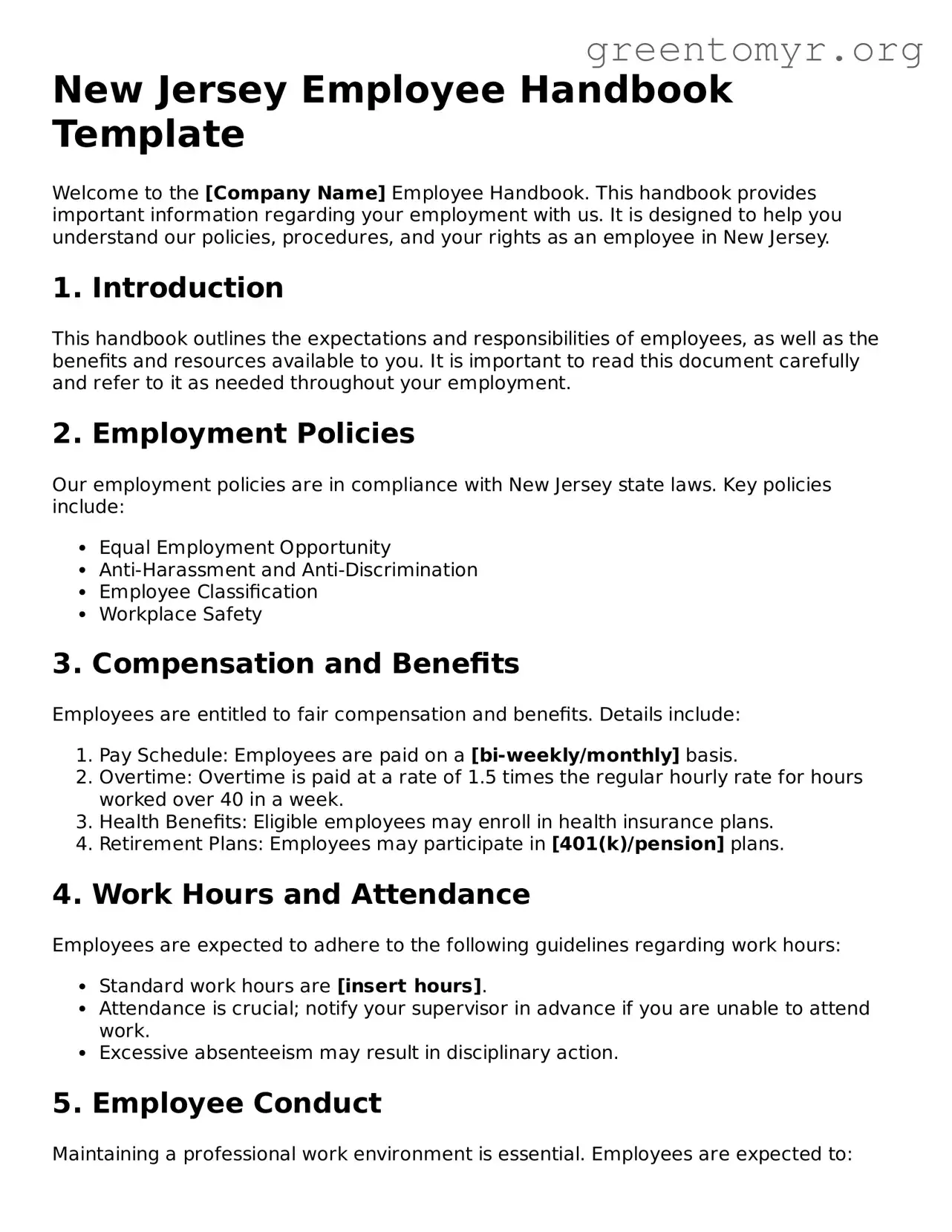
New Jersey Employee Handbook Template
Welcome to the [Company Name] Employee Handbook. This handbook provides important information regarding your employment with us. It is designed to help you understand our policies, procedures, and your rights as an employee in New Jersey.
1. Introduction
This handbook outlines the expectations and responsibilities of employees, as well as the benefits and resources available to you. It is important to read this document carefully and refer to it as needed throughout your employment.
2. Employment Policies
Our employment policies are in compliance with New Jersey state laws. Key policies include:
3. Compensation and Benefits
Employees are entitled to fair compensation and benefits. Details include:
4. Work Hours and Attendance
Employees are expected to adhere to the following guidelines regarding work hours:
5. Employee Conduct
Maintaining a professional work environment is essential. Employees are expected to:
6. Acknowledgment of Receipt
All employees must acknowledge receipt of this handbook. Please sign below:
Employee Name: ________________________
Date: ________________________
7. Contact Information
If you have questions about this handbook or any policies, please contact:
[HR Contact Name]
[HR Contact Phone]
[HR Contact Email]
Thank you for being a part of [Company Name]. We look forward to a successful partnership.
| Fact Name | Description |
|---|---|
| Purpose | The New Jersey Employee Handbook form serves as a guide for employees, outlining company policies, procedures, and expectations in the workplace. |
| Governing Laws | This form is governed by New Jersey state labor laws, including the New Jersey Law Against Discrimination (NJLAD) and the New Jersey Wage and Hour Law. |
| Mandatory Inclusion | Employers in New Jersey are encouraged to include specific policies in their handbooks, such as anti-discrimination policies and workplace safety guidelines. |
| Employee Acknowledgment | It is advisable for employers to obtain written acknowledgment from employees that they have received and understood the handbook, ensuring clarity and compliance. |
Completing the New Jersey Employee Handbook form is an essential step in ensuring that you understand your rights and responsibilities as an employee. Once you have filled out the form, it will be submitted to your employer for review. This process helps establish clear communication and expectations within the workplace.
The New Jersey Employee Handbook form serves as a comprehensive guide for employees and employers. It outlines company policies, procedures, and expectations. This document helps ensure that all employees understand their rights and responsibilities within the workplace.
An Employee Handbook is crucial for several reasons:
The responsibility of creating the Employee Handbook typically falls on the employer, often with input from human resources and legal professionals. This collaborative approach ensures that the handbook reflects the company's culture and complies with applicable laws.
A well-rounded Employee Handbook should cover various topics, including:
Regular updates to the Employee Handbook are essential. It's advisable to review and revise the document at least annually or whenever significant changes occur within the company or applicable laws. This ensures that the handbook remains relevant and compliant.
Employers should make the Employee Handbook easily accessible to all employees. This can be done by:
If employees have questions or need clarification about the Employee Handbook, they should feel encouraged to reach out to their supervisor or the human resources department. Open communication is vital for understanding and adhering to company policies.
While the Employee Handbook is not a legally binding contract, it can have legal implications. Courts may refer to the handbook to determine the expectations set forth by the employer. Therefore, it is essential that the handbook is clear, accurate, and consistent with employment laws.
Yes, the Employee Handbook can be a valuable tool in disciplinary actions. It provides a reference point for policies and procedures that employees are expected to follow. If an employee violates a policy outlined in the handbook, it can serve as a basis for disciplinary measures.
If an employee fails to adhere to the guidelines set forth in the Employee Handbook, the employer should follow the established disciplinary procedures. This may involve verbal warnings, written warnings, or more severe consequences, depending on the nature and frequency of the violations.
Filling out the New Jersey Employee Handbook form can seem straightforward, but many individuals make common mistakes that can lead to confusion later on. One frequent error is overlooking the importance of providing accurate personal information. When employees fail to double-check their names, addresses, or contact details, it can create complications in communication and record-keeping. Ensuring that this information is correct from the start helps prevent issues down the line.
Another mistake often made is neglecting to read the handbook thoroughly before signing. Employees may rush through the form without understanding the policies and procedures outlined within. This oversight can lead to misunderstandings about workplace expectations and rights. Taking the time to read and comprehend the content ensures that employees are well-informed about their responsibilities and the company’s policies.
Some individuals may also forget to ask questions about any unclear sections. If something in the handbook is confusing, it is crucial to seek clarification. Failing to do so can result in misinterpretation of the rules or regulations, which might affect job performance or compliance with company standards. Employees should feel empowered to reach out to their HR department for any needed explanations.
Additionally, individuals sometimes miss the deadline for submitting the form. Each organization typically has a specific timeframe for when the handbook acknowledgment must be returned. Missing this deadline can lead to administrative issues and may even affect an employee’s standing within the company. Marking important dates on a calendar can help ensure timely submission.
Lastly, not keeping a copy of the signed form for personal records is a common oversight. Once the form is submitted, employees should retain a copy for their own reference. This practice can be beneficial if any questions arise about the policies in the future or if there are disputes regarding compliance. Having a record helps to clarify any misunderstandings that might occur later.
When creating a comprehensive employee handbook in New Jersey, it's important to consider additional forms and documents that can support your policies and procedures. Each of these documents serves a unique purpose, helping to ensure clarity and compliance within your organization.
By incorporating these documents alongside the New Jersey Employee Handbook, you can create a robust framework that promotes a positive workplace culture and protects both employees and the organization. Clear communication of policies and expectations leads to a more engaged and informed workforce.
The Employee Handbook is a crucial document for any organization, outlining policies, procedures, and expectations for employees. Several other documents serve similar purposes, providing guidance and structure within the workplace. Here’s a look at seven such documents:
When filling out the New Jersey Employee Handbook form, it’s important to approach the task thoughtfully. Here are some essential dos and don’ts to consider:
When it comes to the New Jersey Employee Handbook form, there are several misconceptions that can lead to confusion for employers and employees alike. Understanding these misconceptions is crucial for ensuring compliance and fostering a positive workplace environment.
Many believe that having an Employee Handbook is not necessary. However, it serves as a critical document that outlines company policies, procedures, and expectations. It can protect both the employer and the employees by providing clear guidelines.
Some assume that there is a one-size-fits-all approach to Employee Handbooks. In reality, policies should reflect the specific needs and culture of the organization. Each handbook should be tailored to the unique circumstances of the business.
It is a common belief that an Employee Handbook is a static document. In truth, it requires regular reviews and updates to ensure compliance with changing laws and regulations, as well as to incorporate new company policies.
Some people think that the handbook serves as a legal contract between the employer and the employee. While it can provide guidelines and expectations, it typically does not create legally binding obligations unless explicitly stated.
Many employers expect that employees will take the initiative to read the handbook thoroughly. However, it is essential to communicate its contents effectively and provide opportunities for employees to ask questions.
While having a digital version is convenient, it should not replace the need for a physical copy or a formal acknowledgment process. Employees should have access to a hard copy and be encouraged to familiarize themselves with the policies.
When it comes to creating an Employee Handbook in New Jersey, understanding the essentials can make a significant difference. Here are some key takeaways to consider:
By keeping these takeaways in mind, you can create an effective Employee Handbook that serves both your organization and its employees well.