The New Jersey Employment Verification form plays a crucial role in the hiring process for both employers and employees. This document serves as an essential tool to confirm an individual’s employment status, providing necessary details such as job title, duration of employment, and salary information. Employers often require this form to ensure that candidates meet specific job qualifications and to verify their work history. For employees, the form can be vital when applying for loans, rental agreements, or other situations where proof of employment is needed. Additionally, understanding how to properly fill out and submit this form can streamline the verification process, making it easier for all parties involved. As such, familiarity with the form's structure and requirements is beneficial for both employers and job seekers navigating the employment landscape in New Jersey.
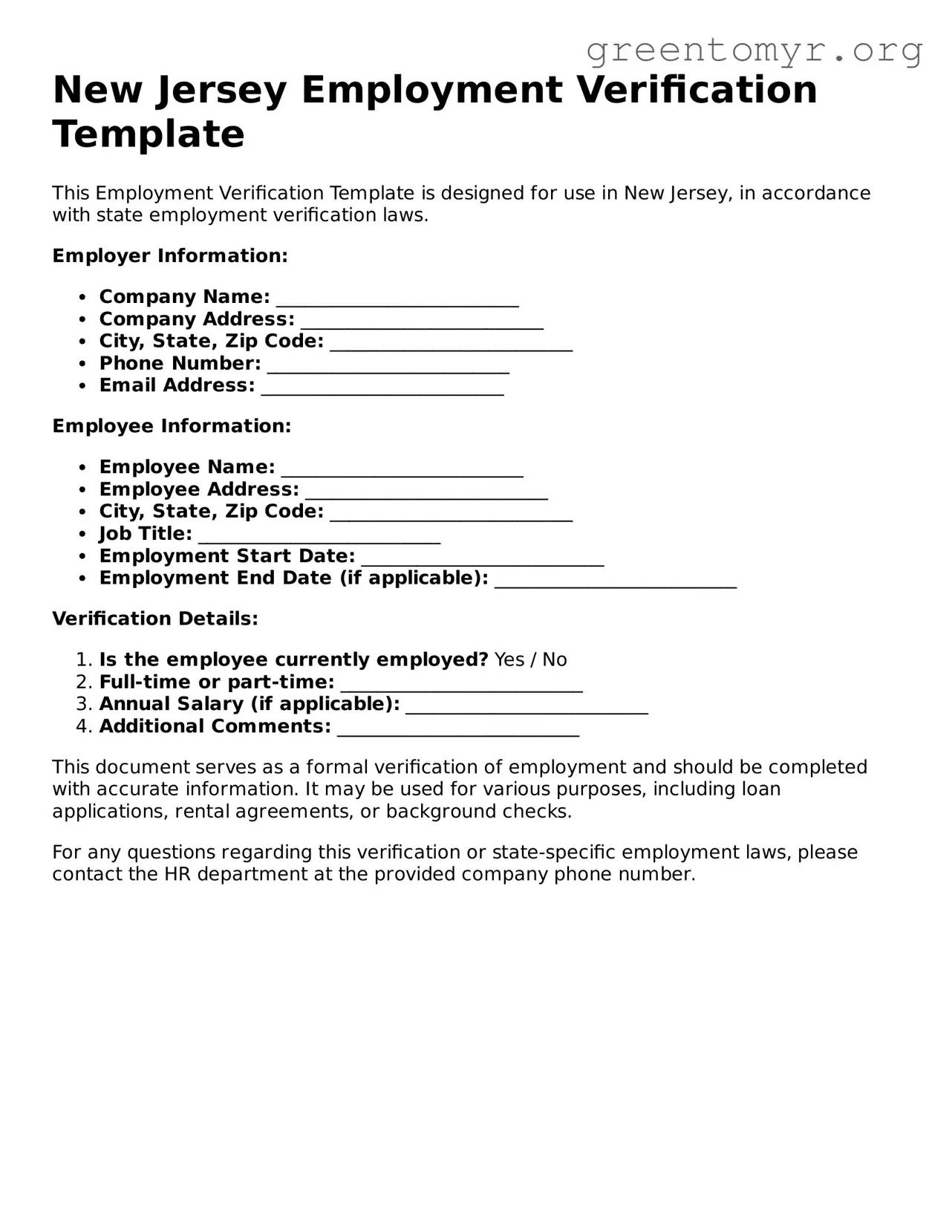
New Jersey Employment Verification Template
This Employment Verification Template is designed for use in New Jersey, in accordance with state employment verification laws.
Employer Information:
Employee Information:
Verification Details:
This document serves as a formal verification of employment and should be completed with accurate information. It may be used for various purposes, including loan applications, rental agreements, or background checks.
For any questions regarding this verification or state-specific employment laws, please contact the HR department at the provided company phone number.
| Fact Name | Details |
|---|---|
| Purpose | The New Jersey Employment Verification form is used to confirm an individual's employment status for various purposes, including loan applications and government assistance programs. |
| Governing Law | This form is governed by the New Jersey Administrative Code, specifically N.J.A.C. 12:17-1.1. |
| Required Information | Employers must provide details such as the employee's name, job title, employment dates, and salary information. |
| Signature Requirement | The form must be signed by an authorized representative of the employer to validate the information provided. |
| Submission Process | Completed forms can be submitted directly to the requesting party, such as a bank or government agency. |
| Confidentiality | Employers should ensure that the information shared on the form complies with privacy laws and protects employee confidentiality. |
| Duration of Validity | The information on the form is typically valid for a limited time, often specified by the requesting party. |
| Penalties for Misrepresentation | Providing false information on the form can result in legal consequences for both the employer and the employee. |
Once you have the New Jersey Employment Verification form in hand, it's time to fill it out accurately. This form is essential for confirming employment details, so ensure that all information is correct before submission.
The New Jersey Employment Verification form is a document used to confirm an individual's employment status, job title, and other relevant employment details. This form is often required by various agencies, including state departments, lenders, and other organizations that need to verify a person's employment for purposes such as loans, housing applications, or government assistance programs.
Typically, the form needs to be completed by the employer of the individual whose employment is being verified. This could include businesses, non-profit organizations, or government entities. Employees may also request this verification for their own purposes, such as when applying for a mortgage or rental agreement.
The Employment Verification form generally requires the following information:
Additional details may be requested depending on the specific requirements of the agency or organization requesting the verification.
The completed Employment Verification form can be submitted in various ways, depending on the requesting party's preferences. Common methods include:
It's essential to follow any specific submission instructions provided by the requesting organization to ensure timely processing.
If you experience difficulties while completing or submitting the Employment Verification form, consider the following steps:
Addressing any issues promptly can help ensure that the verification process goes smoothly.
Filling out the New Jersey Employment Verification form can be a straightforward process, but many people make common mistakes that can lead to delays or complications. One frequent error is providing incomplete information. Each section of the form must be filled out accurately. Omitting details such as the employee's job title or the employer's address can raise questions and slow down the verification process.
Another mistake is failing to sign the form. Without a signature, the form is considered invalid. This simple oversight can result in the entire application being rejected. Always double-check that the form is signed and dated before submission. It’s a small step that can save a lot of time and frustration.
Additionally, using outdated information can create significant issues. Employment details can change frequently, and it’s crucial to ensure that the information provided is current. For example, if an employee has recently changed positions or if there have been updates to their salary, these changes must be reflected on the form. Providing old information can lead to discrepancies that complicate the verification process.
Finally, neglecting to review the form for errors before submission is a common pitfall. Simple typos or incorrect numbers can cause confusion. Taking a moment to carefully review all entries can prevent unnecessary delays. Always ensure that the information is accurate and clearly presented. By avoiding these mistakes, individuals can help ensure a smoother verification process.
The New Jersey Employment Verification form serves as a crucial document for confirming an individual's employment status. However, it is often accompanied by other forms and documents that provide additional context or information regarding an employee's work history and qualifications. Below are four common forms that may be used alongside the Employment Verification form.
Incorporating these additional documents alongside the New Jersey Employment Verification form can create a more comprehensive view of an individual's employment history. This approach not only aids in confirming employment but also provides insights into the employee's qualifications and financial standing.
Pay Stub: A pay stub provides a record of an employee's earnings and deductions for a specific pay period. Like the Employment Verification form, it confirms employment status and income but does so through detailed financial information.
W-2 Form: The W-2 form is issued by employers to report annual wages and taxes withheld. Similar to the Employment Verification form, it serves as proof of employment, but it reflects a broader time frame and includes tax-related information.
Offer Letter: An offer letter outlines the terms of employment, including job title, salary, and start date. This document confirms employment intentions and details, aligning closely with the Employment Verification form's purpose of validating employment.
Reference Letter: A reference letter, often provided by a previous employer, attests to an individual's work history and character. It serves a similar function to the Employment Verification form by validating a person's employment history and professional capabilities.
Employment Contract: An employment contract is a formal agreement between an employer and employee that outlines job responsibilities, compensation, and terms of employment. Like the Employment Verification form, it verifies the employment relationship but includes more comprehensive details about the employment terms.
When filling out the New Jersey Employment Verification form, it’s essential to follow certain guidelines to ensure accuracy and compliance. Here’s a list of things you should and shouldn't do:
Many people have misunderstandings about the New Jersey Employment Verification form. Clarifying these misconceptions can help both employers and employees navigate the verification process more smoothly. Here are five common misconceptions:
Understanding these misconceptions can lead to a more efficient employment verification process in New Jersey. Clear communication between employers and employees is key to ensuring that the necessary information is shared accurately and promptly.
When filling out and using the New Jersey Employment Verification form, keep the following key takeaways in mind: