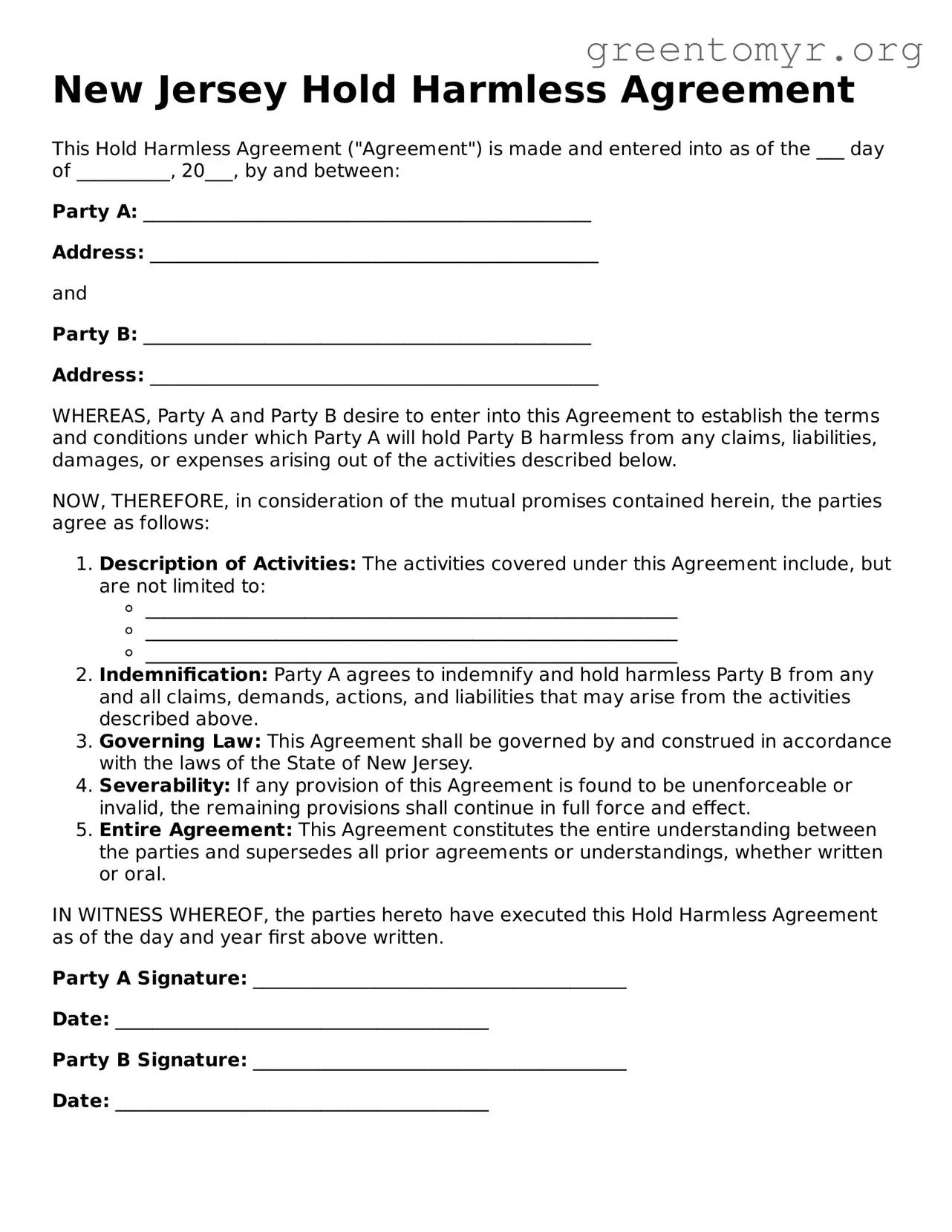
In the realm of legal agreements, the New Jersey Hold Harmless Agreement form stands out as a crucial tool for managing liability and risk. This document is designed to protect one party from the consequences of certain actions or negligence of another party. Typically used in various contexts, such as real estate transactions, construction projects, and event planning, it ensures that the party assuming responsibility will not hold the other party liable for any injuries, damages, or losses that may occur. By clearly outlining the terms and conditions, the Hold Harmless Agreement fosters a sense of security and trust between the involved parties. It is important to understand that while this agreement can offer significant protection, it must be drafted carefully to ensure that it meets legal standards and adequately reflects the intentions of those signing it. Knowing the major aspects of the form, such as its purpose, scope, and limitations, can empower individuals and businesses to make informed decisions about their liabilities and responsibilities.
New Jersey Hold Harmless Agreement
This Hold Harmless Agreement ("Agreement") is made and entered into as of the ___ day of __________, 20___, by and between:
Party A: ________________________________________________
Address: ________________________________________________
and
Party B: ________________________________________________
Address: ________________________________________________
WHEREAS, Party A and Party B desire to enter into this Agreement to establish the terms and conditions under which Party A will hold Party B harmless from any claims, liabilities, damages, or expenses arising out of the activities described below.
NOW, THEREFORE, in consideration of the mutual promises contained herein, the parties agree as follows:
IN WITNESS WHEREOF, the parties hereto have executed this Hold Harmless Agreement as of the day and year first above written.
Party A Signature: ________________________________________
Date: ________________________________________
Party B Signature: ________________________________________
Date: ________________________________________
| Fact Name | Description |
|---|---|
| Purpose | The New Jersey Hold Harmless Agreement is designed to protect one party from liability for damages or injuries that may occur during a specific activity or event. |
| Parties Involved | This agreement typically involves at least two parties: the indemnitor (the party agreeing to hold harmless) and the indemnitee (the party being protected). |
| Governing Law | The agreement is governed by New Jersey state law, ensuring that it complies with local legal standards and regulations. |
| Enforceability | For the agreement to be enforceable, it must be clear, specific, and voluntarily signed by all parties involved. |
| Common Uses | These agreements are often used in situations involving events, construction projects, and recreational activities where risks are present. |
| Limitations | New Jersey law may impose limitations on the scope of liability that can be waived, particularly in cases of gross negligence or intentional misconduct. |
| Legal Advice | It is advisable for parties to seek legal advice before signing a Hold Harmless Agreement to ensure their rights are protected. |
After obtaining the New Jersey Hold Harmless Agreement form, you will need to complete it accurately to ensure it serves its intended purpose. Follow these steps carefully to fill out the form correctly.
Once you have completed the form, review it for accuracy before submitting it to the relevant party. Ensure that all sections are filled out and that signatures are present where needed.
A Hold Harmless Agreement is a legal document that protects one party from liability or claims that may arise from specific activities or situations. In New Jersey, this agreement is commonly used in various contexts, such as construction projects, events, or rental agreements. It ensures that one party agrees not to hold the other responsible for certain damages or injuries.
This agreement is often used by businesses, property owners, event organizers, and contractors. For example, if a contractor is hired for a construction project, the property owner may ask the contractor to sign a Hold Harmless Agreement to protect themselves from any claims related to the work performed.
A typical Hold Harmless Agreement includes the following components:
Yes, Hold Harmless Agreements can be enforceable in New Jersey, provided they are clear and specific. However, certain limitations exist. For instance, a party cannot be held harmless for their own negligence in some cases. Courts may review the language of the agreement to determine its enforceability.
Yes, parties can modify a Hold Harmless Agreement. Changes should be documented in writing and signed by both parties. It is essential to ensure that any modifications are clear to avoid misunderstandings in the future.
Before signing, consider the following:
Yes, alternatives exist, such as insurance policies that cover liability. Some parties may choose to rely on general liability insurance instead of a Hold Harmless Agreement. It is important to evaluate the specific needs and risks associated with the situation.
Hold Harmless Agreement forms can be found online through legal document services, or you may consult with a legal professional for assistance. Ensure that any form you use is appropriate for your specific situation and complies with New Jersey laws.
When filling out the New Jersey Hold Harmless Agreement form, individuals often make several common mistakes that can lead to confusion or legal issues down the line. One frequent error is failing to read the entire document before signing. This oversight can result in misunderstandings about the rights and responsibilities outlined in the agreement. It is crucial to understand what you are agreeing to before putting your signature on the line.
Another mistake is neglecting to provide complete and accurate information. Incomplete forms can lead to delays or even rejection of the agreement. Individuals should ensure that all required fields are filled out correctly, including names, addresses, and any relevant dates. Missing information can create complications that might have been easily avoided.
People also often overlook the importance of understanding the implications of the agreement. A Hold Harmless Agreement can release one party from liability for certain actions or events. It is essential to comprehend what liabilities are being waived and under what circumstances. Without this understanding, individuals may unknowingly expose themselves to risks they thought were covered.
Another common error is failing to seek legal advice when necessary. While the form may seem straightforward, legal language can be complex. Consulting with an attorney can provide clarity and ensure that the agreement aligns with one’s best interests. Many individuals skip this step, only to regret it later when issues arise.
Additionally, some people mistakenly assume that a verbal agreement is sufficient. A Hold Harmless Agreement should be documented in writing to be enforceable. Relying on verbal assurances can lead to disputes and misunderstandings that could have been easily avoided with proper documentation.
Another frequent mistake is not updating the agreement as circumstances change. Life events, such as changes in ownership or new partnerships, may necessitate a revision of the agreement. Failing to keep the document current can lead to complications if an issue arises later on.
Many individuals also forget to consider the duration of the agreement. It is important to specify how long the Hold Harmless Agreement will remain in effect. Without a clear timeframe, there can be confusion about when the protections of the agreement apply.
People sometimes neglect to sign and date the form properly. An unsigned or undated agreement may not be considered valid. Ensuring that all parties involved have signed and dated the document is essential for its enforceability.
Finally, individuals often fail to keep a copy of the signed agreement. Retaining a copy is vital for future reference and can serve as evidence if disputes arise. Without a copy, individuals may find themselves at a disadvantage when trying to enforce the terms of the agreement.
A Hold Harmless Agreement is an important document that protects one party from legal liability for any injuries or damages that may occur during a specific activity or event. In New Jersey, this agreement is often used in various situations, such as events, construction projects, or rental agreements. Along with the Hold Harmless Agreement, there are several other forms and documents that may be necessary to ensure all parties are protected and informed. Here’s a list of some commonly associated documents:
Understanding these documents can help you navigate legal responsibilities and protect your interests. Always consider consulting with a legal professional to ensure that you have the right documents in place for your specific situation.
The Hold Harmless Agreement is a vital document that shares similarities with several other agreements. Each serves to protect parties from liability under specific circumstances. Below are five documents that are comparable to the Hold Harmless Agreement:
When filling out the New Jersey Hold Harmless Agreement form, it's essential to approach the task with care. This document can have significant implications, so understanding what to do and what to avoid is crucial. Here’s a list to guide you:
By following these guidelines, you can navigate the Hold Harmless Agreement process more effectively, ensuring that your interests are protected.
The New Jersey Hold Harmless Agreement is often misunderstood. Here are eight common misconceptions about this legal document:
Understanding these misconceptions can help individuals and businesses make informed decisions when considering a Hold Harmless Agreement in New Jersey.
The New Jersey Hold Harmless Agreement is a legal document designed to protect one party from liability for certain actions or events. Understanding how to fill out and use this form is crucial for ensuring its effectiveness. Here are key takeaways to consider:
By following these guidelines, individuals can effectively use the New Jersey Hold Harmless Agreement to mitigate potential liabilities.