In New Jersey, a lease agreement serves as a crucial document for both landlords and tenants, outlining the terms and conditions of renting a property. This legally binding contract specifies key aspects such as the duration of the lease, the amount of rent due, and the responsibilities of both parties. It also includes important details like security deposits, maintenance obligations, and rules regarding pets or alterations to the property. Understanding these components is essential for ensuring a smooth rental experience. Whether you are a first-time renter or an experienced landlord, familiarizing yourself with the New Jersey Lease Agreement form can help prevent disputes and protect your rights. The clarity and comprehensiveness of this document can significantly influence the landlord-tenant relationship, making it imperative to pay attention to every detail before signing.
New Jersey Lease Agreement Template
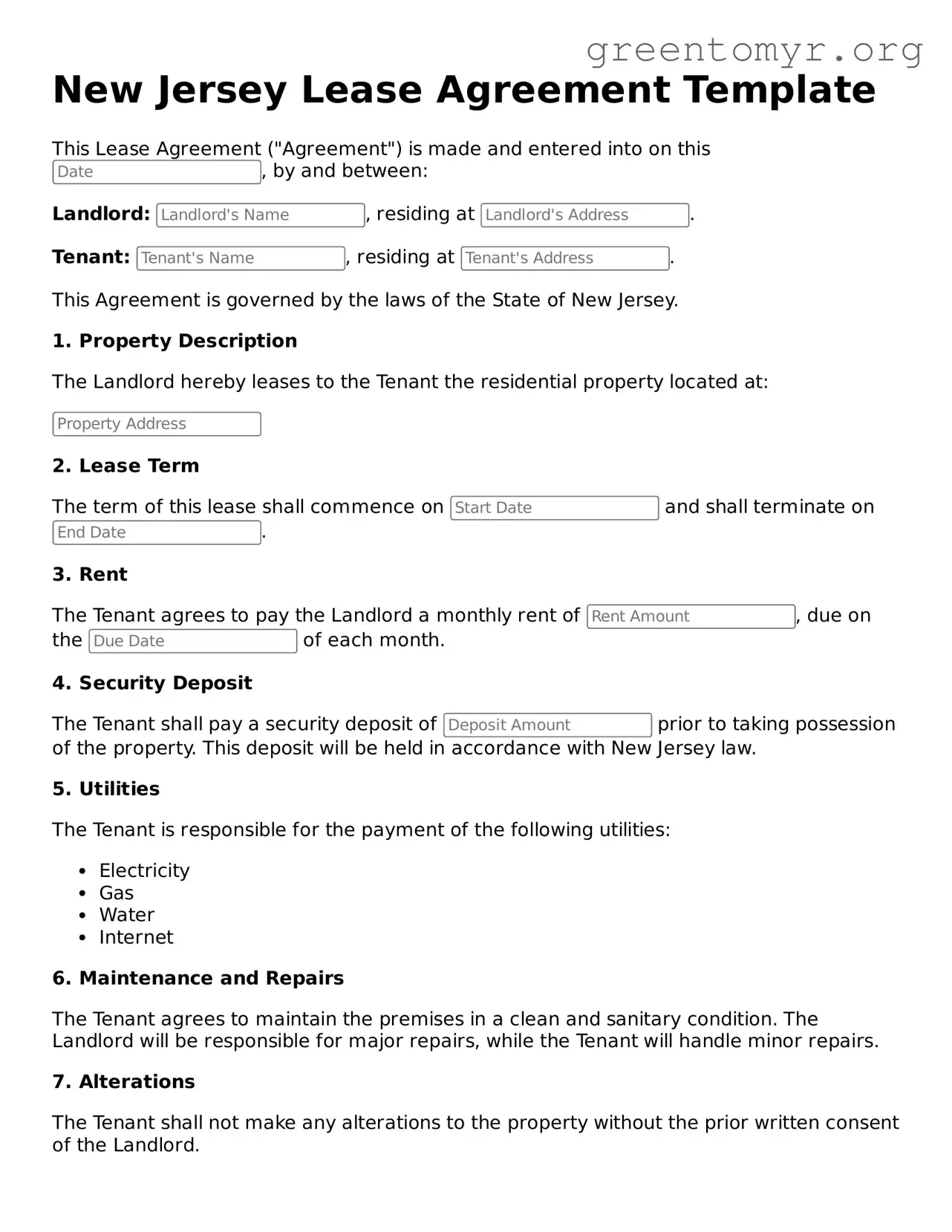
This Lease Agreement ("Agreement") is made and entered into on this , by and between:
Landlord: , residing at .
Tenant: , residing at .
This Agreement is governed by the laws of the State of New Jersey.
1. Property Description
The Landlord hereby leases to the Tenant the residential property located at:
2. Lease Term
The term of this lease shall commence on and shall terminate on .
3. Rent
The Tenant agrees to pay the Landlord a monthly rent of , due on the of each month.
4. Security Deposit
The Tenant shall pay a security deposit of prior to taking possession of the property. This deposit will be held in accordance with New Jersey law.
5. Utilities
The Tenant is responsible for the payment of the following utilities:
6. Maintenance and Repairs
The Tenant agrees to maintain the premises in a clean and sanitary condition. The Landlord will be responsible for major repairs, while the Tenant will handle minor repairs.
7. Alterations
The Tenant shall not make any alterations to the property without the prior written consent of the Landlord.
8. Termination
Either party may terminate this Agreement by providing written notice at least days prior to the desired termination date.
9. Governing Law
This Agreement shall be governed by the laws of the State of New Jersey.
IN WITNESS WHEREOF, the parties hereto have executed this Lease Agreement as of the date first above written.
Landlord Signature: ____________________________
Date: ____________________________
Tenant Signature: ____________________________
Date: ____________________________
| Fact Name | Description |
|---|---|
| Legal Requirement | In New Jersey, a lease agreement is governed by the New Jersey Statutes Annotated (N.J.S.A.) Title 46, which outlines the rights and responsibilities of landlords and tenants. |
| Written Lease | A written lease is not required for all rental agreements, but it is highly recommended to protect both parties’ interests and clarify terms. |
| Duration | Lease agreements can be for a fixed term, such as one year, or can be month-to-month, allowing for flexibility in rental duration. |
| Security Deposit | New Jersey law limits security deposits to one and a half months' rent and requires landlords to place these deposits in an interest-bearing account. |
| Termination Notice | For month-to-month leases, either party must provide at least 30 days' notice to terminate the lease, unless otherwise specified in the agreement. |
Filling out the New Jersey Lease Agreement form is an important step in establishing a clear understanding between a landlord and tenant. Once the form is completed, both parties can review the terms and conditions before signing. This ensures that everyone is on the same page regarding the rental arrangement.
A New Jersey Lease Agreement form is a legal document that outlines the terms and conditions under which a landlord rents property to a tenant. This agreement includes details such as the rental amount, duration of the lease, and responsibilities of both parties. It serves to protect the rights of both landlords and tenants by clearly defining expectations and obligations.
When creating a lease agreement in New Jersey, it is important to include several key elements:
Terminating a lease agreement in New Jersey can vary based on the lease terms. Generally, the following steps should be taken:
In certain situations, such as a breach of lease terms, immediate termination may be possible. Always consult the lease agreement for specific conditions.
While verbal agreements can be legally binding, it is highly recommended to have a lease agreement in writing. A written lease provides clarity and serves as evidence of the terms agreed upon. It helps prevent misunderstandings and disputes between landlords and tenants. In New Jersey, a written lease is especially important for leases longer than one year, as they must be in writing to be enforceable.
Filling out a lease agreement can be a daunting task for many individuals. In New Jersey, the lease agreement form is a crucial document that outlines the terms of a rental arrangement. However, mistakes can lead to misunderstandings and disputes between landlords and tenants. One common error is failing to include the correct rental amount. This figure should be clearly stated and agreed upon by both parties. If the rental amount is left blank or inaccurately recorded, it can create confusion regarding payment expectations.
Another frequent mistake involves neglecting to specify the lease term. The duration of the lease should be clearly defined, whether it is a month-to-month agreement or a fixed-term lease. Omitting this information can result in uncertainty about when the lease begins and ends, potentially leading to disputes over renewal or termination.
Additionally, many individuals overlook the importance of including the names of all tenants. Each adult who will be living in the rental unit should be listed on the lease. This inclusion not only ensures that all parties are legally bound by the agreement but also clarifies who is responsible for rent payments. Failing to list all tenants can complicate matters if issues arise later.
Another common error is not providing the correct contact information for both the landlord and the tenant. Accurate contact details are essential for communication regarding repairs, notices, or any other issues that may arise during the tenancy. If this information is incorrect or incomplete, it can hinder effective communication and lead to frustration for both parties.
Lastly, many people do not take the time to read the entire lease agreement before signing it. Understanding the terms, conditions, and responsibilities outlined in the lease is vital. Signing without comprehension can result in unintended obligations or the acceptance of unfavorable terms. It is advisable for both landlords and tenants to thoroughly review the document and seek clarification on any unclear points before finalizing the agreement.
When entering into a lease agreement in New Jersey, several other forms and documents may be necessary to ensure clarity and protection for both landlords and tenants. Each of these documents serves a specific purpose and can help prevent misunderstandings during the leasing process.
Having these documents in place can facilitate a smoother leasing experience. They provide clarity and protect the interests of both landlords and tenants, helping to avoid potential conflicts down the line.
A Lease Agreement is a crucial document in the realm of property rental. However, it shares similarities with several other legal documents. Here are five such documents that are akin to a Lease Agreement:
When filling out the New Jersey Lease Agreement form, it’s essential to be thorough and accurate. Here are some guidelines to help you navigate the process effectively.
Many people have misunderstandings about the New Jersey Lease Agreement form. Here are seven common misconceptions:
Not all lease agreements are identical. Each agreement can vary based on the terms negotiated between the landlord and tenant. It's essential to read and understand the specific lease you are signing.
While verbal agreements can be enforceable in some cases, they are often difficult to prove. A written lease agreement provides clear terms and protects both parties.
Both landlords and tenants can propose changes to the lease. However, any modifications must be agreed upon and documented in writing.
Security deposits can be refunded if the property is returned in good condition, minus any allowable deductions for damages or unpaid rent. Always check the specific terms regarding security deposits in your lease.
Lease agreements can be created for both short-term and long-term rentals. The terms will specify the duration of the lease, which can vary widely.
Tenants have specific rights under New Jersey law, including the right to a habitable living environment and protection against unlawful eviction. Understanding these rights is crucial.
A lease can be amended, but both parties must agree to the changes. Any modifications should be documented in writing to avoid future disputes.
Filling out and using the New Jersey Lease Agreement form can seem daunting, but understanding its key components can make the process smoother. Here are some essential takeaways to keep in mind:
By paying attention to these key aspects, both landlords and tenants can create a lease agreement that is fair, transparent, and beneficial for everyone involved.