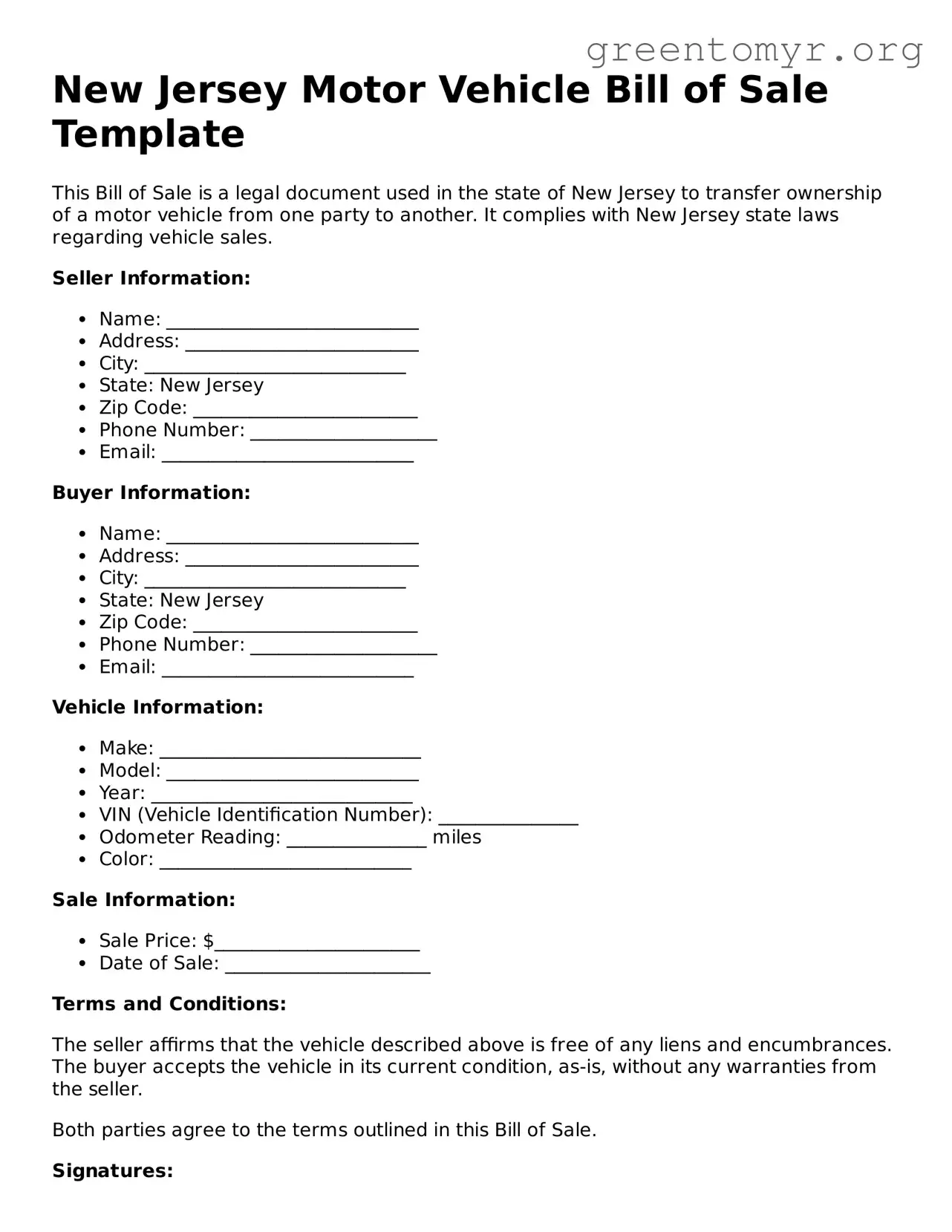
When buying or selling a vehicle in New Jersey, a Motor Vehicle Bill of Sale form is an essential document that facilitates a smooth transaction. This form serves as a legal record of the sale, detailing important information about the vehicle, such as its make, model, year, and Vehicle Identification Number (VIN). It also includes the names and addresses of both the buyer and the seller, ensuring that both parties are clearly identified. The form typically requires the sale price and may include details about any warranties or conditions related to the vehicle. By completing this document, both the buyer and seller protect their interests and create a transparent record of the transaction, which can be crucial for future reference, registration, or potential disputes. Understanding the components of the Motor Vehicle Bill of Sale is vital for anyone looking to navigate the complexities of vehicle ownership transfers in New Jersey.
New Jersey Motor Vehicle Bill of Sale Template
This Bill of Sale is a legal document used in the state of New Jersey to transfer ownership of a motor vehicle from one party to another. It complies with New Jersey state laws regarding vehicle sales.
Seller Information:
Buyer Information:
Vehicle Information:
Sale Information:
Terms and Conditions:
The seller affirms that the vehicle described above is free of any liens and encumbrances. The buyer accepts the vehicle in its current condition, as-is, without any warranties from the seller.
Both parties agree to the terms outlined in this Bill of Sale.
Signatures:
This document serves as proof of the transaction and should be kept for your records.
| Fact Name | Description |
|---|---|
| Purpose | The New Jersey Motor Vehicle Bill of Sale form serves as a legal document to record the sale of a vehicle between a buyer and a seller. |
| Governing Law | This form is governed by New Jersey state laws, specifically the New Jersey Statutes Annotated (N.J.S.A.) 39:10-1. |
| Required Information | The form requires details such as the vehicle's make, model, year, VIN, sale price, and the names and signatures of both parties. |
| Usage | It is recommended to complete this form during the transaction to ensure both parties have a record of the sale for future reference. |
Filling out the New Jersey Motor Vehicle Bill of Sale form is an important step in the process of transferring vehicle ownership. Once the form is completed, it will serve as a legal document that records the sale, providing both the buyer and seller with proof of the transaction. This document will also be necessary for the buyer when registering the vehicle with the New Jersey Motor Vehicle Commission.
A Motor Vehicle Bill of Sale is a legal document that serves as proof of the sale and transfer of ownership of a vehicle. In New Jersey, this form is essential for both the buyer and the seller, as it provides a record of the transaction and helps to protect the interests of both parties involved.
A Bill of Sale is important for several reasons:
The Bill of Sale should include the following information:
While a Bill of Sale is not always legally required in New Jersey, it is highly recommended. Having this document can simplify the registration process and provide clarity in case of disputes. It also helps establish a clear record of ownership transfer, which can be beneficial for both parties.
Yes, you can create your own Bill of Sale. However, it must include all the necessary information to be effective. Alternatively, you can use a template or obtain a form from the New Jersey Motor Vehicle Commission (MVC) to ensure that all required details are included.
After completing the Bill of Sale, both the buyer and the seller should sign the document. The seller should provide a copy to the buyer for their records. The buyer will then need to take this document to the MVC when registering the vehicle. It’s also wise for the seller to keep a copy for their records.
If discrepancies arise after the sale, the Bill of Sale can serve as a key piece of evidence. It is important to document any issues and communicate with the other party promptly. If necessary, legal advice may be sought to resolve any disputes effectively.
When completing the New Jersey Motor Vehicle Bill of Sale form, many individuals inadvertently make mistakes that can lead to complications down the line. One common error is failing to include all required information. The form asks for specific details about the vehicle, such as the Vehicle Identification Number (VIN), make, model, and year. Omitting any of these details can result in delays or issues with the title transfer.
Another mistake often seen is incorrect or illegible handwriting. When filling out the form, it’s crucial to ensure that all information is written clearly. If the information is difficult to read, it may lead to misunderstandings or miscommunication with the New Jersey Motor Vehicle Commission. Always double-check your handwriting and, if possible, consider typing the information to avoid this issue.
People also frequently overlook the importance of signatures. Both the seller and the buyer must sign the Bill of Sale for it to be valid. Failing to obtain a signature from either party can render the document ineffective. This step is vital for protecting both parties in the transaction and ensuring that the transfer of ownership is legally recognized.
Lastly, many individuals neglect to keep a copy of the completed Bill of Sale. After the transaction is finalized, it’s essential to retain a copy for personal records. This document serves as proof of the sale and can be useful for future reference, especially if any disputes arise. Keeping a copy ensures that you have the necessary documentation should questions about the sale come up later.
When buying or selling a vehicle in New Jersey, the Motor Vehicle Bill of Sale form is essential. However, several other documents often accompany it to ensure a smooth transaction. Here’s a list of some common forms and documents you may need:
Having these documents ready can make the process of buying or selling a vehicle much easier. It’s always best to check with the New Jersey Motor Vehicle Commission for any specific requirements or updates.
The Motor Vehicle Bill of Sale form is an important document for transferring ownership of a vehicle. It shares similarities with several other documents used in various transactions. Here are ten documents that are similar to the Motor Vehicle Bill of Sale:
Each of these documents serves a specific purpose in transferring ownership or outlining terms of sale, much like the Motor Vehicle Bill of Sale form does for vehicles.
When filling out the New Jersey Motor Vehicle Bill of Sale form, it is essential to ensure accuracy and completeness. The following list outlines important actions to take and avoid during this process.
The New Jersey Motor Vehicle Bill of Sale form is an important document for anyone buying or selling a vehicle in the state. However, several misconceptions surround this form. Here are five common misunderstandings:
Many people believe that the Bill of Sale is only required for private transactions. In reality, it is also useful in dealer sales, as it provides proof of the transaction and can help clarify the terms of the sale.
Some individuals think that a notarized Bill of Sale is mandatory. While notarization can add an extra layer of authenticity, it is not a requirement in New Jersey for the Bill of Sale to be valid.
Many confuse the Bill of Sale with the vehicle title transfer. The Bill of Sale documents the transaction, while the title transfer is the legal process of changing ownership. Both are necessary but serve different purposes.
Some believe that only one copy of the Bill of Sale is sufficient. In fact, both the buyer and seller should keep their own copies for their records. This helps in case of future disputes or questions about the transaction.
Another misconception is that if a vehicle is given as a gift, a Bill of Sale is unnecessary. However, even in gift transactions, having a Bill of Sale can help clarify the transfer of ownership and protect both parties.
Understanding these misconceptions can help streamline the buying and selling process, ensuring that all parties are properly informed and protected.
When filling out and using the New Jersey Motor Vehicle Bill of Sale form, keep these key takeaways in mind:
Following these guidelines will help ensure a smooth transaction and proper documentation.