In the realm of business formation, the New Jersey Operating Agreement form serves as a vital document for Limited Liability Companies (LLCs) looking to establish clear guidelines and operational procedures. This agreement outlines the internal structure of the LLC, detailing the roles and responsibilities of its members, as well as the management framework. By addressing key elements such as profit distribution, decision-making processes, and dispute resolution, the Operating Agreement fosters a collaborative environment among members. Additionally, it can specify the procedures for adding or removing members, ensuring that the LLC can adapt to changing circumstances. Whether a business is just starting or already established, having a well-crafted Operating Agreement can prevent misunderstandings and provide a solid foundation for future growth.
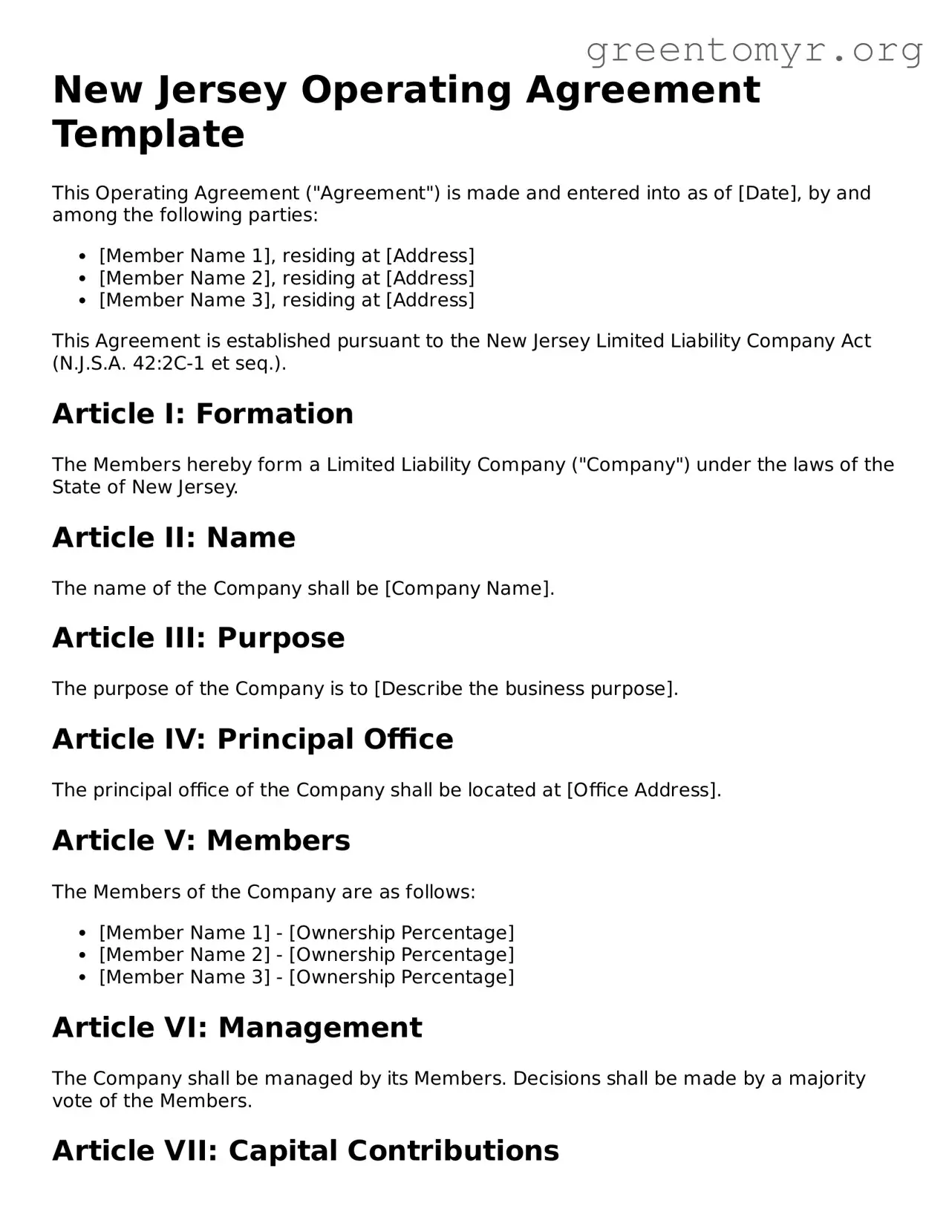
New Jersey Operating Agreement Template
This Operating Agreement ("Agreement") is made and entered into as of [Date], by and among the following parties:
This Agreement is established pursuant to the New Jersey Limited Liability Company Act (N.J.S.A. 42:2C-1 et seq.).
Article I: Formation
The Members hereby form a Limited Liability Company ("Company") under the laws of the State of New Jersey.
Article II: Name
The name of the Company shall be [Company Name].
Article III: Purpose
The purpose of the Company is to [Describe the business purpose].
Article IV: Principal Office
The principal office of the Company shall be located at [Office Address].
Article V: Members
The Members of the Company are as follows:
Article VI: Management
The Company shall be managed by its Members. Decisions shall be made by a majority vote of the Members.
Article VII: Capital Contributions
The initial capital contributions of the Members are as follows:
Article VIII: Distributions
Distributions of profits and losses shall be allocated to the Members in proportion to their respective ownership percentages.
Article IX: Indemnification
The Company shall indemnify each Member against any losses or expenses incurred in connection with the Company, to the fullest extent permitted by New Jersey law.
Article X: Amendments
This Agreement may be amended only by a written agreement signed by all Members.
Article XI: Governing Law
This Agreement shall be governed by and construed in accordance with the laws of the State of New Jersey.
IN WITNESS WHEREOF
The undersigned have executed this Operating Agreement as of the date first above written.
__________________________
[Member Name 1]
__________________________
[Member Name 2]
__________________________
[Member Name 3]
| Fact Name | Details |
|---|---|
| Purpose | The New Jersey Operating Agreement outlines the management structure and operating procedures of a limited liability company (LLC). |
| Governing Law | The agreement is governed by the New Jersey Limited Liability Company Act, specifically N.J.S.A. 42:2C-1 et seq. |
| Mandatory Nature | While not required by law, having an Operating Agreement is highly recommended to clarify member roles and responsibilities. |
| Flexibility | The agreement allows members to customize their management structure and profit distribution, adapting to their specific needs. |
Completing the New Jersey Operating Agreement form is a crucial step in establishing the structure and governance of your business. This document outlines how your business will operate, the roles of its members, and the procedures for making decisions. Once you have filled out the form, it will serve as a foundational blueprint for your company, guiding operations and helping to avoid potential disputes.
A New Jersey Operating Agreement is a legal document that outlines the management structure and operating procedures of a limited liability company (LLC). It serves as a foundational agreement among the members of the LLC, detailing their rights, responsibilities, and obligations. This document is crucial for defining how the business will operate and how decisions will be made.
While New Jersey law does not mandate that LLCs have an Operating Agreement, it is highly recommended. Having one helps protect the limited liability status of the members and provides clarity in the management of the business. Without it, the LLC may be governed by default state laws, which may not align with the members' intentions.
An effective Operating Agreement typically includes the following key components:
Creating an Operating Agreement can be straightforward. Here are some steps to consider:
Yes, an Operating Agreement can be modified. The process for making amendments should be outlined in the agreement itself. Generally, all members must agree to any changes. It’s a good practice to keep a record of all amendments for future reference.
If an LLC does not have an Operating Agreement, the business will be governed by New Jersey's default LLC laws. This may lead to complications, as the state’s laws may not reflect the members' wishes or intentions. Additionally, without an agreement, members may face disputes regarding management and profit distribution.
Using a template for your Operating Agreement can be a helpful starting point. However, it is essential to customize the template to fit the specific needs and circumstances of your LLC. Consider consulting with a legal professional to ensure that the agreement meets all legal requirements and adequately addresses the unique aspects of your business.
An Operating Agreement plays a significant role in maintaining the limited liability protection that an LLC provides. By clearly outlining the roles and responsibilities of members, it helps establish the LLC as a separate legal entity. This separation is crucial for protecting personal assets from business liabilities. Without a well-drafted Operating Agreement, members may inadvertently jeopardize this protection.
Sample Operating Agreements can be found online through various legal websites, business resources, and state government portals. Many of these samples provide templates that can be customized to fit your LLC's needs. However, always ensure that any sample you choose complies with New Jersey laws and is tailored to your specific situation.
When completing the New Jersey Operating Agreement form, individuals often overlook critical details that can lead to complications down the line. One common mistake is failing to specify the management structure of the LLC. Without clear definitions regarding who will manage the company, disputes may arise among members. It's essential to outline whether the LLC will be member-managed or manager-managed to avoid confusion.
Another frequent error involves neglecting to include the percentage of ownership for each member. This information is vital for determining profit distribution and decision-making authority. If ownership percentages are left blank or inaccurately stated, it can create friction among members and lead to potential legal disputes.
Additionally, many people forget to address the procedures for adding or removing members from the LLC. An Operating Agreement should clearly outline how new members can join and the process for removing existing members. Without these provisions, the LLC may face difficulties in adjusting to changes in membership.
Some individuals also make the mistake of not including a buy-sell agreement. This clause is important in the event that a member wants to sell their interest or if a member passes away. A well-defined buy-sell agreement can prevent conflicts and ensure a smooth transition of ownership.
Lastly, failing to review and update the Operating Agreement regularly is a common oversight. As the business evolves, so too should the Operating Agreement. It is crucial to revisit this document periodically to ensure it reflects the current state of the business and the intentions of its members. Neglecting this step can lead to outdated provisions that no longer serve the interests of the LLC.
When forming a limited liability company (LLC) in New Jersey, the Operating Agreement is a crucial document that outlines the management structure and operational procedures of the company. However, several other forms and documents may accompany the Operating Agreement to ensure compliance with state regulations and to facilitate smooth business operations. Below is a list of commonly used forms and documents that are often paired with the New Jersey Operating Agreement.
In summary, while the New Jersey Operating Agreement is a foundational document for any LLC, it is important to recognize the value of the additional forms and documents that accompany it. Each plays a distinct role in ensuring the LLC operates smoothly and complies with legal requirements. Properly managing these documents can contribute to the overall success and longevity of the business.
When filling out the New Jersey Operating Agreement form, it is important to follow certain guidelines to ensure accuracy and compliance. Below are nine recommendations regarding what to do and what to avoid.
Following these guidelines can help ensure that the Operating Agreement is properly filled out and legally sound.
Many people have misunderstandings about the New Jersey Operating Agreement form. Here are five common misconceptions:
Some believe that an Operating Agreement is not necessary for LLCs in New Jersey. However, while it is not legally required, having one is highly recommended. It provides clarity on the management and ownership of the business.
There is a misconception that Operating Agreements need to be submitted to the New Jersey Division of Revenue. In reality, these documents are kept internally and do not need to be filed with the state.
Some think that only LLCs with multiple members need an Operating Agreement. In truth, even single-member LLCs benefit from having one. It helps establish the business as a separate entity and outlines the owner’s rights and responsibilities.
Many believe that Operating Agreements are set in stone. However, they can be amended as needed. Changes can reflect new business circumstances or member agreements.
Some assume that these documents only address financial issues. In fact, they can cover a wide range of topics, including management structure, voting rights, and procedures for adding new members.
Filling out and using the New Jersey Operating Agreement form is a critical step for business owners. Here are some key takeaways to consider: