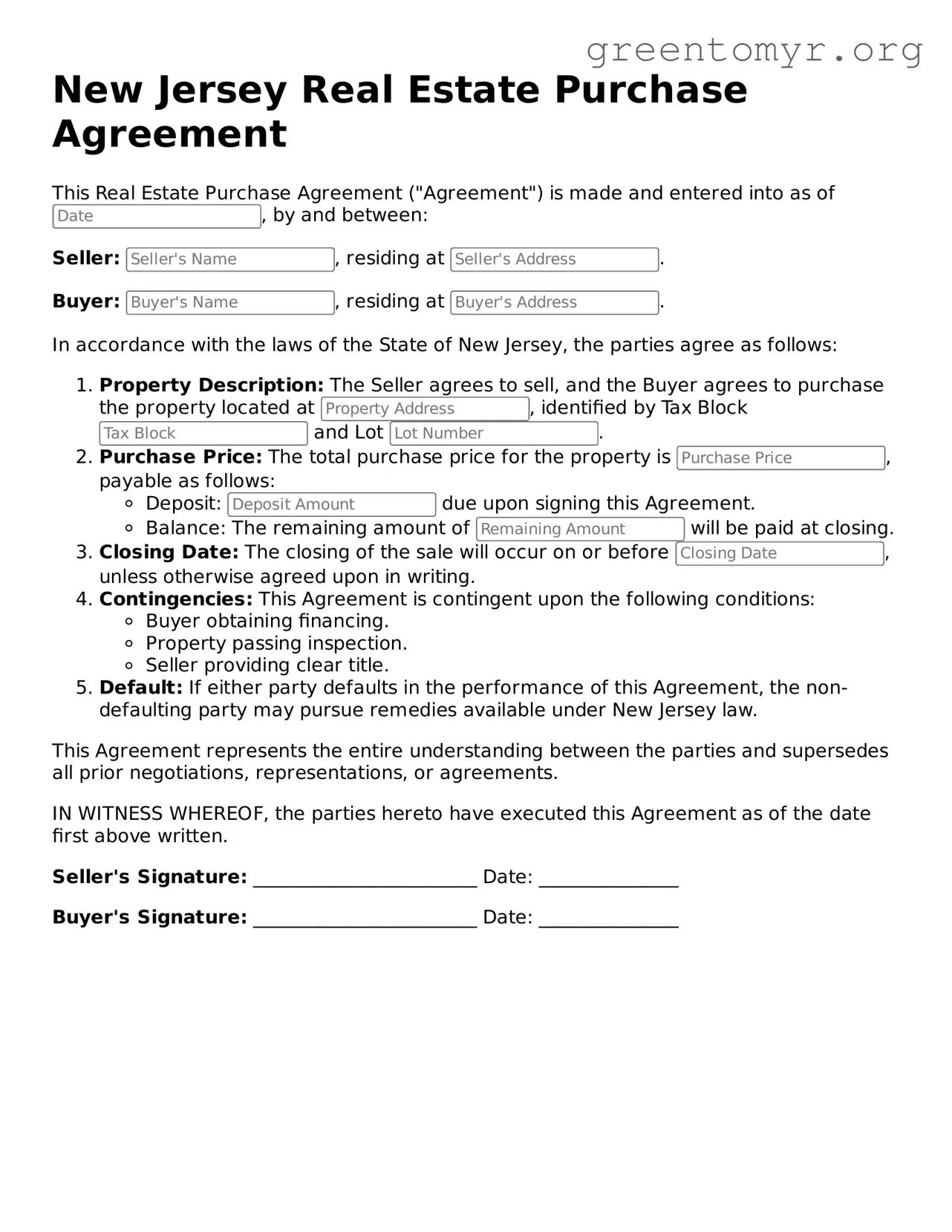
The New Jersey Real Estate Purchase Agreement is a crucial document that serves as the foundation for any real estate transaction within the state. This form outlines the essential terms and conditions agreed upon by both the buyer and the seller, ensuring clarity and legal protection for both parties involved. Key components of the agreement include the purchase price, the closing date, and any contingencies that may affect the sale, such as financing or inspections. Additionally, it specifies the property description, earnest money deposit, and the responsibilities of each party during the transaction process. By addressing these critical elements, the agreement helps to minimize misunderstandings and provides a structured framework for the sale, ultimately facilitating a smoother transition of property ownership. Understanding the intricacies of this form is vital for anyone looking to navigate the real estate market in New Jersey effectively.
New Jersey Real Estate Purchase Agreement
This Real Estate Purchase Agreement ("Agreement") is made and entered into as of , by and between:
Seller: , residing at .
Buyer: , residing at .
In accordance with the laws of the State of New Jersey, the parties agree as follows:
This Agreement represents the entire understanding between the parties and supersedes all prior negotiations, representations, or agreements.
IN WITNESS WHEREOF, the parties hereto have executed this Agreement as of the date first above written.
Seller's Signature: ________________________ Date: _______________
Buyer's Signature: ________________________ Date: _______________
| Fact Name | Description |
|---|---|
| Governing Law | The New Jersey Real Estate Purchase Agreement is governed by the laws of the State of New Jersey. |
| Purpose | This form is used to outline the terms and conditions for the sale of real estate in New Jersey. |
| Parties Involved | The agreement involves a buyer and a seller, both of whom must provide their legal names. |
| Property Description | A detailed description of the property being sold is required, including the address and any relevant identifiers. |
| Purchase Price | The total purchase price must be clearly stated, along with any deposit amounts. |
| Contingencies | Common contingencies include financing, inspections, and the sale of the buyer's current home. |
| Closing Date | The agreement should specify a closing date, which is the date when ownership transfers. |
| Signatures | Both parties must sign the agreement for it to be legally binding. |
| Disclosure Requirements | Sellers are required to disclose known issues with the property, such as lead paint or structural problems. |
Once you have the New Jersey Real Estate Purchase Agreement form in hand, you are ready to proceed with filling it out. This document will require specific information about the property, the buyer, and the seller. Follow these steps carefully to ensure that all necessary details are included.
After completing the form, it’s important to keep a copy for your records. You may need to provide this document to your lender or attorney as you move forward with the transaction.
The New Jersey Real Estate Purchase Agreement is a legal document that outlines the terms and conditions of a real estate transaction between a buyer and a seller. This agreement serves as a binding contract, detailing the obligations of both parties, the purchase price, property description, and any contingencies that must be met before the sale can be finalized.
A comprehensive Real Estate Purchase Agreement should include the following key elements:
The earnest money deposit is a sum of money provided by the buyer to show their commitment to the purchase. Typically, this amount is held in escrow until closing. If the transaction proceeds, the deposit is applied to the purchase price. However, if the buyer backs out without a valid reason specified in the agreement, they may forfeit this deposit to the seller.
Contingencies are conditions that must be satisfied for the sale to proceed. They protect both the buyer and seller by allowing the buyer to back out of the agreement without penalty if certain conditions are not met. Common contingencies include:
Yes, the agreement can be modified after it is signed, but both parties must agree to any changes. Modifications should be documented in writing and signed by both the buyer and the seller to ensure clarity and enforceability. Oral agreements may not hold up in court, so it’s best to have everything in writing.
If either party breaches the agreement, the non-breaching party may have several options. They can seek damages, which may include financial compensation for losses incurred due to the breach. Alternatively, the non-breaching party may choose to enforce the contract, requiring the other party to fulfill their obligations. Legal action can be taken if necessary, but it’s often advisable to seek resolution through negotiation first.
Filling out the New Jersey Real Estate Purchase Agreement can be a daunting task, and many people make common mistakes that can lead to delays or complications in the buying process. One of the first mistakes is failing to provide accurate information about the property. Buyers should ensure that the property address, legal description, and other essential details are correct. An oversight here can cause significant issues down the line.
Another frequent error is neglecting to specify the purchase price clearly. This might seem straightforward, but ambiguity can create confusion between the buyer and seller. It’s crucial to state the agreed-upon price explicitly to avoid any misunderstandings later.
Many buyers also overlook the importance of including contingencies. These are conditions that must be met for the sale to proceed, such as financing or inspection contingencies. Without them, buyers may find themselves locked into a contract without the necessary protections in place.
Additionally, some people forget to include the closing date. This detail is vital as it sets the timeline for the transaction. A missing closing date can lead to frustration for both parties, as it creates uncertainty about when the property will officially change hands.
Another common mistake involves the earnest money deposit. Buyers sometimes fail to specify the amount or the terms of this deposit. This can lead to confusion about the buyer’s commitment and may affect negotiations.
Misunderstanding the obligations related to repairs can also be problematic. Buyers should clearly outline who is responsible for repairs and maintenance before the closing date. Failing to address this can result in disputes after the sale.
Buyers sometimes neglect to include personal property items in the agreement. If there are appliances, fixtures, or furniture included in the sale, they must be explicitly mentioned. Otherwise, there could be disagreements about what stays with the property.
Another area of concern is the failure to review the entire agreement before signing. Rushing through the document can lead to missed clauses or terms that could have significant implications. Taking the time to read and understand the entire agreement is essential.
Some buyers may not consider the implications of signing the agreement without legal counsel. While it’s possible to fill out the form independently, having a knowledgeable professional review it can help avoid pitfalls and ensure that all bases are covered.
Lastly, many individuals forget to keep a copy of the signed agreement. Once the document is signed, it’s important to retain a copy for personal records. This can serve as a reference point in case any issues arise in the future.
When engaging in a real estate transaction in New Jersey, several important documents accompany the Real Estate Purchase Agreement. Each of these documents serves a specific purpose and helps ensure that both parties are protected and informed throughout the process.
Understanding these documents is vital for a smooth real estate transaction. Each plays a crucial role in protecting the interests of both the buyer and seller, ensuring a clear path to ownership transfer.
Lease Agreement: Similar to a Real Estate Purchase Agreement, a lease agreement outlines the terms under which a tenant can occupy a property. Both documents specify the rights and responsibilities of the parties involved, including payment terms and duration of the agreement.
Sales Contract: A sales contract is used in various types of transactions, including real estate. Like the purchase agreement, it details the conditions of the sale, including price, contingencies, and the obligations of both the buyer and seller.
Option Agreement: An option agreement grants a buyer the right, but not the obligation, to purchase a property at a later date. This document shares similarities with the purchase agreement in that it outlines specific terms and conditions for a potential future sale.
Escrow Agreement: An escrow agreement involves a neutral third party holding funds or documents until certain conditions are met. This document is akin to a purchase agreement as it also defines the terms of the transaction and ensures that both parties fulfill their obligations before the transfer of property occurs.
When filling out the New Jersey Real Estate Purchase Agreement form, it's important to approach the task with care. Here’s a helpful list of things you should and shouldn't do to ensure the process goes smoothly.
Following these guidelines will help you complete the New Jersey Real Estate Purchase Agreement form correctly and efficiently. Taking the time to do it right can prevent misunderstandings and legal issues down the line.
Understanding the New Jersey Real Estate Purchase Agreement form is crucial for both buyers and sellers. However, several misconceptions can lead to confusion. Here are six common misunderstandings:
Being aware of these misconceptions can help individuals navigate the real estate process more effectively. Proper understanding leads to informed decisions and smoother transactions.
Filling out and using the New Jersey Real Estate Purchase Agreement form is a critical step in the home-buying process. Understanding its components can significantly impact the transaction's success. Here are some key takeaways to consider:
By keeping these points in mind, you can approach the New Jersey Real Estate Purchase Agreement with confidence and clarity. A well-prepared agreement lays the foundation for a successful transaction.