Content Navigation

The New Jersey Rental Application form serves as a crucial tool for landlords and prospective tenants alike, streamlining the rental process while ensuring that both parties have a clear understanding of their rights and responsibilities. This form typically collects essential information such as the applicant's personal details, rental history, employment status, and financial background. In addition, it may require references from previous landlords or employers to verify the applicant's reliability and suitability as a tenant. The application often includes a consent section for credit and background checks, allowing landlords to assess the financial responsibility and character of potential renters. Moreover, the form may outline any associated fees, such as application or processing fees, which are important for applicants to consider. By providing a comprehensive overview of the applicant's qualifications, the New Jersey Rental Application form plays a vital role in helping landlords make informed decisions while promoting transparency in the rental process.

New Jersey Rental Application Example

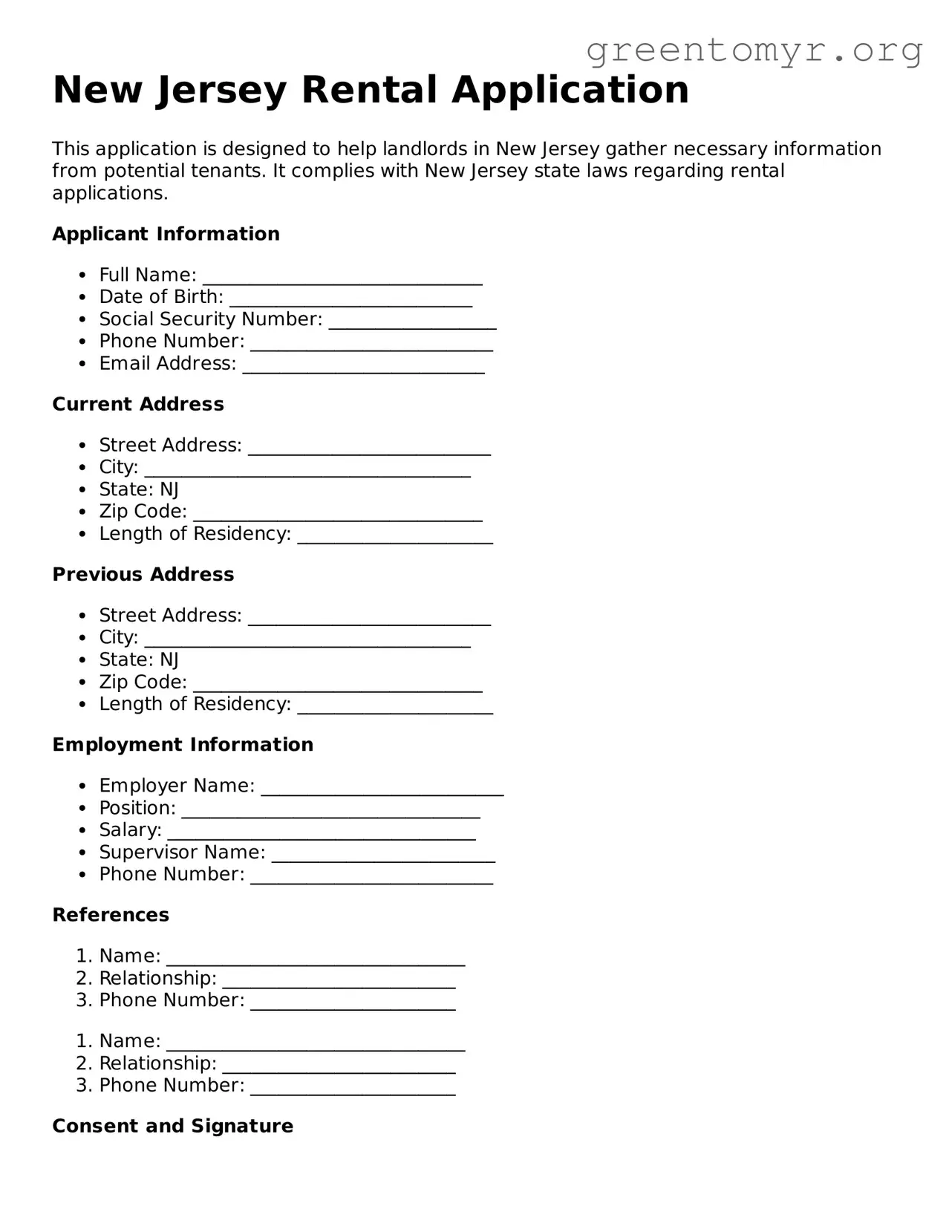
New Jersey Rental Application

This application is designed to help landlords in New Jersey gather necessary information from potential tenants. It complies with New Jersey state laws regarding rental applications.

Applicant Information

  • Full Name: ______________________________
  • Date of Birth: __________________________
  • Social Security Number: __________________
  • Phone Number: __________________________
  • Email Address: __________________________

Current Address

  • Street Address: __________________________
  • City: ___________________________________
  • State: NJ
  • Zip Code: _______________________________
  • Length of Residency: _____________________

Previous Address

  • Street Address: __________________________
  • City: ___________________________________
  • State: NJ
  • Zip Code: _______________________________
  • Length of Residency: _____________________

Employment Information

  • Employer Name: __________________________
  • Position: ________________________________
  • Salary: _________________________________
  • Supervisor Name: ________________________
  • Phone Number: __________________________

References

  1. Name: ________________________________
  2. Relationship: _________________________
  3. Phone Number: ______________________
  1. Name: ________________________________
  2. Relationship: _________________________
  3. Phone Number: ______________________

Consent and Signature

I hereby authorize the landlord to conduct a background check and verify the information provided in this application.

Applicant Signature: _________________________

Date: _____________________________________

PDF Form Features

Fact Name Description
Purpose The New Jersey Rental Application form is used by landlords to screen potential tenants for rental properties.
Required Information Applicants must provide personal information, including name, contact details, and employment history.
Background Check Landlords often use the application to conduct background checks, which may include credit history and criminal records.
Application Fee Landlords may charge a non-refundable application fee to cover the cost of processing the application.
Fair Housing Laws The application process must comply with the Fair Housing Act, prohibiting discrimination based on race, color, religion, sex, national origin, familial status, or disability.
State-Specific Laws In New Jersey, the application process is governed by the New Jersey Law Against Discrimination (N.J.S.A. 10:5-1 et seq.).
Tenant Rights Applicants have the right to request a copy of any background check conducted by the landlord.
Processing Time Landlords typically have a limited timeframe to process applications and notify applicants of their decision.

Guide to Using New Jersey Rental Application

After obtaining the New Jersey Rental Application form, you will need to fill it out carefully. Make sure to provide accurate information to avoid any delays in the rental process. Follow these steps to complete the form.

  1. Start by entering your personal information. This includes your full name, current address, phone number, and email address.
  2. Provide details about your employment. List your employer's name, your job title, and your monthly income. Include the length of time you have been employed.
  3. Fill in your rental history. Include the addresses of places you have rented in the past, along with the names of your previous landlords and the duration of your stay.
  4. Indicate your references. List at least two personal or professional references who can vouch for your character and reliability.
  5. Sign and date the application at the bottom. This indicates that all the information provided is true and correct.
  6. Submit the completed application along with any required fees to the landlord or property manager.

Once you have submitted your application, the landlord will review it and may contact you for further information or to schedule an interview. Stay available for communication during this time.

Get Answers on New Jersey Rental Application

What is the New Jersey Rental Application form?

The New Jersey Rental Application form is a document used by landlords to collect information from potential tenants. This form helps landlords assess the suitability of applicants for rental properties. It typically includes personal details, rental history, employment information, and references.

Why do I need to fill out a rental application?

Filling out a rental application is crucial for several reasons:

  • It allows landlords to verify your identity and background.
  • It helps them evaluate your financial stability and rental history.
  • It serves as a formal request for tenancy, showing your interest in the property.

What information is typically required on the application?

A standard rental application in New Jersey usually requires the following information:

  1. Full name and contact information
  2. Social Security number
  3. Current and previous addresses
  4. Employment details, including income
  5. References from previous landlords

Is there a fee to apply for a rental property?

Yes, many landlords charge a non-refundable application fee. This fee covers the cost of background checks and processing your application. Make sure to ask about the amount and what it includes before submitting your application.

How long does the application process take?

The application process can vary. Generally, it takes anywhere from a few days to a week. Factors influencing this timeline include the landlord's review process and how quickly they can obtain background check results.

What happens if my application is denied?

If your application is denied, the landlord is required to provide a reason. Common reasons include insufficient income, poor credit history, or negative rental references. You have the right to request this information.

Can I appeal a denial of my rental application?

Yes, you can appeal a denial. Contact the landlord to discuss your application and inquire about the possibility of reconsideration. Providing additional documentation or references may strengthen your case.

Are there any protections against discrimination during the application process?

Yes, federal and state laws protect applicants from discrimination based on race, color, national origin, religion, sex, familial status, or disability. If you believe you have been discriminated against, you can file a complaint with the New Jersey Division on Civil Rights.

What should I do if I find errors in my application?

If you find errors in your application after submission, contact the landlord immediately. Correcting inaccuracies promptly can prevent delays in the approval process. Be prepared to provide the correct information and any necessary documentation.

Can I withdraw my application after submission?

Yes, you can withdraw your application at any time before the lease is signed. However, be aware that the application fee is typically non-refundable. Notify the landlord in writing to formally withdraw your application.

Common mistakes

Filling out a rental application can be a straightforward process, but many individuals make common mistakes that can hinder their chances of securing a rental property. One of the most frequent errors is failing to provide complete and accurate personal information. This includes not only your name and contact details but also your Social Security number and date of birth. Landlords use this information for background checks, and any discrepancies can raise red flags.

Another common mistake is neglecting to include employment history. Applicants often forget to mention previous jobs or fail to provide the necessary details about their current employment. Landlords typically want to verify income to ensure that tenants can meet their rent obligations. Providing a complete employment history, including job titles, dates of employment, and contact information for employers, is crucial.

Some applicants overlook the importance of providing references. Many rental applications ask for personal and professional references who can vouch for your character and reliability. Not including these references, or failing to inform them that they may be contacted, can weaken your application.

Inaccurate financial information is another pitfall. Applicants sometimes underestimate their income or fail to disclose additional sources of income. It is essential to be honest and thorough when reporting your financial situation. Misrepresentation can lead to denial of the application or even eviction later on.

Many people also forget to check their credit history before applying. A poor credit score can significantly affect your chances of being approved for a rental. It is advisable to review your credit report for errors and address any issues before submitting your application.

Another mistake is not reading the application thoroughly. Some applicants may rush through the process, missing important sections or failing to sign the document. Each part of the application is designed to gather specific information, and missing sections can lead to delays or rejections.

Additionally, applicants sometimes fail to provide the required application fee. Many landlords require a fee to process the application, and not including this payment can result in immediate denial. Be sure to check the application instructions for any fees and payment methods.

Finally, a lack of professionalism in communication can negatively impact your application. Using informal language or failing to follow up after submitting the application can leave a poor impression. Maintaining a respectful and professional tone throughout the process can enhance your chances of securing the rental.

Documents used along the form

When applying for a rental property in New Jersey, a rental application form is just one piece of the puzzle. Several other documents may be required to ensure a thorough evaluation of potential tenants. These documents help landlords assess the suitability of applicants and protect their investment. Below is a list of commonly used forms and documents that often accompany the New Jersey Rental Application.

  • Credit Report Authorization Form: This document allows landlords to obtain a credit report for the applicant. It provides insight into the applicant’s credit history, helping landlords evaluate their financial responsibility.
  • Background Check Consent Form: This form gives landlords permission to conduct a background check. It typically includes criminal history and can help ensure the safety of other tenants.
  • Employment Verification Letter: A letter from the applicant’s employer confirming their employment status and income. This document helps landlords assess the applicant’s ability to pay rent consistently.
  • Pay Stubs or Income Documentation: Recent pay stubs or other forms of income verification demonstrate the applicant's financial stability. This is crucial for landlords to confirm the applicant can afford the rent.
  • Rental History Verification: A form or letter from previous landlords confirming the applicant's rental history. This document can reveal the applicant's reliability and behavior as a tenant.
  • Pet Application Form: If the rental property allows pets, this form collects information about the applicant’s pets. It helps landlords understand any additional responsibilities or risks involved.
  • Identification Documents: A copy of a government-issued ID, such as a driver’s license or passport, is often required to verify the applicant’s identity.
  • Guarantor Agreement: If the applicant has insufficient income or credit history, a guarantor may be required. This document outlines the responsibilities of the guarantor in case the tenant defaults on rent.
  • Security Deposit Receipt: A receipt for the security deposit paid by the applicant. This document confirms the financial commitment of the tenant and serves as a record for both parties.

Having these documents prepared and organized can expedite the rental application process. It demonstrates the applicant's seriousness and readiness to move forward, which can be crucial in competitive rental markets. Ensure you have everything in order to make a strong impression on potential landlords.

Similar forms

  • Lease Agreement: This document outlines the terms and conditions of renting a property, similar to a rental application in that it requires personal and financial information from the tenant.
  • Tenant Background Check Form: This form collects information about a tenant's rental history, credit score, and criminal background, paralleling the rental application in its purpose to assess the tenant's suitability.
  • Employment Verification Form: This document confirms a tenant's employment status and income, providing financial information that is also requested in a rental application.
  • Credit Application: A credit application gathers financial information to evaluate a person's creditworthiness, similar to the rental application which assesses the tenant's ability to pay rent.
  • Rental History Verification: This document seeks to confirm a tenant's previous rental experiences, akin to the rental application that often asks for references from past landlords.
  • Guarantor Application: If a tenant requires a guarantor, this application collects similar information about the guarantor's financial stability, mirroring the tenant's financial details in the rental application.
  • Pet Application: For tenants with pets, this form gathers details about the pet, including breed and size, which can impact rental decisions, similar to how a rental application assesses overall tenant suitability.

Dos and Don'ts

When filling out the New Jersey Rental Application form, it's important to approach the process thoughtfully. Here are some guidelines to help you navigate this essential step in securing a rental property.

  • Do read the application thoroughly before starting to fill it out.
  • Do provide accurate and truthful information about your rental history.
  • Do include all required documentation, such as proof of income and identification.
  • Do follow any specific instructions provided by the landlord or property manager.
  • Don't leave any sections blank unless instructed to do so.
  • Don't exaggerate or provide false information about your background.
  • Don't forget to proofread your application for any errors before submission.
  • Don't submit the application without checking the application fee requirements.

Misconceptions

When it comes to the New Jersey Rental Application form, several misconceptions can lead to confusion for both landlords and tenants. Understanding these misconceptions can help ensure a smoother rental process.

  1. All rental applications are the same. Many people believe that rental applications are uniform across the board. In reality, each landlord or property management company may have their own specific requirements and forms. It is essential to review the specific application provided by the landlord.
  2. Providing a social security number is mandatory. While many rental applications request a social security number for background checks, it is not always a requirement. Some landlords may accept alternative forms of identification or may not require it at all, depending on their policies.
  3. Rental applications guarantee approval. Submitting a rental application does not guarantee that a tenant will be approved for the rental. Landlords consider various factors, including credit history, income verification, and rental history before making a decision.
  4. Only tenants with poor credit are denied. Another common misconception is that only tenants with poor credit are turned down. Landlords may deny applications for various reasons, including insufficient income, negative rental history, or failure to provide complete information on the application.
  5. Once submitted, applications cannot be withdrawn. Many believe that once a rental application is submitted, it cannot be retracted. In fact, applicants can withdraw their application before a decision is made, but it is courteous to inform the landlord as soon as possible.

Understanding these misconceptions can help both tenants and landlords navigate the rental application process more effectively.

Key takeaways

When filling out and using the New Jersey Rental Application form, consider the following key takeaways:

  1. Personal Information: Provide accurate personal details, including your full name, contact information, and social security number.
  2. Rental History: List your previous residences, including addresses, landlord names, and duration of stay. This helps landlords verify your rental history.
  3. Employment Information: Include your current employer's name, address, and your position. This information demonstrates your financial stability.
  4. Income Details: Clearly state your monthly income and any additional sources of income. Attach pay stubs or bank statements as proof if required.
  5. References: Provide personal or professional references. Ensure that you inform them beforehand, so they are prepared to respond.
  6. Credit Check Consent: Be aware that most landlords will request permission to conduct a credit check. Understand what this entails and its impact on your application.
  7. Application Fees: Expect to pay a non-refundable application fee. This fee covers the cost of background and credit checks.
  8. Truthfulness: Always be honest when completing the application. Misrepresentation can lead to denial of the application or eviction later.
  9. Follow Up: After submitting the application, follow up with the landlord or property manager to express your continued interest and inquire about the status.

Understanding these key points can help streamline the rental application process in New Jersey.