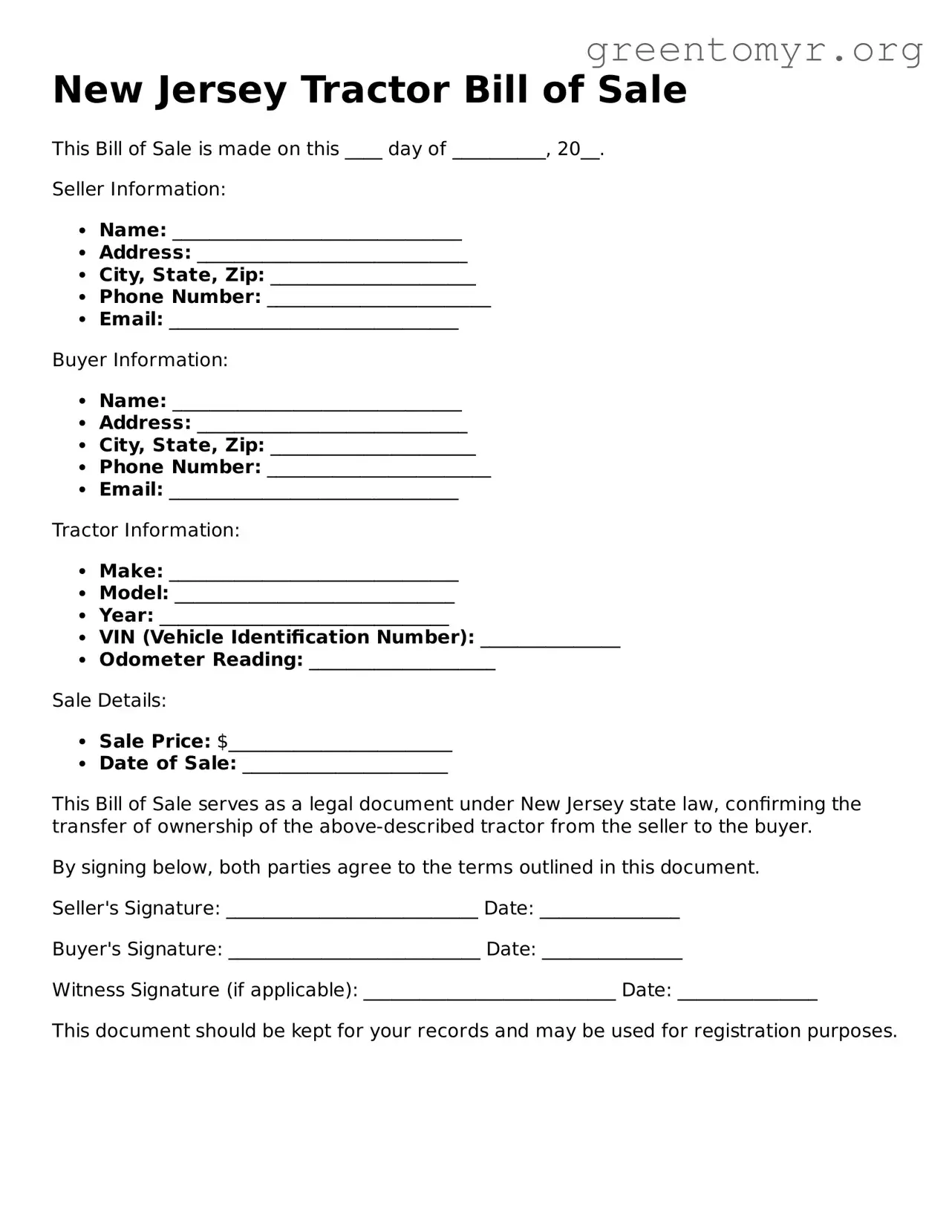
When purchasing or selling a tractor in New Jersey, having a properly completed Tractor Bill of Sale form is essential for both parties involved in the transaction. This document serves as a legal record of the sale, detailing important information such as the buyer's and seller's names, contact information, and the tractor's specific details, including its make, model, year, and Vehicle Identification Number (VIN). Additionally, the form outlines the sale price and any terms or conditions agreed upon by both parties. By documenting the transaction, this form protects the interests of both the buyer and the seller, providing proof of ownership transfer and ensuring that all necessary information is captured. It also helps in maintaining clear records for future reference, whether for resale, insurance purposes, or potential disputes. Understanding the components and significance of the Tractor Bill of Sale form is crucial for anyone engaging in the buying or selling of tractors in New Jersey.
New Jersey Tractor Bill of Sale
This Bill of Sale is made on this ____ day of __________, 20__.
Seller Information:
Buyer Information:
Tractor Information:
Sale Details:
This Bill of Sale serves as a legal document under New Jersey state law, confirming the transfer of ownership of the above-described tractor from the seller to the buyer.
By signing below, both parties agree to the terms outlined in this document.
Seller's Signature: ___________________________ Date: _______________
Buyer's Signature: ___________________________ Date: _______________
Witness Signature (if applicable): ___________________________ Date: _______________
This document should be kept for your records and may be used for registration purposes.
| Fact Name | Details |
|---|---|
| Purpose | The New Jersey Tractor Bill of Sale form serves as a legal document to record the sale of a tractor between a buyer and a seller. |
| Governing Law | This form is governed by the New Jersey Uniform Commercial Code (UCC), specifically under Article 2 concerning sales. |
| Identification | The form requires identification details of both the buyer and the seller, including names and addresses. |
| Vehicle Information | It must include specific details about the tractor, such as make, model, year, and Vehicle Identification Number (VIN). |
| Purchase Price | The agreed-upon purchase price must be clearly stated to avoid any disputes later on. |
| Date of Sale | The date when the transaction occurs is essential for record-keeping and legal purposes. |
| Signatures | Both parties must sign the document to validate the sale and confirm their agreement to the terms. |
| As-Is Condition | Often, the form includes a clause stating that the tractor is sold "as-is," meaning no warranties are provided by the seller. |
| Notarization | While not always required, notarization can add an extra layer of authenticity to the document. |
| Record Keeping | Both parties should keep a copy of the Bill of Sale for their records, as it may be needed for future reference or legal matters. |
After obtaining the New Jersey Tractor Bill of Sale form, you will need to carefully fill it out to ensure that all necessary information is accurately provided. This document serves as a record of the transaction and includes important details about the tractor and the parties involved. Follow these steps to complete the form correctly.
Once you have completed the form, ensure that both parties retain a copy for their records. This will help prevent any disputes or misunderstandings in the future.
The New Jersey Tractor Bill of Sale form is a legal document that records the sale and transfer of ownership of a tractor. It serves as proof of the transaction between the seller and the buyer, detailing essential information about the tractor and the parties involved.
The form typically requires the following information:
While not legally required, having a Bill of Sale is highly recommended. It provides a clear record of the transaction and can help resolve disputes in the future. Additionally, it may be required when registering the tractor with the state.
The Bill of Sale protects the buyer by providing proof of ownership and the details of the transaction. For the seller, it serves as evidence that the tractor was sold, helping to avoid liability for any future issues related to the tractor.
Once the Bill of Sale is signed by both parties, it should not be modified. Any changes should be documented with a new Bill of Sale or an amendment signed by both parties to avoid confusion or disputes.
You can obtain the form from various sources, including online legal document services, local government offices, or agricultural associations. Ensure that the form you choose is compliant with New Jersey laws.
If you lose the Bill of Sale, it is advisable to create a duplicate. Both parties should sign the new document, indicating that it is a replacement for the lost original. Keeping a copy for your records is essential.
There are typically no fees for creating a Bill of Sale itself. However, there may be fees associated with registering the tractor or transferring the title with the state. It is wise to check with local authorities for specific costs.
If issues arise after the sale, refer to the terms outlined in the Bill of Sale. If the tractor was sold “as is,” the seller may not be liable for any problems. However, if there were warranties or guarantees provided, you may have recourse based on those terms.
When completing the New Jersey Tractor Bill of Sale form, individuals often overlook crucial details that can lead to complications later on. One common mistake is failing to include the correct vehicle identification number (VIN). The VIN serves as a unique identifier for the tractor. An incorrect or missing VIN can create issues with registration and ownership transfer.
Another frequent error is neglecting to provide complete buyer and seller information. This includes names, addresses, and contact details. Incomplete information can lead to misunderstandings and disputes regarding the sale. It is essential to ensure that all parties' information is accurate and legible.
Many people also forget to specify the sale price of the tractor. This figure is necessary for tax purposes and for establishing the terms of the sale. Without a clear sale price, both the buyer and seller may face difficulties during the registration process.
Additionally, some individuals fail to sign and date the document. Both the buyer and seller must provide their signatures to validate the transaction. A missing signature can render the Bill of Sale ineffective, causing potential legal issues down the line.
Another mistake involves not providing a clear description of the tractor. This includes details such as the make, model, year, and any distinguishing features. A vague description can lead to confusion about the item being sold and may complicate future transactions.
It is also important to remember that the form should be filled out in ink. Using pencil or erasable ink can create problems, as changes may not be easily visible. Clear and permanent entries help ensure the document's integrity.
Some individuals may not realize that they need to keep a copy of the completed Bill of Sale for their records. This document serves as proof of the transaction and can be essential for future reference. Failing to retain a copy can lead to difficulties if disputes arise later.
Lastly, individuals sometimes overlook the importance of consulting local regulations. Each municipality may have specific requirements regarding the sale of agricultural equipment. Not adhering to these regulations can result in fines or complications during the registration process.
When buying or selling a tractor in New Jersey, the Tractor Bill of Sale form is essential. However, several other documents often accompany it to ensure a smooth transaction. Each of these documents serves a specific purpose and helps protect both the buyer and seller.
Having these documents ready can facilitate a more straightforward and legally sound transaction. Being prepared not only helps in meeting legal requirements but also builds trust between the buyer and seller.
Vehicle Bill of Sale: Similar to the Tractor Bill of Sale, this document serves as proof of the sale of a vehicle. It includes details about the buyer, seller, and the vehicle itself, ensuring both parties have a record of the transaction.
Boat Bill of Sale: Like the Tractor Bill of Sale, this form is used to document the sale of a boat. It captures essential information such as the boat's make, model, and identification number, along with the buyer and seller's information.
Motorcycle Bill of Sale: This document functions similarly by providing a legal record of the sale of a motorcycle. It includes vital details such as the motorcycle's specifications and the identities of the involved parties.
Equipment Bill of Sale: When selling heavy machinery or other equipment, this form is essential. It outlines the specifics of the equipment being sold, ensuring both the buyer and seller are clear on the terms of the sale.
Personal Property Bill of Sale: This document is used for the sale of various personal items, not limited to vehicles or equipment. It provides a clear record of the transaction, detailing the item sold and the parties involved.
When filling out the New Jersey Tractor Bill of Sale form, it’s important to follow certain guidelines to ensure the document is accurate and legally binding. Below are some essential do's and don'ts to keep in mind.
Things You Should Do:
Things You Shouldn't Do:
Many people have misunderstandings about the New Jersey Tractor Bill of Sale form. Here are some common misconceptions and the truths behind them:
Understanding these points can help ensure a smoother transaction when buying or selling a tractor in New Jersey.
When filling out and using the New Jersey Tractor Bill of Sale form, consider the following key takeaways:
Following these guidelines can help ensure a smooth transaction when buying or selling a tractor in New Jersey.