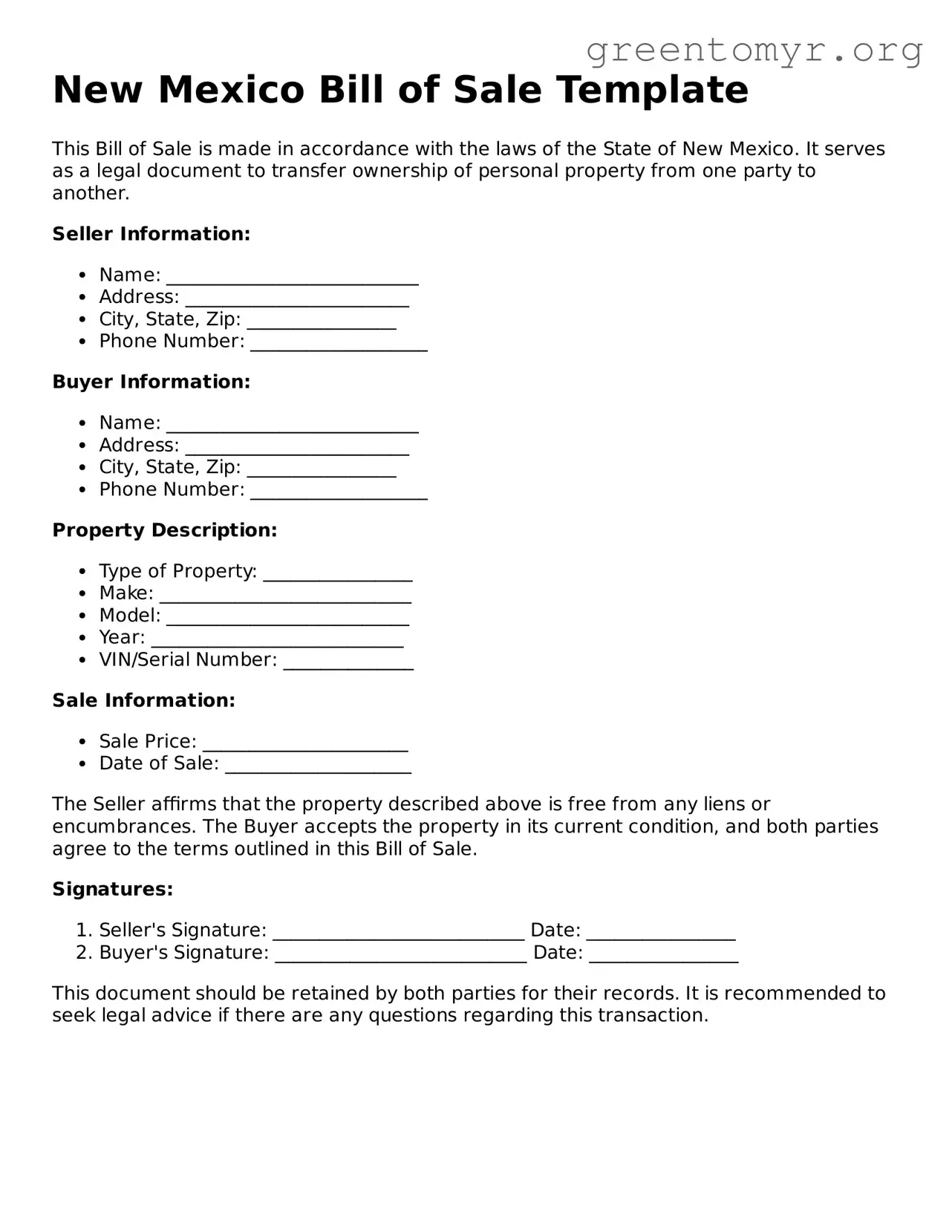
The New Mexico Bill of Sale form serves as a crucial document for individuals and businesses engaged in the transfer of ownership for various types of personal property. This form is not only essential for ensuring that transactions are legally binding, but it also provides both the buyer and the seller with a clear record of the sale. Key components of the Bill of Sale include the names and addresses of both parties, a detailed description of the item being sold, the purchase price, and the date of the transaction. Additionally, the form may include terms regarding warranties or disclaimers, which can protect both parties in the event of disputes. By documenting the sale, this form helps to establish proof of ownership and can facilitate future transactions or registrations, especially for vehicles or other significant assets. Understanding the importance of the New Mexico Bill of Sale form can empower individuals to navigate their sales confidently and responsibly.
New Mexico Bill of Sale Template
This Bill of Sale is made in accordance with the laws of the State of New Mexico. It serves as a legal document to transfer ownership of personal property from one party to another.
Seller Information:
Buyer Information:
Property Description:
Sale Information:
The Seller affirms that the property described above is free from any liens or encumbrances. The Buyer accepts the property in its current condition, and both parties agree to the terms outlined in this Bill of Sale.
Signatures:
This document should be retained by both parties for their records. It is recommended to seek legal advice if there are any questions regarding this transaction.
| Fact Name | Description |
|---|---|
| Purpose | The New Mexico Bill of Sale form serves as a legal document to transfer ownership of personal property from one party to another. |
| Governing Laws | This form is governed by the New Mexico Uniform Commercial Code (UCC), specifically Article 2, which deals with the sale of goods. |
| Types of Property | The Bill of Sale can be used for various types of personal property, including vehicles, equipment, and other tangible items. |
| Notarization | While notarization is not always required, having the Bill of Sale notarized can provide additional legal protection and verification. |
| Sales Tax | In New Mexico, the sale of certain items may be subject to sales tax, and the Bill of Sale can be used to document the transaction for tax purposes. |
| Buyer's Information | The form requires the buyer's full name and address to ensure that the new owner is clearly identified. |
| Seller's Information | Similarly, the seller's full name and address must be included, establishing the original owner of the property. |
| Item Description | A detailed description of the item being sold, including its condition and any identifying information, is crucial for clarity and legal purposes. |
Once you have the New Mexico Bill of Sale form in front of you, the next step involves accurately filling it out to ensure a smooth transaction. This form is essential for documenting the sale of personal property. Below are the steps to complete the form correctly.
A Bill of Sale in New Mexico is a legal document that records the transfer of ownership of personal property from one party to another. It serves as proof of the transaction and outlines the terms agreed upon by both the seller and the buyer.
The Bill of Sale should include the following information:
While a Bill of Sale is not legally required for all transactions in New Mexico, it is highly recommended. It provides legal protection for both parties and can be necessary for registering the vehicle or transferring ownership of certain items.
Yes, a Bill of Sale is commonly used for vehicle transactions in New Mexico. It helps document the sale and is often required when registering the vehicle in the new owner’s name.
Notarization is not a requirement for a Bill of Sale in New Mexico. However, having it notarized can provide an additional layer of verification and may be beneficial in case of disputes.
Both the seller and the buyer should keep a copy of the Bill of Sale for their records. This document may be needed for tax purposes, registration, or in case of future disputes regarding ownership.
Yes, you can create your own Bill of Sale. Ensure that it includes all necessary information and meets the requirements for your specific transaction. Templates are also available online for convenience.
If the item sold is defective, the terms of the Bill of Sale will dictate the responsibilities of the seller. If a warranty is included, the seller may be liable for repairs or returns. If no warranty is provided, the buyer may have limited recourse.
Bill of Sale forms can be obtained online through various legal document websites, or you may create one using templates. Additionally, some local government offices may provide forms for specific transactions.
If you lose your Bill of Sale, it is advisable to contact the other party involved in the transaction to request a duplicate. Keeping a digital copy or scanning the document can help prevent issues in the future.
When filling out the New Mexico Bill of Sale form, many individuals overlook crucial details that can lead to complications later on. One common mistake is failing to provide accurate information about the buyer and seller. It's essential to include full names, addresses, and contact information. Incomplete or incorrect details can create confusion and may even invalidate the document.
Another frequent error involves not specifying the item being sold. The Bill of Sale should clearly describe the item, including make, model, year, and any identifying numbers like a VIN for vehicles. Without this information, it can be challenging to prove ownership or resolve disputes.
Many people forget to include the sale price. This detail is vital not only for record-keeping but also for tax purposes. Omitting the price can lead to misunderstandings between the buyer and seller and may raise questions from tax authorities.
Additionally, some individuals neglect to date the Bill of Sale. A date is important for establishing when the transaction took place. Without a date, it may be difficult to determine the timeline of ownership, which could affect future sales or legal issues.
Signatures are another area where mistakes commonly occur. Both the buyer and seller must sign the document for it to be legally binding. Failing to obtain one or both signatures can render the Bill of Sale ineffective.
People also often overlook the need for witnesses or notarization, especially for high-value transactions. While not always required, having a witness or a notary can add an extra layer of protection and legitimacy to the sale.
Another mistake is not keeping a copy of the Bill of Sale. It’s crucial for both parties to retain a copy for their records. This document serves as proof of the transaction and can be important for future reference.
Finally, many individuals fail to review the completed form before submission. Taking a moment to double-check all entries can prevent errors that may complicate the sale later. Ensuring accuracy from the start can save time and trouble down the line.
When completing a transaction involving the purchase or sale of property in New Mexico, several important documents may accompany the Bill of Sale form. These documents help to ensure that the transaction is clear, legally binding, and protects the interests of both parties involved. Below are some commonly used forms and documents that are often associated with a Bill of Sale.
Each of these documents plays a crucial role in facilitating a smooth transaction. By understanding their purposes and ensuring they are properly completed, both buyers and sellers can help protect their rights and interests throughout the process.
When filling out the New Mexico Bill of Sale form, it’s important to be thorough and accurate. This document serves as proof of the sale of personal property, such as a vehicle or equipment. Here are some key dos and don’ts to consider:
By following these guidelines, you can help ensure that your Bill of Sale is valid and serves its purpose effectively.
Understanding the New Mexico Bill of Sale form can be challenging due to several misconceptions. Here are ten common misunderstandings, along with explanations to clarify them.
Many believe that a Bill of Sale is a one-size-fits-all document. In reality, different types of transactions—like vehicles, personal property, or real estate—require specific details and formats.
While it's true that vehicle transactions often use a Bill of Sale, this document is also important for the sale of personal property, such as furniture or equipment.
Some people think that low-value transactions don't require a Bill of Sale. However, having a record of any sale is beneficial for both the buyer and seller, regardless of the amount.
Relying solely on a verbal agreement can lead to misunderstandings. A written Bill of Sale provides clear evidence of the terms agreed upon, protecting both parties.
Both the buyer and seller should sign the document. This mutual agreement helps validate the transaction and can be crucial in case of disputes.
When completed correctly, a Bill of Sale is a legally binding document. It serves as proof of ownership transfer and can be enforced in court if necessary.
While many templates are available, it's important to understand the specific requirements for New Mexico. A poorly drafted Bill of Sale can lead to complications later.
While signing the document is an important step, other actions, such as transferring titles or registrations, may still be necessary to finalize the transaction.
Businesses also use Bills of Sale for transactions. Whether you're a private seller or a business, this document can help ensure clarity in the sale process.
Each state has its own laws regarding Bills of Sale. New Mexico has specific requirements that may differ from those in other states, making it essential to follow local regulations.
When it comes to completing a Bill of Sale in New Mexico, understanding the process can make all the difference. Here are some key takeaways to keep in mind:
By following these guidelines, you can ensure that your Bill of Sale is both effective and legally sound. This document serves as proof of the transaction and can help avoid misunderstandings down the line.