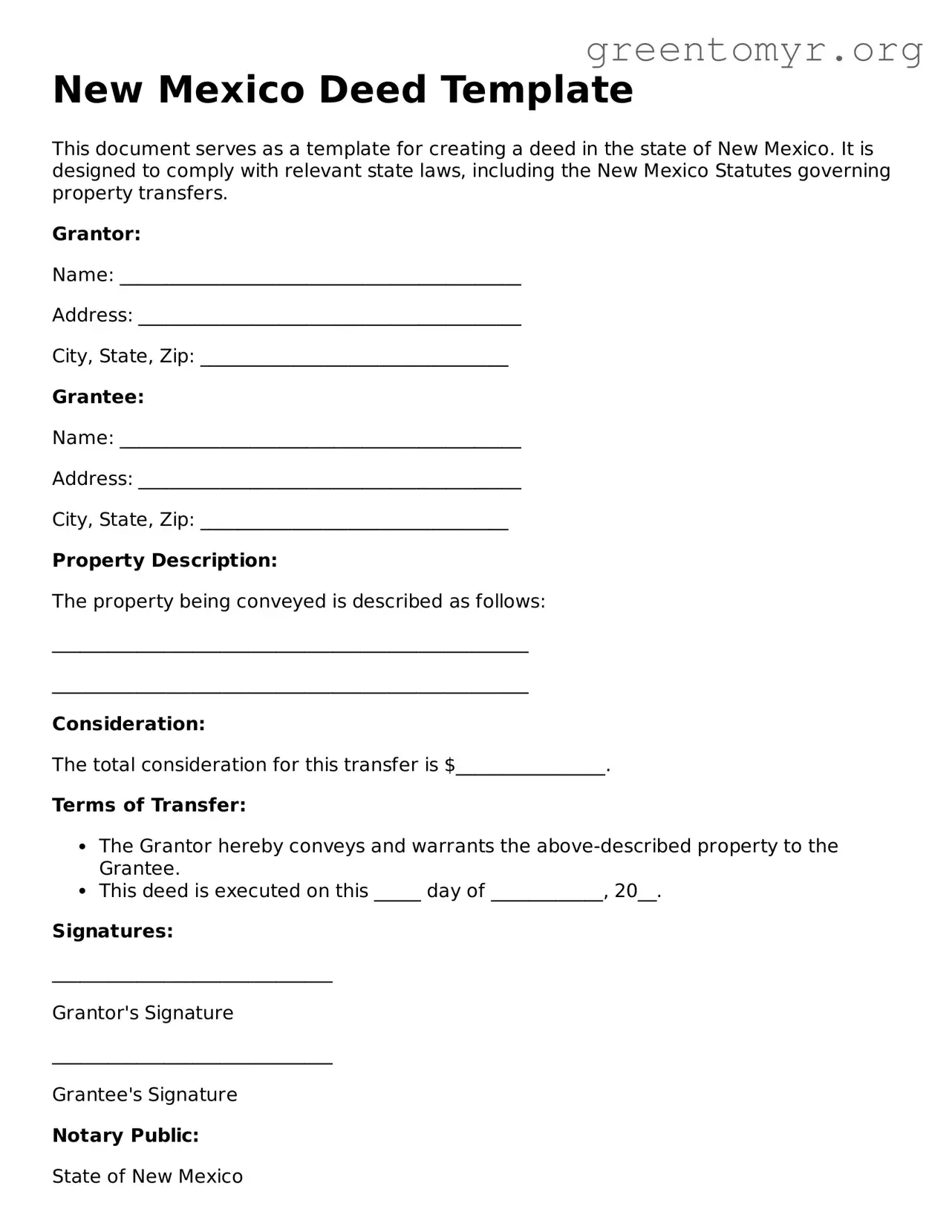
In the realm of real estate transactions, the New Mexico Deed form plays a crucial role in the transfer of property ownership. This legal document serves as a formal declaration of the transfer from the seller, known as the grantor, to the buyer, referred to as the grantee. Essential elements of the deed include the names of the parties involved, a detailed description of the property, and the consideration, or payment, involved in the transaction. Additionally, the form may include warranties or covenants that assure the grantee of the grantor's legal right to sell the property and that the property is free from encumbrances. Understanding the nuances of the New Mexico Deed form is vital for anyone involved in real estate, as it not only facilitates the transfer process but also protects the rights of both parties. By ensuring that all necessary information is accurately recorded, this document helps to prevent future disputes and secures the interests of those involved in the transaction.
New Mexico Deed Template
This document serves as a template for creating a deed in the state of New Mexico. It is designed to comply with relevant state laws, including the New Mexico Statutes governing property transfers.
Grantor:
Name: ___________________________________________
Address: _________________________________________
City, State, Zip: _________________________________
Grantee:
Name: ___________________________________________
Address: _________________________________________
City, State, Zip: _________________________________
Property Description:
The property being conveyed is described as follows:
___________________________________________________
___________________________________________________
Consideration:
The total consideration for this transfer is $________________.
Terms of Transfer:
Signatures:
______________________________
Grantor's Signature
______________________________
Grantee's Signature
Notary Public:
State of New Mexico
County of ______________________
Subscribed and sworn to before me this _____ day of ____________, 20__.
______________________________
Notary Public
My Commission Expires: _______________
| Fact Name | Description |
|---|---|
| Governing Law | The New Mexico Deed form is governed by the New Mexico Statutes, specifically Chapter 47, which addresses real property and conveyances. |
| Types of Deeds | In New Mexico, common types of deeds include Warranty Deeds, Quitclaim Deeds, and Special Warranty Deeds, each serving different purposes in property transfer. |
| Notarization Requirement | All deeds in New Mexico must be notarized to be valid. This ensures that the signatures are verified and the document is legally binding. |
| Recording Process | Once executed, the deed must be recorded with the county clerk’s office where the property is located to provide public notice of the ownership transfer. |
| Consideration | The deed must state the consideration, or the amount paid for the property. This amount can be a monetary value or other forms of compensation. |
| Legal Description | A legal description of the property is required in the deed. This detailed description helps to accurately identify the property being transferred. |
| Grantee Information | The deed must clearly identify the grantee, or the person receiving the property. This includes their full name and any necessary identifying information. |
Once you have the New Mexico Deed form ready, you will need to fill it out carefully. This form is essential for transferring property ownership. Make sure you have all necessary information at hand to complete it accurately.
A New Mexico Deed form is a legal document used to transfer ownership of real estate from one party to another. This form serves as proof of the transaction and includes essential details such as the names of the parties involved, a description of the property, and any conditions or restrictions related to the transfer.
In New Mexico, there are several types of deeds, each serving different purposes:
Filling out a New Mexico Deed form requires careful attention to detail. Here are the steps to follow:
While it is not legally required to have a lawyer create a deed in New Mexico, it is highly advisable. A lawyer can help ensure that the deed is filled out correctly, that all necessary legal language is included, and that your interests are protected throughout the transaction.
Yes, there are fees associated with filing a deed in New Mexico. These fees can vary by county, so it’s important to check with your local county clerk's office for specific amounts. Additionally, if you choose to have a lawyer assist you, there may be legal fees involved as well.
Once the deed is filed with the county clerk's office, it becomes a public record. This means that anyone can access it to verify ownership of the property. The filing also officially transfers ownership from the seller to the buyer, allowing the new owner to take possession of the property.
Yes, it is possible to change a deed after it has been filed, but the process can be complex. You would typically need to create a new deed that reflects the changes and file it with the county clerk's office. Depending on the nature of the change, it may also require the consent of all parties involved. Consulting with a lawyer can help navigate this process effectively.
Filling out a New Mexico Deed form can be straightforward, but many people make common mistakes that can lead to delays or even legal issues. One frequent error is failing to include all required information. Ensure that you provide the full names of all parties involved, including the grantor and grantee. Omitting even one name can render the deed invalid.
Another mistake is not properly identifying the property being transferred. It’s essential to include a clear legal description of the property, which typically involves more than just the address. A vague description can cause confusion and disputes later on. Always check that the description matches what is recorded in public records.
Many people overlook the importance of signatures. Both the grantor and grantee must sign the deed for it to be legally binding. Additionally, if the property is owned by a business entity, ensure that the person signing has the authority to do so. Failing to have the right signatures can invalidate the deed.
Some individuals forget to have the deed notarized. In New Mexico, notarization is often required for the deed to be recorded. Without a notary’s acknowledgment, the deed may not be accepted by the county clerk's office. This step is crucial for ensuring that the deed can be legally recognized.
Another common mistake is not including the correct date of the transaction. The date is important for establishing the timeline of ownership and can affect the rights of the parties involved. Always double-check that the date reflects when the transaction actually took place.
People sometimes fail to pay attention to the recording requirements. After filling out the deed, it must be filed with the appropriate county clerk’s office. Ignoring this step means the deed is not officially recorded, which can lead to complications in proving ownership in the future.
Lastly, many individuals neglect to seek legal advice. Consulting with a legal professional can help avoid mistakes and ensure that the deed complies with all local laws and regulations. Taking this precaution can save time and resources in the long run.
When dealing with property transactions in New Mexico, several forms and documents often accompany the deed form. Each of these documents serves a specific purpose, ensuring that the transfer of property is legally sound and clear. Below is a list of common forms you may encounter.
Understanding these documents can help facilitate a smoother transaction and protect your interests. Each plays a vital role in ensuring that property transfers are conducted legally and transparently, contributing to a successful real estate experience.
The Deed form is an important legal document used to transfer ownership of property. There are several other documents that serve similar purposes in real estate and legal transactions. Below is a list of six documents that share similarities with the Deed form:
When filling out the New Mexico Deed form, it's important to follow certain guidelines to ensure accuracy and compliance. Here are some dos and don'ts to keep in mind:
When it comes to the New Mexico Deed form, several misconceptions can lead to confusion for property owners and buyers alike. Understanding these misconceptions is essential for anyone involved in real estate transactions in the state. Here are nine common myths explained:
All deeds are the same. Many people believe that all deed forms are interchangeable. In reality, different types of deeds serve specific purposes, such as warranty deeds, quitclaim deeds, and special warranty deeds. Each has unique implications for ownership rights and liabilities.
A deed must be notarized to be valid. While notarization is highly recommended for a deed to be enforceable, it is not always a strict requirement in New Mexico. However, without notarization, proving the authenticity of the document may become more challenging.
Deeds do not need to be recorded. Some people think that recording a deed is optional. In New Mexico, recording is crucial as it provides public notice of ownership and protects the buyer's interests against future claims.
Only lawyers can prepare a deed. While legal professionals can certainly assist in preparing deeds, it is not a legal requirement. Many individuals choose to prepare their own deeds, provided they understand the necessary elements and requirements.
Once a deed is signed, it cannot be changed. This is not entirely true. While a deed is a legal document, it can be amended or corrected under certain circumstances. Understanding the process for making changes is important for property owners.
All property transfers require a new deed. Some individuals believe that every transfer of property necessitates a new deed. However, in certain situations, such as transfers between family members, a simple affidavit may suffice.
Deeds only transfer ownership. Many think that deeds only convey ownership rights. However, they can also include specific conditions, such as life estates or easements, which can affect how the property is used and transferred in the future.
Once recorded, a deed cannot be contested. This misconception suggests that a recorded deed is immune to disputes. In fact, recorded deeds can still be challenged in court, especially if there are issues like fraud or lack of capacity.
All deeds are permanent. While deeds typically convey ownership rights, it is possible for them to be revoked or modified under certain conditions. Understanding these nuances can help property owners navigate their rights effectively.
By addressing these misconceptions, individuals can make more informed decisions regarding property transactions in New Mexico. Always consider consulting with a knowledgeable professional if you have questions or need assistance with deed-related matters.
When filling out and using the New Mexico Deed form, it is essential to understand several key aspects to ensure the document is completed accurately and serves its intended purpose. Below are important takeaways to consider:
By following these guidelines, individuals can navigate the process of filling out and using the New Mexico Deed form more effectively.