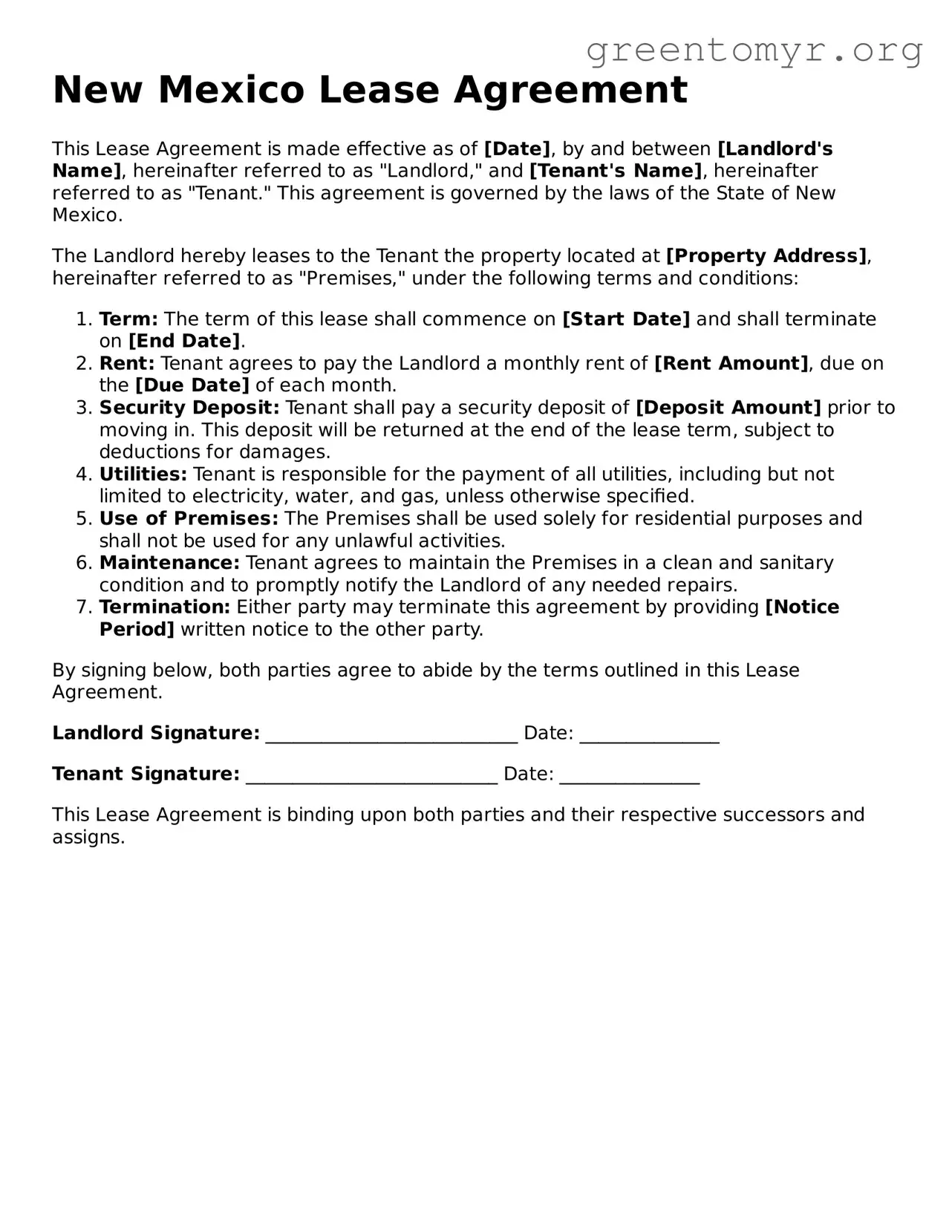
In New Mexico, the Lease Agreement form serves as a crucial document that outlines the terms and conditions between landlords and tenants. This legally binding contract establishes the rights and responsibilities of both parties, ensuring a clear understanding of expectations. Key components of the form include the identification of the property, the duration of the lease, and the rental amount, which must be agreed upon before occupancy begins. Additionally, it addresses security deposits, maintenance responsibilities, and procedures for terminating the lease. By detailing these aspects, the Lease Agreement not only protects the interests of the landlord but also provides tenants with essential information regarding their living arrangements. Properly completing this form can prevent misunderstandings and disputes, fostering a more harmonious rental experience for all involved.
New Mexico Lease Agreement
This Lease Agreement is made effective as of [Date], by and between [Landlord's Name], hereinafter referred to as "Landlord," and [Tenant's Name], hereinafter referred to as "Tenant." This agreement is governed by the laws of the State of New Mexico.
The Landlord hereby leases to the Tenant the property located at [Property Address], hereinafter referred to as "Premises," under the following terms and conditions:
By signing below, both parties agree to abide by the terms outlined in this Lease Agreement.
Landlord Signature: ___________________________ Date: _______________
Tenant Signature: ___________________________ Date: _______________
This Lease Agreement is binding upon both parties and their respective successors and assigns.
| Fact Name | Description |
|---|---|
| Purpose | The New Mexico Lease Agreement form is used to outline the terms and conditions under which a property is rented, including rent amount, duration, and responsibilities of both landlord and tenant. |
| Governing Law | This lease agreement is governed by the New Mexico Uniform Owner-Resident Relations Act, which provides guidelines for residential leases in the state. |
| Required Information | The form requires essential details such as the names of the parties involved, property address, lease term, and payment terms to ensure clarity and legal compliance. |
| Signatures | Both the landlord and tenant must sign the lease agreement for it to be legally binding, indicating their acceptance of the terms outlined in the document. |
When preparing to fill out the New Mexico Lease Agreement form, it's important to gather all necessary information about the property, the landlord, and the tenant. This will help ensure that the form is completed accurately and efficiently. Below are the steps to guide you through the process.
Once the form is completed, both parties should keep a copy for their records. This ensures that everyone has access to the agreed-upon terms throughout the lease period.
The New Mexico Lease Agreement form is a legal document that outlines the terms and conditions under which a landlord rents property to a tenant. It serves to protect the rights of both parties and includes essential details such as rental amount, duration of the lease, and responsibilities for maintenance and repairs.
A typical New Mexico Lease Agreement includes several important components:
While a verbal agreement can be legally binding, a written lease agreement is highly recommended in New Mexico. A written document provides clarity and serves as evidence in case of disputes. It is especially important for leases longer than one year, as they must be in writing to be enforceable under state law.
In New Mexico, landlords may collect a security deposit, typically not exceeding one month's rent for unfurnished properties and up to one and a half month's rent for furnished ones. The law requires landlords to return the deposit within 30 days after the lease ends, minus any deductions for damages beyond normal wear and tear. A written itemized list of any deductions must be provided to the tenant.
In New Mexico, landlords must provide reasonable notice before entering a tenant's rental unit. Generally, 24 hours' notice is considered reasonable unless there is an emergency situation. The lease agreement may specify additional terms regarding entry, but it cannot allow landlords to enter at any time without notice.
If a tenant wishes to terminate the lease early, they must review the lease agreement for specific terms regarding early termination. Many leases include a clause that outlines penalties or fees for breaking the lease early. In some cases, tenants may negotiate with the landlord to find a mutually agreeable solution, such as subletting the property or finding a replacement tenant.
Yes, lease agreements in New Mexico are governed by the New Mexico Uniform Owner-Resident Relations Act. This legislation outlines the rights and responsibilities of both landlords and tenants, covering various aspects such as security deposits, lease termination, and eviction procedures. Familiarity with these laws can help both parties ensure compliance and protect their rights.
When filling out the New Mexico Lease Agreement form, people often make several common mistakes that can lead to confusion or legal issues down the line. One frequent error is not providing complete information. For instance, failing to include the full names of all tenants or landlords can create complications in the future. Each party involved should be clearly identified to avoid misunderstandings.
Another mistake is neglecting to specify the rental property address accurately. This may seem minor, but an incorrect address can lead to disputes over which property is being rented. Always double-check the details to ensure that the address matches the property in question.
Some individuals forget to outline the terms of the lease, including the duration of the rental period. Whether it’s a month-to-month agreement or a year-long lease, clarity is essential. Without clear terms, both landlords and tenants may have differing expectations, which can result in conflicts.
Additionally, people often overlook the importance of including the rent amount and due date. If these details are vague or missing, it can lead to confusion about payment obligations. Clearly stating how much rent is due and when it should be paid helps to avoid disputes later.
Many also fail to address the security deposit. It’s crucial to specify the amount required and the conditions under which it may be withheld. Not addressing this can lead to misunderstandings about the return of the deposit at the end of the lease.
Lastly, some individuals skip the section on maintenance responsibilities. Clearly outlining who is responsible for repairs and upkeep can prevent disagreements. Both landlords and tenants should understand their obligations to maintain the property. This clarity helps to foster a good relationship throughout the lease term.
When entering into a lease agreement in New Mexico, several additional forms and documents may be necessary to ensure clarity and protection for both landlords and tenants. These documents help outline responsibilities, rights, and specific arrangements related to the rental property.
Incorporating these forms and documents alongside the New Mexico Lease Agreement can enhance the rental experience for both landlords and tenants. They provide a structured approach to managing the rental relationship, ensuring that all parties are aware of their rights and obligations.
When filling out the New Mexico Lease Agreement form, it's important to be thorough and accurate. Here are some dos and don'ts to keep in mind:
Understanding the New Mexico Lease Agreement form is crucial for both landlords and tenants. However, several misconceptions can lead to confusion. Here are ten common misconceptions, along with clarifications:
While it is highly recommended to have a written lease for clarity, oral agreements can also be legally binding in New Mexico, provided they meet certain conditions.
Tenants can also propose terms and conditions. A lease is a mutual agreement, and both parties can negotiate its terms.
There is no one-size-fits-all lease agreement. Each lease should be tailored to the specific needs of the parties involved.
While many landlords charge a security deposit equal to one month's rent, New Mexico law does not set a specific limit. The amount can vary based on the agreement.
Renewal terms depend on what is specified in the lease. If no renewal clause exists, the lease will not automatically renew.
New Mexico law requires landlords to provide reasonable notice before entering a tenant's property, typically 24 hours, except in emergencies.
Notarization is not a requirement for lease agreements in New Mexico. A lease can be legally binding without a notary's signature.
Both landlords and tenants have rights and obligations under the lease. Breaking a lease can have consequences, but tenants may have legal defenses available.
While it's common to include terms regarding eviction, it is not legally required. The parties can choose to omit this clause if they agree.
Commercial leases are also subject to New Mexico laws. Different rules may apply, but legal protections exist for both residential and commercial agreements.
Clarifying these misconceptions can help both landlords and tenants navigate their agreements more effectively, ensuring a smoother rental experience.
When filling out and using the New Mexico Lease Agreement form, it's essential to understand the key components to ensure a smooth rental experience. Here are some important takeaways:
Understanding these key elements can help both landlords and tenants navigate their responsibilities and rights effectively.