In the realm of healthcare planning, the New Mexico Living Will form serves as a vital tool for individuals seeking to express their wishes regarding medical treatment in the event they become unable to communicate those desires. This document empowers individuals to articulate their preferences concerning life-sustaining measures, ensuring that their values and beliefs guide medical decisions at critical moments. It typically addresses scenarios such as terminal illness or irreversible conditions, allowing individuals to specify whether they wish to receive or forgo specific medical interventions. By completing a Living Will, individuals not only provide clarity for their loved ones but also alleviate the emotional burden that often accompanies difficult healthcare choices. Furthermore, the form can be complemented by other advance directives, such as a durable power of attorney for healthcare, thereby creating a comprehensive approach to end-of-life care. Ultimately, the New Mexico Living Will form stands as an essential component of personal autonomy, offering a pathway for individuals to maintain control over their medical treatment in accordance with their personal beliefs.
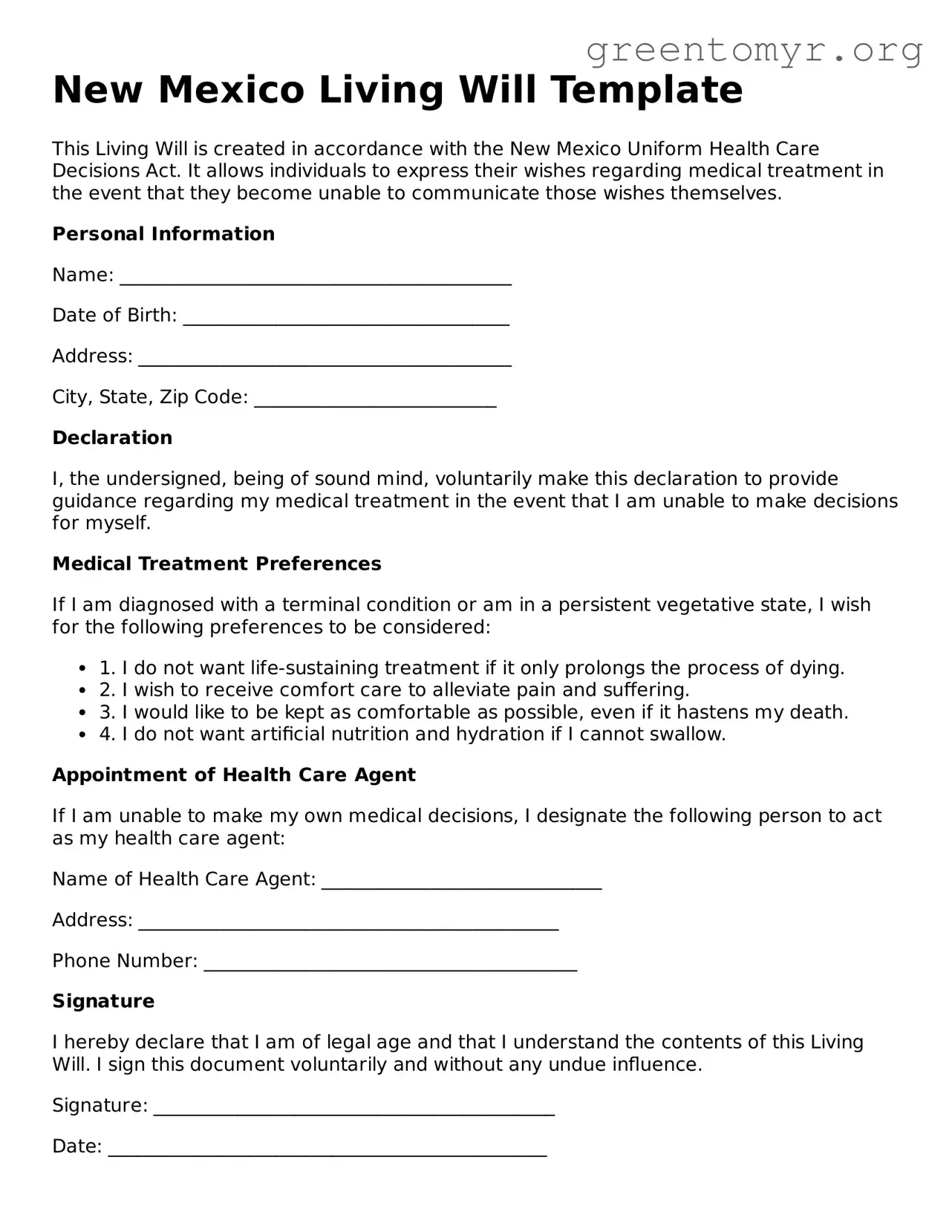
New Mexico Living Will Template
This Living Will is created in accordance with the New Mexico Uniform Health Care Decisions Act. It allows individuals to express their wishes regarding medical treatment in the event that they become unable to communicate those wishes themselves.
Personal Information
Name: __________________________________________
Date of Birth: ___________________________________
Address: ________________________________________
City, State, Zip Code: __________________________
Declaration
I, the undersigned, being of sound mind, voluntarily make this declaration to provide guidance regarding my medical treatment in the event that I am unable to make decisions for myself.
Medical Treatment Preferences
If I am diagnosed with a terminal condition or am in a persistent vegetative state, I wish for the following preferences to be considered:
Appointment of Health Care Agent
If I am unable to make my own medical decisions, I designate the following person to act as my health care agent:
Name of Health Care Agent: ______________________________
Address: _____________________________________________
Phone Number: ________________________________________
Signature
I hereby declare that I am of legal age and that I understand the contents of this Living Will. I sign this document voluntarily and without any undue influence.
Signature: ___________________________________________
Date: _______________________________________________
Witnesses
This Living Will must be signed in the presence of two witnesses who are not related to me and who are not entitled to any portion of my estate.
Witness 1 Name: _____________________________________
Witness 1 Signature: _________________________________
Date: _______________________________________________
Witness 2 Name: _____________________________________
Witness 2 Signature: _________________________________
Date: _______________________________________________
Notarization (optional)
This document may also be notarized for additional validity.
State of New Mexico
County of ___________________________________________
Subscribed and sworn to before me this _____ day of __________, 20__.
Notary Public: ______________________________________
My Commission Expires: _____________________________
| Fact Name | Description |
|---|---|
| Governing Law | The New Mexico Living Will is governed by the New Mexico Statutes, specifically Section 24-7-1 to 24-7-12. |
| Purpose | A Living Will allows individuals to express their wishes regarding medical treatment in case they become unable to communicate. |
| Eligibility | Any adult who is at least 18 years old can create a Living Will in New Mexico. |
| Witness Requirements | The document must be signed in the presence of two witnesses who are not related to the individual or entitled to any part of their estate. |
| Revocation | A Living Will can be revoked at any time by the individual, either verbally or in writing. |
| Durability | The Living Will remains effective until it is revoked or the individual passes away. |
| Storage Recommendations | It is advisable to keep the Living Will in a safe place and provide copies to family members and healthcare providers. |
Filling out the New Mexico Living Will form is an important step in ensuring your healthcare wishes are known and respected. Once you have completed the form, you can share it with your healthcare provider and loved ones to make sure everyone is on the same page.
A Living Will is a legal document that allows individuals to express their wishes regarding medical treatment in the event they become unable to communicate their preferences due to illness or incapacitation. In New Mexico, this document specifically addresses end-of-life care decisions, ensuring that a person’s healthcare preferences are honored even when they cannot speak for themselves.
Anyone over the age of 18 should consider creating a Living Will. It is especially important for individuals with chronic illnesses, those undergoing major medical procedures, or anyone who wants to ensure their healthcare wishes are known. Having a Living Will can provide peace of mind for both the individual and their loved ones.
A New Mexico Living Will typically includes:
To create a Living Will in New Mexico, follow these steps:
Yes, you can change or revoke your Living Will at any time as long as you are mentally competent. To make changes, simply create a new Living Will that reflects your updated wishes. Be sure to notify your healthcare provider and any family members about the changes. To revoke a Living Will, you can destroy the document or provide a written statement indicating your intent to revoke.
No, a Living Will and a Durable Power of Attorney for Healthcare are distinct documents. A Living Will focuses on your specific medical treatment preferences, while a Durable Power of Attorney for Healthcare designates someone to make healthcare decisions on your behalf if you are unable to do so. It is often advisable to have both documents in place to ensure comprehensive healthcare planning.
Store your Living Will in a safe but accessible location. It is important to inform your family members, healthcare provider, and any designated healthcare agents about where the document is kept. You may also consider carrying a card in your wallet that indicates you have a Living Will and provides instructions on how to access it.
Filling out a New Mexico Living Will form is an important step in ensuring that your healthcare preferences are respected. However, many individuals make common mistakes that can lead to confusion or disputes later on. Understanding these pitfalls can help ensure that your wishes are clearly communicated.
One frequent mistake is not being specific enough about medical treatments. When individuals simply state that they do not want life-sustaining treatment without clarifying what that entails, it can lead to misunderstandings. For instance, some may wish to refuse only certain treatments, such as resuscitation, while still wanting others, like pain management.
Another error is failing to date the document. A Living Will should always include the date it was signed. Without a date, there may be questions about its validity or whether it reflects your most current wishes.
Many people neglect to review their Living Will periodically. As life circumstances change, so too might your preferences regarding medical treatment. Regular reviews ensure that the document remains aligned with your current values and desires.
Additionally, some individuals do not discuss their wishes with family members. It is crucial to communicate your preferences to loved ones to avoid confusion or conflict at critical moments. A Living Will is only effective if those involved in your care understand its contents.
Another common mistake is not designating a healthcare proxy. While a Living Will outlines your wishes, appointing someone to make decisions on your behalf can provide clarity and ensure that your preferences are honored if you are unable to communicate them yourself.
Some individuals may fill out the form without consulting legal or medical professionals. Seeking guidance can help clarify any uncertainties and ensure that the document complies with New Mexico laws.
Another oversight is using outdated forms. Laws and regulations can change, so it is essential to use the most current version of the Living Will form to ensure its validity and effectiveness.
People often forget to sign the document in front of witnesses. New Mexico law requires that the Living Will be signed in the presence of at least two witnesses or a notary. Failure to do so can render the document invalid.
Some individuals may also overlook the importance of keeping copies of the Living Will. It is advisable to provide copies to your healthcare proxy, family members, and your medical providers. This ensures that your wishes are readily available when needed.
Lastly, many people make the mistake of not considering future scenarios. It is vital to think about various medical situations and how you would want to be treated in each case. This foresight can help create a more comprehensive and effective Living Will.
In New Mexico, a Living Will is an important document that outlines an individual's wishes regarding medical treatment in the event they become unable to communicate their preferences. However, it is often used in conjunction with several other legal forms and documents that can help ensure a person's healthcare and financial decisions are honored. Below is a list of commonly associated documents.
These documents work together to create a comprehensive plan for an individual's healthcare and financial decisions. By preparing these forms, individuals can ensure their wishes are respected and their loved ones are equipped to make informed choices on their behalf.
The Living Will form is an important document for expressing your healthcare preferences. It shares similarities with several other legal documents. Here are five documents that are comparable to a Living Will:
When filling out the New Mexico Living Will form, it's important to approach the process thoughtfully. Here are seven things to keep in mind:
When it comes to the New Mexico Living Will form, many people have misunderstandings that can lead to confusion and hesitation. Here’s a list of ten common misconceptions, along with clarifications to help you navigate this important document.
Understanding these misconceptions can empower individuals to make informed decisions about their healthcare preferences. A Living Will is a valuable tool that ensures your wishes are honored, no matter what the future holds.
When considering a New Mexico Living Will, it is essential to understand its purpose and how to properly fill it out. Here are five key takeaways to keep in mind: