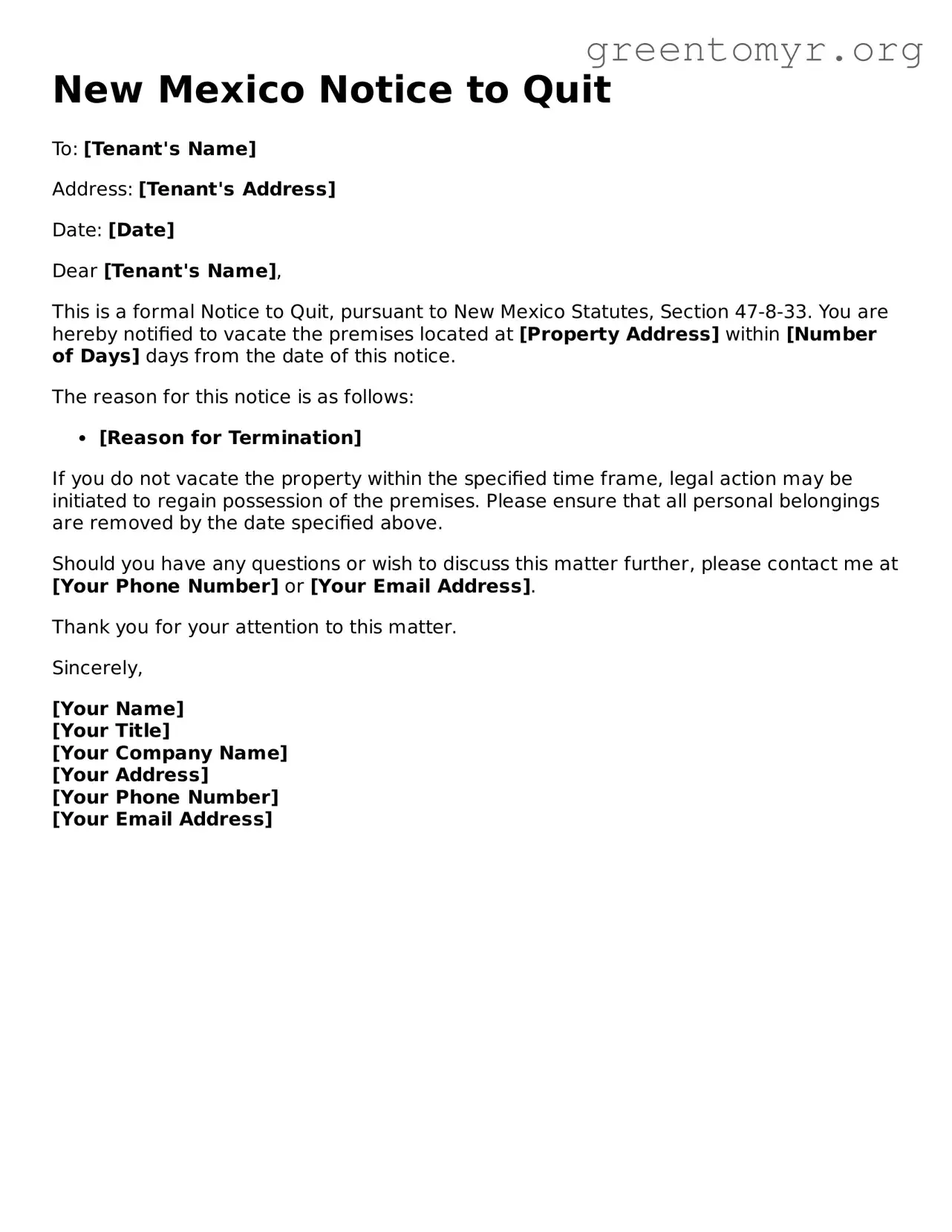
The New Mexico Notice to Quit form serves as a crucial document in the landlord-tenant relationship, particularly when a landlord seeks to terminate a lease agreement. This form is typically used when a tenant has violated the terms of their lease or has failed to pay rent. It provides a formal way for landlords to communicate their intent to evict a tenant, ensuring that the process adheres to state laws. The form outlines essential details, such as the reason for termination, the date by which the tenant must vacate the premises, and any specific actions the tenant can take to remedy the situation. It is important for both landlords and tenants to understand the implications of this notice, as it can significantly impact their rights and responsibilities. Proper completion and delivery of the Notice to Quit are vital to avoid potential legal disputes and to ensure a smooth transition for all parties involved.
New Mexico Notice to Quit
To: [Tenant's Name]
Address: [Tenant's Address]
Date: [Date]
Dear [Tenant's Name],
This is a formal Notice to Quit, pursuant to New Mexico Statutes, Section 47-8-33. You are hereby notified to vacate the premises located at [Property Address] within [Number of Days] days from the date of this notice.
The reason for this notice is as follows:
If you do not vacate the property within the specified time frame, legal action may be initiated to regain possession of the premises. Please ensure that all personal belongings are removed by the date specified above.
Should you have any questions or wish to discuss this matter further, please contact me at [Your Phone Number] or [Your Email Address].
Thank you for your attention to this matter.
Sincerely,
[Your Name]
[Your Title]
[Your Company Name]
[Your Address]
[Your Phone Number]
[Your Email Address]
| Fact Name | Description |
|---|---|
| Purpose | The New Mexico Notice to Quit form is used by landlords to notify tenants of their intent to terminate a rental agreement. |
| Governing Law | This form is governed by the New Mexico Uniform Owner-Resident Relations Act. |
| Notice Period | Typically, landlords must provide a 30-day notice for month-to-month leases. |
| Delivery Methods | The notice can be delivered in person, via certified mail, or posted on the property. |
| Tenant Rights | Tenants have the right to contest the notice in court if they believe it is unjustified. |
| Form Requirements | The form must include the landlord's name, tenant's name, property address, and the reason for termination. |
| Filing for Eviction | If the tenant does not vacate, the landlord can file for eviction after the notice period expires. |
| Legal Assistance | Both landlords and tenants may benefit from seeking legal advice when dealing with eviction notices. |
| Variations | Different rules may apply for different types of rental agreements, such as fixed-term leases. |
Once you have the New Mexico Notice to Quit form ready, it’s important to fill it out accurately. This form is a crucial step in the process of terminating a lease or rental agreement. After completing the form, you will need to deliver it to the tenant in accordance with state guidelines.
After filling out the form, ensure it is delivered to the tenant properly, either in person or by mail, to comply with legal requirements.
A Notice to Quit is a legal document used by landlords in New Mexico to inform tenants that they must vacate the rental property. This notice is typically issued when a tenant has violated the terms of their lease or rental agreement, or if the landlord wishes to terminate a month-to-month tenancy.
A landlord should use a Notice to Quit when:
It is crucial to follow the legal requirements and timelines for issuing this notice based on the specific situation.
The response time depends on the reason for the Notice to Quit. Generally, tenants have:
Tenants should read the notice carefully to understand their obligations and timelines.
A Notice to Quit should include:
Providing clear and accurate information helps ensure the notice is legally valid.
Yes, tenants can contest a Notice to Quit. If they believe the notice is unjust, they may respond in writing or seek legal advice. It’s important to act quickly, as failing to respond may result in eviction proceedings.
If a tenant does not comply with the Notice to Quit by the specified deadline, the landlord may proceed with eviction proceedings. This typically involves filing an unlawful detainer action in court.
No, a Notice to Quit is not the same as an eviction notice. The Notice to Quit is the first step in the process, notifying the tenant to vacate. An eviction notice is issued after the tenant fails to comply with the Notice to Quit and legal proceedings are initiated.
A New Mexico Notice to Quit form can often be found online through legal aid websites, local court websites, or by consulting with a local attorney. Ensure that the form is up-to-date and complies with New Mexico laws.
Filling out the New Mexico Notice to Quit form can be a straightforward process, but many individuals make mistakes that can complicate matters. One common error is failing to provide accurate information about the tenant. It is crucial to include the full name of the tenant as it appears on the lease. Omitting or misspelling a name can lead to delays or even dismissal of the notice.
Another frequent mistake involves not specifying the reason for the eviction. The form requires a clear statement of why the tenant is being asked to leave. Whether it’s for non-payment of rent or a violation of lease terms, clarity is essential. If the reason is vague or not properly documented, it can weaken the case.
Many people overlook the importance of including the correct date on the notice. The Notice to Quit must indicate when the tenant is expected to vacate the premises. If the date is missing or incorrect, it may render the notice ineffective. This can create unnecessary complications and prolong the eviction process.
Finally, some individuals fail to sign and date the form. A signature is a vital part of the document, as it indicates that the landlord has officially issued the notice. Without a signature, the form may not be considered valid, leading to further legal issues. Taking the time to review the form for these common mistakes can help ensure a smoother process.
When dealing with rental agreements and tenant issues in New Mexico, the Notice to Quit form is just one of several important documents that may be needed. Each of these forms serves a specific purpose in the process of managing rental properties and ensuring compliance with state laws. Below is a list of other commonly used forms that may accompany the Notice to Quit.
Understanding these documents can help both landlords and tenants navigate their rights and responsibilities more effectively. Being informed about the necessary paperwork can streamline communication and reduce potential conflicts during a tenancy.
The Notice to Quit form is an important document in the context of rental agreements. It serves as a formal notification to a tenant to vacate the premises. Several other documents share similarities with the Notice to Quit form in terms of purpose and function. Here are four such documents:
When filling out the New Mexico Notice to Quit form, it's important to follow specific guidelines to ensure the process goes smoothly. Here are six things you should and shouldn't do:
When it comes to the New Mexico Notice to Quit form, there are several misconceptions that can lead to confusion for both landlords and tenants. Understanding these can help clarify the process and ensure everyone is on the same page.
This is not accurate. A Notice to Quit is a preliminary step that informs a tenant they must vacate the property. It does not mean that an eviction has already taken place.
Ignoring the Notice to Quit can lead to further legal action. It is essential for tenants to respond appropriately, whether that means vacating the premises or addressing the issues outlined in the notice.
Landlords can only issue a Notice to Quit for specific reasons, such as non-payment of rent or violation of lease terms. It is important to understand the grounds for issuing this notice.
While personal delivery is one option, landlords can also send the notice via certified mail or other acceptable methods. The key is to ensure the tenant receives it.
This is misleading. The Notice to Quit is just the beginning. If the tenant does not comply, the landlord must still go through the formal eviction process in court.
In New Mexico, there are guidelines that outline what should be included in the Notice to Quit. Following these guidelines helps ensure that the notice is valid and enforceable.
When dealing with the New Mexico Notice to Quit form, understanding its purpose and proper usage is essential for both landlords and tenants. Here are some key takeaways to consider: