Content Navigation

The New Mexico Real Estate Purchase Agreement form serves as a crucial document in the process of buying and selling real estate within the state. This agreement outlines the terms and conditions agreed upon by both the buyer and seller, ensuring that each party understands their rights and obligations. Key aspects of the form include the purchase price, property description, and financing details. Additionally, it addresses contingencies, such as inspections and appraisals, which can impact the transaction. The agreement also specifies the closing date, the responsibilities of each party, and any potential penalties for breach of contract. Understanding these elements is essential for anyone involved in a real estate transaction in New Mexico, as they help facilitate a smooth transfer of ownership and protect the interests of both parties.

New Mexico Real Estate Purchase Agreement Example

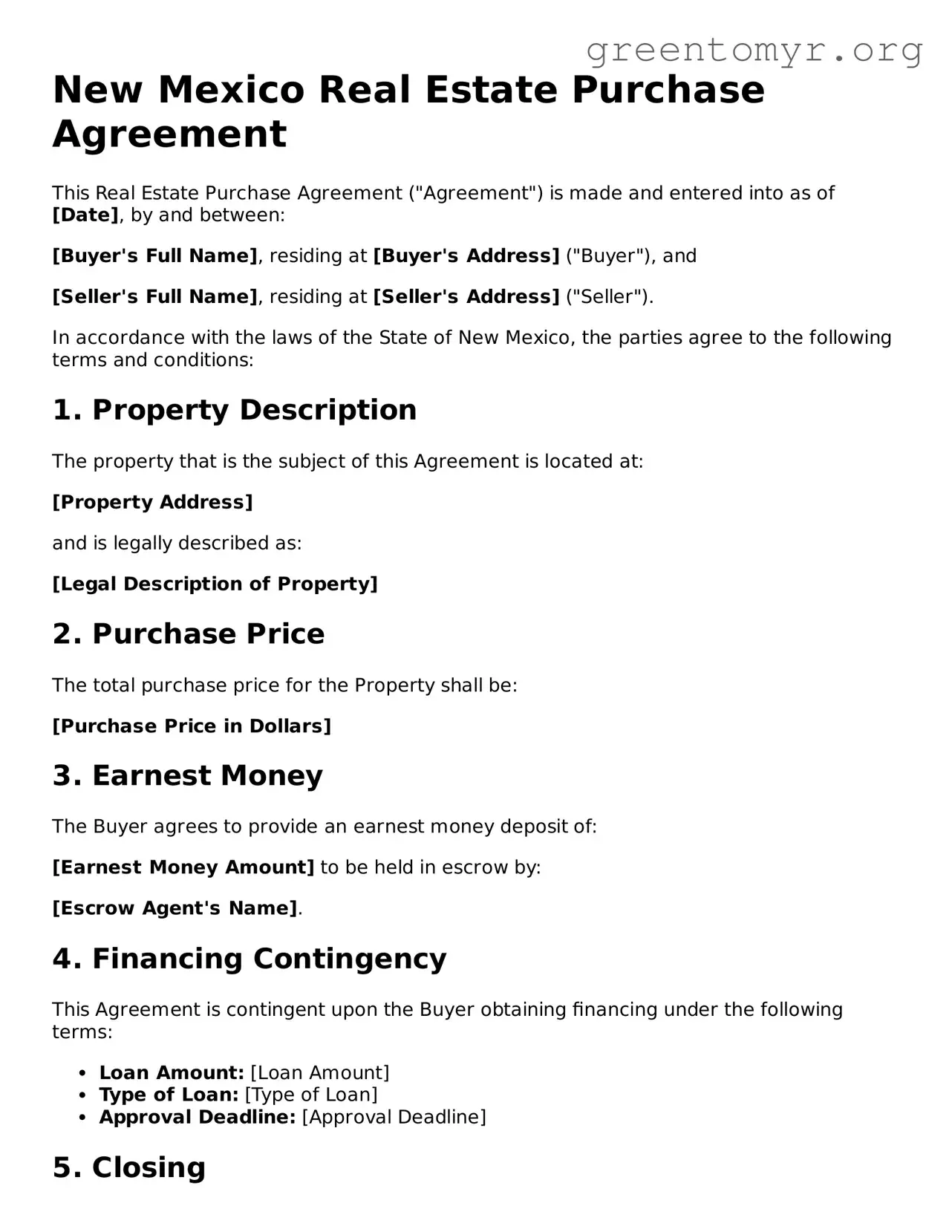
New Mexico Real Estate Purchase Agreement

This Real Estate Purchase Agreement ("Agreement") is made and entered into as of [Date], by and between:

[Buyer's Full Name], residing at [Buyer's Address] ("Buyer"), and

[Seller's Full Name], residing at [Seller's Address] ("Seller").

In accordance with the laws of the State of New Mexico, the parties agree to the following terms and conditions:

1. Property Description

The property that is the subject of this Agreement is located at:

[Property Address]

and is legally described as:

[Legal Description of Property]

2. Purchase Price

The total purchase price for the Property shall be:

[Purchase Price in Dollars]

3. Earnest Money

The Buyer agrees to provide an earnest money deposit of:

[Earnest Money Amount] to be held in escrow by:

[Escrow Agent's Name].

4. Financing Contingency

This Agreement is contingent upon the Buyer obtaining financing under the following terms:

  • Loan Amount: [Loan Amount]
  • Type of Loan: [Type of Loan]
  • Approval Deadline: [Approval Deadline]

5. Closing

The closing of the sale shall occur on or before:

[Closing Date].

6. Additional Terms

The following additional terms shall apply:

  • [Additional Term 1]
  • [Additional Term 2]
  • [Additional Term 3]

7. Governing Law

This Agreement shall be governed by and construed in accordance with the laws of the State of New Mexico.

8. Signatures

IN WITNESS WHEREOF, the parties hereto have executed this Agreement as of the date first above written.

__________________________

Buyer’s Signature

[Buyer's Printed Name]

__________________________

Seller’s Signature

[Seller's Printed Name]

PDF Form Features

Fact Name Description
Purpose The New Mexico Real Estate Purchase Agreement is used to outline the terms of a property sale between a buyer and a seller.
Governing Law This agreement is governed by the laws of the State of New Mexico, ensuring that all transactions comply with local regulations.
Essential Components Key elements include purchase price, property description, and contingencies that protect both parties during the transaction.
Signature Requirements Both the buyer and seller must sign the agreement for it to be legally binding, indicating their acceptance of the terms.

Guide to Using New Mexico Real Estate Purchase Agreement

Filling out the New Mexico Real Estate Purchase Agreement form is a straightforward process that requires attention to detail. This form is crucial for formalizing the agreement between a buyer and a seller regarding the purchase of real estate. Once completed, it will facilitate the next steps in the transaction, including negotiations and closing.

  1. Begin by entering the date at the top of the form. This establishes when the agreement is made.
  2. Fill in the names of the buyer(s) and seller(s). Ensure that all parties involved are accurately listed.
  3. Provide the property address. This includes the street address, city, state, and zip code.
  4. Specify the purchase price. Clearly state the amount the buyer is willing to pay for the property.
  5. Indicate the earnest money deposit. This is a good faith payment made by the buyer to show commitment.
  6. Complete the financing terms. Describe how the buyer plans to finance the purchase, whether through a mortgage or other means.
  7. Detail any contingencies. This may include inspections, appraisals, or financing conditions that must be met.
  8. Fill in the closing date. This is the anticipated date when the transaction will be finalized.
  9. Sign and date the agreement. Both buyer and seller must provide their signatures to validate the document.

With the form filled out, the next step involves reviewing the agreement with all parties involved to ensure clarity and understanding before proceeding with the transaction.

Get Answers on New Mexico Real Estate Purchase Agreement

What is the New Mexico Real Estate Purchase Agreement form?

The New Mexico Real Estate Purchase Agreement form is a legal document used when a buyer intends to purchase real estate in New Mexico. This form outlines the terms and conditions of the sale, including the purchase price, property details, and any contingencies that must be met before the sale can be finalized. It serves as a binding contract between the buyer and the seller.

Who needs to use this form?

Both buyers and sellers involved in a real estate transaction in New Mexico should use the Real Estate Purchase Agreement form. It is essential for anyone looking to purchase property, whether residential or commercial, to ensure that their interests are protected and that all parties are clear on the terms of the agreement.

What key elements are included in the agreement?

The agreement typically includes several important elements, such as:

  1. Purchase Price: The total amount the buyer agrees to pay for the property.
  2. Property Description: Detailed information about the property being sold, including its address and legal description.
  3. Contingencies: Conditions that must be met for the sale to proceed, such as financing approval or home inspections.
  4. Closing Date: The date on which the transaction will be finalized and ownership transferred.
  5. Earnest Money: A deposit made by the buyer to demonstrate their commitment to the purchase.

Is the Real Estate Purchase Agreement legally binding?

Yes, once both parties sign the New Mexico Real Estate Purchase Agreement, it becomes a legally binding contract. This means that both the buyer and seller are obligated to follow the terms outlined in the agreement. If either party fails to meet their obligations, the other party may have legal recourse to enforce the agreement.

Can the agreement be modified after it is signed?

Yes, the agreement can be modified after it is signed, but both parties must agree to any changes. Modifications should be documented in writing and signed by both the buyer and the seller to ensure that they are enforceable. Verbal agreements are not typically considered legally binding in real estate transactions.

What happens if the buyer or seller backs out of the agreement?

If either the buyer or seller decides to back out of the agreement without a valid reason, they may face consequences. This could include the loss of the earnest money deposit or potential legal action for breach of contract. However, if the buyer backs out due to unmet contingencies, such as failing to secure financing, they may be able to withdraw without penalty.

Are there any disclosures required in the agreement?

Yes, New Mexico law requires sellers to provide certain disclosures to buyers. This may include information about the condition of the property, any known defects, and other relevant details that could affect the buyer’s decision. These disclosures help ensure transparency and protect both parties in the transaction.

Where can I obtain a New Mexico Real Estate Purchase Agreement form?

The New Mexico Real Estate Purchase Agreement form can be obtained from various sources, including real estate agents, attorneys, or online legal document providers. It is advisable to use a form that is current and complies with New Mexico laws to ensure its validity and effectiveness in your transaction.

Common mistakes

Filling out the New Mexico Real Estate Purchase Agreement can be a daunting task, and many individuals make common mistakes that can lead to complications down the road. One frequent error is the omission of essential details. Buyers and sellers may overlook critical information such as the legal description of the property or the purchase price. Without these details, the agreement may be deemed incomplete, causing delays in the transaction process.

Another mistake often encountered is the failure to specify contingencies. Buyers should include contingencies that protect their interests, such as financing or inspection contingencies. Neglecting to outline these terms can lead to misunderstandings or disputes later on, leaving one party vulnerable.

Inaccurate dates can also create significant issues. When individuals fill in the agreement, they might mistakenly enter the wrong closing date or fail to include important timelines for inspections and financing. These errors can disrupt the entire transaction, leading to frustration for both parties involved.

Additionally, many people do not seek legal advice when completing the form. While it may seem straightforward, the nuances of real estate agreements can be complex. Consulting with a legal professional can provide clarity and ensure that all terms are understood and appropriately addressed.

Finally, neglecting to review the agreement thoroughly before signing is a common pitfall. It is crucial to read through the entire document to ensure that all information is accurate and that there are no misunderstandings. Taking this extra step can prevent potential disputes and promote a smoother transaction process.

Documents used along the form

When engaging in a real estate transaction in New Mexico, several key documents accompany the Real Estate Purchase Agreement. These documents help clarify terms, protect the interests of both parties, and ensure a smooth process. Here’s a brief overview of some important forms you might encounter.

  • Property Disclosure Statement: This document provides buyers with information about the property's condition. Sellers are required to disclose known issues, such as past flooding or structural problems, ensuring transparency in the transaction.
  • Lead-Based Paint Disclosure: For homes built before 1978, this form informs buyers about potential lead-based paint hazards. It’s crucial for protecting health and safety, particularly for families with young children.
  • Title Commitment: This document outlines the terms under which the title company will insure the title to the property. It confirms ownership and identifies any liens or encumbrances that may affect the property.
  • Closing Statement: Also known as the HUD-1 Settlement Statement, this document summarizes all costs associated with the transaction. It details the financial breakdown, including fees, commissions, and any adjustments.
  • Earnest Money Agreement: This agreement outlines the deposit made by the buyer to demonstrate their commitment to purchasing the property. It specifies the amount and conditions under which the deposit may be forfeited or returned.
  • Home Warranty Agreement: This optional document provides coverage for certain repairs and replacements of home systems and appliances. It can offer peace of mind to buyers, knowing they have protection against unexpected costs.
  • Inspection Report: After a home inspection, this report details the findings regarding the property’s condition. It can reveal necessary repairs and help buyers make informed decisions before finalizing the purchase.

Understanding these documents can significantly ease the home buying or selling process in New Mexico. Each one serves a specific purpose, ensuring that both buyers and sellers are well-informed and protected throughout the transaction.

Similar forms

  • Lease Agreement: This document outlines the terms under which a tenant can occupy a property. Like the Real Estate Purchase Agreement, it specifies the parties involved, the property description, and the duration of the agreement.
  • Option to Purchase Agreement: This agreement grants a buyer the right to purchase a property within a specified time frame. It shares similarities with the Real Estate Purchase Agreement in that it includes purchase price and terms, but it does not finalize the sale until the option is exercised.
  • Sales Contract: A broader term that can encompass various types of sales, including real estate. Like the Real Estate Purchase Agreement, it defines the obligations of the buyer and seller, including price and closing details.
  • Listing Agreement: This document is used between a property owner and a real estate agent. It outlines the terms of the sale, similar to a Real Estate Purchase Agreement, but focuses on the agent's role in marketing the property.
  • Buyer’s Agency Agreement: This agreement establishes a relationship between a buyer and a real estate agent. It shares elements with the Real Estate Purchase Agreement by detailing the responsibilities and expectations of both parties during the purchasing process.
  • Joint Venture Agreement: In real estate, this document outlines the terms of collaboration between two or more parties to purchase property. It resembles the Real Estate Purchase Agreement in its focus on shared responsibilities and financial contributions.
  • Property Management Agreement: This document defines the relationship between a property owner and a management company. While it focuses on management duties, it includes property details and financial terms similar to those found in a Real Estate Purchase Agreement.
  • Deed: A legal document that transfers ownership of real estate from one party to another. While it serves a different purpose, it is ultimately linked to the Real Estate Purchase Agreement as it formalizes the transfer of property after the agreement is executed.

Dos and Don'ts

When filling out the New Mexico Real Estate Purchase Agreement form, it's essential to approach the process with care. Here are some key dos and don'ts to keep in mind:

  • Do read the entire agreement carefully before filling it out. Understanding every section will help you avoid mistakes.
  • Do provide accurate information regarding the property, including the legal description and address. This ensures clarity and avoids future disputes.
  • Do include all necessary contingencies, such as financing or inspection clauses. These protect your interests during the transaction.
  • Do consult with a real estate agent or attorney if you have questions. Their expertise can guide you through complex areas.
  • Do keep copies of all documents for your records. This is vital for tracking the transaction and for future reference.
  • Don't rush through the form. Taking your time can prevent costly errors.
  • Don't leave any sections blank. Incomplete forms can lead to delays or misunderstandings.
  • Don't use vague language. Be specific about terms, dates, and conditions to avoid ambiguity.
  • Don't ignore deadlines. Ensure that all parties are aware of important dates to keep the process on track.
  • Don't forget to sign and date the agreement. An unsigned document is not legally binding.

Misconceptions

Misconceptions about the New Mexico Real Estate Purchase Agreement form can lead to confusion for buyers and sellers. Below is a list of common misunderstandings.

  • It is a legally binding contract immediately upon signing. Many believe that the agreement becomes legally binding as soon as both parties sign. In reality, the contract may be contingent upon certain conditions being met.
  • All real estate transactions require a purchase agreement. Some individuals think that a purchase agreement is necessary for every real estate transaction. However, certain informal agreements may not require a formal document.
  • Verbal agreements are sufficient. There is a misconception that verbal agreements are as valid as written ones. In New Mexico, a written purchase agreement is generally required to enforce the terms of the sale.
  • Buyers can change the terms at any time. It is commonly assumed that buyers can modify the agreement after it has been signed. Changes typically require mutual consent from both parties.
  • The form is the same for all types of properties. Some people think that the same purchase agreement applies to all property types. Different types of properties, such as residential, commercial, or land, may require specific forms.
  • Real estate agents always fill out the form correctly. There is a belief that real estate agents are infallible in completing the purchase agreement. Errors can occur, and it is essential for both parties to review the document carefully.
  • Once signed, the agreement cannot be terminated. Many assume that a signed purchase agreement cannot be canceled. However, there are conditions under which a party may legally terminate the agreement.
  • Only the buyer needs to understand the form. It is often thought that only the buyer should be familiar with the purchase agreement. In reality, both parties should fully understand the terms and conditions outlined in the document.

Clarifying these misconceptions can help ensure a smoother transaction process for all parties involved in real estate dealings in New Mexico.

Key takeaways

When filling out and using the New Mexico Real Estate Purchase Agreement form, there are several important points to consider. These takeaways can help ensure a smoother transaction process.

  • Understand the Basics: Familiarize yourself with the key components of the agreement, including the purchase price, property description, and contingencies.
  • Accurate Information: Ensure that all information entered is accurate and complete. This includes names, addresses, and legal descriptions of the property.
  • Contingencies Matter: Pay attention to contingencies such as financing, inspections, and repairs. These clauses protect both the buyer and seller.
  • Review Deadlines: Be aware of all deadlines outlined in the agreement. Missing a deadline can have significant consequences.
  • Seek Professional Guidance: Consider consulting with a real estate agent or attorney to navigate the complexities of the agreement effectively.

By keeping these key takeaways in mind, individuals can better prepare for the real estate transaction process in New Mexico.