When it comes to renting a home in New Mexico, having a solid understanding of the Residential Lease Agreement form is essential for both landlords and tenants. This form outlines the terms and conditions of the rental arrangement, ensuring that both parties are on the same page from the start. Key aspects include the duration of the lease, rental payment details, and security deposit requirements. Additionally, it addresses maintenance responsibilities, rules regarding pets, and procedures for terminating the lease. By clearly defining these elements, the agreement helps to prevent misunderstandings and disputes down the line. Whether you’re a seasoned landlord or a first-time renter, familiarizing yourself with this important document can make the leasing process smoother and more transparent.
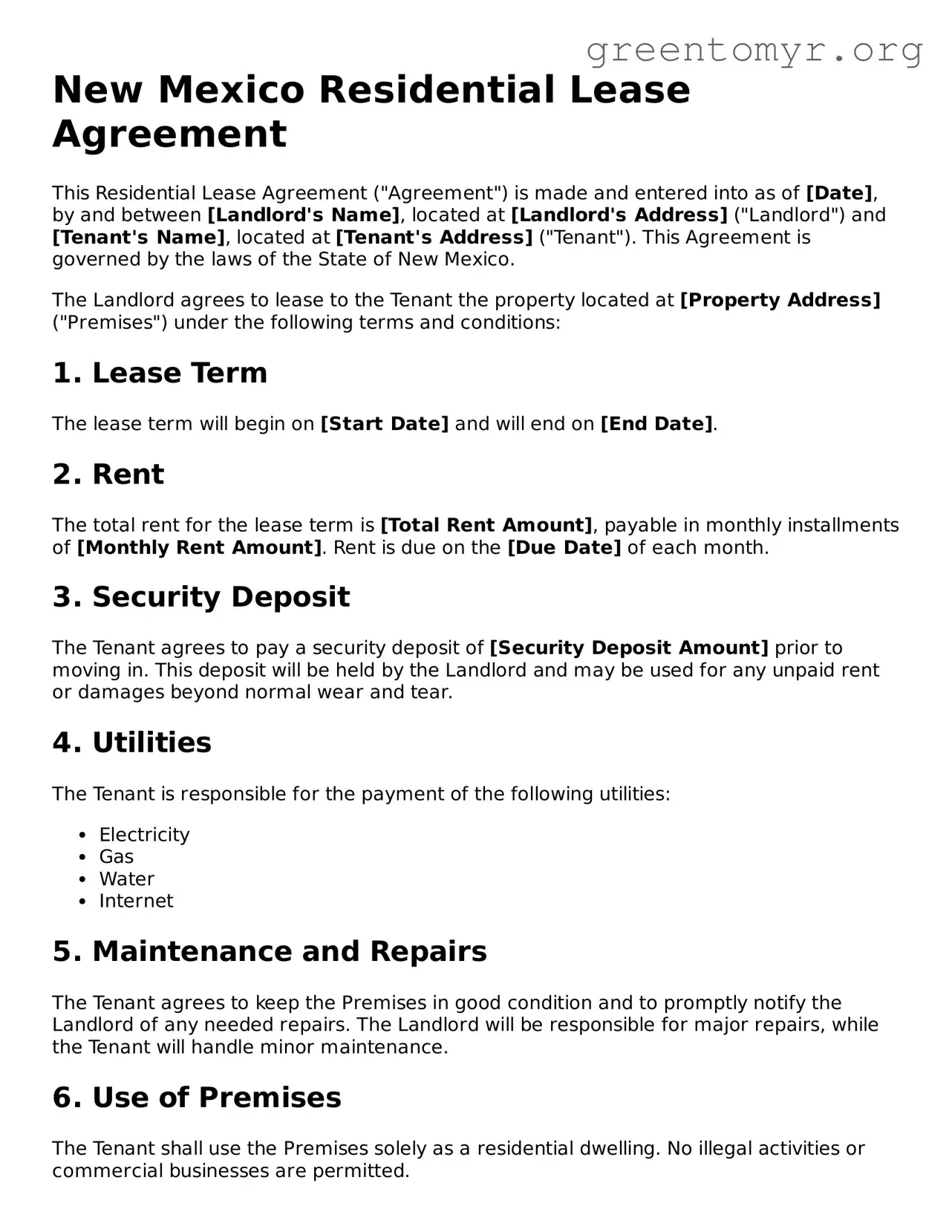
New Mexico Residential Lease Agreement
This Residential Lease Agreement ("Agreement") is made and entered into as of [Date], by and between [Landlord's Name], located at [Landlord's Address] ("Landlord") and [Tenant's Name], located at [Tenant's Address] ("Tenant"). This Agreement is governed by the laws of the State of New Mexico.
The Landlord agrees to lease to the Tenant the property located at [Property Address] ("Premises") under the following terms and conditions:
1. Lease Term
The lease term will begin on [Start Date] and will end on [End Date].
2. Rent
The total rent for the lease term is [Total Rent Amount], payable in monthly installments of [Monthly Rent Amount]. Rent is due on the [Due Date] of each month.
3. Security Deposit
The Tenant agrees to pay a security deposit of [Security Deposit Amount] prior to moving in. This deposit will be held by the Landlord and may be used for any unpaid rent or damages beyond normal wear and tear.
4. Utilities
The Tenant is responsible for the payment of the following utilities:
5. Maintenance and Repairs
The Tenant agrees to keep the Premises in good condition and to promptly notify the Landlord of any needed repairs. The Landlord will be responsible for major repairs, while the Tenant will handle minor maintenance.
6. Use of Premises
The Tenant shall use the Premises solely as a residential dwelling. No illegal activities or commercial businesses are permitted.
7. Termination
Either party may terminate this Agreement by providing [Notice Period] written notice to the other party.
8. Governing Law
This Agreement shall be governed by the laws of the State of New Mexico.
IN WITNESS WHEREOF, the parties hereto have executed this Residential Lease Agreement as of the date first above written.
Landlord Signature: ___________________________ Date: ________________
Tenant Signature: ___________________________ Date: ________________
| Fact Name | Description |
|---|---|
| Governing Law | The New Mexico Residential Lease Agreement is governed by the New Mexico Uniform Owner-Resident Relations Act. |
| Parties Involved | The agreement must clearly identify the landlord and tenant, including their legal names and contact information. |
| Lease Duration | The lease can be for a fixed term or month-to-month, and this must be specified in the agreement. |
| Security Deposit | New Mexico law regulates the amount a landlord can charge for a security deposit, typically not exceeding one month's rent. |
| Maintenance Responsibilities | The lease should outline the responsibilities of both the landlord and tenant regarding property maintenance and repairs. |
Completing the New Mexico Residential Lease Agreement form is an essential step in establishing a clear understanding between landlords and tenants. Follow these steps to ensure all necessary information is accurately provided.
After completing these steps, review the entire agreement to ensure accuracy. Both parties should retain a copy for their records.
A New Mexico Residential Lease Agreement is a legal document that outlines the terms and conditions between a landlord and a tenant for renting a residential property. This agreement typically includes details such as the rental amount, payment due dates, lease duration, and responsibilities of both parties. It serves to protect the rights of both the landlord and the tenant.
Key elements of a New Mexico Residential Lease Agreement include:
In New Mexico, lease terms can vary widely. Most residential leases are either:
Choose the term that best fits your needs and circumstances.
Yes, a lease can be modified after it is signed, but both the landlord and tenant must agree to the changes. It is advisable to document any modifications in writing. This helps avoid misunderstandings in the future. Always keep a copy of the amended lease for your records.
If a tenant breaks the lease, they may face several consequences, including:
It’s important to review the lease terms regarding early termination to understand the specific penalties involved.
Filling out the New Mexico Residential Lease Agreement form can be straightforward, but many make common mistakes that can lead to issues later. One frequent error is not providing accurate tenant information. It's essential to include the full names of all tenants who will reside in the property. Omitting a name can create confusion and potential legal problems down the line.
Another mistake is failing to specify the lease term clearly. Whether it’s a month-to-month arrangement or a fixed-term lease, this detail must be unambiguous. Not defining the lease duration can result in misunderstandings about when the lease begins and ends.
Some individuals neglect to include the rent amount and payment details. Clearly stating the monthly rent and the due date helps prevent disputes. Leaving this information out can lead to disagreements and financial issues.
People often overlook the importance of outlining security deposit terms. It’s crucial to specify the amount of the deposit and the conditions under which it will be returned. Without this clarity, tenants may feel uncertain about their rights regarding the security deposit.
Another common error is not detailing maintenance responsibilities. The lease should clearly state who is responsible for repairs and maintenance. This helps ensure that both parties understand their obligations, reducing the risk of conflict.
Some people forget to include any rules regarding pets. If the property has restrictions on pets, these should be clearly stated in the lease. Not addressing this can lead to disputes if a tenant brings in a pet without permission.
Failure to include the property address accurately is another mistake. The lease must have the complete address of the rental property. An incomplete address can lead to confusion about which property is being rented.
Many overlook the significance of including signatures. Both the landlord and tenant must sign the lease for it to be valid. A missing signature can render the agreement unenforceable.
Lastly, not keeping a copy of the signed lease can be a costly oversight. Both parties should retain a copy of the lease for their records. This ensures that everyone has access to the terms agreed upon, should any questions arise later.
When entering into a rental agreement in New Mexico, several additional forms and documents may be necessary to ensure a smooth process for both landlords and tenants. These documents help clarify responsibilities and provide legal protections. Here are some commonly used forms alongside the New Mexico Residential Lease Agreement:
Using these documents in conjunction with the New Mexico Residential Lease Agreement can help create a clear and fair rental experience. It’s important for both landlords and tenants to understand these forms to protect their rights and responsibilities throughout the leasing process.
When filling out the New Mexico Residential Lease Agreement form, it is essential to follow certain guidelines to ensure accuracy and compliance. Here are five things to do and five things to avoid:
Things You Should Do:
Things You Shouldn't Do:
When it comes to the New Mexico Residential Lease Agreement form, several misconceptions can lead to confusion for both landlords and tenants. Understanding the truth behind these myths can foster better relationships and clearer expectations. Here are ten common misconceptions:
Many people believe that a lease agreement is a one-size-fits-all document. In reality, each lease can be tailored to specific situations, needs, and local laws.
Some tenants and landlords think that a verbal agreement is enough to secure a rental arrangement. However, having a written lease protects both parties and clarifies terms.
There is a common belief that once a security deposit is paid, it cannot be recovered. In New Mexico, tenants can reclaim their deposit unless there are valid deductions for damages or unpaid rent.
Many assume that landlords have unrestricted access to their rental properties. However, New Mexico law requires landlords to provide notice before entering, except in emergencies.
Some believe that once a lease is signed, its terms cannot be changed. In truth, landlords and tenants can negotiate terms throughout the lease, provided both parties agree.
It's a common misconception that landlords can raise rent whenever they choose. In New Mexico, landlords must provide notice and adhere to the terms outlined in the lease.
Many renters think that all leases ban pets. However, policies vary widely, and some landlords may allow pets with specific conditions or fees.
Some tenants believe they can stop paying rent if they encounter issues with the property. However, withholding rent can lead to eviction unless proper legal channels are followed.
Many assume that leases must be annual. In reality, leases can be month-to-month, yearly, or even for shorter terms, depending on the agreement between the parties.
There is a belief that any violation of the lease automatically results in eviction. However, landlords often have to follow specific legal procedures and provide opportunities for tenants to remedy the situation.
Understanding these misconceptions can empower both landlords and tenants to navigate their rental agreements with clarity and confidence. Open communication and knowledge of the law can lead to a more harmonious renting experience.
When dealing with the New Mexico Residential Lease Agreement form, it's important to understand the key aspects to ensure a smooth rental process. Here are some essential takeaways:
Following these key points can help both landlords and tenants navigate the rental process more effectively.