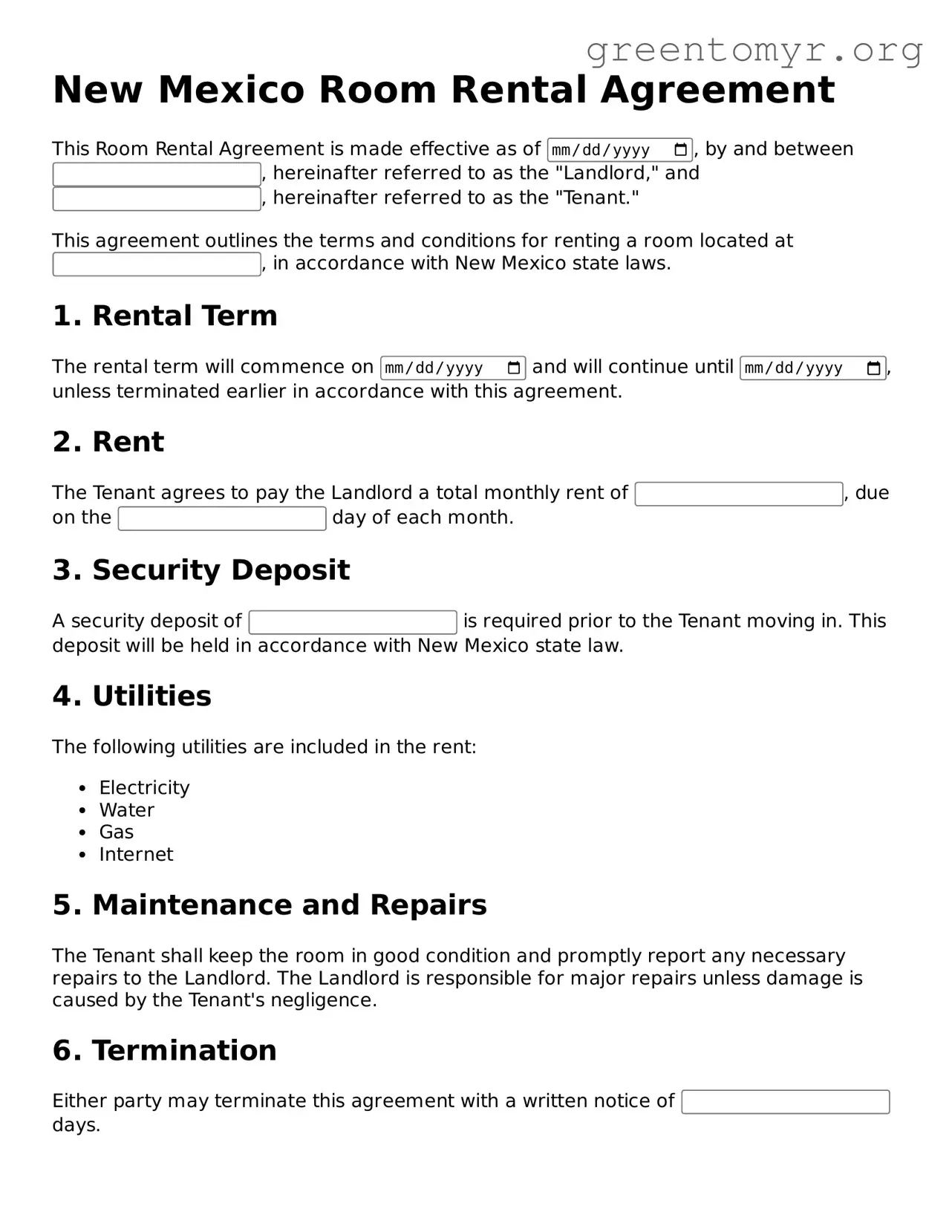
The New Mexico Room Rental Agreement form serves as a crucial document for both landlords and tenants, outlining the terms and conditions associated with renting a room within a property. This agreement typically includes essential details such as the rental amount, payment due dates, and the duration of the tenancy. It also addresses the responsibilities of both parties, specifying what is expected from the landlord in terms of maintenance and utilities, as well as what is required from the tenant regarding property care and timely payments. Additionally, the form often incorporates clauses related to security deposits, rules for property use, and procedures for terminating the agreement, ensuring that both parties have a clear understanding of their rights and obligations. By laying out these key elements, the New Mexico Room Rental Agreement helps to foster a transparent and respectful relationship between landlords and tenants, ultimately contributing to a more harmonious living arrangement.
New Mexico Room Rental Agreement
This Room Rental Agreement is made effective as of , by and between , hereinafter referred to as the "Landlord," and , hereinafter referred to as the "Tenant."
This agreement outlines the terms and conditions for renting a room located at , in accordance with New Mexico state laws.
1. Rental Term
The rental term will commence on and will continue until , unless terminated earlier in accordance with this agreement.
2. Rent
The Tenant agrees to pay the Landlord a total monthly rent of , due on the day of each month.
3. Security Deposit
A security deposit of is required prior to the Tenant moving in. This deposit will be held in accordance with New Mexico state law.
4. Utilities
The following utilities are included in the rent:
5. Maintenance and Repairs
The Tenant shall keep the room in good condition and promptly report any necessary repairs to the Landlord. The Landlord is responsible for major repairs unless damage is caused by the Tenant's negligence.
6. Termination
Either party may terminate this agreement with a written notice of days.
7. Governing Law
This agreement shall be governed by the laws of the State of New Mexico.
8. Signatures
By signing below, both parties agree to the terms outlined in this Room Rental Agreement.
______________________________
Landlord Signature
______________________________
Tenant Signature
| Fact Name | Description |
|---|---|
| Governing Law | The New Mexico Room Rental Agreement is governed by the New Mexico Statutes, specifically Chapter 47, which covers landlord-tenant laws. |
| Purpose | This form outlines the terms and conditions of renting a room in a property, ensuring both parties understand their rights and responsibilities. |
| Required Information | It typically requires details such as the names of the parties involved, the rental amount, payment due dates, and the duration of the rental agreement. |
| Security Deposit | The agreement may specify a security deposit amount, which is usually refundable at the end of the rental period, subject to certain conditions. |
| Termination Clause | It often includes a termination clause that outlines how either party can end the agreement, including notice periods and conditions for termination. |
Filling out the New Mexico Room Rental Agreement form is an important step in establishing the terms of a rental arrangement. By completing this form accurately, both the landlord and tenant can ensure that their rights and responsibilities are clearly defined. Follow the steps below to fill out the form correctly.
Once the form is completed, it is advisable to keep a copy for your records. This ensures that both parties have access to the agreed terms throughout the rental period.
The New Mexico Room Rental Agreement form is a legal document used to outline the terms and conditions between a landlord and a tenant for renting a room in a residential property. This agreement specifies the rights and responsibilities of both parties, ensuring clarity and protection during the rental period.
This form is suitable for landlords who are renting out a room in their home or property and for tenants seeking to rent a room. It can be used in various situations, such as shared housing arrangements, boarding houses, or single-room rentals within a larger residence.
The agreement typically includes the following key information:
The rental amount can vary based on several factors, including the location of the property, the size and condition of the room, and the amenities offered. Landlords often consider market rates in the area and may also take into account the specific needs and circumstances of potential tenants.
Yes, the agreement can be modified if both the landlord and tenant agree to the changes. It is essential to document any modifications in writing, and both parties should sign the updated agreement to ensure clarity and mutual understanding.
If a tenant fails to pay rent on time, the landlord may have specific procedures outlined in the agreement for addressing late payments. This could include a grace period, late fees, or the option to terminate the lease if payment is not made. It is important for both parties to understand these terms before signing the agreement.
A security deposit is often required as part of the rental agreement. This deposit serves as a financial safeguard for the landlord against potential damages or unpaid rent. The amount of the security deposit is typically specified in the agreement and must comply with New Mexico state laws regarding maximum limits and return timelines.
The tenant's responsibilities may include:
If a dispute arises between the landlord and tenant, it is advisable to first attempt to resolve the issue through open communication. If that does not work, the agreement may outline specific dispute resolution procedures, such as mediation or arbitration. In some cases, legal action may be necessary, but this is typically a last resort.
Filling out a Room Rental Agreement form in New Mexico can be straightforward, but many people still make common mistakes that can lead to complications later. One of the most frequent errors is not providing accurate personal information. It’s crucial to ensure that your name, address, and contact details are correct. Any inaccuracies can create confusion and may even affect the legality of the agreement.
Another common mistake is overlooking the rental terms. Many individuals skim through the terms and conditions, failing to fully understand their obligations. This can lead to misunderstandings regarding rent due dates, security deposits, and maintenance responsibilities. Always read the entire agreement carefully.
People often forget to specify the rental period. Whether it’s a month-to-month arrangement or a fixed-term lease, clarity is essential. Not defining the rental duration can lead to disputes over when the agreement starts and ends.
Additionally, some renters neglect to include details about utilities. It’s important to clarify which utilities are included in the rent and which are the tenant’s responsibility. Failing to address this can result in unexpected expenses down the line.
Many individuals also forget to discuss the rules regarding pets. If you have a pet or plan to get one, it’s vital to include this information in the agreement. Not addressing pet policies can lead to issues with the landlord and potential eviction.
Another mistake is not documenting the condition of the property before moving in. A thorough walkthrough with the landlord can help identify existing damages. Failing to document these issues can lead to disputes over security deposits when it’s time to move out.
People sometimes overlook the importance of signatures. Both parties must sign the agreement for it to be legally binding. A missing signature can invalidate the entire contract, leaving one party unprotected.
Some renters also forget to keep a copy of the signed agreement. Having your own copy is essential for reference and can help resolve disputes if they arise. Always ensure you have documentation of what was agreed upon.
Lastly, many individuals fail to consult with a legal professional if they have questions. Seeking guidance can help clarify any uncertainties and ensure that you fully understand your rights and responsibilities under the agreement. Taking the time to do this can save you from potential headaches in the future.
When entering into a room rental agreement in New Mexico, it's important to have a complete understanding of the various forms and documents that may accompany this agreement. Each of these documents serves a specific purpose and can help protect the rights of both the landlord and the tenant. Below is a list of commonly used forms that you may encounter.
Understanding these documents can help ensure a smoother rental experience. Each form plays a crucial role in establishing clear expectations and responsibilities, fostering a positive relationship between landlords and tenants.
When filling out the New Mexico Room Rental Agreement form, it's essential to approach the task with care. Here are ten important guidelines to follow:
Following these guidelines can help ensure a smoother rental experience. Taking the time to understand the agreement can protect your rights and responsibilities as a tenant or landlord.
When it comes to renting a room in New Mexico, several misconceptions can cloud understanding of the Room Rental Agreement form. It is essential to clarify these misunderstandings to ensure both landlords and tenants are well-informed about their rights and responsibilities. Here are eight common misconceptions:
Understanding these misconceptions is crucial for both landlords and tenants. Clear communication and a well-drafted Room Rental Agreement can help foster a positive rental experience.
When filling out and using the New Mexico Room Rental Agreement form, it is essential to consider several key points to ensure clarity and legality in the rental process.
By following these key takeaways, individuals can navigate the rental process more effectively and protect their rights and responsibilities.