The New York Commercial Lease Agreement form serves as a crucial document in the realm of commercial real estate, facilitating the relationship between landlords and tenants. This form outlines essential terms such as the duration of the lease, rental payments, and the responsibilities of both parties regarding property maintenance and repairs. It also addresses the permitted use of the premises, ensuring that tenants operate within the agreed-upon parameters. Furthermore, the document typically includes provisions for security deposits, insurance requirements, and termination clauses, which protect the interests of both landlords and tenants. By clearly defining these aspects, the lease agreement aims to minimize disputes and provide a framework for successful business operations within the leased space. Understanding each component of the form is vital for both parties to ensure compliance and foster a positive leasing experience.
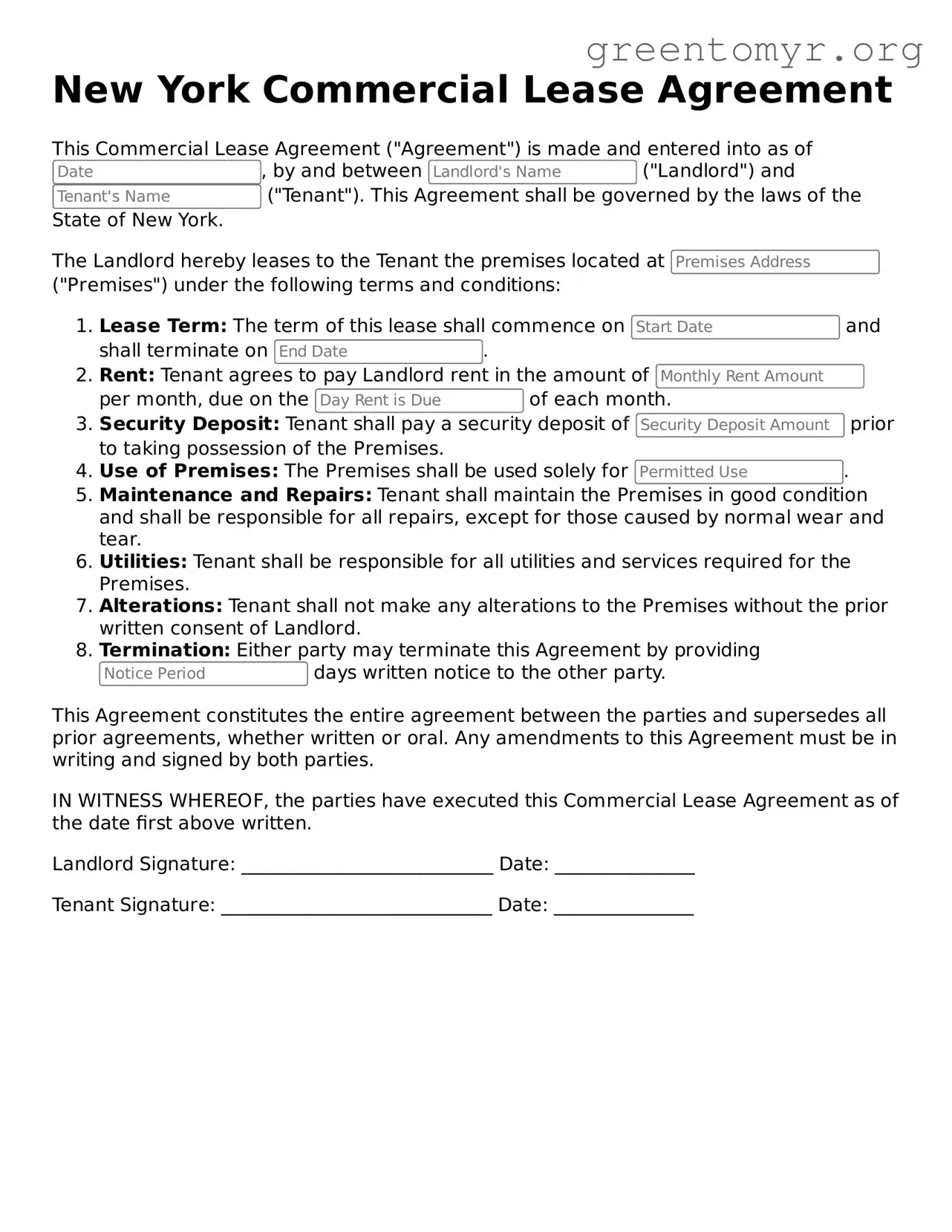
New York Commercial Lease Agreement
This Commercial Lease Agreement ("Agreement") is made and entered into as of , by and between ("Landlord") and ("Tenant"). This Agreement shall be governed by the laws of the State of New York.
The Landlord hereby leases to the Tenant the premises located at ("Premises") under the following terms and conditions:
This Agreement constitutes the entire agreement between the parties and supersedes all prior agreements, whether written or oral. Any amendments to this Agreement must be in writing and signed by both parties.
IN WITNESS WHEREOF, the parties have executed this Commercial Lease Agreement as of the date first above written.
Landlord Signature: ___________________________ Date: _______________
Tenant Signature: _____________________________ Date: _______________
| Fact Name | Description |
|---|---|
| Governing Law | The New York Commercial Lease Agreement is governed by New York State laws. |
| Parties Involved | This agreement typically involves a landlord and a tenant, both of whom must be clearly identified. |
| Property Description | A detailed description of the commercial property being leased is required, including the address and any specific features. |
| Lease Term | The lease term specifies the duration of the lease, which can range from a few months to several years. |
| Rent Payment | Details about the rent amount, payment schedule, and acceptable payment methods must be included. |
| Security Deposit | The agreement usually outlines the amount of the security deposit and the conditions for its return. |
| Maintenance Responsibilities | Responsibilities for maintenance and repairs are typically defined, clarifying what the landlord and tenant are accountable for. |
| Termination Conditions | The lease agreement should include conditions under which either party can terminate the lease early. |
Filling out the New York Commercial Lease Agreement form is a crucial step in securing a rental space for your business. Completing this form accurately ensures that both parties understand their rights and obligations. Below are the necessary steps to guide you through the process of filling out this important document.
After completing the form, review it carefully to ensure all information is accurate and complete. Both parties should retain a copy for their records. This will help prevent misunderstandings and disputes in the future.
A New York Commercial Lease Agreement is a legally binding contract between a landlord and a business tenant. This document outlines the terms under which a tenant can occupy a commercial property. It includes details such as the lease duration, rental amount, property use, and responsibilities of both parties.
Several essential components should be included in a Commercial Lease Agreement:
The duration of a commercial lease can vary widely. Common terms range from one year to five years, but longer leases of ten years or more are not uncommon, especially in retail and industrial sectors. The specific duration should be negotiated and clearly stated in the agreement.
Whether a tenant can sublease the commercial space depends on the terms outlined in the lease agreement. Many landlords require tenants to obtain written consent before subleasing. This protects the landlord's interests and ensures that the subtenant meets any necessary qualifications.
If a tenant fails to pay rent on time, the landlord may have the right to impose late fees as specified in the lease. Continued non-payment can lead to eviction proceedings. It is crucial for tenants to understand the consequences of late or missed payments and to communicate with their landlord if financial difficulties arise.
Yes, commercial leases in New York are subject to state laws and regulations. While many aspects of commercial leases are negotiable, certain provisions must comply with local and state laws. It is advisable for both landlords and tenants to familiarize themselves with relevant statutes and regulations to ensure compliance.
The process for renewing a commercial lease typically involves a discussion between the landlord and tenant. Many leases include a renewal clause that outlines the terms for renewal, including any rent adjustments. It is important to start this conversation well before the lease expiration to avoid any disruptions in occupancy.
Yes, a commercial lease can be modified after it has been signed, but both parties must agree to the changes. Modifications should be documented in writing and signed by both the landlord and tenant to ensure clarity and legal enforceability. Verbal agreements are not typically sufficient for changes to lease terms.
Filling out the New York Commercial Lease Agreement can be a daunting task. Many individuals make common mistakes that can lead to misunderstandings or disputes later on. One frequent error is neglecting to provide accurate contact information. Landlords and tenants must ensure that their names, addresses, and phone numbers are correct. Inaccurate details can hinder communication and create complications in the future.
Another mistake often seen is failing to specify the lease term clearly. The duration of the lease should be outlined explicitly, including start and end dates. Vague terms can lead to confusion regarding the length of the tenancy. Both parties should agree on the timeline to avoid potential conflicts.
Many individuals also overlook the importance of understanding the rent payment structure. The agreement should detail the amount due, payment frequency, and acceptable payment methods. Missing this information can lead to disputes over missed payments or misunderstandings about when rent is due.
Additionally, tenants sometimes fail to read the fine print regarding maintenance responsibilities. The lease should clearly define who is responsible for repairs and maintenance of the property. If this section is left ambiguous, it can result in disagreements about who must handle specific issues.
Another common mistake is not addressing renewal options. If a tenant wishes to stay beyond the initial lease term, the agreement should include terms for renewal. This prevents last-minute negotiations and ensures both parties are on the same page regarding future occupancy.
Finally, many people forget to include any special provisions or modifications to the standard lease terms. If there are unique agreements or conditions, they must be documented within the lease. Failing to do so can lead to confusion and potential legal issues later on.
When entering into a commercial lease agreement in New York, several other forms and documents may be necessary to ensure a smooth transaction. These documents help clarify terms, protect rights, and establish responsibilities for both landlords and tenants. Below is a list of commonly used forms alongside the New York Commercial Lease Agreement.
Having these documents prepared and organized can facilitate a smoother leasing process. Each form plays a vital role in protecting the interests of both landlords and tenants, ensuring clarity and mutual understanding throughout the lease term.
Residential Lease Agreement: Like a commercial lease, this document outlines the terms under which a tenant can occupy a property. It includes details such as rent, duration, and responsibilities of both parties, but it is specifically designed for residential properties.
Sublease Agreement: This document allows a tenant to lease their rented space to another party. Similar to a commercial lease, it specifies terms like rent and duration, but it is often used in situations where the original tenant is still responsible for the lease obligations.
Property Management Agreement: This document establishes the relationship between a property owner and a management company. It shares similarities with a commercial lease in that it outlines responsibilities and expectations, but it focuses on the management of the property rather than the leasing terms.
Commercial Purchase Agreement: This document is used when a buyer purchases a commercial property. It is similar to a lease in that it includes terms and conditions, but it involves the transfer of ownership rather than the rental of space.
Letter of Intent (LOI): This preliminary document outlines the basic terms of a lease before a formal agreement is drafted. While not legally binding, it shares similarities with a commercial lease by detailing the intent of both parties regarding rental terms and conditions.
When filling out the New York Commercial Lease Agreement form, it’s important to approach the process with care. Here’s a list of things you should and shouldn’t do to ensure a smooth experience.
By following these guidelines, you can help protect your interests and ensure that the lease agreement meets your needs.
Misconceptions about the New York Commercial Lease Agreement can lead to confusion and potential issues for both landlords and tenants. Here are eight common misconceptions explained:
Many people believe that all commercial leases follow a standard format. In reality, leases can vary significantly based on the property type, location, and specific terms negotiated between the parties.
Some assume that a verbal agreement is sufficient for a commercial lease. However, it is essential to have a written contract to protect both parties and clarify the terms of the lease.
While the rent is a crucial aspect, other terms like maintenance responsibilities, lease duration, and renewal options are equally important and should not be overlooked.
Many tenants believe they can modify the space as they wish. However, most leases require landlord approval for any significant alterations or improvements.
Some think that security deposits are always non-refundable. In fact, if the lease terms are met and the property is returned in good condition, tenants may receive their deposit back.
Breaking a commercial lease can be complicated and often comes with penalties. It is important to understand the terms regarding termination before signing.
Many believe landlords can increase rent at will. However, most leases specify when and how much rent can be raised, often requiring notice and justification.
While many terms can be negotiated, some landlords may have strict policies that limit flexibility. It’s important to discuss any desired changes early in the negotiation process.
When filling out and using the New York Commercial Lease Agreement form, keep these key takeaways in mind: