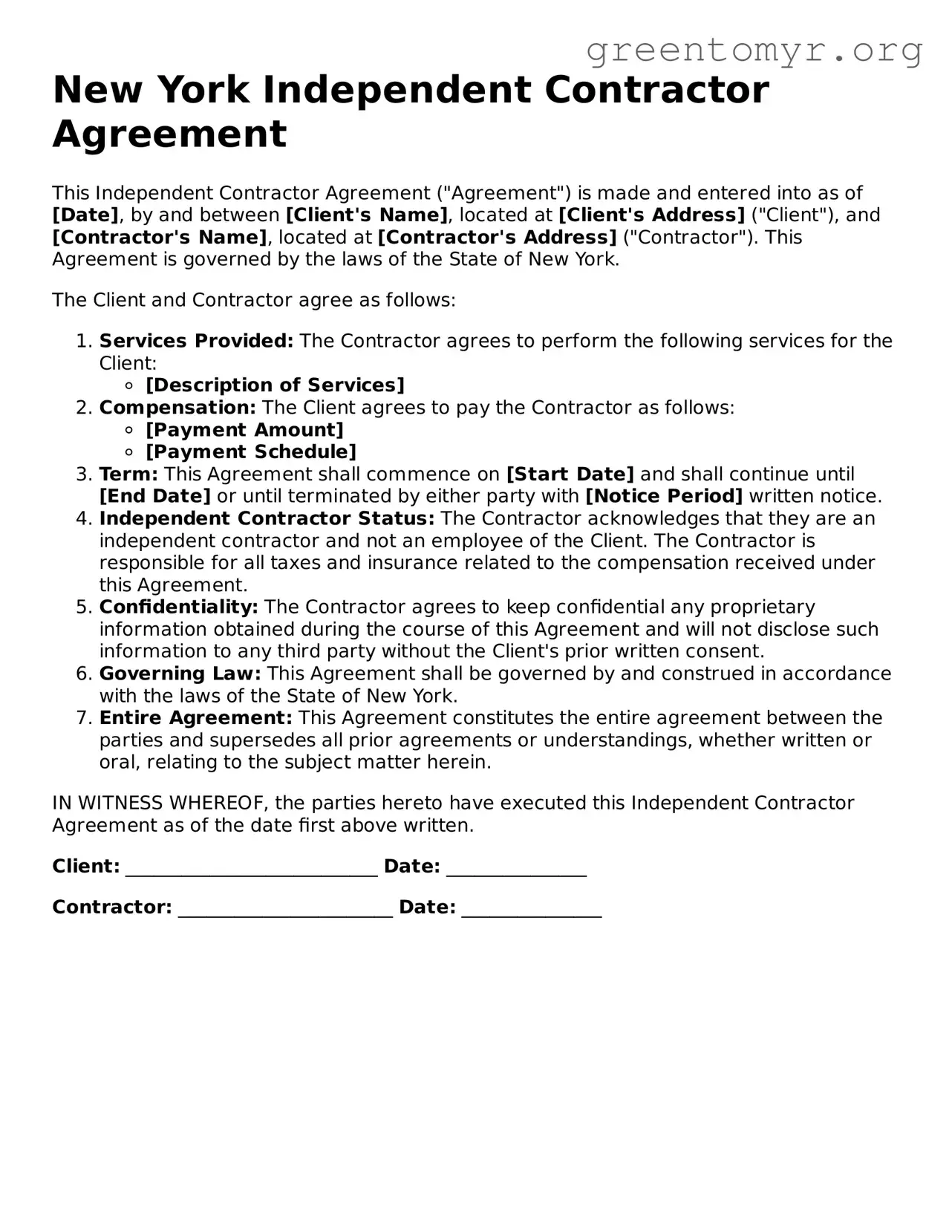
When engaging an independent contractor in New York, having a solid agreement in place is essential for both parties involved. The New York Independent Contractor Agreement form serves as a crucial tool that outlines the terms and conditions of the working relationship. This document typically includes key elements such as the scope of work, payment terms, and deadlines, ensuring that expectations are clear from the outset. Additionally, it addresses confidentiality clauses, intellectual property rights, and the independent contractor's status, which is vital for compliance with state laws. By clearly defining these aspects, the agreement helps to mitigate misunderstandings and disputes, fostering a professional relationship built on transparency and mutual respect. Understanding the nuances of this form not only protects the interests of both the contractor and the client but also lays the groundwork for a successful collaboration.
New York Independent Contractor Agreement
This Independent Contractor Agreement ("Agreement") is made and entered into as of [Date], by and between [Client's Name], located at [Client's Address] ("Client"), and [Contractor's Name], located at [Contractor's Address] ("Contractor"). This Agreement is governed by the laws of the State of New York.
The Client and Contractor agree as follows:
IN WITNESS WHEREOF, the parties hereto have executed this Independent Contractor Agreement as of the date first above written.
Client: ___________________________ Date: _______________
Contractor: _______________________ Date: _______________
| Fact Name | Description |
|---|---|
| Definition | The New York Independent Contractor Agreement outlines the terms and conditions between a contractor and a client, defining the nature of their working relationship. |
| Governing Law | This agreement is governed by the laws of the State of New York, ensuring compliance with state regulations regarding independent contracting. |
| Payment Terms | It specifies payment terms, including rates, payment schedules, and any additional expenses that may be reimbursed. |
| Scope of Work | The agreement clearly defines the scope of work to be performed by the contractor, outlining specific tasks and deliverables. |
| Termination Clause | A termination clause is included, detailing the conditions under which either party may terminate the agreement. |
| Confidentiality | Confidentiality provisions protect sensitive information shared during the course of the contractor-client relationship. |
Filling out the New York Independent Contractor Agreement form is an important step in establishing a clear and professional relationship between a contractor and a client. This form outlines the terms of the agreement, ensuring that both parties understand their rights and responsibilities. To proceed effectively, follow the steps outlined below.
A New York Independent Contractor Agreement is a legal document that outlines the terms and conditions between a business and an independent contractor. This agreement specifies the scope of work, payment terms, and responsibilities of both parties. It helps to clarify the nature of the working relationship, distinguishing it from an employer-employee relationship.
This agreement is crucial for several reasons:
Essential elements of a New York Independent Contractor Agreement typically include:
An Independent Contractor Agreement differs from an employment contract primarily in the nature of the relationship. In an employment contract, the employer has more control over the worker's tasks, hours, and methods. Conversely, an independent contractor typically enjoys more freedom in how to complete their work. Additionally, independent contractors are usually responsible for their own taxes and benefits.
While there are no specific legal requirements for an Independent Contractor Agreement in New York, it is essential that the agreement complies with general contract law principles. This means that the agreement should be in writing, signed by both parties, and include all necessary terms to be enforceable. It is advisable to consult legal counsel to ensure compliance with applicable laws.
Yes, an Independent Contractor Agreement can be modified. However, any changes must be agreed upon by both parties and documented in writing. Verbal agreements regarding modifications may not be enforceable, so it is important to keep a written record of any amendments.
If a dispute arises under the terms of the agreement, the parties should first attempt to resolve the issue amicably. If informal discussions do not lead to a resolution, the agreement may include a clause outlining the process for dispute resolution. This could involve mediation or arbitration before pursuing litigation. Having a clear process in place can save time and resources.
While it is not legally required to have a lawyer review the Independent Contractor Agreement, it is highly advisable. A legal professional can help ensure that the agreement is comprehensive, compliant with New York laws, and protects the interests of both parties. Investing in legal advice can prevent potential issues down the line.
Filling out the New York Independent Contractor Agreement form can be a straightforward process, but mistakes often occur. One common error is failing to provide accurate personal information. It is crucial to ensure that names, addresses, and contact details are correct. An incorrect address can lead to delays in communication and potential legal issues.
Another mistake is not clearly defining the scope of work. The agreement should specify the tasks the contractor will perform. Ambiguity can lead to misunderstandings between the contractor and the hiring party. It is important to be as detailed as possible to avoid confusion later on.
Many people overlook the importance of payment terms. The agreement should outline how and when the contractor will be paid. Without this information, disputes may arise regarding compensation. Clearly stating payment methods and schedules can help prevent these issues.
Additionally, some individuals forget to include termination clauses. These clauses explain how either party can end the agreement. Without them, it may be difficult to resolve conflicts if they arise. Including these provisions ensures that both parties understand their rights and responsibilities.
Lastly, failing to sign the agreement is a frequent oversight. An unsigned contract is not legally binding. Both parties must sign the document to validate the agreement. Taking the time to review and sign the form can save a lot of trouble in the future.
When entering into an Independent Contractor Agreement in New York, there are several other forms and documents that may be beneficial to have on hand. These documents help clarify the relationship between the contractor and the client, ensuring that both parties understand their rights and obligations. Here’s a brief overview of some key documents often used alongside the Independent Contractor Agreement.
Having these documents ready can streamline the contracting process and foster a professional relationship between the contractor and the client. Clear communication and well-defined terms can lead to successful collaborations and minimize potential conflicts.
When filling out the New York Independent Contractor Agreement form, it's important to keep a few key points in mind. Here’s a list of things you should and shouldn’t do:
Misconceptions about the New York Independent Contractor Agreement can lead to confusion and misinterpretation of the terms involved. Below are nine common misconceptions, along with explanations to clarify each one.
While verbal agreements can be legally binding, having a written contract is crucial. It clearly outlines the expectations and responsibilities of both parties, reducing the risk of disputes.
This is not entirely accurate. While many independent contractors operate as self-employed individuals, some may work through a business entity, such as an LLC or corporation.
This misconception overlooks the fact that some independent contractors negotiate for certain benefits, such as health insurance or retirement contributions, as part of their agreement.
While independent contractors often enjoy flexibility, the agreement may specify certain hours or deadlines that must be adhered to, depending on the nature of the work.
This statement is misleading. While independent contractors do not enjoy the same protections as employees, they still have rights under various laws, such as anti-discrimination and contract laws.
Including a termination clause is essential. It provides a clear process for ending the relationship, protecting both parties in the event of a dispute or unsatisfactory performance.
In fact, independent contractors have the right to negotiate their rates based on their skills, experience, and the market demand for their services.
This is incorrect. Each state, including New York, has specific laws and regulations that can affect the terms and enforceability of independent contractor agreements.
Contracts can be amended if both parties agree to the changes. It is important to document any modifications in writing to avoid misunderstandings.
When using the New York Independent Contractor Agreement form, there are several important points to keep in mind. Here are four key takeaways: