Creating a Last Will and Testament is a crucial step in ensuring that your wishes are honored after your passing. In New York, this legal document outlines how your assets will be distributed, who will serve as your executor, and any guardianship arrangements for minor children. The form requires specific information, including the names and addresses of beneficiaries, a clear description of your assets, and any debts or obligations that need to be addressed. Additionally, the will must be signed in the presence of at least two witnesses, who also sign the document, affirming its validity. This process not only provides clarity and direction for your loved ones but also helps to minimize potential disputes among family members. Understanding the components of the New York Last Will and Testament form is essential for anyone looking to secure their legacy and ensure their wishes are fulfilled.
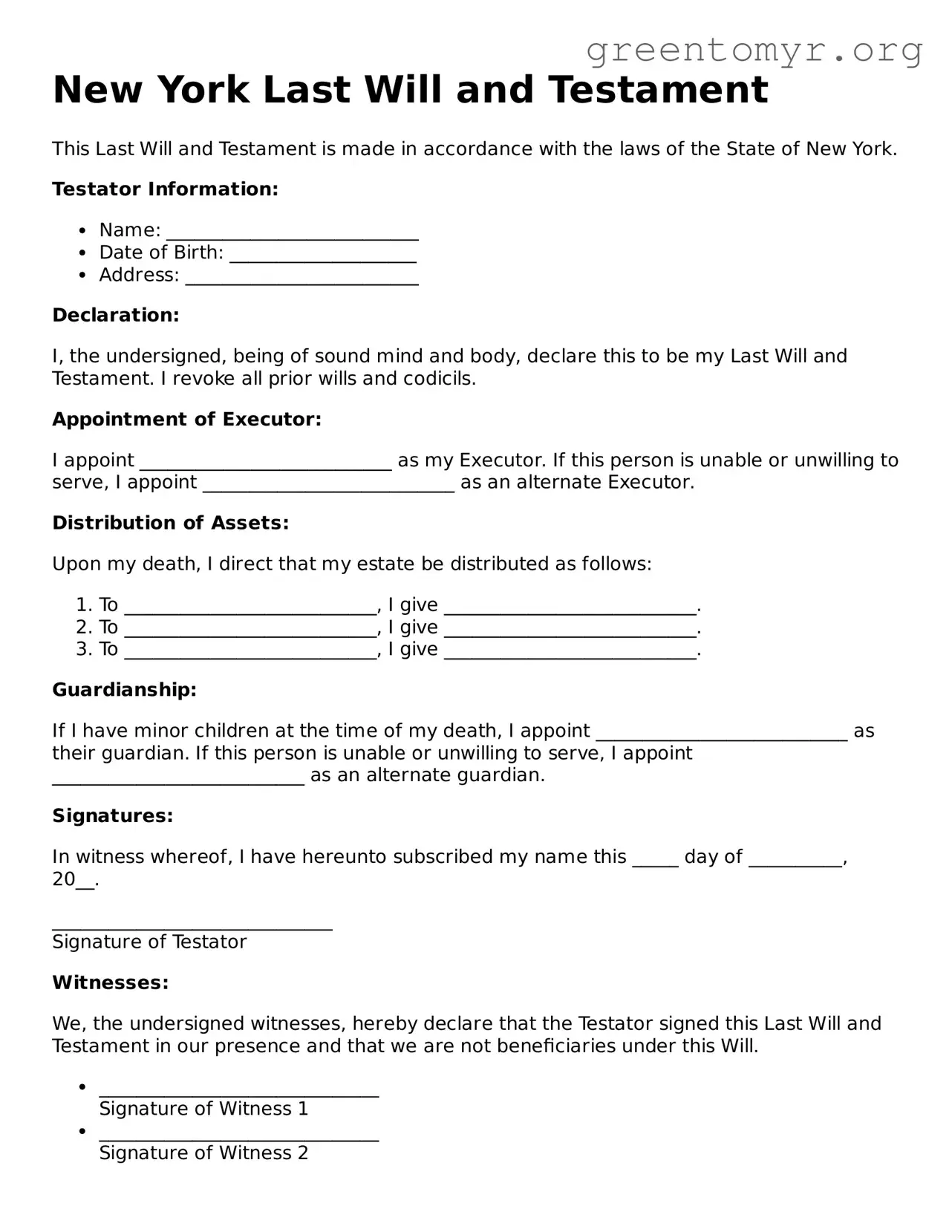
New York Last Will and Testament
This Last Will and Testament is made in accordance with the laws of the State of New York.
Testator Information:
Declaration:
I, the undersigned, being of sound mind and body, declare this to be my Last Will and Testament. I revoke all prior wills and codicils.
Appointment of Executor:
I appoint ___________________________ as my Executor. If this person is unable or unwilling to serve, I appoint ___________________________ as an alternate Executor.
Distribution of Assets:
Upon my death, I direct that my estate be distributed as follows:
Guardianship:
If I have minor children at the time of my death, I appoint ___________________________ as their guardian. If this person is unable or unwilling to serve, I appoint ___________________________ as an alternate guardian.
Signatures:
In witness whereof, I have hereunto subscribed my name this _____ day of __________, 20__.
______________________________
Signature of Testator
Witnesses:
We, the undersigned witnesses, hereby declare that the Testator signed this Last Will and Testament in our presence and that we are not beneficiaries under this Will.
| Fact Name | Details |
|---|---|
| Governing Law | The New York Last Will and Testament form is governed by the New York Estates, Powers and Trusts Law (EPTL). |
| Requirements | To be valid, the will must be signed by the testator and witnessed by at least two individuals. |
| Age Requirement | The testator must be at least 18 years old to create a valid will in New York. |
| Revocation | A will can be revoked by the testator at any time, typically by creating a new will or physically destroying the existing one. |
Filling out a Last Will and Testament form in New York is an important step in ensuring your wishes are honored after your passing. Once you have completed the form, it’s essential to follow the necessary steps to ensure it is legally binding and recognized. Here’s how to fill out the form effectively.
A Last Will and Testament is a legal document that outlines how a person's assets and affairs should be handled after their death. It allows individuals to specify who will inherit their property, appoint guardians for minor children, and name an executor to manage the estate.
In New York, any individual who is at least 18 years old and of sound mind can create a Last Will and Testament. It is important that the individual understands the implications of the will and is able to make decisions regarding their assets.
To be valid, a will in New York must meet the following requirements:
Yes, you can change your will at any time as long as you are of sound mind. Changes can be made by creating a new will or by adding a codicil, which is an amendment to the existing will. It is essential to follow the same legal formalities for signing and witnessing as required for the original will.
If you die without a will, your estate will be distributed according to New York's intestacy laws. This means that your assets will be divided among your closest relatives, which may not align with your wishes. It is advisable to have a will to ensure your preferences are honored.
You can revoke your will by creating a new will that explicitly states the previous will is revoked or by physically destroying the original will. It is important to ensure that the revocation is clear to avoid any confusion regarding your intentions.
An executor is the person responsible for carrying out the terms of your will. This individual manages the estate, pays debts, and distributes assets to beneficiaries. When choosing an executor, consider someone who is trustworthy, organized, and willing to take on the responsibilities involved.
Yes, you can include specific bequests in your will. This means you can designate particular items or sums of money to specific individuals. Clearly stating these bequests helps ensure that your wishes are carried out as intended.
While it is not legally required to hire an attorney to create a will, it is highly recommended. An attorney can provide guidance, ensure that your will meets all legal requirements, and help you avoid potential pitfalls that could lead to disputes or invalidation of the will.
Store your will in a safe place where it can be easily accessed after your death. Options include a safe deposit box, a fireproof safe at home, or with your attorney. Inform your executor and trusted family members about the location of your will to ensure it can be found when needed.
Creating a Last Will and Testament is a significant step in ensuring that your wishes are honored after your passing. However, many people make mistakes when filling out this important document. One common error is failing to properly identify themselves. It is essential to include your full legal name and address. Omitting this information can lead to confusion and potential disputes regarding the will’s validity.
Another frequent mistake is not clearly specifying the beneficiaries. It’s crucial to name individuals or organizations explicitly and to provide their full names. Using nicknames or vague terms can create ambiguity, leading to misunderstandings about who is entitled to inherit your assets.
Additionally, people often overlook the importance of appointing an executor. This person is responsible for carrying out your wishes as outlined in the will. Failing to designate an executor or choosing someone who may not be willing or able to serve can complicate the process and delay the distribution of your estate.
Many individuals also neglect to sign and date the will properly. In New York, a will must be signed in the presence of at least two witnesses, who must also sign the document. Without these signatures, the will may be deemed invalid, leaving your wishes unfulfilled.
Another mistake is not updating the will after significant life changes. Events such as marriage, divorce, or the birth of a child can impact your wishes. If you fail to revise your will accordingly, it may not reflect your current intentions, leading to unintended consequences.
Lastly, some people do not consider the tax implications of their estate. Understanding how taxes may affect your beneficiaries is essential. Failing to plan for these obligations can result in financial burdens for your loved ones. By addressing these common mistakes, you can create a more effective and legally sound Last Will and Testament.
When preparing a New York Last Will and Testament, several additional forms and documents may be necessary to ensure that your estate planning is comprehensive. Each of these documents serves a specific purpose and can help clarify your wishes regarding your assets and care. Below is a list of commonly used documents that accompany a Last Will and Testament.
Including these documents in your estate plan can provide clarity and peace of mind for both you and your loved ones. It is essential to review and update these documents regularly to reflect any changes in your circumstances or wishes.
The Last Will and Testament is an important legal document that outlines how an individual's assets and affairs should be handled after their death. Several other documents serve similar purposes in estate planning and management. Below are four documents that share similarities with a Last Will and Testament:
When filling out the New York Last Will and Testament form, it is important to follow certain guidelines to ensure that your will is valid and reflects your wishes. Here are five things you should and shouldn't do:
When it comes to creating a Last Will and Testament in New York, several misconceptions can lead to confusion. Understanding these can help individuals make informed decisions about their estate planning.
Many people believe that a will must be typed and formally printed to be valid. In New York, a handwritten will, also known as a holographic will, can be valid as long as it is signed by the testator and the material provisions are in their handwriting.
While having a lawyer can help ensure that all legal requirements are met, individuals can create a valid will on their own. New York law allows individuals to draft their own wills as long as they follow the state's guidelines.
Some think that only those with significant assets need a will. In reality, everyone can benefit from having a will. It allows individuals to specify how they want their assets distributed, regardless of their financial situation.
A common belief is that a will can address all estate planning needs. However, a will does not cover certain assets, such as life insurance policies or retirement accounts, which may require separate designations. Additionally, a will does not avoid probate, which can be a lengthy process.
Creating a Last Will and Testament in New York is an important step in planning for the future. Here are some key takeaways to keep in mind:
Taking the time to fill out your Last Will and Testament correctly can provide peace of mind for you and your loved ones.