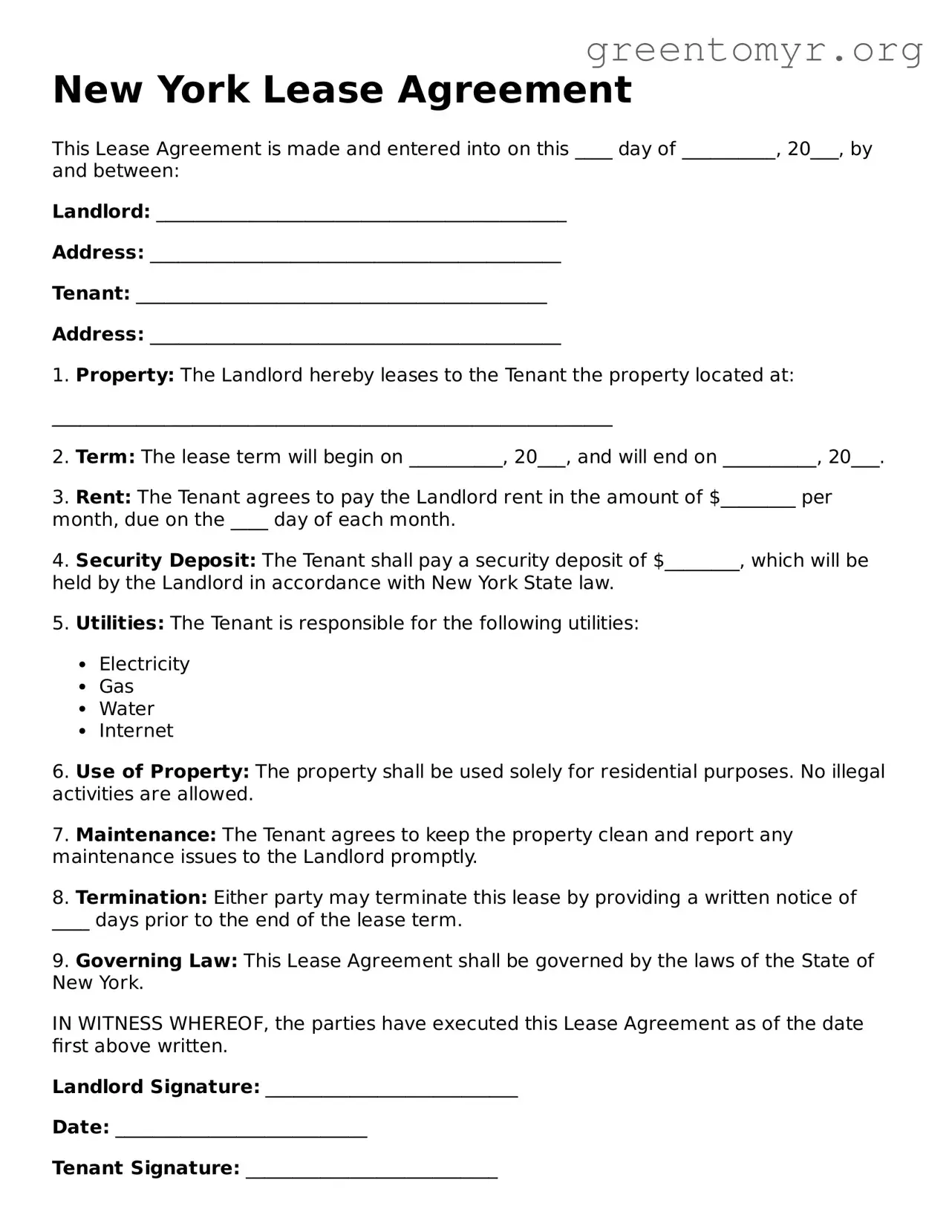
The New York Lease Agreement form serves as a crucial document in the rental process, outlining the rights and responsibilities of both landlords and tenants. This legally binding contract typically includes essential details such as the rental property's address, the duration of the lease, and the agreed-upon rent amount. Additionally, it addresses security deposits, maintenance responsibilities, and rules regarding subletting or terminating the lease. Various clauses may also cover issues like late payment penalties and pet policies, ensuring that both parties have a clear understanding of expectations. By specifying these terms, the form helps to prevent disputes and provides a framework for resolving any issues that may arise during the tenancy. Understanding the components of this agreement is vital for anyone entering into a rental arrangement in New York, as it protects the interests of both landlords and tenants alike.
New York Lease Agreement
This Lease Agreement is made and entered into on this ____ day of __________, 20___, by and between:
Landlord: ____________________________________________
Address: ____________________________________________
Tenant: ____________________________________________
Address: ____________________________________________
1. Property: The Landlord hereby leases to the Tenant the property located at:
____________________________________________________________
2. Term: The lease term will begin on __________, 20___, and will end on __________, 20___.
3. Rent: The Tenant agrees to pay the Landlord rent in the amount of $________ per month, due on the ____ day of each month.
4. Security Deposit: The Tenant shall pay a security deposit of $________, which will be held by the Landlord in accordance with New York State law.
5. Utilities: The Tenant is responsible for the following utilities:
6. Use of Property: The property shall be used solely for residential purposes. No illegal activities are allowed.
7. Maintenance: The Tenant agrees to keep the property clean and report any maintenance issues to the Landlord promptly.
8. Termination: Either party may terminate this lease by providing a written notice of ____ days prior to the end of the lease term.
9. Governing Law: This Lease Agreement shall be governed by the laws of the State of New York.
IN WITNESS WHEREOF, the parties have executed this Lease Agreement as of the date first above written.
Landlord Signature: ___________________________
Date: ___________________________
Tenant Signature: ___________________________
Date: ___________________________
| Fact Name | Description |
|---|---|
| Purpose | The New York Lease Agreement form outlines the terms and conditions of renting a property, protecting both the landlord and tenant. |
| Governing Laws | This lease agreement is governed by the New York Real Property Law, which sets forth the rights and responsibilities of landlords and tenants. |
| Duration | The lease can be for a fixed term, such as one year, or on a month-to-month basis, depending on what both parties agree upon. |
| Security Deposit | Landlords in New York may require a security deposit, typically not exceeding one month's rent, to cover potential damages or unpaid rent. |
| Termination Notice | Either party must provide written notice to terminate the lease, with specific timeframes varying based on the type of lease agreement. |
When preparing to fill out the New York Lease Agreement form, it's important to gather all necessary information beforehand. This ensures a smooth process and helps avoid any mistakes. Follow these steps to complete the form accurately.
A New York Lease Agreement is a legally binding document between a landlord and a tenant that outlines the terms and conditions under which a tenant may occupy a rental property. This agreement typically includes details such as the rental amount, duration of the lease, and responsibilities of both parties.
Key components often include:
While verbal agreements can be enforceable, it is highly recommended to have a written lease agreement. A written document provides clarity and protects both parties by clearly outlining their rights and responsibilities.
Lease agreements in New York can vary in length. Common durations include one year, six months, or even month-to-month arrangements. The specific duration should be agreed upon by both the landlord and tenant and clearly stated in the lease.
A security deposit is a sum of money that a tenant pays to the landlord at the beginning of the lease. It serves as a safeguard for the landlord against potential damages or unpaid rent. In New York, landlords can typically charge up to one month's rent as a security deposit. The landlord must return the deposit within a specific timeframe after the lease ends, minus any lawful deductions.
Generally, a landlord cannot raise the rent during the term of a lease unless the lease explicitly allows for it. For month-to-month agreements, landlords can typically raise the rent with proper notice, usually 30 days in advance. Always check the specific terms of your lease.
If a tenant wishes to break the lease early, they should first review the lease terms. Many leases include a clause that outlines the process for early termination, which may involve paying a fee or providing notice. Communication with the landlord is crucial, as they may be willing to negotiate.
Yes, tenants in New York have several important rights. These include the right to a habitable living space, protection against discrimination, and the right to privacy. Landlords must provide reasonable notice before entering the rental property, typically 24 hours, except in emergencies.
Disputes can often be resolved through communication and negotiation. If that fails, tenants may seek assistance from local housing authorities or mediation services. In some cases, legal action may be necessary, and small claims court can be an option for resolving monetary disputes.
Templates for New York Lease Agreements can be found online through various legal websites, local housing authorities, or by consulting with a real estate attorney. It's essential to ensure that any template used complies with New York state laws and addresses the specific needs of both parties.
Filling out a New York Lease Agreement form can be a straightforward task, but many individuals make common mistakes that can lead to misunderstandings or disputes later on. One frequent error is failing to provide accurate personal information. When tenants or landlords neglect to include their full names, addresses, or contact details, it can create confusion and complicate communication.
Another mistake often seen is not specifying the lease term clearly. Whether it’s a month-to-month arrangement or a fixed-term lease, clarity is essential. If the duration of the lease is ambiguous, it may lead to disputes regarding renewal or termination.
People sometimes overlook the importance of detailing the rent amount and payment schedule. It’s crucial to state the exact amount due, when it’s due, and acceptable payment methods. Missing this information can result in late payments or misunderstandings about financial obligations.
Additionally, some individuals forget to outline the security deposit terms. The lease should specify the amount of the deposit, the conditions under which it may be withheld, and the timeline for its return. Without these details, tenants might find themselves facing unexpected deductions when moving out.
Another common oversight is neglecting to include information about maintenance responsibilities. Both landlords and tenants should understand who is responsible for repairs and upkeep. Failing to clarify these duties can lead to frustration and conflict down the line.
People often make the mistake of not discussing pet policies. If pets are allowed or prohibited, this should be clearly stated in the lease. Without this clarity, misunderstandings can arise, potentially leading to eviction or other legal issues.
Some individuals may also forget to include the terms for terminating the lease. It is important to outline how either party can end the agreement, including notice periods and any penalties for early termination. Without this information, parties may find themselves in complicated situations.
Another frequent error is not addressing the issue of subletting. If tenants plan to sublet the property, they must ensure that the lease explicitly permits this. Failure to include such provisions can lead to legal complications and unwanted surprises.
In addition, many overlook the significance of including any additional rules or regulations. Whether it pertains to noise levels, use of common areas, or other community guidelines, these should be clearly articulated. This helps set expectations and promotes a harmonious living environment.
Lastly, individuals may forget to sign and date the lease. A lease agreement is not legally binding until all parties have signed it. Therefore, ensuring that all signatures are present is crucial to validate the agreement and protect everyone’s rights.
When entering into a rental agreement in New York, it’s essential to have a few additional documents on hand. These forms help clarify terms and protect both landlords and tenants. Here are some commonly used documents that often accompany the New York Lease Agreement:
Having these documents prepared alongside the New York Lease Agreement can make the rental process smoother and more transparent. They provide clarity and protection for both landlords and tenants, ensuring everyone knows their rights and responsibilities.
Rental Agreement: Similar to a lease agreement, a rental agreement typically covers the terms of renting a property. It may be for a shorter duration, often month-to-month, and outlines the responsibilities of both the landlord and tenant.
Sublease Agreement: This document allows a tenant to rent out their leased property to another person. It includes details about the original lease terms and the obligations of the subtenant, ensuring that the primary tenant remains responsible to the landlord.
Commercial Lease Agreement: Used for business properties, this agreement outlines the terms under which a business can occupy a space. It often includes specific clauses related to business operations, maintenance responsibilities, and lease duration.
Property Management Agreement: This document is between a property owner and a management company. It details the management services provided, including rent collection, maintenance, and tenant relations, similar to how a lease governs tenant-landlord relationships.
Tenancy Agreement: Often used interchangeably with lease agreements, this document outlines the rights and responsibilities of both landlords and tenants. It specifies the duration of tenancy, payment terms, and conditions for terminating the agreement.
When filling out the New York Lease Agreement form, it's important to be careful and thorough. Here are some dos and don'ts to keep in mind:
When it comes to the New York Lease Agreement form, several misconceptions often arise. Understanding these misconceptions can help both landlords and tenants navigate their rental agreements more effectively. Here are four common misconceptions:
By addressing these misconceptions, both landlords and tenants can foster a better understanding of their rights and responsibilities under the New York Lease Agreement form.
When filling out and using the New York Lease Agreement form, it is essential to understand the following key points: