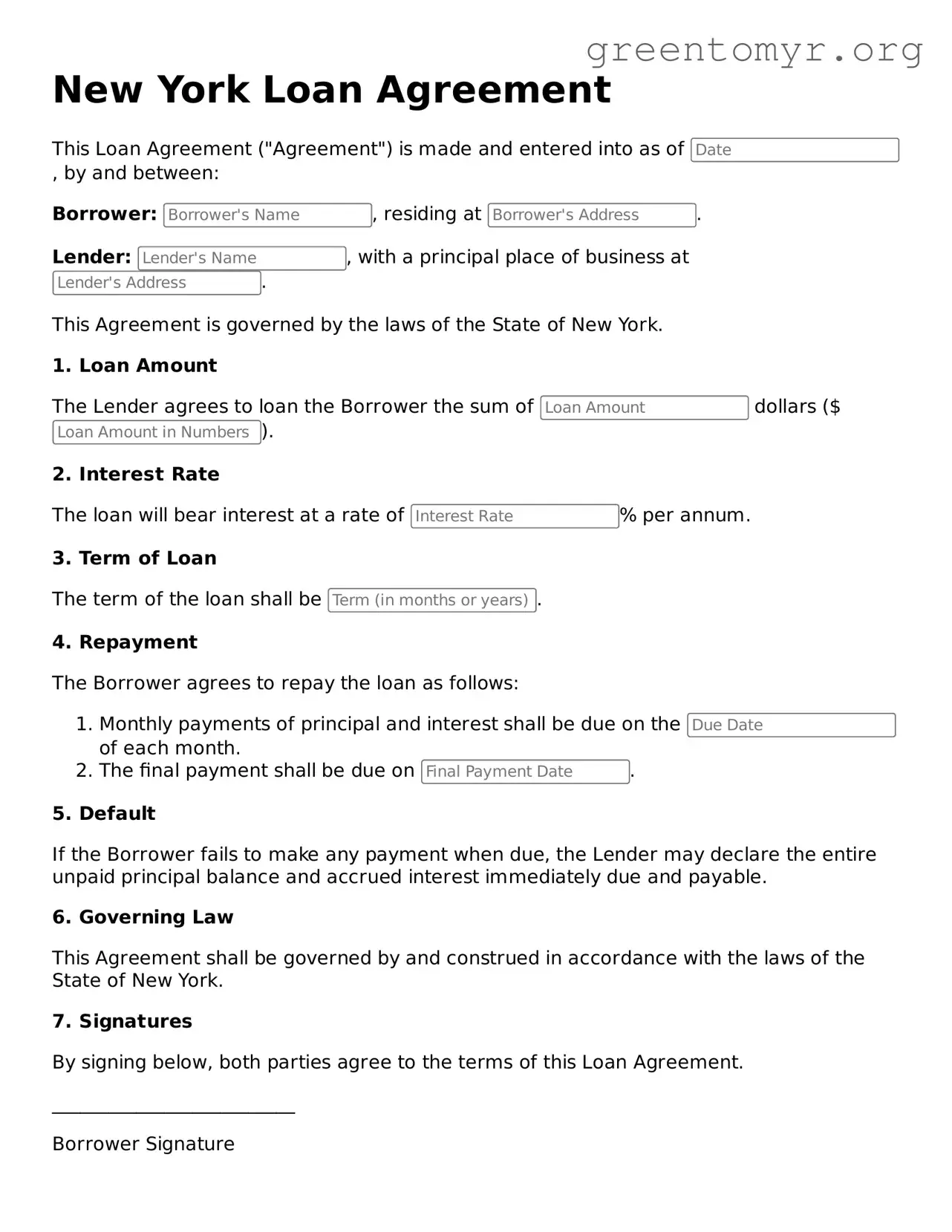
The New York Loan Agreement form serves as a vital document for individuals and businesses seeking to formalize a loan arrangement. This form outlines the terms and conditions under which the loan will be provided, ensuring that both the lender and borrower have a clear understanding of their rights and obligations. Key components of the agreement include the loan amount, interest rate, repayment schedule, and any collateral required. Additionally, it addresses potential penalties for late payments and the process for resolving disputes. By detailing these aspects, the New York Loan Agreement form provides a structured framework that promotes transparency and accountability between the parties involved.
New York Loan Agreement
This Loan Agreement ("Agreement") is made and entered into as of , by and between:
Borrower: , residing at .
Lender: , with a principal place of business at .
This Agreement is governed by the laws of the State of New York.
1. Loan Amount
The Lender agrees to loan the Borrower the sum of dollars ($).
2. Interest Rate
The loan will bear interest at a rate of % per annum.
3. Term of Loan
The term of the loan shall be .
4. Repayment
The Borrower agrees to repay the loan as follows:
5. Default
If the Borrower fails to make any payment when due, the Lender may declare the entire unpaid principal balance and accrued interest immediately due and payable.
6. Governing Law
This Agreement shall be governed by and construed in accordance with the laws of the State of New York.
7. Signatures
By signing below, both parties agree to the terms of this Loan Agreement.
__________________________
Borrower Signature
__________________________
Lender Signature
| Fact Name | Details |
|---|---|
| Purpose | The New York Loan Agreement form is used to outline the terms of a loan between a lender and a borrower. |
| Governing Law | This agreement is governed by the laws of the State of New York. |
| Loan Terms | The form specifies the amount of the loan, interest rate, repayment schedule, and any fees associated with the loan. |
| Signatures | Both the lender and borrower must sign the agreement for it to be valid. |
| Amendments | Any changes to the agreement must be made in writing and signed by both parties. |
Filling out the New York Loan Agreement form is an important step in securing a loan. It’s essential to provide accurate information to ensure a smooth process. Below are the steps to help you complete the form correctly.
After completing the form, review it carefully to ensure all information is accurate and legible. Once satisfied, both parties can retain a copy for their records.
A New York Loan Agreement form is a legal document that outlines the terms and conditions of a loan between a lender and a borrower. This form specifies the amount borrowed, interest rates, repayment schedule, and any collateral involved. It serves as a binding contract to protect both parties' interests.
Anyone involved in a loan transaction in New York should consider using a Loan Agreement form. This includes individuals, businesses, and financial institutions. Whether you’re lending money to a friend or seeking a business loan, having a written agreement is essential to avoid misunderstandings.
A typical Loan Agreement includes:
While it’s not legally required, having a lawyer review your Loan Agreement can be beneficial. They can ensure that the document complies with New York laws and that your rights are protected. This is especially important for larger loans or complex agreements.
Yes, you can modify a Loan Agreement after it has been signed, but both parties must agree to the changes. It’s best to document any modifications in writing and have both parties sign the updated agreement to avoid future disputes.
If the borrower defaults, the lender has several options. They may pursue repayment through negotiation, demand payment in full, or take legal action to recover the owed amount. If collateral was involved, the lender might also have the right to seize it.
Yes, New York has specific laws that govern loan agreements, including interest rate limits and disclosure requirements. The New York General Obligations Law outlines the rights and responsibilities of both lenders and borrowers. It’s important to be aware of these regulations when drafting your agreement.
Yes, a properly drafted and signed Loan Agreement can be enforced in court. If one party fails to uphold their end of the agreement, the other party can file a lawsuit to seek damages or compel performance. Having a clear and comprehensive agreement increases the likelihood of successful enforcement.
If you have questions about your Loan Agreement, consider consulting with a legal expert. They can provide guidance tailored to your specific situation and help clarify any confusing terms or conditions in the agreement.
You can obtain a New York Loan Agreement form from various sources, including online legal document services, law firms, or local government offices. Ensure that the form you choose is up-to-date and complies with New York laws.
When filling out the New York Loan Agreement form, many individuals overlook critical details that can lead to complications. One common mistake is failing to provide accurate personal information. This includes not only your name but also your address, phone number, and Social Security number. Inaccuracies can delay processing or even result in the rejection of your application.
Another frequent error involves misunderstanding the loan terms. Borrowers often skim through the terms and conditions, missing vital information about interest rates, repayment schedules, and fees. This oversight can lead to unexpected financial burdens down the line. Always read the fine print carefully to ensure you fully understand your obligations.
Additionally, people sometimes forget to include necessary documentation. The New York Loan Agreement may require proof of income, bank statements, or identification. Omitting these documents can stall the approval process. It’s crucial to gather all required paperwork before submission to avoid unnecessary delays.
Lastly, many applicants neglect to sign and date the form properly. A missing signature or date can render the agreement invalid. Always double-check that you have completed all sections of the form and that your signature is present. Taking these steps will help ensure a smoother loan application process.
A New York Loan Agreement form is often accompanied by several other important documents that help outline the terms and conditions of the loan. These documents provide clarity and legal backing to the agreement, ensuring all parties understand their rights and responsibilities. Below is a list of commonly used forms and documents associated with a New York Loan Agreement.
These documents work together to create a comprehensive framework for the loan transaction. Understanding each form's purpose is essential for both borrowers and lenders to ensure a smooth and legally sound lending process.
A Loan Agreement is a crucial document that outlines the terms and conditions under which a loan is granted. It shares similarities with several other financial documents. Here are four documents that are comparable to a Loan Agreement:
When filling out the New York Loan Agreement form, it is essential to approach the task with care. Here are some guidelines to help you navigate the process effectively.
Things You Should Do:
Things You Shouldn't Do:
Many people have misunderstandings about the New York Loan Agreement form. Here are five common misconceptions:
When filling out and using the New York Loan Agreement form, it's important to keep several key points in mind. Here are some takeaways to consider:
By following these takeaways, you can create a clear and effective loan agreement that serves the needs of both the lender and borrower.