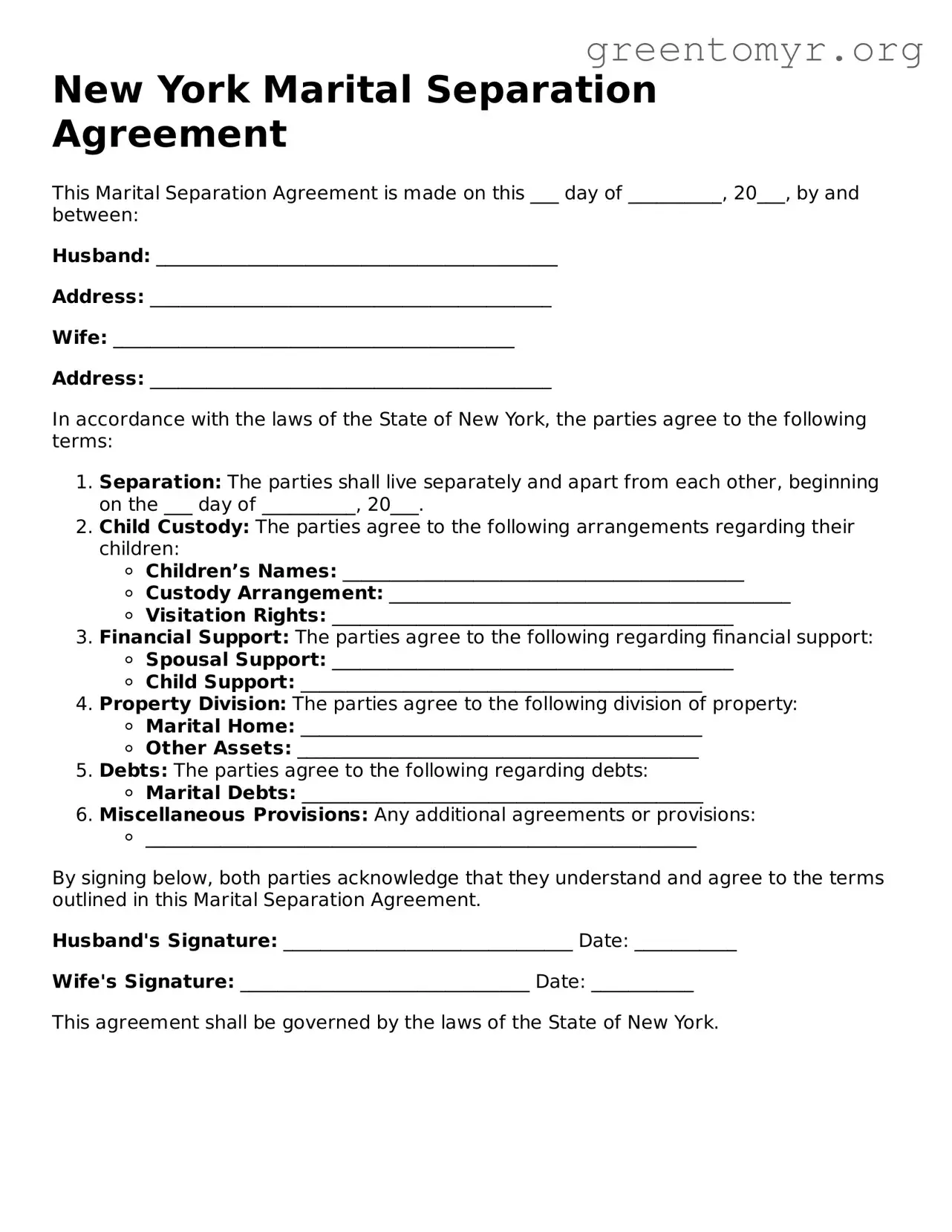
The New York Marital Separation Agreement is a crucial document for couples seeking to formalize their separation while addressing various aspects of their relationship. This agreement outlines the rights and responsibilities of each spouse during the separation period, including the division of assets, debts, and spousal support. It also covers child custody arrangements, visitation rights, and child support obligations, ensuring that the best interests of any children involved are prioritized. By clearly defining each party's expectations and obligations, this form helps prevent misunderstandings and disputes in the future. It serves as a legal safeguard, providing clarity and structure during a challenging time. Couples are encouraged to consider all relevant factors and negotiate terms that reflect their unique circumstances before finalizing the agreement.
New York Marital Separation Agreement
This Marital Separation Agreement is made on this ___ day of __________, 20___, by and between:
Husband: ___________________________________________
Address: ___________________________________________
Wife: ___________________________________________
Address: ___________________________________________
In accordance with the laws of the State of New York, the parties agree to the following terms:
By signing below, both parties acknowledge that they understand and agree to the terms outlined in this Marital Separation Agreement.
Husband's Signature: _______________________________ Date: ___________
Wife's Signature: _______________________________ Date: ___________
This agreement shall be governed by the laws of the State of New York.
| Fact Name | Details |
|---|---|
| Definition | A New York Marital Separation Agreement is a legal document that outlines the terms of separation between spouses. |
| Governing Law | The agreement is governed by New York State Domestic Relations Law. |
| Purpose | It helps clarify issues such as child custody, support, and division of property. |
| Voluntary Agreement | Both parties must willingly agree to the terms outlined in the document. |
| Legal Status | While it is not a divorce decree, it can be enforced in court. |
| Modification | The agreement can be modified if both parties consent to the changes. |
| Notarization | It is advisable to have the agreement notarized to ensure its validity. |
| Child Support | The agreement can specify child support obligations, which must comply with state guidelines. |
| Duration | The terms remain in effect until a divorce is finalized or the agreement is modified. |
After obtaining the New York Marital Separation Agreement form, it's essential to complete it accurately to ensure that both parties understand their rights and responsibilities. Follow these steps carefully to fill out the form correctly.
Once the form is completed, review it thoroughly to ensure all information is accurate. After that, both parties should retain a copy for their records.
A New York Marital Separation Agreement is a legal document that outlines the terms of separation between spouses. It addresses various issues such as property division, child custody, and support obligations. This agreement helps clarify each party's rights and responsibilities, providing a clear framework for the separation process.
There are several reasons to consider a Marital Separation Agreement:
Creating a Marital Separation Agreement involves several steps:
Yes, a Marital Separation Agreement is legally binding in New York, provided it meets certain requirements. Both parties must voluntarily agree to the terms, and the agreement must be in writing and signed. It is advisable to have the document notarized to strengthen its enforceability in court.
If one party does not adhere to the terms of the Marital Separation Agreement, the other party can seek legal recourse. This may involve filing a motion in court to enforce the agreement. Courts generally take these agreements seriously, and violations can result in legal consequences, including fines or modifications to custody and support arrangements.
Filling out the New York Marital Separation Agreement form can be a complex process, and many individuals make common mistakes that can lead to complications later on. One of the most frequent errors is not providing complete information. Each section of the form requires specific details about assets, liabilities, and personal information. Leaving sections blank can create confusion and delay the processing of the agreement.
Another common mistake is failing to accurately list all marital assets and debts. It’s crucial to include everything from real estate and vehicles to bank accounts and credit card debts. Omitting even a single item can lead to disputes in the future, as one party may feel entitled to a portion of an asset that was not disclosed.
Many individuals also overlook the importance of clarity in their language. Ambiguous terms can create misunderstandings. For example, stating that one party will "receive support" without specifying the amount or duration can lead to differing interpretations. Clear, precise language helps prevent potential conflicts.
Additionally, some people forget to consider tax implications when dividing assets. Certain assets may have tax consequences that affect their overall value. Understanding these implications can help both parties make informed decisions about how to divide their property.
It’s also common for individuals to neglect to include a plan for child custody and support, if applicable. The form should clearly outline arrangements for the children, including visitation schedules and financial support. Failing to address these issues can lead to complications down the road.
Another mistake is not reviewing the agreement thoroughly before signing. Rushing through the process can result in overlooked errors or misunderstandings. Taking the time to read the document carefully ensures that both parties are in agreement with the terms.
Some individuals mistakenly believe that they do not need legal advice when completing the form. While it is possible to fill out the agreement without an attorney, consulting with a legal professional can provide valuable insights and help avoid potential pitfalls.
Another frequent error involves signing the document without proper witnesses or notarization. In New York, certain agreements require notarization to be legally binding. Failing to follow these requirements can render the agreement unenforceable.
People also sometimes forget to keep copies of the completed form. It’s essential for both parties to have a copy of the signed agreement for their records. This ensures that everyone has access to the terms agreed upon in case any disputes arise later.
Finally, a common mistake is not updating the agreement when circumstances change. Life events such as job changes, relocations, or changes in income can impact the terms of the agreement. Regularly reviewing and updating the document ensures that it remains relevant and fair for both parties.
A New York Marital Separation Agreement is an important document that outlines the terms of a couple's separation. However, several other forms and documents often accompany this agreement to ensure a comprehensive legal process. Below is a list of these documents, each serving a unique purpose in the separation process.
Each of these documents plays a vital role in the separation process. Together, they help clarify the rights and responsibilities of each party, promote fair resolutions, and lay the groundwork for future legal proceedings if necessary. Understanding these forms can significantly ease the complexities of marital separation.
When filling out the New York Marital Separation Agreement form, there are important dos and don'ts to keep in mind. Here’s a helpful list to guide you:
Understanding the New York Marital Separation Agreement can be challenging. Here are ten common misconceptions that people often have about this important document:
Being informed about these misconceptions can help you navigate the complexities of separation more effectively. It’s crucial to understand the purpose and implications of a marital separation agreement.
When filling out and using the New York Marital Separation Agreement form, it is essential to keep several key points in mind to ensure clarity and compliance with state laws. Here are five important takeaways: