When it comes to making critical healthcare decisions, having a plan in place is essential. The New York Medical Power of Attorney form empowers individuals to designate someone they trust to make medical choices on their behalf in the event they become unable to communicate their wishes. This legal document not only clarifies who will act as your healthcare agent but also outlines the extent of their authority. It can cover a range of medical decisions, from routine care to life-sustaining treatments, ensuring that your preferences are respected. Completing this form requires careful consideration, as it involves discussing your values and wishes with your chosen agent. In New York, this document must be signed in the presence of a witness to be valid, reinforcing the importance of having a reliable advocate during medical crises. By understanding the key aspects of the New York Medical Power of Attorney, you can take a proactive step toward securing your healthcare rights and ensuring your voice is heard, even when you cannot speak for yourself.
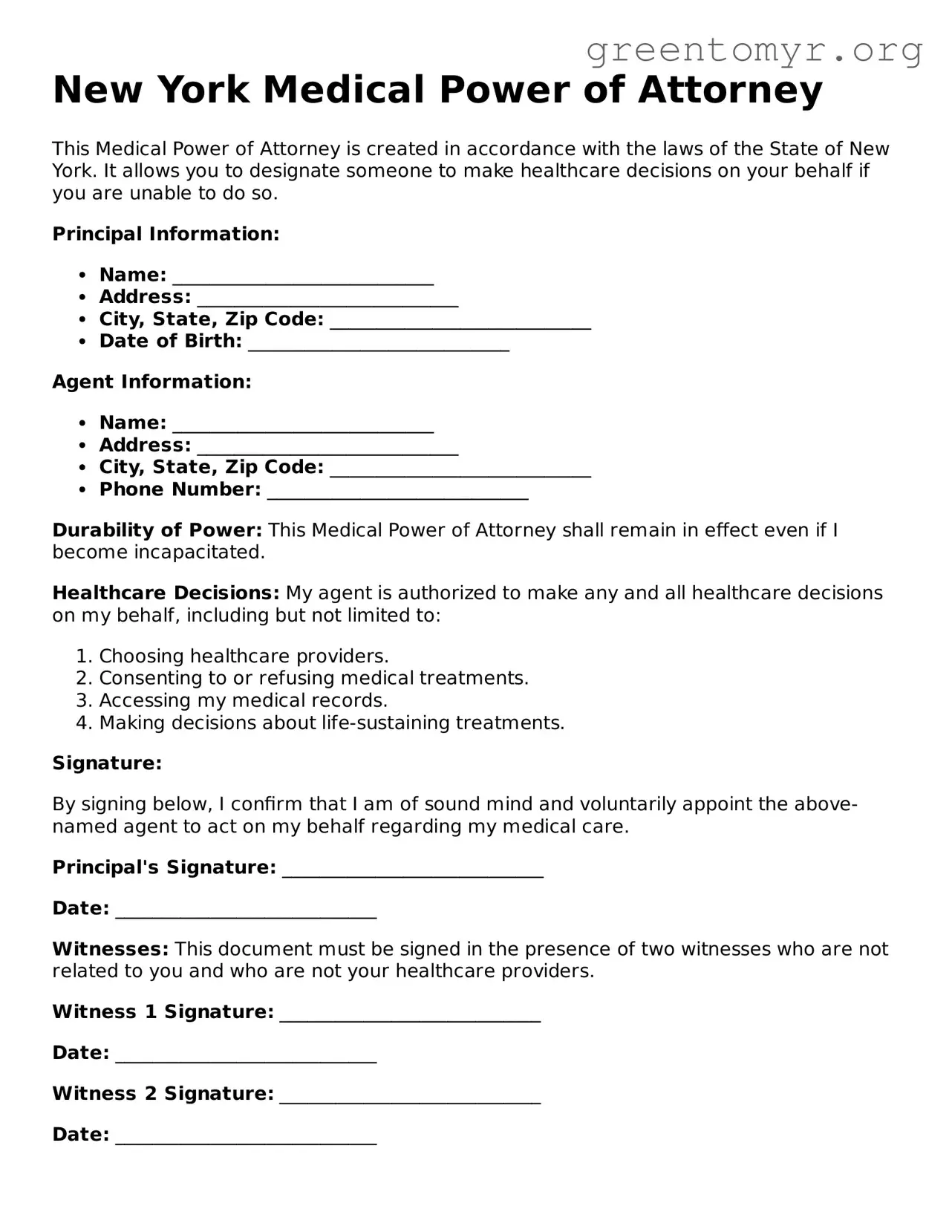
New York Medical Power of Attorney
This Medical Power of Attorney is created in accordance with the laws of the State of New York. It allows you to designate someone to make healthcare decisions on your behalf if you are unable to do so.
Principal Information:
Agent Information:
Durability of Power: This Medical Power of Attorney shall remain in effect even if I become incapacitated.
Healthcare Decisions: My agent is authorized to make any and all healthcare decisions on my behalf, including but not limited to:
Signature:
By signing below, I confirm that I am of sound mind and voluntarily appoint the above-named agent to act on my behalf regarding my medical care.
Principal's Signature: ____________________________
Date: ____________________________
Witnesses: This document must be signed in the presence of two witnesses who are not related to you and who are not your healthcare providers.
Witness 1 Signature: ____________________________
Date: ____________________________
Witness 2 Signature: ____________________________
Date: ____________________________
It is advisable to keep this document in a safe place and to inform your agent and family members of its existence.
| Fact Name | Details |
|---|---|
| Definition | A New York Medical Power of Attorney form allows an individual to designate someone to make healthcare decisions on their behalf if they become unable to do so. |
| Governing Law | This form is governed by New York State's Public Health Law, specifically Article 29-C, which outlines the rules for healthcare proxies. |
| Requirements | The form must be signed by the principal (the person granting authority) in the presence of two witnesses or a notary public to be valid. |
| Durability | The New York Medical Power of Attorney remains effective even if the principal becomes incapacitated, ensuring continuous decision-making authority. |
Filling out the New York Medical Power of Attorney form is an important step in designating someone to make healthcare decisions on your behalf. Once completed, this document will allow your chosen agent to act according to your wishes if you are unable to communicate them yourself.
A New York Medical Power of Attorney is a legal document that allows an individual, known as the principal, to designate another person, called the agent or proxy, to make medical decisions on their behalf if they become unable to do so. This document is crucial for ensuring that your healthcare preferences are respected when you cannot communicate them yourself.
In New York, you can appoint anyone you trust as your agent, provided they are at least 18 years old. Common choices include family members, close friends, or trusted advisors. It is essential to choose someone who understands your values and wishes regarding medical treatment.
Your agent can make a variety of medical decisions on your behalf, including:
These decisions should align with your preferences and values, so it’s important to discuss them with your agent ahead of time.
To create a Medical Power of Attorney in New York, follow these steps:
It’s advisable to keep the original document in a safe place and inform your loved ones about its existence.
Yes, you can revoke your Medical Power of Attorney at any time, as long as you are mentally competent. To do this, you should notify your agent and any healthcare providers who have a copy of the document. It is also a good idea to destroy the old document and create a new one if you wish to appoint a different agent.
If you do not have a Medical Power of Attorney and become unable to make your own medical decisions, healthcare providers may turn to your family members or close friends to make those decisions. However, this can lead to disagreements and may not reflect your personal wishes. Having a designated agent ensures that your preferences are followed.
No, a Medical Power of Attorney and a Living Will serve different purposes. A Medical Power of Attorney allows someone to make decisions on your behalf, while a Living Will outlines your wishes regarding specific medical treatments and end-of-life care. Both documents can work together to provide comprehensive guidance about your healthcare preferences.
While it is not legally required to have a lawyer to create a Medical Power of Attorney in New York, consulting one can be beneficial. A lawyer can help ensure that the document accurately reflects your wishes and complies with all legal requirements. If you feel confident in understanding the process, you can create the document on your own.
It is a good practice to review your Medical Power of Attorney periodically, especially after significant life changes such as marriage, divorce, or the birth of a child. Changes in your health status or personal circumstances may also prompt a review. Keeping your document up to date ensures that it accurately reflects your current wishes and the right agent is in place.
Filling out a New York Medical Power of Attorney form is an important step in ensuring your healthcare wishes are respected. However, many people make common mistakes that can lead to complications down the line. Understanding these pitfalls can help you navigate the process more smoothly.
One frequent error is not selecting an appropriate agent. Your agent should be someone you trust completely, as they will have the authority to make medical decisions on your behalf. Choosing someone who may not fully understand your wishes can create confusion and conflict during critical times.
Another mistake is failing to discuss your wishes with your chosen agent. It’s essential to have an open conversation about your healthcare preferences. Without this dialogue, your agent may struggle to make decisions that align with your values and desires.
People often overlook the importance of signing and dating the document correctly. In New York, your signature and the date are crucial for the validity of the form. Missing either can render the document ineffective, leaving your healthcare decisions unaddressed.
Additionally, many individuals forget to have the form witnessed or notarized. New York law requires that the Medical Power of Attorney be signed in the presence of at least one witness or a notary public. Failing to do so can lead to challenges in enforcing the document when needed.
Another common oversight is not updating the form when circumstances change. Life events such as marriage, divorce, or the death of your agent can impact your choices. Regularly reviewing and updating your Medical Power of Attorney ensures that it reflects your current wishes.
Some people mistakenly assume that a Medical Power of Attorney is the same as a Living Will. While both documents deal with healthcare decisions, they serve different purposes. A Living Will outlines your preferences for medical treatment in specific situations, while a Medical Power of Attorney designates someone to make decisions on your behalf.
Moreover, failing to provide copies of the completed form to your healthcare providers can lead to confusion. It’s vital that your doctors and medical team have access to your Medical Power of Attorney. This ensures that your wishes are known and respected during medical emergencies.
Lastly, many individuals do not consider the implications of choosing multiple agents. While it might seem beneficial to have a backup, designating more than one person can lead to disagreements and delays in decision-making. It’s often more effective to select one primary agent with the option to name an alternate if necessary.
By being aware of these common mistakes, you can take the necessary steps to ensure your Medical Power of Attorney is filled out correctly. This will help safeguard your healthcare wishes and provide peace of mind for you and your loved ones.
When setting up a New York Medical Power of Attorney, it’s often helpful to consider additional forms and documents that can complement it. These documents can provide clarity and ensure that your healthcare wishes are respected. Here’s a brief overview of some commonly used forms alongside the Medical Power of Attorney.
Having these documents in place can provide peace of mind. They ensure that your healthcare decisions align with your values and wishes, especially in critical situations. Always consider discussing these options with a trusted advisor or legal professional to ensure your choices are well understood and documented.
When filling out the New York Medical Power of Attorney form, it's important to keep a few key points in mind. Here are four things you should and shouldn't do:
The New York Medical Power of Attorney form is a crucial document that allows individuals to designate someone to make healthcare decisions on their behalf if they become unable to do so. However, several misconceptions surround this form. Here are six common misunderstandings:
Many people confuse a Medical Power of Attorney with a Living Will. While both documents deal with healthcare decisions, a Medical Power of Attorney appoints someone to make decisions for you, whereas a Living Will outlines your wishes regarding medical treatment.
Some believe that only legal professionals can draft a Medical Power of Attorney. In reality, individuals can create this document themselves using state-approved forms, provided they meet the necessary requirements.
This form is often thought to be necessary only for the elderly. However, anyone over 18 can benefit from having a Medical Power of Attorney, as accidents or sudden illnesses can happen to anyone at any age.
Some people think that the Medical Power of Attorney is only active when they are unable to make decisions. In New York, you can choose to have it effective immediately or only upon incapacity, depending on your preferences.
Another misconception is that once the Medical Power of Attorney is signed, it cannot be altered. In fact, you can revoke or update the document at any time, as long as you are mentally competent.
Many assume that healthcare providers will automatically recognize the Medical Power of Attorney. However, it is essential to provide a copy to your healthcare team to ensure they are aware of your designated decision-maker.
Understanding these misconceptions can help individuals make informed decisions about their healthcare and ensure their wishes are respected.
Filling out a Medical Power of Attorney form in New York is an important step in ensuring that your healthcare preferences are respected. Here are some key takeaways to keep in mind:
By following these guidelines, you can ensure that your Medical Power of Attorney is effective and serves your needs when it matters most.