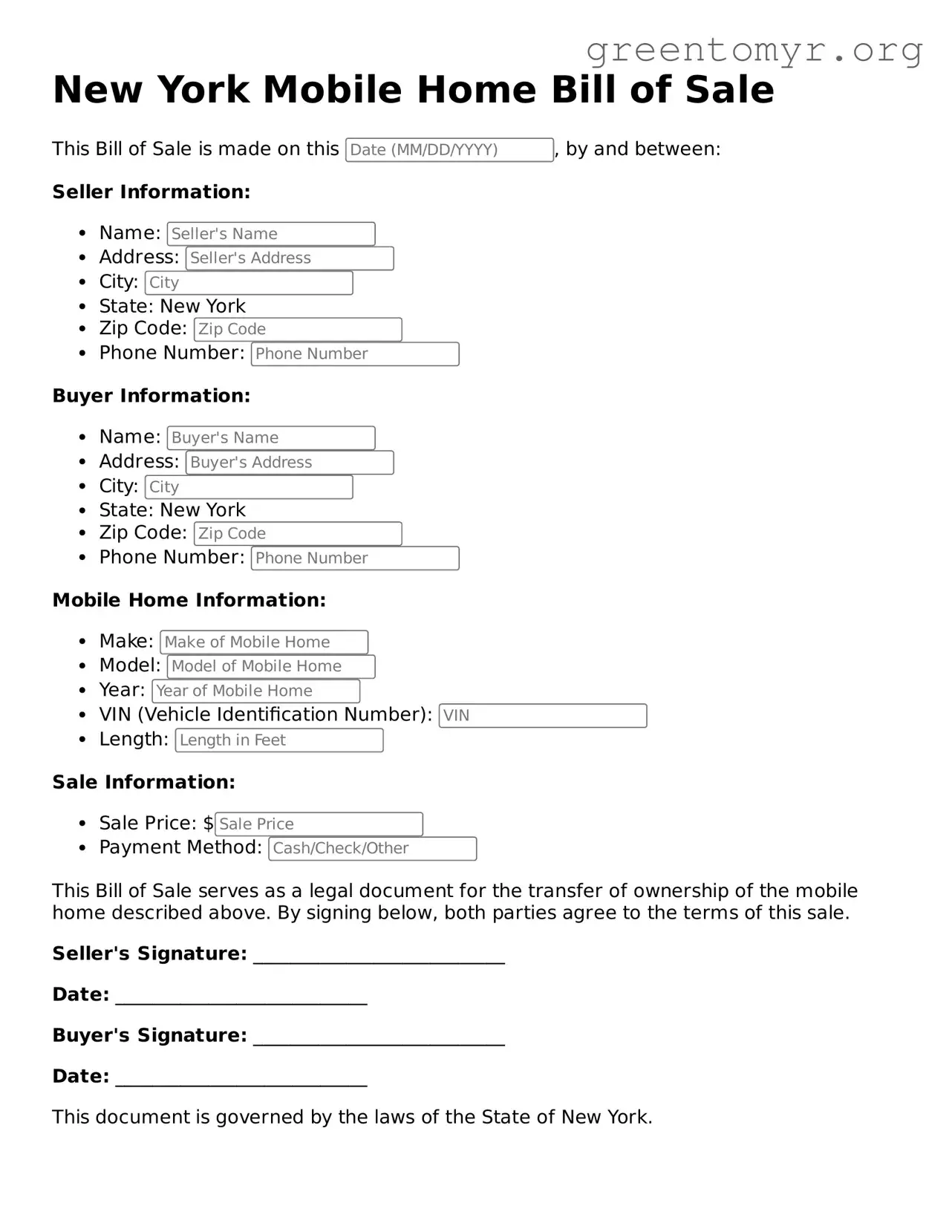
The New York Mobile Home Bill of Sale form serves as a crucial document in the transaction of mobile homes within the state. This form outlines essential details such as the buyer's and seller's names, addresses, and contact information, ensuring that both parties are clearly identified. It includes a comprehensive description of the mobile home being sold, which typically encompasses the make, model, year, and Vehicle Identification Number (VIN). Additionally, the form captures the sale price and any terms related to payment, providing clarity on the financial aspects of the transaction. Notably, it also includes a section for signatures, which signifies the agreement between the buyer and seller, making it legally binding. By utilizing this form, individuals can ensure a smooth transfer of ownership while complying with state regulations, thereby protecting their rights and interests throughout the process.
New York Mobile Home Bill of Sale
This Bill of Sale is made on this , by and between:
Seller Information:
Buyer Information:
Mobile Home Information:
Sale Information:
This Bill of Sale serves as a legal document for the transfer of ownership of the mobile home described above. By signing below, both parties agree to the terms of this sale.
Seller's Signature: ___________________________
Date: ___________________________
Buyer's Signature: ___________________________
Date: ___________________________
This document is governed by the laws of the State of New York.
| Fact Name | Description |
|---|---|
| Purpose | The New York Mobile Home Bill of Sale form is used to document the sale of a mobile home, ensuring both parties have a record of the transaction. |
| Governing Laws | This form is governed by New York State laws pertaining to the sale and transfer of mobile homes, including relevant sections of the New York Vehicle and Traffic Law. |
| Required Information | Essential details include the names and addresses of both the seller and buyer, a description of the mobile home, and the sale price. |
| Signatures | Both the seller and buyer must sign the form to validate the transaction, ensuring legal recognition of the sale. |
Once you have gathered all necessary information, you can proceed to fill out the New York Mobile Home Bill of Sale form. This document is essential for transferring ownership of a mobile home. Ensure that you have all the details handy to complete the form accurately.
After completing the form, ensure that both parties keep a copy for their records. This will serve as proof of the transaction and ownership transfer.
A Mobile Home Bill of Sale is a legal document that records the transfer of ownership of a mobile home from one party to another in New York. This form serves as proof that the seller has sold the mobile home and the buyer has purchased it. It includes important details about the transaction, such as the names of the buyer and seller, the mobile home’s identification number, and the sale price.
This document is essential for several reasons:
The Mobile Home Bill of Sale typically requires the following information:
While it is not legally required to have a Mobile Home Bill of Sale, it is highly recommended. Without it, proving ownership can become complicated. Many parks and municipalities may also require this document for registration purposes.
To complete the form, follow these steps:
Yes, you can create your own Mobile Home Bill of Sale. However, it’s important to include all required information to ensure it is valid. Many templates are available online, or you can consult with a legal expert to ensure your document meets all necessary requirements.
Once the Mobile Home Bill of Sale is completed and signed, keep a copy for your records. The buyer should also retain a copy as proof of ownership. If required, submit the form to the appropriate local authority for registration and titling purposes.
Filling out the New York Mobile Home Bill of Sale form can be straightforward, but many people make common mistakes that can lead to complications. One frequent error is not providing complete information. Sellers often forget to include important details such as the mobile home’s make, model, year, and Vehicle Identification Number (VIN). Omitting these details can create confusion and may affect the transfer of ownership.
Another common mistake is incorrect signatures. Both the seller and the buyer must sign the form. If one party forgets to sign, the document is not valid. It’s essential to ensure that all required signatures are present before submitting the form.
People also tend to overlook the date of the transaction. Failing to include the date can lead to questions about when the sale occurred. This information is crucial for record-keeping and for any future legal considerations.
Additionally, some individuals make the mistake of not including the purchase price. This detail is vital for both parties and for tax purposes. Leaving it blank can raise red flags with the Department of Motor Vehicles (DMV).
Another issue arises when individuals do not provide accurate contact information. Buyers and sellers should ensure that their names, addresses, and phone numbers are clearly stated. Incomplete or incorrect contact details can hinder communication and future correspondence.
People sometimes forget to check for any outstanding liens or loans on the mobile home. If there are existing financial obligations, the sale may not be valid. It’s advisable to verify the status of the mobile home before completing the sale.
Moreover, neglecting to keep a copy of the completed form is a mistake many make. Both parties should retain a copy for their records. This document serves as proof of the transaction and can be important for future reference.
Lastly, not following up with the DMV can be a significant oversight. After completing the sale, it’s crucial to ensure that the ownership transfer is recorded. This step protects both the buyer and the seller and confirms that the transaction has been officially recognized.
When completing a transaction involving a mobile home in New York, it is crucial to have all necessary documents in order. Along with the New York Mobile Home Bill of Sale form, several other forms may be required to ensure a smooth transfer of ownership and compliance with state regulations. Here are four essential documents to consider:
Having these documents prepared and properly filled out can prevent delays and complications. It is advisable to review each form carefully and consult with a professional if there are any uncertainties. This proactive approach will facilitate a successful transfer of ownership for your mobile home.
The Mobile Home Bill of Sale form serves as a crucial document in the transfer of ownership for mobile homes. Several other documents share similarities with it, particularly in their function and purpose. Below are four such documents:
When completing the New York Mobile Home Bill of Sale form, it is essential to follow specific guidelines to ensure accuracy and compliance. Below is a list of actions to take and avoid during this process.
When dealing with the New York Mobile Home Bill of Sale form, several misconceptions can lead to confusion. Understanding the truth behind these myths can help ensure a smoother transaction.
This is not true. The Bill of Sale is required for both new and used mobile homes. It serves as proof of ownership transfer regardless of the home's age.
While having a notary can add an extra layer of validation, it is not a legal requirement for the Bill of Sale in New York. The signatures of the buyer and seller are sufficient.
In addition to the Bill of Sale, other documents may be necessary, such as a title certificate and proof of payment. It's essential to check local regulations for any additional requirements.
This form can also be used in transactions involving dealers or businesses. Whether buying from a private seller or a dealership, a Bill of Sale is still important.
Signing the Bill of Sale is just one step in the process. The buyer must also register the mobile home with the local authorities and ensure that any outstanding taxes or fees are settled.
When dealing with the New York Mobile Home Bill of Sale form, there are several important points to keep in mind. This form is essential for legally transferring ownership of a mobile home. Here are some key takeaways:
By following these guidelines, you can ensure a smoother transaction when buying or selling a mobile home in New York.