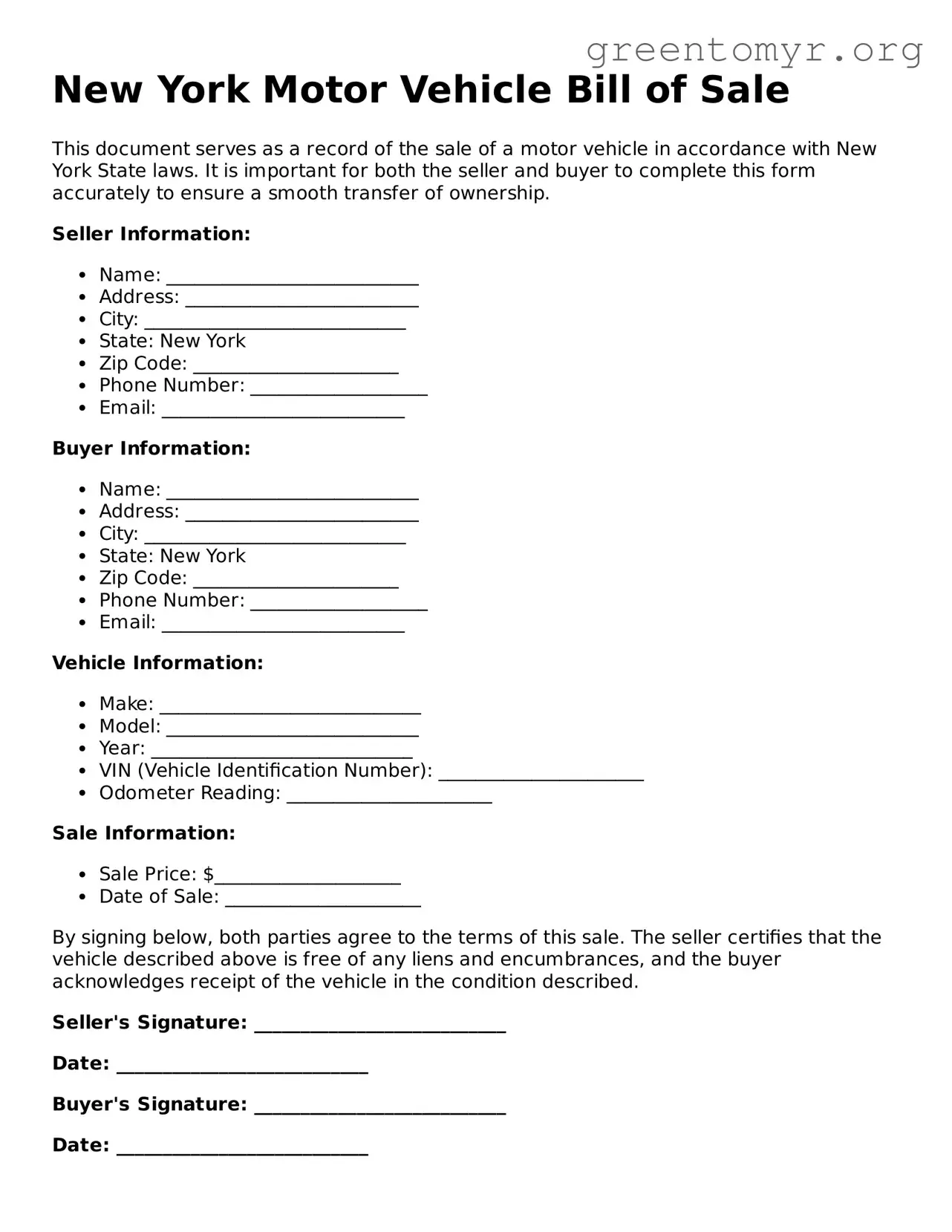
When buying or selling a vehicle in New York, a Motor Vehicle Bill of Sale form plays a crucial role in the transaction. This document serves as a legal record of the transfer of ownership from the seller to the buyer, ensuring that both parties have a clear understanding of the terms involved. Typically, the form includes essential details such as the vehicle's make, model, year, and Vehicle Identification Number (VIN), which help identify the specific vehicle being sold. Additionally, it captures the sale price, date of the transaction, and the names and addresses of both the buyer and seller. This information is vital not only for the parties involved but also for state records and future ownership verification. By providing a signed Bill of Sale, sellers can protect themselves against future claims regarding the vehicle, while buyers gain assurance of their new ownership. Understanding the significance of this form can simplify the buying and selling process, making it a key component of vehicle transactions in New York.
New York Motor Vehicle Bill of Sale
This document serves as a record of the sale of a motor vehicle in accordance with New York State laws. It is important for both the seller and buyer to complete this form accurately to ensure a smooth transfer of ownership.
Seller Information:
Buyer Information:
Vehicle Information:
Sale Information:
By signing below, both parties agree to the terms of this sale. The seller certifies that the vehicle described above is free of any liens and encumbrances, and the buyer acknowledges receipt of the vehicle in the condition described.
Seller's Signature: ___________________________
Date: ___________________________
Buyer's Signature: ___________________________
Date: ___________________________
Keep a copy of this Bill of Sale for your records. This document may be required for registration purposes or in case of any future disputes.
| Fact Name | Description |
|---|---|
| Purpose | The New York Motor Vehicle Bill of Sale form serves as a legal document to record the sale of a vehicle between a buyer and a seller. |
| Governing Law | This form is governed by the New York Vehicle and Traffic Law. |
| Mandatory Use | While not mandatory, using this form is highly recommended for both parties to protect their rights during the transaction. |
| Information Required | The form requires details such as the vehicle identification number (VIN), make, model, year, and odometer reading at the time of sale. |
| Signatures | Both the buyer and seller must sign the form to validate the transaction. |
| Notarization | Notarization is not required for the Bill of Sale in New York, but it can add an extra layer of authenticity. |
| Tax Implications | Buyers may need to pay sales tax based on the purchase price when registering the vehicle with the DMV. |
| Record Keeping | Both parties should keep a copy of the Bill of Sale for their records, which can be useful for future reference. |
| Transfer of Ownership | The Bill of Sale facilitates the transfer of ownership from the seller to the buyer, which is essential for DMV registration. |
| Use for Different Vehicles | This form can be used for various types of motor vehicles, including cars, trucks, motorcycles, and trailers. |
After obtaining the New York Motor Vehicle Bill of Sale form, you will need to fill it out accurately. This form is essential for documenting the sale of a vehicle and ensuring that both the buyer and seller have a record of the transaction. Follow these steps to complete the form correctly.
Once the form is filled out and signed, you can proceed with the necessary steps to transfer ownership of the vehicle. This may include submitting the form to the appropriate authorities and completing any additional paperwork required for registration.
A New York Motor Vehicle Bill of Sale is a legal document that records the sale of a vehicle between a seller and a buyer. It provides proof of the transaction and outlines important details about the vehicle, including its identification number, make, model, and sale price. This document is essential for registering the vehicle under the new owner's name.
The Bill of Sale serves several purposes. It protects both the buyer and the seller by documenting the terms of the sale. It can help resolve disputes regarding the transaction and is often required by the New York Department of Motor Vehicles (DMV) when transferring ownership of a vehicle. Additionally, it may be needed for tax purposes or if the buyer wishes to obtain financing.
The Bill of Sale must include the following information:
While a Bill of Sale is not strictly required for every vehicle sale in New York, it is highly recommended. For private sales, having a Bill of Sale can help clarify the terms of the transaction and protect both parties. If the vehicle is being sold through a dealership, the dealer typically handles the paperwork.
Yes, you can create your own Bill of Sale as long as it includes all the necessary information. There are also templates available online that you can use to ensure you include all required details. However, make sure that the document is clear and accurately reflects the terms of the sale.
In New York, notarization of the Bill of Sale is not required. However, having the document notarized can provide an additional layer of protection and may be beneficial if any disputes arise in the future.
After the sale, both the buyer and seller should keep a copy of the Bill of Sale for their records. The buyer will need it when registering the vehicle with the DMV. It is wise to store the document in a safe place, as it serves as proof of ownership and the terms of the sale.
If the vehicle has a lien, it is crucial to address it before completing the sale. The seller must ensure that the lien is paid off and released. The Bill of Sale should clearly indicate whether the vehicle is being sold free of any liens. If the lien is not resolved, the buyer could face complications regarding ownership.
You can obtain a New York Motor Vehicle Bill of Sale form from the New York DMV website or through various online resources. Additionally, some auto dealerships may provide their own forms. Ensure that any form you use complies with New York state requirements.
Filling out the New York Motor Vehicle Bill of Sale form can seem straightforward, but many people make common mistakes that can lead to complications down the line. One frequent error occurs when individuals forget to include all necessary information. This includes details such as the vehicle identification number (VIN), the make and model of the vehicle, and the sale price. Omitting any of this information can create issues when registering the vehicle or transferring ownership.
Another mistake is not having both the buyer and seller sign the form. It is essential for both parties to sign to ensure that the sale is legally binding. If one party fails to sign, the transaction may be questioned, which can lead to disputes or problems with the Department of Motor Vehicles (DMV).
People often overlook the importance of providing accurate dates on the form. The date of the sale is crucial for record-keeping and can affect tax obligations. If the date is incorrect, it may lead to confusion regarding when the sale actually took place, which could have implications for both the buyer and seller.
Another common error is not providing the correct odometer reading. The law requires that the seller disclose the vehicle's mileage at the time of sale. Failing to do so or providing an inaccurate reading can lead to legal issues, including potential fraud claims. It’s important to double-check this information before submitting the form.
In some cases, individuals may not understand the difference between a bill of sale and a title transfer. While both documents are important, they serve different purposes. The bill of sale serves as proof of the transaction, while the title transfer is necessary to officially change ownership. Confusing these two can lead to delays in the registration process.
Lastly, people sometimes neglect to keep a copy of the completed bill of sale. It is crucial for both the buyer and seller to retain a copy for their records. This document serves as proof of the transaction and can be helpful in case any disputes arise in the future. Having a copy on hand can provide peace of mind and ensure that both parties are protected.
When buying or selling a vehicle in New York, the Motor Vehicle Bill of Sale form is essential. However, several other documents may also be necessary to complete the transaction smoothly. Here’s a list of common forms and documents you might encounter.
Having these documents ready can help ensure a smooth transaction when buying or selling a vehicle in New York. It's always a good idea to check with the DMV or a legal expert if you have questions about what you need.
The Motor Vehicle Bill of Sale form serves an important purpose in the transfer of vehicle ownership. It shares similarities with several other important documents. Here are four documents that are comparable to the Motor Vehicle Bill of Sale:
When filling out the New York Motor Vehicle Bill of Sale form, it is important to follow certain guidelines to ensure the document is completed correctly. Here are five things you should do and five things you should avoid:
The New York Motor Vehicle Bill of Sale form is an important document when buying or selling a vehicle. However, several misconceptions often arise regarding its use and requirements. Here are six common misunderstandings:
Understanding these misconceptions can help ensure a smoother transaction process when buying or selling a vehicle in New York. Always take the time to complete the bill of sale accurately and keep a copy for your records.
When filling out and using the New York Motor Vehicle Bill of Sale form, keep these key takeaways in mind: