The New York Notice to Quit form serves as a crucial document in the landlord-tenant relationship, particularly when a landlord seeks to terminate a tenancy. This form is typically issued to tenants who have violated the terms of their lease or have not paid rent. It notifies the tenant of the landlord's intention to reclaim possession of the rental property. The Notice to Quit must include specific information, such as the tenant's name, the address of the rental property, and the reason for termination. Additionally, it should state the time frame within which the tenant must vacate the premises, which varies based on the reason for the notice. Proper completion and delivery of this form are essential to ensure that the eviction process can proceed legally and effectively. Understanding the requirements and implications of the Notice to Quit is vital for both landlords and tenants to navigate potential disputes and ensure compliance with New York housing laws.
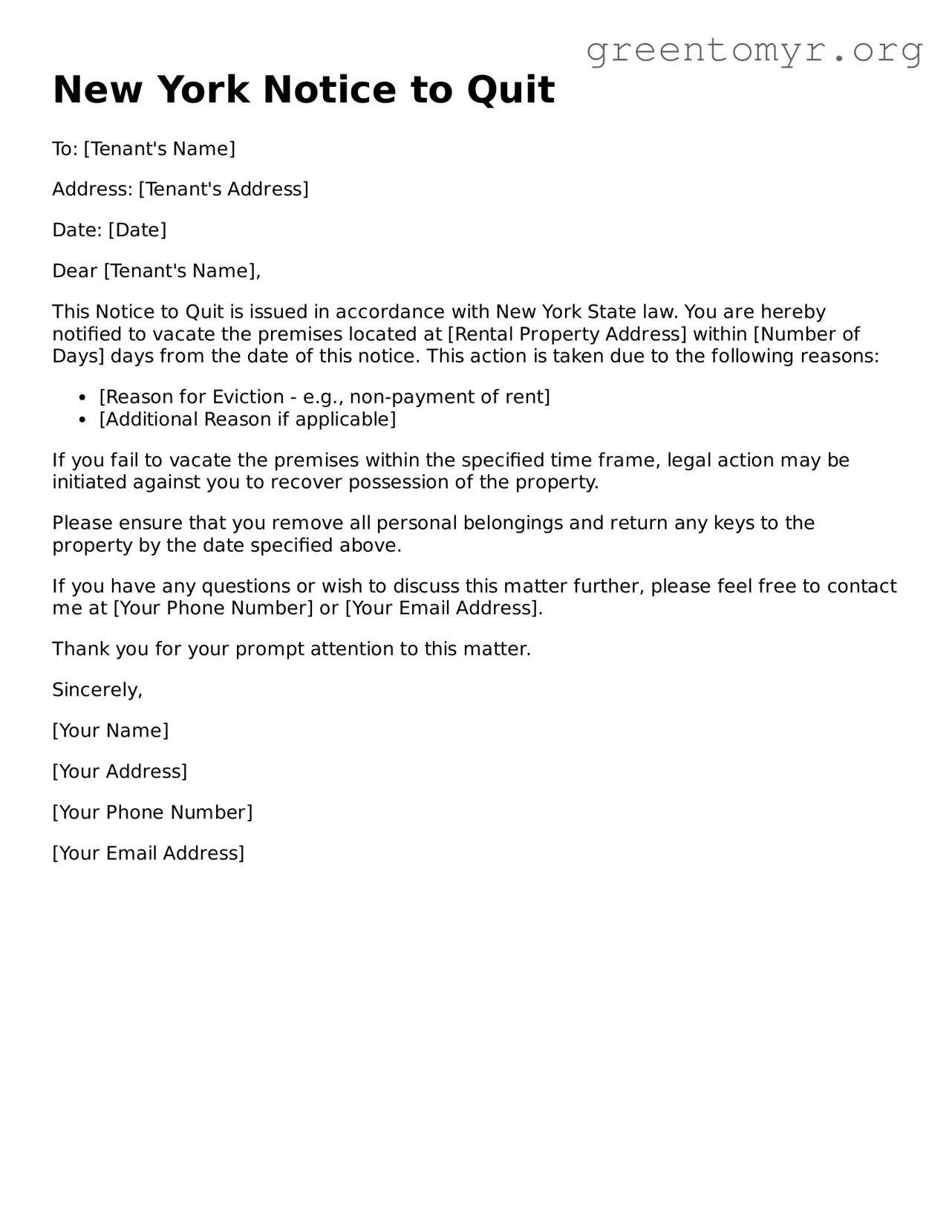
New York Notice to Quit
To: [Tenant's Name]
Address: [Tenant's Address]
Date: [Date]
Dear [Tenant's Name],
This Notice to Quit is issued in accordance with New York State law. You are hereby notified to vacate the premises located at [Rental Property Address] within [Number of Days] days from the date of this notice. This action is taken due to the following reasons:
If you fail to vacate the premises within the specified time frame, legal action may be initiated against you to recover possession of the property.
Please ensure that you remove all personal belongings and return any keys to the property by the date specified above.
If you have any questions or wish to discuss this matter further, please feel free to contact me at [Your Phone Number] or [Your Email Address].
Thank you for your prompt attention to this matter.
Sincerely,
[Your Name]
[Your Address]
[Your Phone Number]
[Your Email Address]
| Fact Name | Details |
|---|---|
| Purpose | The New York Notice to Quit form serves as a formal notification to tenants that they must vacate the rental property. |
| Governing Law | The form is governed by New York Real Property Law, specifically sections 711 and 713. |
| Delivery Method | The notice can be delivered personally, by mail, or posted on the premises if the tenant is absent. |
| Timeframe | Tenants typically have 10 days to respond to the notice before further legal action can be taken. |
| Importance | Utilizing the Notice to Quit is essential for landlords to initiate eviction proceedings legally and effectively. |
Filling out the New York Notice to Quit form is an important step in the process of addressing a rental situation. After completing the form, it will need to be delivered to the tenant, which may involve personal delivery or sending it through certified mail. Ensuring that the form is filled out correctly is essential for it to be legally valid.
Once the Notice to Quit is filled out and delivered, it is important to keep track of any responses from the tenant. This can help in determining the next steps in the process, whether it involves further communication or legal action.
A New York Notice to Quit form is a legal document that a landlord uses to inform a tenant that they must vacate the rental property. This notice is typically issued when a tenant has violated the terms of their lease or failed to pay rent. The form serves as a formal request for the tenant to leave the premises within a specified time frame.
A landlord should issue a Notice to Quit in various situations, including:
Each situation may have different requirements regarding the notice period, so it's essential to understand the specific circumstances before proceeding.
The Notice to Quit must include the following key details:
Including this information ensures clarity and compliance with legal requirements.
The time frame for a tenant to respond to a Notice to Quit varies based on the reason for the notice. For example:
It is crucial for tenants to read the notice carefully and understand their rights and obligations.
If a tenant does not comply with the Notice to Quit, the landlord may initiate eviction proceedings. This process typically involves filing a petition with the local court. The court will then schedule a hearing where both the landlord and tenant can present their cases. If the court rules in favor of the landlord, a warrant of eviction may be issued, allowing law enforcement to remove the tenant from the property.
Filling out the New York Notice to Quit form can be a straightforward process, but many make common mistakes that can lead to delays or complications. One frequent error is failing to provide accurate tenant information. It’s crucial to include the full name of the tenant as it appears on the lease. If this information is incorrect, it may invalidate the notice.
Another common mistake involves the address. The property address must be complete and precise. Omitting apartment numbers or using incorrect street names can cause confusion and hinder the delivery of the notice. Always double-check the details to ensure they match official documents.
Many people also forget to specify the reason for the eviction. While some may think it's unnecessary, stating the reason clearly can help clarify the situation. Whether it’s non-payment of rent or lease violations, being explicit can prevent misunderstandings down the line.
Timing is another critical factor. A common error is not adhering to the required notice period. New York law mandates specific time frames depending on the reason for eviction. Failing to meet these deadlines can complicate the eviction process and may require starting over.
Additionally, some individuals neglect to sign the form. A signature is essential, as it validates the notice. Without it, the document lacks legal standing, which can lead to significant setbacks in the eviction process.
Another mistake is not keeping a copy of the completed form. It’s important to retain a copy for your records. This documentation can serve as proof of the notice being served, which may be necessary if the situation escalates.
People often overlook the method of delivery. The law requires that the notice be delivered in a specific manner, whether that’s by mail, personal delivery, or posting on the property. Ignoring these requirements can lead to challenges in court.
Lastly, many fail to understand the importance of following up. After sending the notice, it’s wise to confirm that the tenant received it. This proactive approach can help ensure that the eviction process proceeds smoothly and without unnecessary delays.
The New York Notice to Quit form is an essential document used in the eviction process. It notifies tenants that they must vacate the rental property within a specified timeframe. Alongside this form, several other documents are commonly utilized to ensure compliance with legal requirements and to facilitate the eviction process. Below is a list of these forms and documents.
Utilizing these documents correctly is crucial for landlords to ensure that the eviction process adheres to New York laws. Each form serves a specific purpose, contributing to the overall legality and efficiency of the proceedings.
When filling out the New York Notice to Quit form, it's important to approach the task with care. Here are some essential dos and don'ts to keep in mind:
By adhering to these guidelines, you can help ensure that the process goes smoothly and remains compliant with New York law.
Understanding the New York Notice to Quit form is essential for both landlords and tenants. However, several misconceptions can lead to confusion. Here are six common misconceptions:
The Notice to Quit is specifically for non-payment of rent or lease violations. It is not applicable for all eviction scenarios.
A Notice to Quit must be in writing. Verbal notices do not meet the legal requirements and can lead to complications.
The Notice to Quit is a preliminary step and does not require a court order. However, if the tenant does not comply, further legal action may be necessary.
Ignoring the Notice to Quit can have serious consequences. Tenants are advised to respond appropriately to avoid escalation.
The content and delivery of the Notice to Quit can vary based on the specific circumstances of the tenancy and the lease agreement.
The Notice to Quit is just the beginning. If the tenant does not vacate, landlords must proceed with formal eviction proceedings.
By clarifying these misconceptions, both landlords and tenants can navigate the eviction process more effectively and understand their rights and responsibilities.
When dealing with the New York Notice to Quit form, understanding its purpose and proper usage is essential for both landlords and tenants. Here are some key takeaways:
Understanding these points can help ensure that both landlords and tenants navigate the eviction process with clarity and confidence.