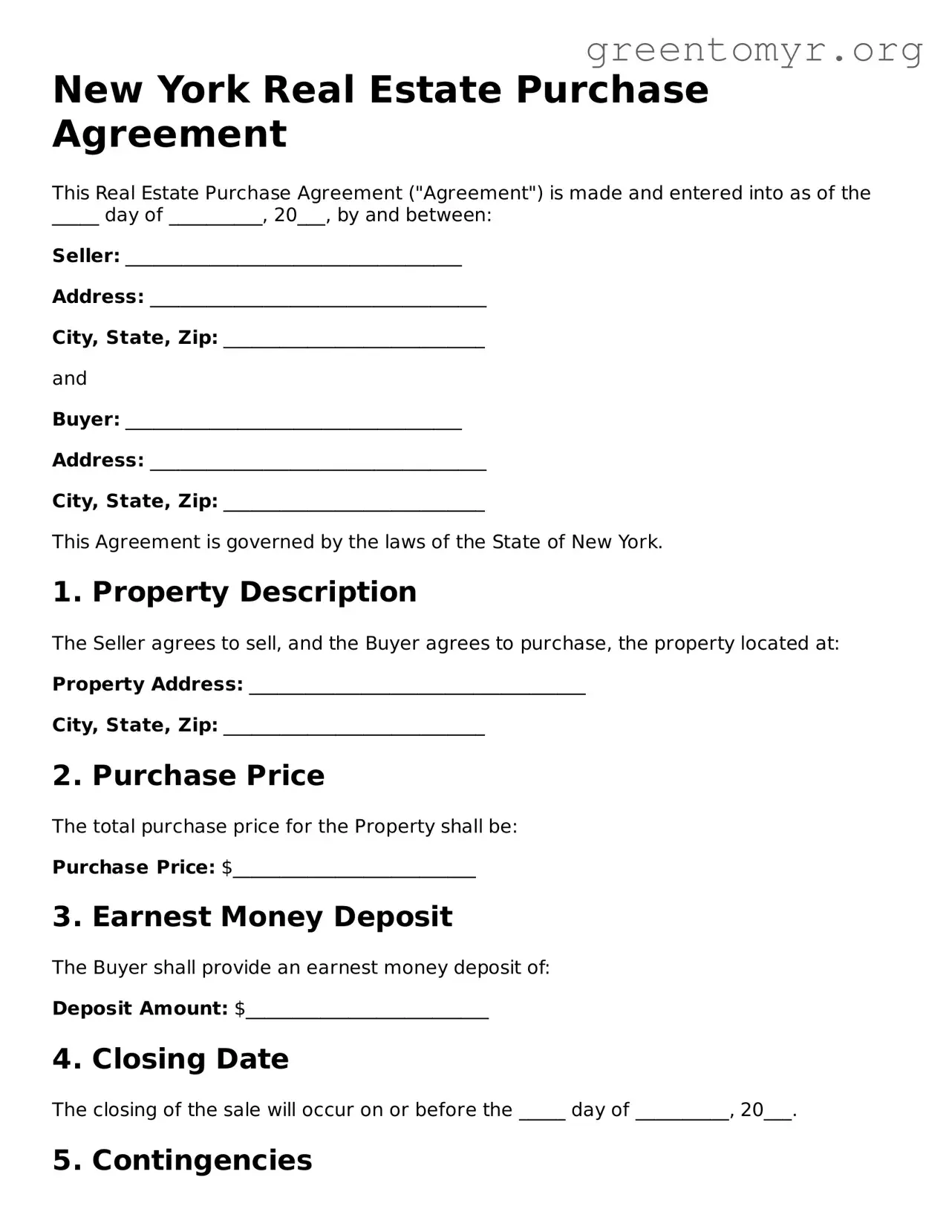
The New York Real Estate Purchase Agreement form is a crucial document in the process of buying and selling property in New York State. This legally binding contract outlines the terms and conditions agreed upon by the buyer and seller, ensuring that both parties understand their rights and responsibilities. Key elements of the agreement include the purchase price, the legal description of the property, and the closing date. Additionally, the form addresses contingencies, such as financing and inspections, which allow the buyer to back out of the deal under certain circumstances. It also specifies any included fixtures or personal property, along with the allocation of closing costs. By clearly defining these aspects, the Real Estate Purchase Agreement helps facilitate a smooth transaction and serves as a reference point should any disputes arise during the process.
New York Real Estate Purchase Agreement
This Real Estate Purchase Agreement ("Agreement") is made and entered into as of the _____ day of __________, 20___, by and between:
Seller: ____________________________________
Address: ____________________________________
City, State, Zip: ____________________________
and
Buyer: ____________________________________
Address: ____________________________________
City, State, Zip: ____________________________
This Agreement is governed by the laws of the State of New York.
1. Property Description
The Seller agrees to sell, and the Buyer agrees to purchase, the property located at:
Property Address: ____________________________________
City, State, Zip: ____________________________
2. Purchase Price
The total purchase price for the Property shall be:
Purchase Price: $__________________________
3. Earnest Money Deposit
The Buyer shall provide an earnest money deposit of:
Deposit Amount: $__________________________
4. Closing Date
The closing of the sale will occur on or before the _____ day of __________, 20___.
5. Contingencies
This Agreement is contingent upon the following:
6. Additional Terms
The following additional terms shall apply:
7. Signatures
By signing below, both parties agree to the terms outlined in this Agreement.
Seller's Signature: ____________________________
Date: ____________________________
Buyer's Signature: ____________________________
Date: ____________________________
This Agreement constitutes the entire understanding between the parties and supersedes all prior negotiations, representations, or agreements, whether written or oral.
| Fact Name | Description |
|---|---|
| Purpose | The New York Real Estate Purchase Agreement is a legally binding document that outlines the terms and conditions of a real estate transaction between a buyer and a seller. |
| Governing Law | This agreement is governed by the laws of the State of New York, which provide the framework for real estate transactions in the state. |
| Parties Involved | The agreement typically includes the names and addresses of the buyer(s) and seller(s), ensuring that all parties are clearly identified. |
| Property Description | A detailed description of the property being sold is included, which may encompass the address, lot number, and any relevant legal descriptions. |
| Purchase Price | The purchase price is explicitly stated in the agreement, along with any deposit amount required to secure the transaction. |
| Contingencies | Common contingencies, such as financing, inspection, and appraisal, are outlined in the agreement to protect the interests of both parties. |
| Closing Process | The agreement specifies the closing date and the procedures that will be followed to finalize the sale, ensuring a clear understanding of the process. |
Once you have the New York Real Estate Purchase Agreement form in front of you, it's time to fill it out accurately. This document will require specific information about the property, the buyer, and the seller. Ensuring that all details are correct will help facilitate a smooth transaction.
After completing the form, review it carefully to ensure all information is accurate. Both parties should retain a copy for their records. It is advisable to consult with a legal professional if there are any uncertainties regarding the agreement.
A New York Real Estate Purchase Agreement is a legal document that outlines the terms and conditions of a property sale in New York. It serves as a binding contract between the buyer and the seller, detailing the obligations of both parties regarding the transaction. This agreement typically includes information about the property, purchase price, contingencies, and closing date.
The key components of a New York Real Estate Purchase Agreement generally include:
Yes, once both parties sign the New York Real Estate Purchase Agreement, it becomes legally binding. This means that both the buyer and seller are obligated to fulfill the terms outlined in the contract. If either party fails to comply, the other party may have legal recourse to enforce the agreement or seek damages.
Yes, the New York Real Estate Purchase Agreement can be modified after signing, but any changes must be agreed upon by both parties. Modifications should be documented in writing and signed by both the buyer and the seller to ensure clarity and enforceability.
If the buyer decides to back out of the agreement without a valid reason, they may forfeit their earnest money deposit. However, if the buyer withdraws due to a contingency that was not met, they may be entitled to a full refund of their deposit. It is important to review the specific terms of the agreement to understand the implications of backing out.
While it is not legally required to have a lawyer when completing a New York Real Estate Purchase Agreement, it is often advisable. A lawyer can provide guidance on the legal implications of the agreement, help negotiate terms, and ensure that all necessary disclosures are made. Their expertise can help protect your interests throughout the transaction.
Filling out the New York Real Estate Purchase Agreement can be a daunting task, and it’s easy to make mistakes that could lead to complications down the road. One common error is neglecting to include the full legal names of all parties involved. It’s essential to ensure that the names match those on legal documents. A simple misspelling or omission can lead to disputes later on.
Another frequent mistake is failing to specify the property address accurately. Buyers and sellers should double-check that the address is complete and correct, including any unit or apartment numbers. An incorrect address can create confusion and may even jeopardize the transaction.
Many people overlook the importance of clearly stating the purchase price. It’s not enough to just write a number; the agreement should specify the currency and whether the price includes any contingencies. This clarity helps prevent misunderstandings between the buyer and seller.
In addition, buyers often forget to include important contingencies, such as financing or inspection clauses. These contingencies protect buyers by allowing them to back out of the deal if certain conditions aren’t met. Without these clauses, buyers may find themselves in a difficult position if issues arise during the process.
Another mistake is not paying attention to the closing date. It’s crucial to agree on a specific date and include it in the agreement. Leaving this blank or vague can lead to frustration and delays for both parties involved.
Some individuals may also neglect to review the terms regarding earnest money deposits. Buyers should understand how much they need to put down, when it’s due, and what happens to that money if the deal falls through. Misunderstanding these terms can lead to financial loss.
Additionally, failing to include any necessary disclosures can be a significant oversight. Sellers are often required to disclose certain information about the property, such as known defects or issues. Not including these disclosures can lead to legal troubles later on.
Buyers should also be cautious about assuming that verbal agreements will hold up. Any promises made verbally should be documented in the purchase agreement. Relying on verbal assurances can lead to misunderstandings and disputes.
Lastly, many people underestimate the importance of reviewing the agreement thoroughly before signing. Taking the time to read through every detail can help catch errors and ensure that both parties are on the same page. Rushing through this process can lead to costly mistakes.
When engaging in a real estate transaction in New York, several important documents accompany the Real Estate Purchase Agreement. Each of these forms serves a specific purpose, ensuring that both buyers and sellers are protected throughout the process. Below are some commonly used documents that complement the Purchase Agreement.
Understanding these documents can help both buyers and sellers navigate the complexities of real estate transactions. Each form plays a vital role in ensuring that the process is clear, fair, and legally binding.
Lease Agreement: A lease agreement outlines the terms under which a tenant can occupy a property. Like a Real Estate Purchase Agreement, it specifies the parties involved, the property description, and the duration of the agreement. Both documents serve to protect the rights and responsibilities of the involved parties.
Purchase and Sale Agreement: This document is similar to a Real Estate Purchase Agreement in that it details the terms of buying and selling property. It includes the purchase price, closing date, and conditions that must be met for the sale to proceed, ensuring clarity and mutual understanding between the buyer and seller.
Option to Purchase Agreement: An option to purchase agreement grants a potential buyer the right, but not the obligation, to buy a property within a specified time frame. This document shares similarities with a Real Estate Purchase Agreement in that it outlines the terms of the transaction and protects the interests of both parties involved.
Real Estate Listing Agreement: A real estate listing agreement is a contract between a property owner and a real estate agent. It defines the agent's responsibilities in marketing the property for sale. Similar to a Real Estate Purchase Agreement, it establishes the terms of engagement and expectations, ensuring both parties are aligned in their objectives.
When filling out the New York Real Estate Purchase Agreement form, it is important to follow certain guidelines to ensure accuracy and compliance. Here are some dos and don'ts to keep in mind:
Following these guidelines can help ensure a smoother transaction process.
When dealing with real estate transactions in New York, it's common for misunderstandings to arise regarding the Real Estate Purchase Agreement form. Here are some prevalent misconceptions:
Understanding these misconceptions can help you navigate the New York real estate market more effectively. Always consider seeking advice from a qualified professional to ensure a smooth transaction.
When filling out and using the New York Real Estate Purchase Agreement form, keep these key takeaways in mind: