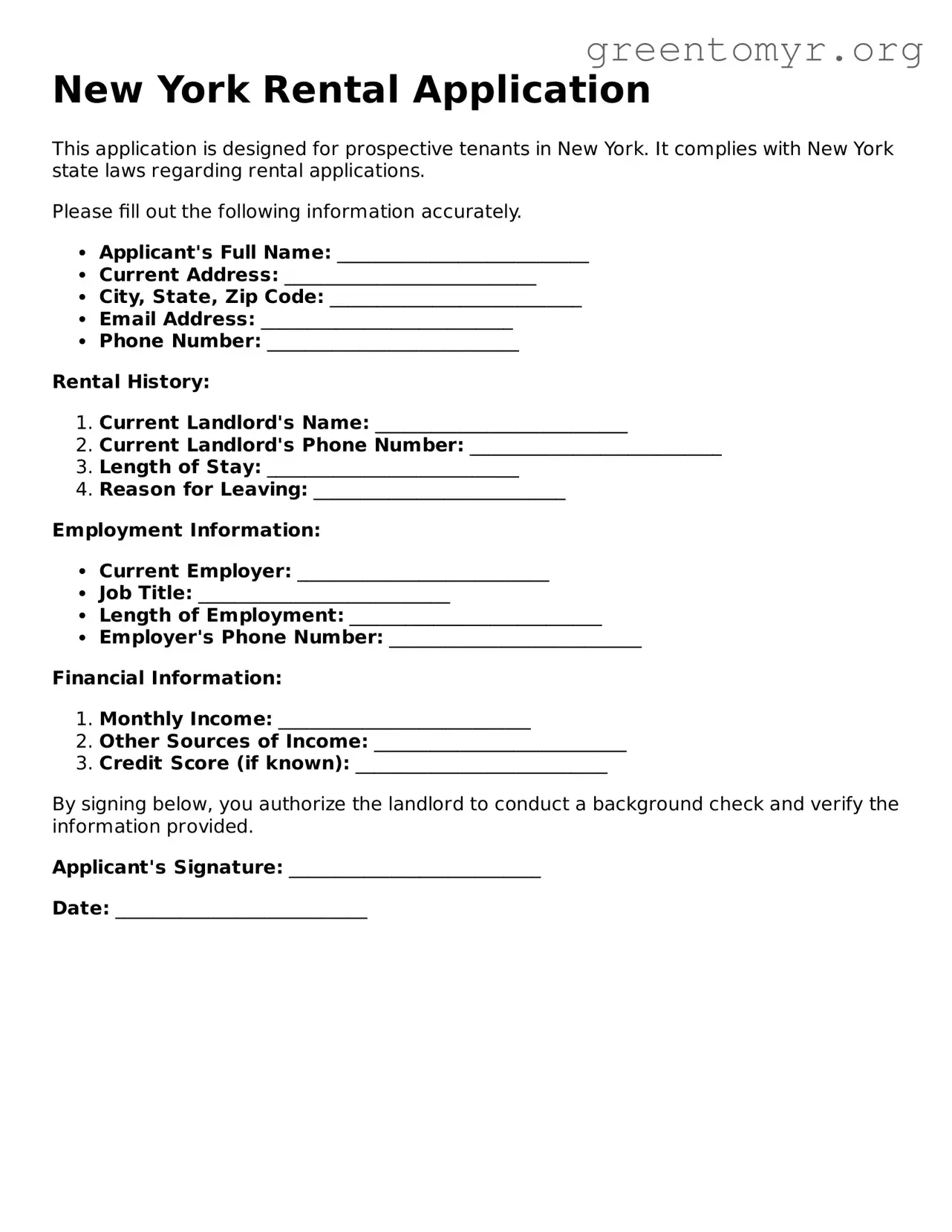
The New York Rental Application form serves as a crucial document in the process of securing a rental property. This form typically requires applicants to provide personal information, including their name, contact details, and Social Security number. Additionally, it often asks for employment history, income verification, and references from previous landlords. Many landlords use this information to assess an applicant's financial stability and rental history, which can influence their decision on whether to approve the application. The form may also include questions about the applicant's credit history and any criminal background, which are important factors in evaluating risk. Furthermore, applicants might be asked to disclose the number of occupants and any pets, as these details can impact the landlord's decision. Understanding the components of the New York Rental Application form is essential for prospective tenants, as it can significantly affect their chances of securing a lease.
New York Rental Application
This application is designed for prospective tenants in New York. It complies with New York state laws regarding rental applications.
Please fill out the following information accurately.
Rental History:
Employment Information:
Financial Information:
By signing below, you authorize the landlord to conduct a background check and verify the information provided.
Applicant's Signature: ___________________________
Date: ___________________________
| Fact Name | Details |
|---|---|
| Purpose | The New York Rental Application form is used by landlords to screen potential tenants. |
| Required Information | Applicants must provide personal information, employment history, and rental history. |
| Credit Check | Landlords often require a credit check, which may involve a fee. |
| Application Fee | New York law allows landlords to charge a non-refundable application fee, but it must be reasonable. |
| Fair Housing Act | The application process must comply with the Fair Housing Act, prohibiting discrimination. |
| Tenant Privacy | Landlords must handle personal information with care to protect tenant privacy. |
| Approval Process | Once submitted, landlords review applications and may conduct interviews before making a decision. |
| State-Specific Laws | The application process is governed by New York Real Property Law and local regulations. |
| Denial Notification | If denied, landlords must provide a reason, often linked to credit or rental history. |
Completing a rental application form is an important step in securing a rental property. It typically requires personal information, financial details, and references. Ensure that all information is accurate and complete to facilitate the approval process.
Once you have filled out the application, submit it along with any required documentation, such as proof of income or identification, to the landlord or property management company. Be prepared for potential follow-up questions or requests for additional information.
A New York Rental Application form generally requires various personal details to assess a potential tenant's suitability. Commonly requested information includes:
Providing accurate and complete information helps landlords make informed decisions regarding your application.
Landlords utilize the information from the Rental Application to evaluate the applicant's ability to pay rent and maintain the property. They typically consider the following factors:
This thorough evaluation helps landlords select tenants who are likely to fulfill their lease obligations.
Yes, landlords often charge an application fee when processing a Rental Application. This fee typically covers the costs associated with:
It is important to inquire about the specific amount and whether it is refundable if your application is denied. Understanding the fee structure can help you budget accordingly.
If your application is denied, it is essential to remain calm and proactive. First, request a written explanation from the landlord. Under federal law, you have the right to know why your application was not accepted. Common reasons for denial include:
Once you understand the reason for denial, you can take steps to address the issues. This might involve improving your credit score, securing a co-signer, or providing additional documentation. Remember, persistence and communication can often lead to alternative solutions.
Filling out a rental application in New York can seem straightforward, but many applicants make common mistakes that can hinder their chances of securing a lease. One prevalent error is providing inaccurate personal information. Whether it’s a typo in the name or an incorrect Social Security number, these mistakes can lead to delays or even disqualification. Always double-check that all personal details are correct and up to date.
Another frequent issue is failing to disclose necessary financial information. Landlords often require proof of income, credit history, and employment details. Omitting this information or providing incomplete details can raise red flags. It’s crucial to be transparent about your financial situation, as landlords want to ensure you can afford the rent.
Some applicants underestimate the importance of references. Not providing adequate references or failing to contact them in advance can create complications. A good reference can significantly strengthen your application, so make sure to choose individuals who can speak positively about your character and reliability.
In addition, many people overlook the significance of the application fee. Not paying the required fee or misunderstanding the payment process can lead to immediate rejection. Be sure to follow the instructions carefully and submit the fee as specified.
Another common mistake is not reading the application thoroughly. Some applicants rush through the form, missing important clauses or requirements. Taking the time to read each section can prevent misunderstandings later on. It’s essential to understand what you’re agreeing to before signing.
Inaccurate employment history is also a frequent pitfall. Applicants sometimes list outdated or incorrect job information, which can be easily verified by landlords. Make sure to include your current employer and position, and provide accurate dates of employment to avoid any discrepancies.
Moreover, some individuals fail to provide a clear explanation of any negative credit history. If there are issues, such as past evictions or bankruptcy, it’s wise to address them upfront. Providing context can help mitigate concerns and demonstrate your responsibility.
Lastly, neglecting to follow up after submitting the application can be detrimental. A simple follow-up can show your interest and help keep your application top of mind for the landlord. It’s a small gesture that can make a big difference in a competitive rental market.
When applying for a rental property in New York, prospective tenants often need to submit several documents alongside the New York Rental Application form. These documents help landlords assess the applicant's suitability and financial stability. Below are five common forms and documents that are typically required.
Having these documents prepared and organized can streamline the application process, making it easier for both tenants and landlords. Understanding the requirements ahead of time can lead to a smoother rental experience.
Lease Agreement: Like a rental application, a lease agreement outlines the terms and conditions of renting a property. Both documents require personal information and establish the relationship between the tenant and landlord.
Employment Verification Form: This form is similar in that it requests information about a person's employment status. Just as a rental application seeks to assess a tenant's ability to pay rent, the employment verification form aims to confirm income stability.
Credit Report Authorization: A rental application often includes a section for credit checks. Similarly, a credit report authorization form allows landlords to review a potential tenant's credit history, helping them gauge financial responsibility.
Background Check Consent Form: Both documents may require consent for background checks. A rental application typically includes a section for this, while a separate consent form explicitly authorizes landlords to investigate a tenant's past.
Tenant Screening Application: This document is akin to a rental application, as it collects detailed information about a prospective tenant. It often includes questions about rental history, references, and financial background, similar to what is found in a rental application.
When filling out the New York Rental Application form, it's important to approach the process carefully. Here are some dos and don'ts to keep in mind:
When it comes to the New York Rental Application form, various misconceptions can lead to confusion for potential renters. Understanding the truth behind these myths can help streamline the application process and ensure a smoother transition into a new home. Below are some common misconceptions clarified.
By dispelling these misconceptions, potential renters can approach the New York Rental Application process with greater confidence and clarity. Awareness of the realities behind these common myths can lead to a more informed and successful rental experience.
When filling out and using the New York Rental Application form, keep these key takeaways in mind: