When renting a home in New York, understanding the Residential Lease Agreement form is crucial for both tenants and landlords. This document outlines the terms and conditions of the rental arrangement, ensuring that both parties are on the same page. Key elements include the duration of the lease, the amount of rent, and the security deposit requirements. It also specifies the responsibilities of each party, such as maintenance duties and rules regarding pets. Additionally, the agreement may detail provisions for lease termination and renewal, which can significantly impact a tenant's living situation. By familiarizing themselves with this form, individuals can navigate the complexities of renting more confidently and protect their rights throughout the leasing process.
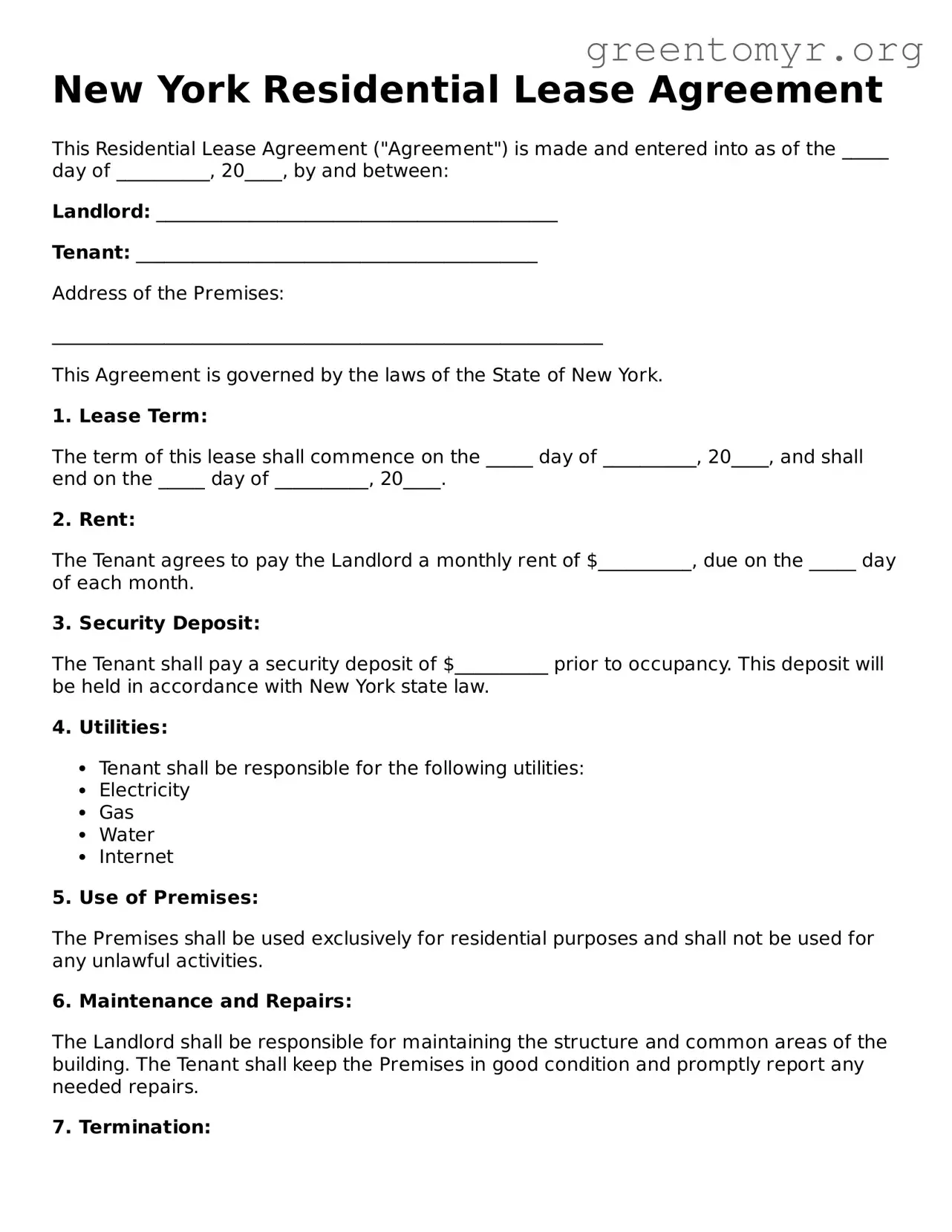
New York Residential Lease Agreement
This Residential Lease Agreement ("Agreement") is made and entered into as of the _____ day of __________, 20____, by and between:
Landlord: ___________________________________________
Tenant: ___________________________________________
Address of the Premises:
___________________________________________________________
This Agreement is governed by the laws of the State of New York.
1. Lease Term:
The term of this lease shall commence on the _____ day of __________, 20____, and shall end on the _____ day of __________, 20____.
2. Rent:
The Tenant agrees to pay the Landlord a monthly rent of $__________, due on the _____ day of each month.
3. Security Deposit:
The Tenant shall pay a security deposit of $__________ prior to occupancy. This deposit will be held in accordance with New York state law.
4. Utilities:
5. Use of Premises:
The Premises shall be used exclusively for residential purposes and shall not be used for any unlawful activities.
6. Maintenance and Repairs:
The Landlord shall be responsible for maintaining the structure and common areas of the building. The Tenant shall keep the Premises in good condition and promptly report any needed repairs.
7. Termination:
8. Governing Law:
This Agreement shall be governed by and construed in accordance with the laws of the State of New York.
IN WITNESS WHEREOF, the parties hereto have executed this Residential Lease Agreement as of the day and year first above written.
Landlord Signature: ___________________________ Date: _______________
Tenant Signature: ___________________________ Date: _______________
| Fact Name | Description |
|---|---|
| Definition | A New York Residential Lease Agreement is a legally binding contract between a landlord and tenant outlining the terms of renting a residential property. |
| Governing Law | The lease is governed by New York State law, specifically the New York Real Property Law. |
| Duration | Typically, residential leases in New York are for a fixed term, commonly one year, but can also be month-to-month. |
| Security Deposit | Landlords may require a security deposit, usually not exceeding one month's rent, to cover potential damages or unpaid rent. |
| Rent Payment | The lease should clearly specify the amount of rent, payment due date, and acceptable payment methods. |
| Utilities | Responsibilities for utility payments should be outlined, indicating which utilities the tenant must pay and which the landlord covers. |
| Maintenance Responsibilities | The lease should detail the maintenance obligations of both the landlord and tenant to ensure the property remains habitable. |
| Termination Clause | A termination clause must be included, explaining how either party can end the lease and the notice period required. |
| Pets Policy | The agreement may include a pets policy, specifying whether pets are allowed and any associated fees or restrictions. |
| Modifications | Any changes to the lease must be made in writing and signed by both parties to be enforceable. |
Filling out the New York Residential Lease Agreement form is an important step in establishing the terms of a rental arrangement. This form outlines the responsibilities and rights of both the landlord and tenant. Follow these steps to ensure the form is completed accurately.
After completing the form, both the landlord and tenant should keep a copy for their records. This ensures that everyone is aware of the agreed-upon terms and conditions of the lease.
A New York Residential Lease Agreement is a legally binding document between a landlord and a tenant. It outlines the terms and conditions of renting a residential property. This agreement specifies the rights and responsibilities of both parties, including rent amount, duration of the lease, and rules for the use of the property.
Several important elements should be present in a New York Residential Lease Agreement:
In New York, residential leases can vary in duration. The most common lease term is one year, but leases can also be month-to-month or longer. It's essential to clearly specify the lease duration in the agreement to avoid any misunderstandings.
A security deposit is a sum of money paid by the tenant to the landlord before moving in. This deposit serves as protection for the landlord against potential damages or unpaid rent. In New York, the security deposit cannot exceed one month's rent. The landlord must return the deposit within 14 days after the tenant vacates, minus any legitimate deductions for damages or unpaid rent.
Generally, a landlord cannot enter a tenant's property without proper notice. New York law requires landlords to provide at least 24 hours' notice before entering, except in emergencies. The lease agreement may specify additional rules regarding access to the property.
If a tenant wishes to break the lease early, they should first review the lease terms. Many agreements include a clause about early termination. If the lease does not allow for early termination, the tenant may be responsible for paying rent until the lease ends or until a new tenant is found.
Yes, New York has specific regulations governing rent increases, particularly in rent-controlled or rent-stabilized apartments. For market-rate apartments, landlords can generally increase rent at the end of a lease term, but they must provide proper notice. The lease agreement should outline any potential rent increase policies.
If a tenant encounters a dispute with their landlord, the first step is to communicate directly with the landlord to resolve the issue. If that does not work, tenants can seek mediation or legal advice. It may also be helpful to document all communications and keep records of any issues related to the lease agreement.
Filling out the New York Residential Lease Agreement form requires attention to detail. One common mistake is failing to provide accurate information about the rental property. This includes the correct address, unit number, and any specific features of the property. Inaccuracies can lead to confusion and potential disputes later on.
Another frequent error is neglecting to include all tenant names. It is essential to list every individual who will reside in the rental unit. Omitting a tenant can complicate lease enforcement and rights, leading to misunderstandings about responsibilities.
Many individuals also overlook the lease term. The start and end dates of the lease should be clearly stated. Without this information, both landlords and tenants may have differing expectations about the duration of the agreement.
Additionally, people often forget to specify the rent amount and payment details. It is crucial to outline the monthly rent, due date, and acceptable payment methods. Ambiguities in this area can create financial disputes and affect the landlord-tenant relationship.
Another mistake involves the security deposit section. Some individuals either leave this section blank or do not specify the amount. It is important to clearly state the security deposit amount and the conditions for its return to avoid conflicts at the end of the lease.
Failure to address maintenance responsibilities is also common. The lease should specify who is responsible for repairs and maintenance. This clarity helps prevent misunderstandings regarding upkeep and responsibilities during the lease term.
People sometimes neglect to review the pet policy. If pets are allowed, the lease should outline any restrictions, fees, or deposits related to pet ownership. Omitting this information can lead to disputes if a tenant decides to acquire a pet later on.
Another mistake is not including any additional clauses that may be relevant to the specific rental situation. For instance, if the landlord requires renters insurance or has specific rules about noise, these should be included in the lease. Leaving out important clauses can lead to issues down the line.
Lastly, failing to sign and date the lease agreement is a critical oversight. Both parties must sign to make the lease legally binding. Without signatures, the agreement may not hold up in legal situations, leaving both parties vulnerable.
When entering into a rental agreement in New York, several additional forms and documents may be necessary to ensure a smooth leasing process. These documents help clarify responsibilities, protect both parties, and provide essential information about the rental arrangement.
Having these forms ready can simplify the leasing process and protect the rights of both landlords and tenants. Being informed about these documents can lead to a better rental experience.
When filling out the New York Residential Lease Agreement form, it's important to be thorough and careful. Here are some key dos and don'ts to keep in mind:
Understanding the New York Residential Lease Agreement is essential for both landlords and tenants. However, several misconceptions can lead to confusion. Here are ten common misunderstandings regarding this important document:
Many people assume that all lease agreements follow a standard format. In reality, each lease can vary significantly based on the specific terms negotiated between the landlord and tenant.
While verbal agreements can hold some weight, they are often difficult to enforce. A written lease agreement provides clear documentation of the terms agreed upon, reducing the risk of misunderstandings.
This is not entirely true. While a lease is a binding contract, both parties can agree to modify its terms. Any changes should be documented in writing to avoid disputes later.
Security deposits are typically refundable, provided the tenant leaves the property in good condition. Landlords can only retain part or all of the deposit for specific damages or unpaid rent.
Landlords must provide proper notice before entering a tenant's home, except in emergencies. This right to privacy is protected under New York law.
While tenants are responsible for minor upkeep, landlords are generally obligated to handle major repairs and maintain the property in a habitable condition.
Lease terms can vary widely. They can be month-to-month, six months, or longer than a year. It all depends on what the landlord and tenant agree upon.
Breaking a lease can lead to financial penalties. Tenants should understand the terms of their lease and the potential repercussions before making such a decision.
In New York, landlords must follow specific regulations regarding rent increases. They cannot simply raise the rent at will; proper notice and justification are required.
Not all leases automatically renew. Tenants should check their agreement for renewal terms and be aware of any necessary actions to continue their tenancy.
By understanding these misconceptions, both landlords and tenants can navigate the complexities of rental agreements with greater confidence and clarity.
When filling out and using the New York Residential Lease Agreement form, it is essential to understand several key aspects to ensure clarity and compliance.