Content Navigation

Starting a business in North Carolina is an exciting venture, and one of the first steps in this journey is filing the Articles of Incorporation. This essential document serves as the foundation for your corporation, laying out key details that define your business structure and operations. Among the critical aspects included in the form are the corporation's name, which must be unique and compliant with state regulations, and the purpose of the corporation, which outlines its intended business activities. Additionally, the form requires information about the registered agent, a designated person or entity responsible for receiving legal documents on behalf of the corporation. You'll also need to specify the number of shares the corporation is authorized to issue, which is crucial for potential investors. By carefully completing the Articles of Incorporation, you not only comply with state laws but also set the stage for your corporation's growth and success.

North Carolina Articles of Incorporation Example

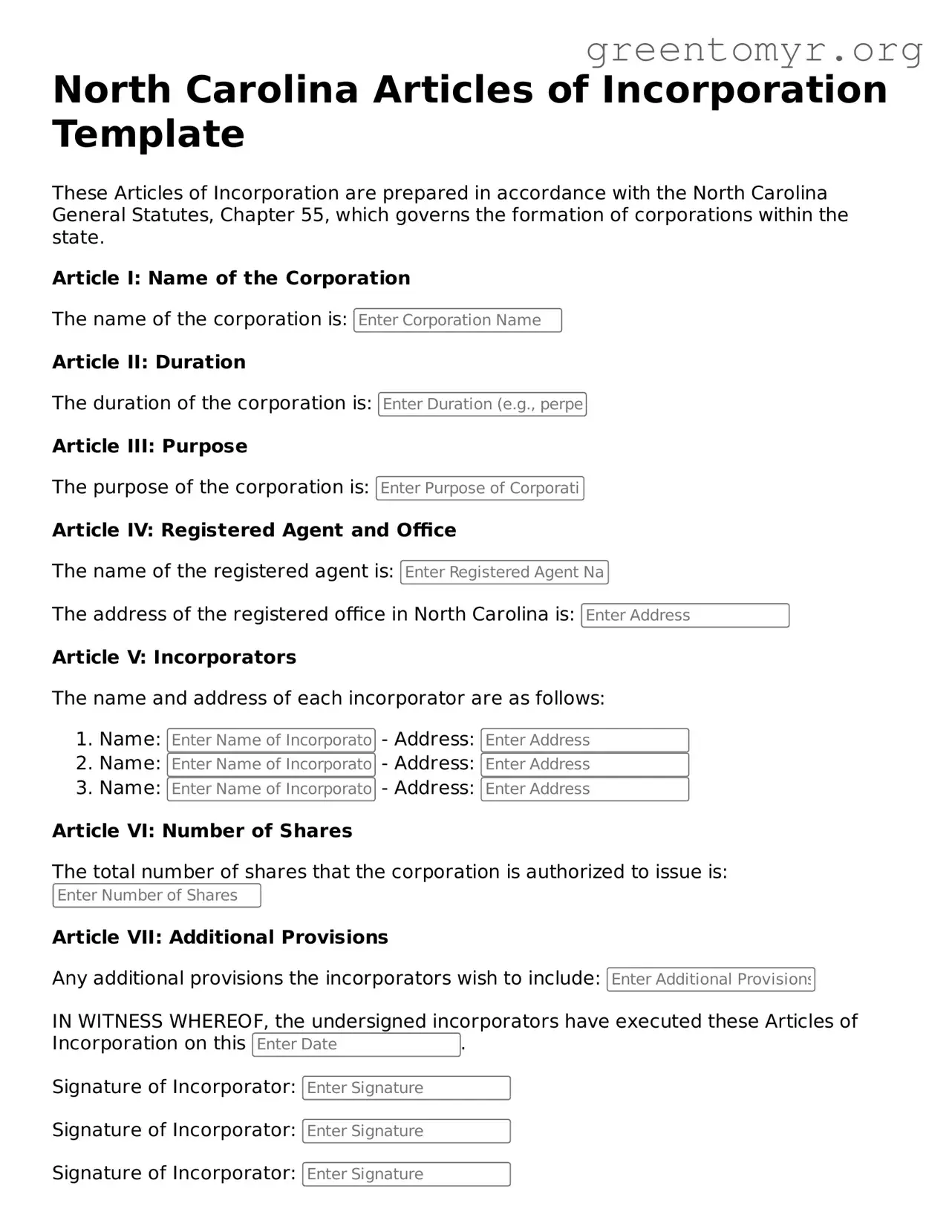
North Carolina Articles of Incorporation Template

These Articles of Incorporation are prepared in accordance with the North Carolina General Statutes, Chapter 55, which governs the formation of corporations within the state.

Article I: Name of the Corporation

The name of the corporation is:

Article II: Duration

The duration of the corporation is:

Article III: Purpose

The purpose of the corporation is:

Article IV: Registered Agent and Office

The name of the registered agent is:

The address of the registered office in North Carolina is:

Article V: Incorporators

The name and address of each incorporator are as follows:

  1. Name: - Address:
  2. Name: - Address:
  3. Name: - Address:

Article VI: Number of Shares

The total number of shares that the corporation is authorized to issue is:

Article VII: Additional Provisions

Any additional provisions the incorporators wish to include:

IN WITNESS WHEREOF, the undersigned incorporators have executed these Articles of Incorporation on this .

Signature of Incorporator:

Signature of Incorporator:

Signature of Incorporator:

This document must be filed with the North Carolina Secretary of State to officially form the corporation.

PDF Form Features

Fact Name Details
Purpose The Articles of Incorporation are used to establish a corporation in North Carolina.
Governing Law The formation of corporations in North Carolina is governed by the North Carolina General Statutes, Chapter 55.
Required Information Key details such as the corporation's name, principal office address, and registered agent must be included.
Filing Fee A filing fee is required when submitting the Articles of Incorporation to the North Carolina Secretary of State.
Submission Method Articles can be submitted online, by mail, or in person to the Secretary of State's office.
Effective Date The corporation is officially formed upon the filing of the Articles of Incorporation, unless a specific effective date is stated.

Guide to Using North Carolina Articles of Incorporation

After gathering the necessary information, you will be ready to fill out the North Carolina Articles of Incorporation form. This form is essential for establishing a corporation in the state. It requires specific details about your business and its structure. Completing this form accurately is crucial for the successful registration of your corporation.

  1. Begin by downloading the North Carolina Articles of Incorporation form from the North Carolina Secretary of State's website.
  2. Provide the name of your corporation. Ensure that the name is unique and complies with state naming rules.
  3. Indicate the duration of the corporation. Most corporations are set up to exist indefinitely unless specified otherwise.
  4. List the purpose of the corporation. Be clear and concise about what your business will do.
  5. Fill in the address of the corporation's principal office. This should be a physical address, not a P.O. Box.
  6. Enter the name and address of the registered agent. The registered agent is the person or entity designated to receive legal documents on behalf of the corporation.
  7. Specify the number of shares the corporation is authorized to issue. Include the par value, if applicable.
  8. Provide the names and addresses of the incorporators. These are the individuals responsible for filing the Articles of Incorporation.
  9. Sign and date the form. The incorporators must sign to validate the document.
  10. Review the completed form for any errors or omissions before submission.
  11. Submit the form along with the required filing fee to the North Carolina Secretary of State's office, either by mail or in person.

Once you have submitted the Articles of Incorporation, the state will review your application. If everything is in order, you will receive confirmation of your corporation's formation. This confirmation is an important document for your business records.

Get Answers on North Carolina Articles of Incorporation

What are the Articles of Incorporation in North Carolina?

The Articles of Incorporation is a legal document that establishes a corporation in North Carolina. This form is essential for anyone looking to create a business entity, as it outlines key information about the corporation, such as its name, purpose, and structure. Filing this document with the North Carolina Secretary of State is the first step in forming a corporation.

What information is required to complete the Articles of Incorporation?

To complete the Articles of Incorporation, you will need to provide the following information:

  1. The name of the corporation, which must be unique and not already in use.
  2. The principal office address of the corporation.
  3. The name and address of the registered agent, who will receive legal documents on behalf of the corporation.
  4. The purpose of the corporation, which can be general or specific.
  5. The number of shares the corporation is authorized to issue.

How do I file the Articles of Incorporation?

Filing the Articles of Incorporation can be done online or by mail. If you choose to file online, you can visit the North Carolina Secretary of State's website and follow the instructions for electronic submission. For mail submissions, print and complete the form, then send it to the appropriate office along with the required filing fee.

Is there a filing fee for the Articles of Incorporation?

Yes, there is a filing fee associated with submitting the Articles of Incorporation in North Carolina. As of the latest update, the fee is typically around $125, but it is advisable to check the North Carolina Secretary of State's website for the most current fee structure, as it may change.

How long does it take for the Articles of Incorporation to be processed?

The processing time for the Articles of Incorporation can vary. Generally, if filed online, the processing may take a few business days. Mail submissions may take longer, potentially up to several weeks. For expedited processing, there may be additional fees available.

Can I amend the Articles of Incorporation after they are filed?

Yes, you can amend the Articles of Incorporation after they have been filed. If changes are necessary—such as altering the corporation's name or adjusting the number of authorized shares—you will need to file an amendment with the Secretary of State. This process typically involves submitting a specific form along with any required fees.

What happens if I do not file the Articles of Incorporation?

If you do not file the Articles of Incorporation, your business will not be recognized as a legal corporation. This means you may be personally liable for any debts or legal issues that arise from the business. Additionally, you will miss out on the benefits that come with incorporation, such as limited liability and potential tax advantages.

Do I need a lawyer to file the Articles of Incorporation?

While it is not legally required to have a lawyer to file the Articles of Incorporation, seeking legal advice can be beneficial. An attorney can help ensure that all necessary information is included and that the document complies with state laws. This can prevent potential issues down the line and provide peace of mind as you start your business.

What is the difference between Articles of Incorporation and Bylaws?

The Articles of Incorporation and Bylaws serve different purposes. The Articles of Incorporation are the foundational document that officially creates the corporation, while Bylaws outline the internal rules and procedures for managing the corporation. Bylaws cover aspects such as how meetings are conducted, how directors are elected, and the rights of shareholders. Both documents are essential for the successful operation of a corporation.

Common mistakes

When starting a business in North Carolina, filing the Articles of Incorporation is a crucial step. However, many individuals make common mistakes that can lead to delays or complications in the incorporation process. Understanding these pitfalls can help ensure a smoother experience.

One frequent mistake is failing to provide a registered agent's information. Every corporation must designate a registered agent who will receive legal documents on behalf of the business. Omitting this information can result in the rejection of the application. It’s essential to choose someone who is reliable and available during business hours.

Another common error is inaccurate or incomplete information. The Articles of Incorporation require specific details, such as the corporation's name, address, and purpose. If any of these details are missing or incorrect, the state may reject the filing. Double-checking all entries can save time and prevent unnecessary headaches.

Some people also overlook the importance of choosing an appropriate business name. The name must be unique and not already in use by another corporation in North Carolina. Failing to conduct a thorough name search can lead to conflicts and legal issues down the road. It’s wise to check the North Carolina Secretary of State’s database before finalizing your choice.

Additionally, many applicants forget to include the number of shares the corporation is authorized to issue. This is a critical component of the Articles of Incorporation. If this information is missing, it can delay the process. Understanding how many shares to issue is vital for future fundraising and ownership distribution.

Another mistake is neglecting to pay the required filing fee. Each submission must include the appropriate fee, which can vary based on the type of corporation being formed. Without this payment, the application will not be processed. It’s important to check the current fee schedule and ensure that payment is included with the application.

Finally, some individuals fail to review the document before submission. Taking the time to carefully read through the Articles of Incorporation can prevent many of the issues mentioned above. A second pair of eyes can also help catch errors that might have been overlooked. Proper review can make a significant difference in the success of the incorporation process.

Documents used along the form

When starting a business in North Carolina, filing the Articles of Incorporation is just the first step. Several other forms and documents are typically required to ensure compliance with state regulations and to facilitate smooth operations. Below is a list of essential documents that often accompany the Articles of Incorporation.

  • Bylaws: These are the internal rules that govern the management of the corporation. Bylaws outline how the corporation will operate, including details about meetings, voting procedures, and the roles of officers and directors.
  • Initial Report: Some states require an initial report to be filed shortly after incorporating. This document typically includes information about the corporation's officers, directors, and registered agent.
  • Employer Identification Number (EIN): Obtaining an EIN from the IRS is essential for tax purposes. This number is necessary for opening a business bank account and filing taxes.
  • Business Licenses and Permits: Depending on the type of business and location, various licenses and permits may be required. These documents ensure compliance with local, state, and federal regulations.
  • Shareholder Agreements: If there are multiple shareholders, a shareholder agreement can clarify rights and responsibilities. This document helps prevent disputes by outlining how decisions are made and how shares can be transferred.
  • Annual Reports: Most corporations must file annual reports with the state. This document updates the state on the corporation’s activities, including changes in management or business address.

Understanding these additional documents can help streamline the incorporation process and set a solid foundation for your business. Each document plays a vital role in ensuring that your corporation operates legally and effectively within North Carolina.

Similar forms

  • Bylaws: Bylaws outline the internal rules and procedures for a corporation. They govern how the corporation will operate, including the roles of officers and the process for holding meetings.
  • Operating Agreement: Similar to bylaws, an operating agreement details the management structure and operational procedures of a limited liability company (LLC). It defines the responsibilities of members and how profits will be distributed.
  • Certificate of Formation: This document is often required to officially establish an LLC. Like the Articles of Incorporation, it includes essential information about the entity, such as its name and purpose.
  • Partnership Agreement: This agreement outlines the terms of a partnership. It specifies each partner's contributions, responsibilities, and how profits and losses will be shared, similar to how Articles of Incorporation define the structure of a corporation.
  • Business License: A business license grants permission to operate within a specific jurisdiction. While it does not establish the entity, it is necessary for legal operation, similar to how Articles of Incorporation enable a corporation's legal existence.
  • Shareholder Agreement: This document governs the relationship between shareholders in a corporation. It addresses rights and obligations, much like the Articles of Incorporation define the rights of shareholders in the corporation.
  • Certificate of Good Standing: This certificate verifies that a corporation is compliant with state regulations. It serves as proof of existence, akin to how the Articles of Incorporation establish a corporation's legal status.
  • Annual Report: Corporations are often required to file annual reports with the state. These reports provide updated information about the corporation, similar to how Articles of Incorporation provide foundational details at formation.
  • Tax Registration Forms: These forms register a business for tax purposes. They are essential for compliance, much like Articles of Incorporation are necessary for legal recognition of a corporation.
  • Employment Agreements: These contracts outline the terms of employment for individuals within a corporation. They define roles and responsibilities, similar to how Articles of Incorporation establish the framework for corporate governance.

Dos and Don'ts

When filling out the North Carolina Articles of Incorporation form, it's important to approach the task with care. Here are some helpful tips on what to do and what to avoid:

  • Do gather all necessary information before starting the form. This includes details about your business name, registered agent, and the purpose of your corporation.
  • Do ensure that your chosen business name complies with North Carolina naming requirements. It should be unique and not easily confused with existing businesses.
  • Do provide accurate information about the registered agent. This person or entity must be available during business hours to receive legal documents.
  • Do review the completed form for any errors or omissions. A small mistake can lead to delays in processing your application.
  • Do submit the form along with the required filing fee. Check the current fee amount to avoid any surprises.
  • Don't rush through the process. Take your time to ensure that every section is filled out correctly.
  • Don't use abbreviations or informal language. The form should be completed in a clear and professional manner.
  • Don't forget to include the purpose of your corporation. This helps clarify your business intentions to the state.
  • Don't leave any sections blank. If a section does not apply, write "N/A" instead of leaving it empty.
  • Don't overlook the importance of keeping a copy of the submitted form for your records. This can be useful for future reference.

By following these guidelines, you can help ensure a smoother process when filing your Articles of Incorporation in North Carolina.

Misconceptions

Many people have misunderstandings about the North Carolina Articles of Incorporation form. Here are eight common misconceptions, along with explanations to clarify them.

  • Anyone can file Articles of Incorporation. While individuals can prepare the form, only a person authorized to act on behalf of the corporation can file it. This typically includes directors or officers.
  • Filing Articles of Incorporation guarantees business success. Filing the form creates a legal entity, but it does not ensure profitability or operational success. A solid business plan and effective management are essential.
  • All corporations must file Articles of Incorporation. Not every business needs to incorporate. Sole proprietorships and partnerships do not require this form. Incorporation is a choice based on specific business needs.
  • Articles of Incorporation are the same as a business license. These two documents serve different purposes. The Articles establish the corporation, while a business license permits operations within a specific jurisdiction.
  • Once filed, Articles of Incorporation cannot be changed. Changes can be made after filing, but they require additional paperwork. Amendments can be filed to update the information as needed.
  • The process is quick and easy. While the form can be straightforward, the entire process may take time. It involves careful preparation and possibly waiting for state approval.
  • All information in the Articles is private. Many details in the Articles of Incorporation, such as the names of directors and registered agents, are public records and can be accessed by anyone.
  • Only for-profit businesses can file Articles of Incorporation. Nonprofit organizations can also file Articles of Incorporation in North Carolina. They must meet specific requirements, but incorporation is possible.

Key takeaways

Here are key takeaways about filling out and using the North Carolina Articles of Incorporation form:

  • The form is required to legally establish a corporation in North Carolina.
  • Provide the corporation's name, which must be unique and not already in use.
  • Include the corporation's principal office address. This must be a physical location, not a P.O. Box.
  • List the registered agent's name and address. This person or business will receive legal documents on behalf of the corporation.
  • Specify the purpose of the corporation. This should be a clear and concise statement.
  • Indicate the number of shares the corporation is authorized to issue.
  • Ensure that the form is signed by an incorporator. This person can be a founder or a designated individual.
  • File the completed form with the North Carolina Secretary of State and pay the required filing fee.