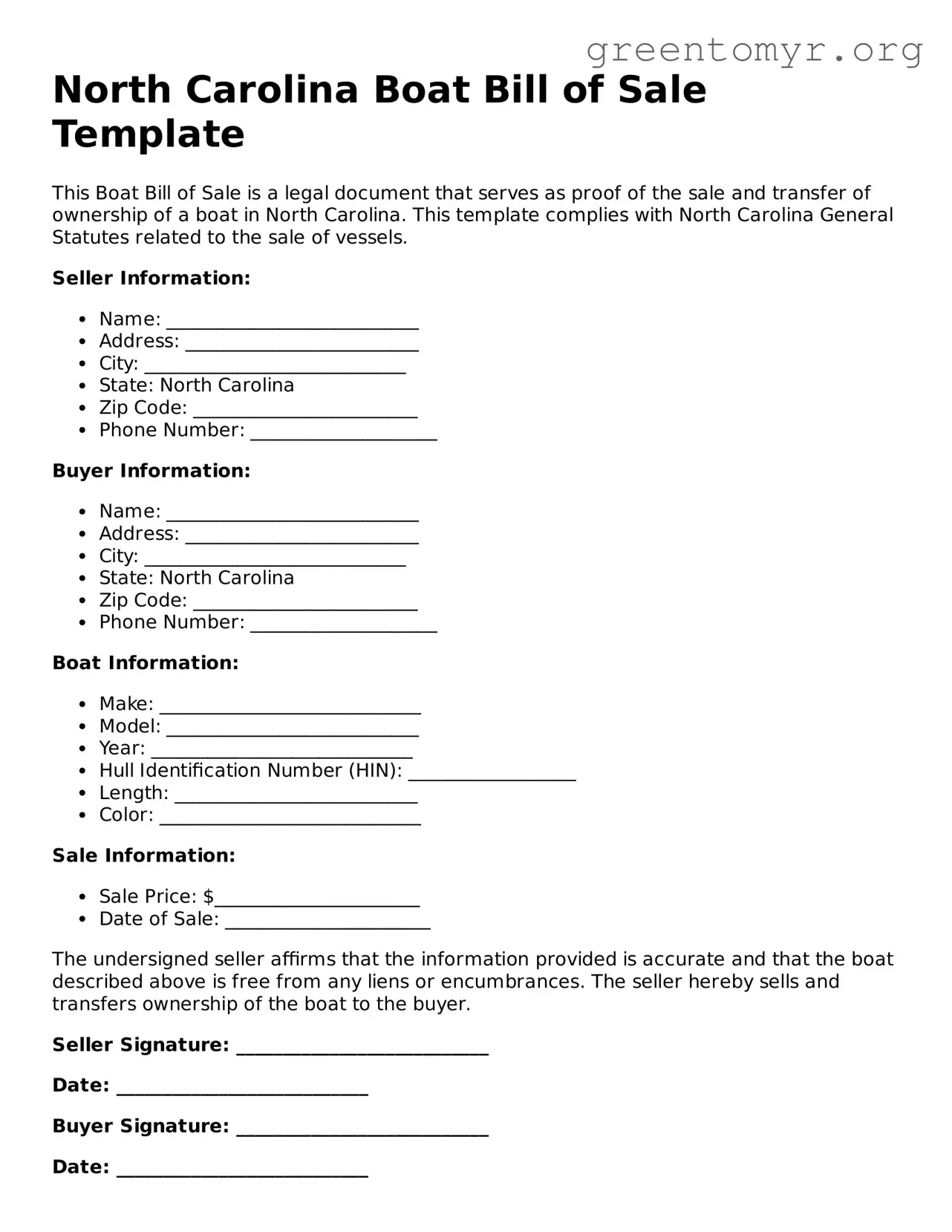
When buying or selling a boat in North Carolina, having the right paperwork is essential to ensure a smooth transaction. One key document in this process is the Boat Bill of Sale form. This form serves as a legal record of the sale, detailing important information such as the names and addresses of both the buyer and seller, the boat's description, and the sale price. It also includes the date of the transaction, which is crucial for establishing ownership. Additionally, the form may require signatures from both parties, providing proof that the sale was agreed upon. By using this form, both buyers and sellers can protect their interests and avoid potential disputes in the future. Understanding how to properly fill out and use the Boat Bill of Sale form can make the buying or selling experience much more straightforward.
North Carolina Boat Bill of Sale Template
This Boat Bill of Sale is a legal document that serves as proof of the sale and transfer of ownership of a boat in North Carolina. This template complies with North Carolina General Statutes related to the sale of vessels.
Seller Information:
Buyer Information:
Boat Information:
Sale Information:
The undersigned seller affirms that the information provided is accurate and that the boat described above is free from any liens or encumbrances. The seller hereby sells and transfers ownership of the boat to the buyer.
Seller Signature: ___________________________
Date: ___________________________
Buyer Signature: ___________________________
Date: ___________________________
This document should be retained by both parties for their records. It is recommended to register the boat with the North Carolina Wildlife Resources Commission following the sale.
| Fact Name | Details |
|---|---|
| Purpose | The North Carolina Boat Bill of Sale form is used to document the sale and transfer of ownership of a boat. |
| Governing Law | The sale and transfer of boats in North Carolina are governed by the North Carolina General Statutes, specifically Chapter 75A. |
| Parties Involved | The form typically includes information about the seller and the buyer, ensuring both parties are clearly identified. |
| Boat Information | Details about the boat, including make, model, year, and hull identification number, must be included in the form. |
| Consideration | The bill of sale should state the purchase price or other consideration exchanged for the boat. |
| Signatures | Both the seller and buyer must sign the document to validate the sale and transfer of ownership. |
| Notarization | Although notarization is not required, it is recommended to add an extra layer of authenticity to the document. |
| Record Keeping | It is advisable for both parties to retain a copy of the completed bill of sale for their records. |
| Usage | The form may be required for registration purposes with the North Carolina Wildlife Resources Commission. |
Once you have the North Carolina Boat Bill of Sale form ready, it’s important to fill it out accurately to ensure a smooth transfer of ownership. Follow these steps carefully to complete the form properly.
Once the form is filled out and signed, it should be presented to the appropriate authorities if required. This ensures that the transfer of ownership is officially recognized and documented.
A North Carolina Boat Bill of Sale is a legal document that serves as proof of the sale and transfer of ownership of a boat from one party to another. This document includes important details about the transaction, such as the names of the buyer and seller, the boat's description, and the sale price.
While it is not legally required to have a Boat Bill of Sale in North Carolina, it is highly recommended. This document protects both the buyer and seller by providing a clear record of the transaction. It can also be useful for registration and titling purposes with the North Carolina Wildlife Resources Commission.
The following information should be included in the Boat Bill of Sale:
Yes, you can create your own Boat Bill of Sale. However, it is important to ensure that all necessary information is included and that the document is clear and concise. Templates are also available online to help guide you in creating a valid document.
No, notarization is not required for a Boat Bill of Sale in North Carolina. However, having the document notarized can add an extra layer of protection and authenticity to the transaction.
The Boat Bill of Sale is an essential document when registering a boat in North Carolina. It serves as proof of ownership and is often required when submitting the application for registration to the North Carolina Wildlife Resources Commission.
If there is a lien or loan on the boat, it is important to address this before completing the sale. The seller should ensure that the lien is satisfied and that the boat is free of any encumbrances. The Boat Bill of Sale should clearly state the status of the lien if it exists.
Yes, the Boat Bill of Sale can be used for tax purposes. It serves as proof of the purchase price, which may be required when calculating sales tax or when filing taxes related to the boat ownership.
If the Boat Bill of Sale is lost, it is advisable to contact the seller to request a duplicate. If that is not possible, consider creating a new Bill of Sale that includes all the necessary information and is signed by both parties again.
Templates for a Boat Bill of Sale can be found online through various legal websites, boating organizations, and state resources. Make sure to choose a template that is specific to North Carolina to ensure compliance with local regulations.
Filling out the North Carolina Boat Bill of Sale form can seem straightforward, but many individuals make common mistakes that can lead to complications later on. One frequent error is failing to provide accurate information about the boat. This includes details such as the hull identification number, make, model, and year. If any of these details are incorrect or missing, it may cause issues when registering the boat or transferring ownership.
Another mistake often seen is the omission of the sale price. The Boat Bill of Sale requires the sale price to be clearly stated. Leaving this field blank or entering an incorrect amount can create confusion during the registration process. It is important to ensure that the price reflects the agreed-upon amount between the buyer and the seller to avoid potential disputes.
People sometimes forget to include the date of the transaction. The date is crucial as it marks the official transfer of ownership. Without this information, it may be difficult to establish when the sale took place, which can complicate matters if any issues arise after the sale.
Additionally, signatures are a critical component of the Boat Bill of Sale. Both the buyer and the seller must sign the document to validate the transaction. Failing to obtain both signatures can render the bill of sale ineffective. It is essential to ensure that both parties sign and date the form to confirm their agreement.
Lastly, individuals may overlook the importance of keeping a copy of the completed Boat Bill of Sale. After filling out the form, it is vital to retain a copy for personal records. This document serves as proof of ownership transfer and can be necessary for future reference, especially if any disputes arise or if the new owner needs to register the boat.
When buying or selling a boat in North Carolina, several forms and documents may accompany the Boat Bill of Sale. These documents help ensure a smooth transaction and provide necessary information for both parties involved. Below is a list of commonly used forms that you might encounter.
Having these documents prepared and organized can facilitate the buying or selling process of a boat in North Carolina. Each form serves a specific purpose, contributing to a clearer and more secure transaction for both parties involved.
The Boat Bill of Sale form serves a specific purpose in documenting the transfer of ownership of a boat. However, it shares similarities with several other important documents. Here’s a look at six such documents and how they relate to the Boat Bill of Sale:
Understanding these documents can help individuals navigate various transactions more effectively. Each serves a unique purpose while maintaining the essential elements of a sale, ensuring that all parties are protected and informed.
When completing the North Carolina Boat Bill of Sale form, it is important to follow specific guidelines to ensure accuracy and compliance. Below are five recommendations on what to do and what to avoid.
Understanding the North Carolina Boat Bill of Sale form is crucial for anyone looking to buy or sell a boat in the state. However, several misconceptions can lead to confusion. Here’s a list of common misunderstandings:
Many people believe that a Bill of Sale is optional. In reality, it serves as a vital legal document that protects both the buyer and seller by documenting the transaction.
While a Bill of Sale can be a simple document, it must include specific information about the boat and the transaction to be legally valid. Generic agreements may not suffice.
This is a misconception. The Bill of Sale protects both parties. It provides proof of ownership transfer and can help resolve disputes if they arise.
Signing the Bill of Sale is just one step. The buyer must also ensure that the boat is properly registered and that any necessary taxes are paid.
While notarization is not always required, having the document notarized can add an extra layer of authenticity and may be beneficial in case of disputes.
Different types of boats may require different details. For example, a motorboat may need engine information, while a sailboat may require sail specifications.
It’s essential for buyers to keep a copy of the Bill of Sale. This document serves as proof of ownership and may be needed for future registration or resale.
While this form is specific to North Carolina, similar documents are used in other states. Understanding your local requirements is important if you plan to travel or relocate with your boat.
The Bill of Sale itself is not filed with the state. It’s a private agreement between the buyer and seller, so both parties must keep it safe.
By clearing up these misconceptions, buyers and sellers can navigate the process more smoothly and ensure a successful transaction.
When filling out and using the North Carolina Boat Bill of Sale form, it is important to consider several key factors. The following list outlines essential takeaways to ensure a smooth transaction.
By following these key takeaways, individuals can facilitate a successful and legally compliant boat sale in North Carolina.