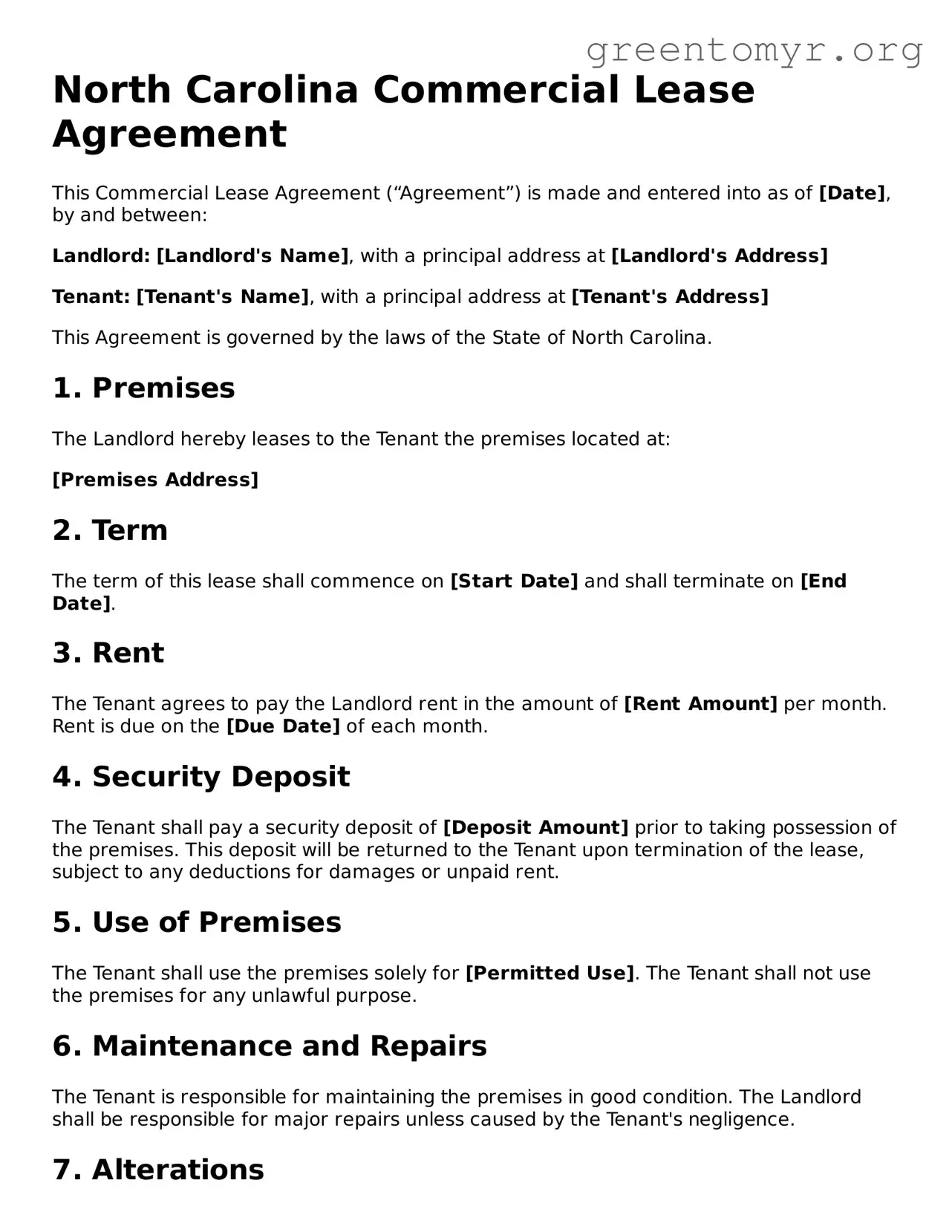
The North Carolina Commercial Lease Agreement form is a crucial document for any business seeking to rent commercial space within the state. It outlines the terms and conditions agreed upon by both the landlord and the tenant, ensuring clarity and legal protection for both parties. Key components of the agreement include the lease duration, rental amount, and payment schedule, which provide a clear financial framework. Additionally, the form addresses maintenance responsibilities, security deposits, and the permitted use of the property, which are vital for establishing expectations. It also incorporates clauses related to termination rights and renewal options, giving both parties a clear understanding of their commitments and options moving forward. This comprehensive approach ensures that all critical aspects of the leasing relationship are documented, helping to prevent disputes and misunderstandings during the lease term.
North Carolina Commercial Lease Agreement
This Commercial Lease Agreement (“Agreement”) is made and entered into as of [Date], by and between:
Landlord: [Landlord's Name], with a principal address at [Landlord's Address]
Tenant: [Tenant's Name], with a principal address at [Tenant's Address]
This Agreement is governed by the laws of the State of North Carolina.
1. Premises
The Landlord hereby leases to the Tenant the premises located at:
[Premises Address]
2. Term
The term of this lease shall commence on [Start Date] and shall terminate on [End Date].
3. Rent
The Tenant agrees to pay the Landlord rent in the amount of [Rent Amount] per month. Rent is due on the [Due Date] of each month.
4. Security Deposit
The Tenant shall pay a security deposit of [Deposit Amount] prior to taking possession of the premises. This deposit will be returned to the Tenant upon termination of the lease, subject to any deductions for damages or unpaid rent.
5. Use of Premises
The Tenant shall use the premises solely for [Permitted Use]. The Tenant shall not use the premises for any unlawful purpose.
6. Maintenance and Repairs
The Tenant is responsible for maintaining the premises in good condition. The Landlord shall be responsible for major repairs unless caused by the Tenant's negligence.
7. Alterations
The Tenant shall not make any alterations to the premises without the Landlord's prior written consent.
8. Termination
Either party may terminate this Agreement by providing [Notice Period] written notice to the other party.
9. Governing Law
This Agreement shall be governed by and construed in accordance with the laws of the State of North Carolina.
10. Signatures
IN WITNESS WHEREOF, the parties have executed this Agreement as of the date first above written.
__________________________
Landlord Signature
__________________________
Tenant Signature
| Fact Name | Details |
|---|---|
| Governing Law | The North Carolina Commercial Lease Agreement is governed by the laws of North Carolina. |
| Parties Involved | The agreement typically involves a landlord (lessor) and a tenant (lessee). |
| Property Description | The lease should include a clear description of the commercial property being leased. |
| Lease Term | The duration of the lease must be specified, including start and end dates. |
| Rent Payment Terms | The agreement outlines the amount of rent, payment due dates, and acceptable payment methods. |
| Security Deposit | Details regarding the security deposit, including the amount and conditions for its return, are included. |
| Maintenance Responsibilities | The lease specifies which party is responsible for maintenance and repairs of the property. |
Completing the North Carolina Commercial Lease Agreement form requires attention to detail. Each section must be filled out accurately to ensure that both parties understand their rights and obligations. Below are the steps to guide you through the process.
After completing the form, ensure that both parties retain a signed copy for their records. This will help avoid misunderstandings and provide clarity on the lease terms moving forward.
A North Carolina Commercial Lease Agreement is a legally binding contract between a landlord and a tenant for the rental of commercial property. This agreement outlines the terms and conditions under which the tenant can occupy and use the property for business purposes. It is essential for protecting the rights of both parties and ensuring a clear understanding of responsibilities.
Key components of a Commercial Lease Agreement typically include:
Rent in a Commercial Lease Agreement can be structured in various ways, depending on the agreement between the landlord and tenant. Common structures include:
Understanding the rent structure is vital for budgeting and financial planning for the business.
Both landlords and tenants have specific responsibilities outlined in the lease agreement. Generally, landlords are responsible for:
On the other hand, tenants typically must:
Yes, a Commercial Lease Agreement can be modified if both the landlord and tenant agree to the changes. Any modifications should be documented in writing and signed by both parties to ensure clarity and legal enforceability. This can include adjustments to rent, lease terms, or maintenance responsibilities.
If a tenant needs to terminate the lease early, they should first review the lease agreement for any specific provisions regarding early termination. Many agreements include a termination clause that outlines the process and any penalties involved. It is advisable for the tenant to communicate openly with the landlord to discuss potential options, which may include subleasing or negotiating a mutual termination agreement.
Yes, North Carolina has specific laws and regulations that govern commercial leases. These laws address issues such as security deposits, eviction processes, and tenant rights. It is essential for both landlords and tenants to familiarize themselves with these laws to ensure compliance and protect their interests. Consulting with a knowledgeable professional can provide further guidance.
Disputes between landlords and tenants can often be resolved through open communication and negotiation. If informal discussions do not lead to a resolution, mediation or arbitration may be considered as alternative dispute resolution methods. In some cases, legal action may be necessary. Both parties should be aware of their rights and obligations as outlined in the lease agreement and seek professional assistance when needed.
Filling out the North Carolina Commercial Lease Agreement form can be a complex task. Many individuals make mistakes that can lead to misunderstandings or disputes later on. One common error is failing to read the entire document carefully. Skimming through the lease can result in missing important clauses or terms that could affect the rights and responsibilities of both parties.
Another mistake is not providing accurate information. This includes the names of the parties involved, the property address, and the lease term. Errors in these details can create confusion and may lead to legal complications. It's essential to double-check all information before submitting the form.
People often overlook the importance of understanding the financial obligations outlined in the lease. This includes rent amounts, security deposits, and any additional fees. Not clarifying these financial terms can lead to disputes over payments later on. It is wise to ensure that all financial obligations are clearly stated and understood.
Additionally, some individuals fail to consider the length of the lease. They may choose a term that does not align with their business plans or financial situation. A lease that is too long can create a burden, while one that is too short may not provide stability. Evaluating the lease term carefully is crucial.
Another frequent mistake is neglecting to discuss maintenance responsibilities. The lease should clearly outline who is responsible for repairs and maintenance of the property. Failing to address this can lead to disagreements about who should handle repairs, resulting in frustration for both parties.
Many also forget to include clauses that protect their interests. This might involve terms related to subleasing, termination, or renewal options. Without these protections, a tenant or landlord may find themselves in a difficult position if circumstances change.
Lastly, some people do not seek legal advice before signing the lease. Consulting with a legal professional can provide valuable insights and help avoid potential pitfalls. Understanding the implications of the lease agreement is essential for both parties to ensure a smooth and successful business relationship.
When entering into a commercial lease agreement in North Carolina, several additional forms and documents may be necessary to ensure clarity and legal compliance. These documents help outline the responsibilities of both parties and provide essential information related to the lease arrangement. Below is a list of commonly used forms that often accompany the North Carolina Commercial Lease Agreement.
Incorporating these forms and documents into the leasing process can facilitate a smoother transaction and provide a clearer understanding of the rights and responsibilities of all parties involved. Proper documentation is crucial for minimizing potential disputes and ensuring a successful commercial leasing experience.
When filling out the North Carolina Commercial Lease Agreement form, it's important to be thorough and careful. Here are some dos and don'ts to keep in mind:
When it comes to commercial leases in North Carolina, misunderstandings can lead to confusion and costly mistakes. Here are eight common misconceptions about the North Carolina Commercial Lease Agreement form that everyone should be aware of:
This is not true. Each lease can vary significantly based on the property type, location, and the specific needs of the landlord and tenant. It's essential to read the lease carefully and understand its unique terms.
While verbal agreements can seem convenient, they often lead to disputes. A written lease provides clarity and legal protection for both parties.
Leases can be modified, but both parties must agree to the changes in writing. Flexibility is possible, but communication is key.
Many leases have additional costs such as maintenance, utilities, and property taxes. It's crucial to clarify what is included and what additional expenses may arise.
While landlords typically handle major repairs, tenants may be responsible for minor maintenance. Always check the lease for specific responsibilities.
Commercial leases can vary in length. Some may be short-term, while others are long-term. It's important to find a lease that fits your business needs.
Many tenants believe the listed rent is final. However, rent is often negotiable. Engaging in discussions with the landlord can lead to more favorable terms.
Even if you feel confident, seeking legal advice is wise. A professional can help clarify terms and protect your interests.
Understanding these misconceptions can empower tenants and landlords alike, leading to smoother transactions and healthier business relationships.
When dealing with the North Carolina Commercial Lease Agreement form, it’s essential to understand several key points to ensure a smooth process. Here are the takeaways: