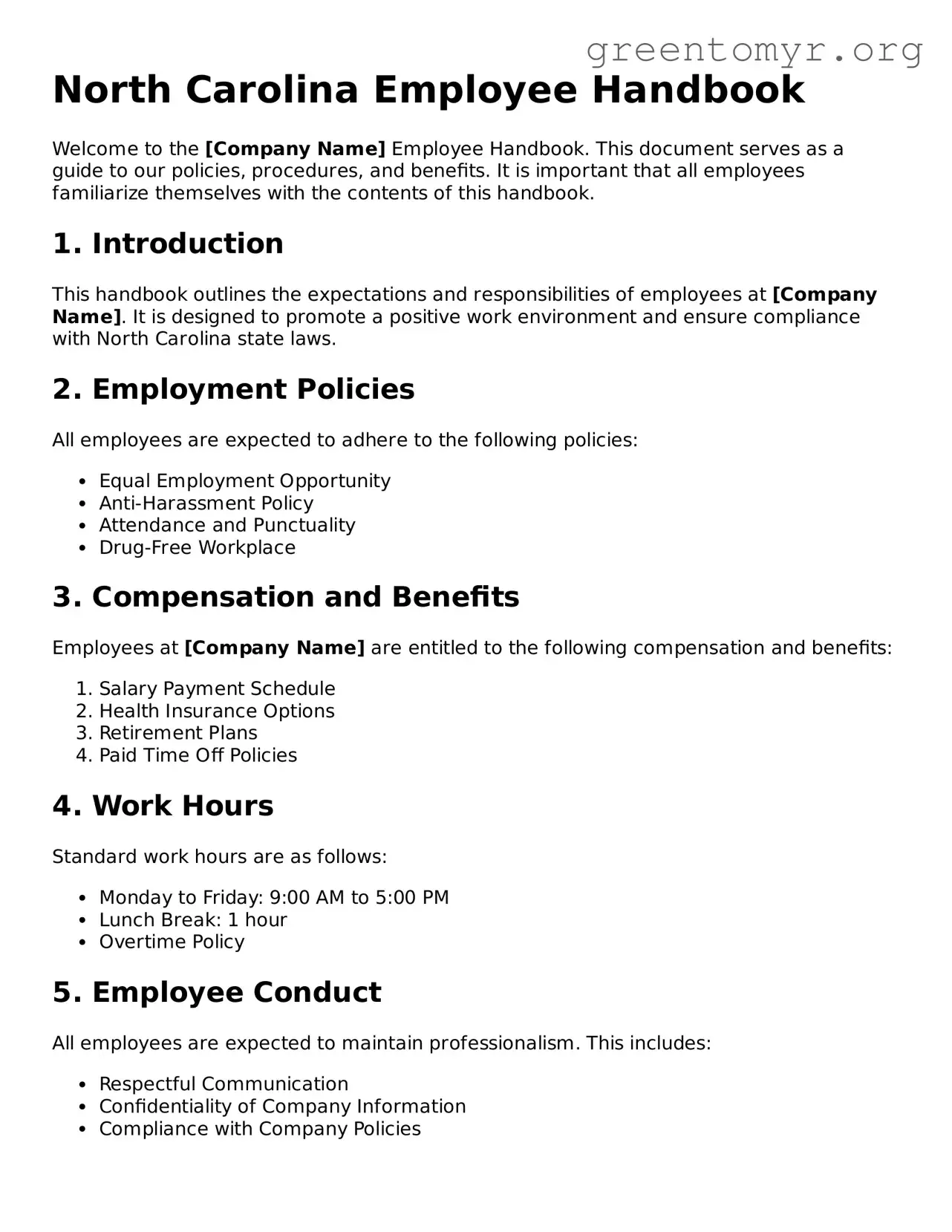
Creating a comprehensive employee handbook is a vital step for any business in North Carolina. This document serves as a guide for both employers and employees, outlining important policies, procedures, and expectations within the workplace. An effective employee handbook can help foster a positive work environment, clarify employee rights, and provide essential information on company culture. Key aspects often included in the handbook are workplace conduct, attendance policies, benefits, and procedures for reporting grievances. Additionally, it may cover topics such as anti-discrimination policies, safety regulations, and the process for performance evaluations. By having a well-structured employee handbook, businesses can ensure that all employees are informed and aligned with the company’s values and operational standards.
North Carolina Employee Handbook
Welcome to the [Company Name] Employee Handbook. This document serves as a guide to our policies, procedures, and benefits. It is important that all employees familiarize themselves with the contents of this handbook.
1. Introduction
This handbook outlines the expectations and responsibilities of employees at [Company Name]. It is designed to promote a positive work environment and ensure compliance with North Carolina state laws.
2. Employment Policies
All employees are expected to adhere to the following policies:
3. Compensation and Benefits
Employees at [Company Name] are entitled to the following compensation and benefits:
4. Work Hours
Standard work hours are as follows:
5. Employee Conduct
All employees are expected to maintain professionalism. This includes:
6. Safety and Health
Employee safety is a priority at [Company Name]. The following measures are in place:
7. Acknowledgment of Receipt
By signing below, you acknowledge that you have received and understood the [Company Name] Employee Handbook.
Employee Name: ________________________
Employee Signature: _____________________
Date: _________________________________
For any questions regarding this handbook, please contact [HR Contact Name] at [HR Contact Email].
| Fact Name | Description |
|---|---|
| Purpose | The North Carolina Employee Handbook serves as a guide for employees regarding company policies, procedures, and expectations. |
| Governing Laws | The handbook must comply with North Carolina labor laws, including the North Carolina Wage and Hour Act and the North Carolina Employment Security Law. |
| Content Requirements | It should include sections on workplace conduct, anti-discrimination policies, and employee benefits. |
| Distribution | Employers are encouraged to provide the handbook to all employees upon hiring and to update it regularly to reflect changes in the law or company policy. |
Completing the North Carolina Employee Handbook form is an important step in ensuring that employees understand their rights and responsibilities. Following these steps will help you accurately fill out the form and submit it properly.
The North Carolina Employee Handbook form is a document that outlines the policies, procedures, and expectations of an employer. It serves as a guide for employees, detailing their rights and responsibilities within the workplace.
An Employee Handbook is important because it helps establish clear communication between employers and employees. It can prevent misunderstandings and disputes by providing a reference point for workplace policies. Additionally, it can protect the employer legally by demonstrating that they have communicated their policies effectively.
The Employee Handbook should include:
The Employee Handbook should be reviewed and updated regularly. It is advisable to revisit it at least once a year or whenever there are significant changes in laws, company policies, or procedures. Keeping the handbook current helps ensure compliance and clarity for employees.
Filling out the North Carolina Employee Handbook form can be a straightforward task, but many individuals make common mistakes that can lead to confusion or delays. One frequent error is not reading the instructions carefully. Each section of the form has specific requirements, and skipping over these can result in incomplete submissions. Taking the time to thoroughly understand the guidelines can save time and effort later.
Another mistake is providing inaccurate or outdated personal information. It is essential to ensure that names, addresses, and contact numbers are current. Incorrect information can lead to issues with communication and may affect employment records. Always double-check these details before submitting the form.
People often overlook the importance of signing and dating the form. A signature serves as an acknowledgment of understanding the policies outlined in the handbook. Without a signature, the form may be considered invalid, leading to potential misunderstandings about employment terms.
Additionally, failing to ask questions about unclear sections is a common pitfall. If any part of the form is confusing, seeking clarification can prevent mistakes. Employers typically encourage questions to ensure that employees fully comprehend the handbook’s content and implications.
Some individuals also neglect to keep a copy of the completed form for their records. Having a personal copy can be beneficial for future reference, especially if questions arise regarding policies or if discrepancies occur later on. It serves as a safeguard for both the employee and the employer.
Lastly, submitting the form late can create unnecessary complications. Timeliness is crucial in the employment process. Being proactive and adhering to deadlines ensures that all necessary documentation is processed smoothly. By avoiding these common mistakes, employees can navigate the handbook form with confidence and clarity.
When creating an Employee Handbook in North Carolina, several other forms and documents may be useful to ensure comprehensive coverage of workplace policies and employee rights. Below is a list of common documents that are often utilized alongside the Employee Handbook. Each document serves a specific purpose and contributes to a well-rounded understanding of employment practices within an organization.
Incorporating these documents alongside the Employee Handbook can help create a structured and informed workplace. Each form plays a vital role in clarifying expectations, protecting rights, and fostering a positive work environment. By ensuring that all employees are aware of these materials, employers can promote transparency and compliance within their organization.
Company Policy Manual: Similar to an Employee Handbook, a Company Policy Manual outlines the rules and regulations that govern employee behavior and workplace expectations. Both documents serve to inform employees about the company’s culture and operational guidelines.
Onboarding Documents: Onboarding documents are provided to new hires to help them acclimate to their roles. Like the Employee Handbook, these documents often include information about company policies, benefits, and procedures, ensuring that employees understand their responsibilities from the start.
Code of Conduct: A Code of Conduct sets the standards for professional behavior within the workplace. It shares similarities with the Employee Handbook by outlining acceptable practices and the consequences for violations, thereby promoting a respectful and productive work environment.
Job Descriptions: Job Descriptions detail the specific duties and expectations for each role within the organization. While the Employee Handbook provides a broader overview of company policies, Job Descriptions focus on individual responsibilities, ensuring that employees know what is expected of them.
Employee Contracts: Employee Contracts are formal agreements that outline the terms of employment, including compensation and benefits. Similar to the Employee Handbook, these contracts serve to clarify the relationship between the employee and the employer, ensuring both parties understand their rights and obligations.
When filling out the North Carolina Employee Handbook form, it is important to follow certain guidelines to ensure accuracy and compliance. Here are six things you should and shouldn't do:
Here are eight common misconceptions about the North Carolina Employee Handbook form:
Understanding these misconceptions can help both employers and employees navigate the importance of the employee handbook effectively.
Filling out and using the North Carolina Employee Handbook form is an essential process for employers. Here are key takeaways to keep in mind:
Using this form effectively can help create a positive work environment and protect both the employer and employees.