In North Carolina, the process of buying or selling a firearm involves specific legal considerations, one of which is the Firearm Bill of Sale form. This document serves as a written record of the transaction, detailing essential information about the buyer and seller, as well as the firearm itself. Key aspects of the form include the names and addresses of both parties, the description of the firearm—including its make, model, and serial number—and the date of the sale. Additionally, the form may include a declaration that both parties are legally eligible to own firearms, which helps ensure compliance with state and federal laws. By providing clarity and protection for both the buyer and the seller, this form plays a crucial role in the responsible transfer of firearm ownership, fostering accountability and transparency in the process.
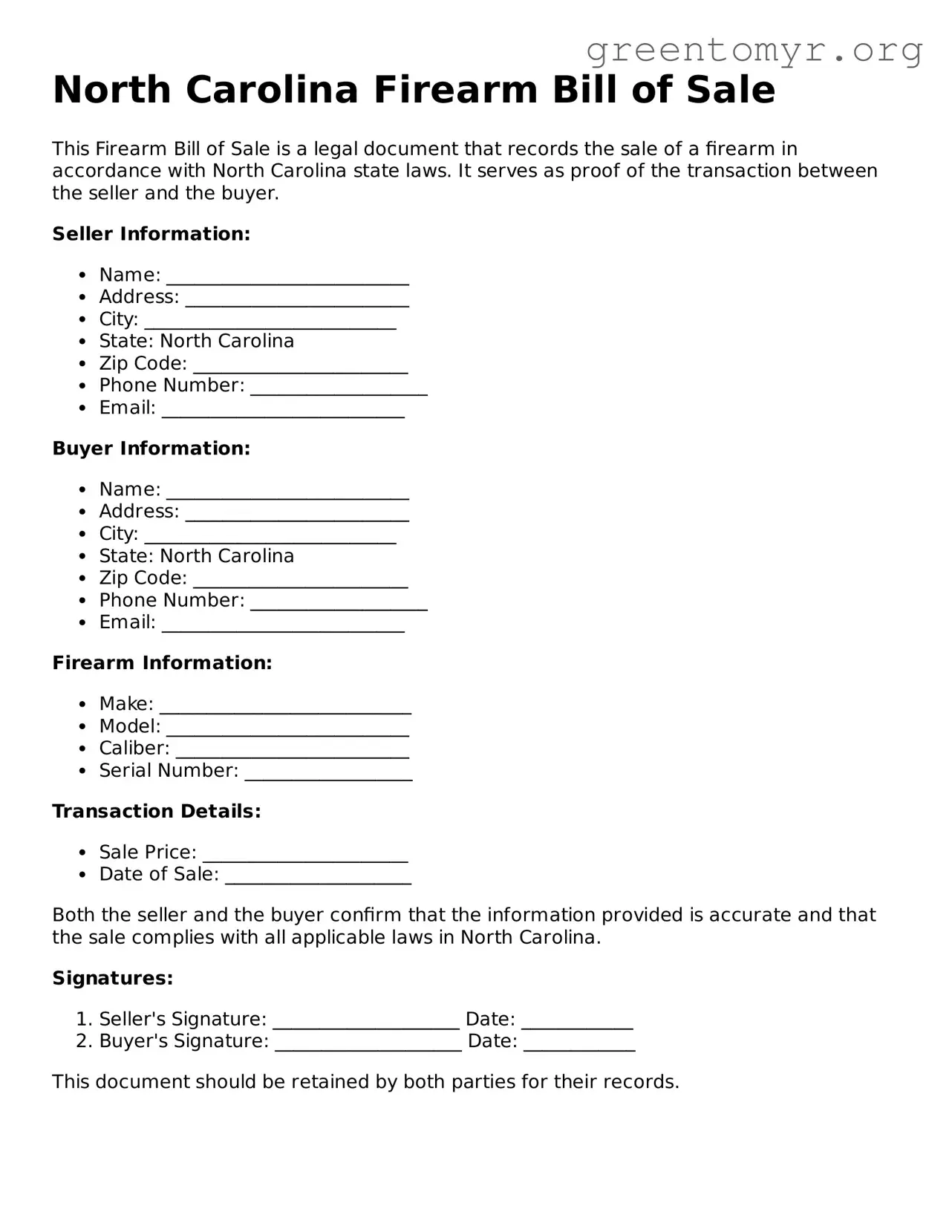
North Carolina Firearm Bill of Sale
This Firearm Bill of Sale is a legal document that records the sale of a firearm in accordance with North Carolina state laws. It serves as proof of the transaction between the seller and the buyer.
Seller Information:
Buyer Information:
Firearm Information:
Transaction Details:
Both the seller and the buyer confirm that the information provided is accurate and that the sale complies with all applicable laws in North Carolina.
Signatures:
This document should be retained by both parties for their records.
| Fact Name | Description |
|---|---|
| Purpose | The North Carolina Firearm Bill of Sale form is used to document the sale or transfer of a firearm between private parties. |
| Legal Requirement | While a bill of sale is not legally required in North Carolina, it is highly recommended to protect both the buyer and seller. |
| Governing Law | The sale of firearms in North Carolina is governed by North Carolina General Statutes, specifically Chapter 14, Article 54B. |
| Information Included | The form typically includes details such as the names and addresses of both parties, the firearm's description, and the sale price. |
| Transfer of Ownership | Completing the bill of sale helps establish proof of ownership transfer, which can be important for legal and personal records. |
| Age Requirement | Buyers must be at least 18 years old to purchase a firearm in North Carolina, as stipulated by state law. |
| Background Checks | While private sales do not require a background check, sellers should be cautious and ensure they are not selling to prohibited individuals. |
| Record Keeping | Both parties should retain a copy of the bill of sale for their records, which can be useful in case of future disputes. |
| Notarization | Notarization of the bill of sale is not required but can add an extra layer of authenticity and protection for both parties. |
Filling out the North Carolina Firearm Bill of Sale form requires careful attention to detail. Once you have completed the form, you will be ready to proceed with the transaction. Ensure that all information is accurate to avoid any issues in the future.
A North Carolina Firearm Bill of Sale is a legal document that records the sale or transfer of a firearm between two parties. This form serves as proof of the transaction and includes important details such as the buyer's and seller's information, firearm description, and the date of the sale. Having this document can help protect both parties in case of future disputes regarding ownership.
While North Carolina does not legally require a Bill of Sale for private firearm transactions, it is highly recommended. A Bill of Sale provides a written record of the sale, which can be beneficial for both the buyer and seller. It can help establish ownership and protect against potential legal issues in the future, such as questions about the firearm's history or liability for crimes committed with the firearm.
A comprehensive Bill of Sale for a firearm should include the following information:
Including this information ensures clarity and can help prevent misunderstandings in the future.
You can create your own Bill of Sale for a firearm in North Carolina. There is no specific form mandated by law, but it must include the essential information mentioned earlier. Many online resources offer templates that you can use as a starting point. Ensure that the document is clear and contains all required details to serve its purpose effectively.
After completing the Bill of Sale, both the buyer and seller should keep a signed copy for their records. This document serves as proof of the transaction and can be useful if any legal questions arise in the future. It is also advisable for the buyer to check local and federal laws regarding firearm ownership to ensure compliance with all regulations.
When completing the North Carolina Firearm Bill of Sale form, individuals often overlook key details that can lead to complications. One common mistake is failing to provide accurate information about the firearm itself. This includes details such as the make, model, and serial number. Inaccuracies can create confusion and may even render the bill of sale ineffective.
Another frequent error is neglecting to include the full names and addresses of both the buyer and the seller. This information is crucial for establishing the identities of the parties involved. Omitting or misspelling names can lead to legal issues down the line, particularly if disputes arise regarding the transaction.
Many people also forget to date the bill of sale. A date is essential for establishing when the transfer of ownership occurred. Without this information, it may be difficult to prove the timeline of the transaction, which can be important for legal or tax purposes.
In addition, some individuals do not sign the document. Both the buyer and the seller should sign the bill of sale to validate the transaction. A lack of signatures can lead to questions about the legitimacy of the sale, and it may not be accepted by law enforcement or other authorities.
Moreover, failing to provide a clear description of the payment method is another mistake. Whether the transaction was completed with cash, a check, or another form of payment should be documented. This helps to clarify the terms of the sale and can protect both parties in case of disputes.
Another oversight involves not checking local laws and regulations regarding firearm sales. North Carolina has specific requirements that may affect the sale process. Ignoring these regulations can lead to legal repercussions for both the buyer and the seller.
Some individuals also forget to retain a copy of the completed bill of sale. Keeping a copy for personal records is essential. It serves as proof of the transaction and can be useful for future reference.
Additionally, people sometimes do not verify the buyer’s eligibility to purchase a firearm. Ensuring that the buyer meets all legal requirements is crucial. Failing to do so can result in serious legal consequences for the seller.
Lastly, neglecting to seek legal advice when unsure about the process can be a significant mistake. Consulting with a legal expert can provide clarity and ensure that all necessary steps are taken. This proactive approach can save time and prevent potential issues in the future.
When engaging in the sale or transfer of a firearm in North Carolina, several additional forms and documents may be necessary to ensure compliance with state and federal laws. Each of these documents serves a specific purpose and helps protect both the buyer and seller in the transaction. Below is a list of commonly used forms that accompany the North Carolina Firearm Bill of Sale.
Utilizing these forms can help facilitate a smooth and legal transfer of firearms in North Carolina. It is crucial for both parties to understand their rights and responsibilities throughout the process. Always consider consulting with a legal professional if there are any uncertainties regarding firearm transactions.
The Firearm Bill of Sale form serves a specific purpose in documenting the sale of firearms. However, several other documents share similarities in function and intent. Below is a list of four such documents, along with explanations of how they relate to the Firearm Bill of Sale.
Each of these documents plays a crucial role in ensuring clarity and legality in transactions, much like the Firearm Bill of Sale does for firearm sales.
When filling out the North Carolina Firearm Bill of Sale form, it's important to keep a few key points in mind. Here are some things you should and shouldn't do:
By following these guidelines, you can help ensure a smooth transaction and avoid potential issues down the line.
There are several misconceptions surrounding the North Carolina Firearm Bill of Sale form. Understanding the facts can help clarify the process and requirements. Here are nine common misconceptions:
Being informed about these misconceptions can help ensure a smoother transaction process when buying or selling firearms in North Carolina.
When engaging in the sale or transfer of firearms in North Carolina, it is essential to understand the importance of the Firearm Bill of Sale form. Here are key takeaways to consider:
Understanding these key aspects of the North Carolina Firearm Bill of Sale form can facilitate a smoother transaction and promote responsible firearm ownership.