The North Carolina Lady Bird Deed, also known as an enhanced life estate deed, serves as a powerful estate planning tool that allows property owners to transfer their real estate to beneficiaries while retaining control during their lifetime. This unique form of deed enables the original owner to enjoy the property, make changes, and even sell it without the need for consent from the beneficiaries. One of its most significant advantages is that it helps avoid probate, streamlining the transfer process upon the owner's death. Additionally, the Lady Bird Deed can provide tax benefits and protect the property from potential creditors, making it an attractive option for many homeowners. By utilizing this deed, individuals can ensure that their property is passed on to their loved ones according to their wishes, all while maintaining the flexibility to manage their assets throughout their lives. Understanding the intricacies of the Lady Bird Deed form is essential for anyone considering this estate planning strategy in North Carolina.
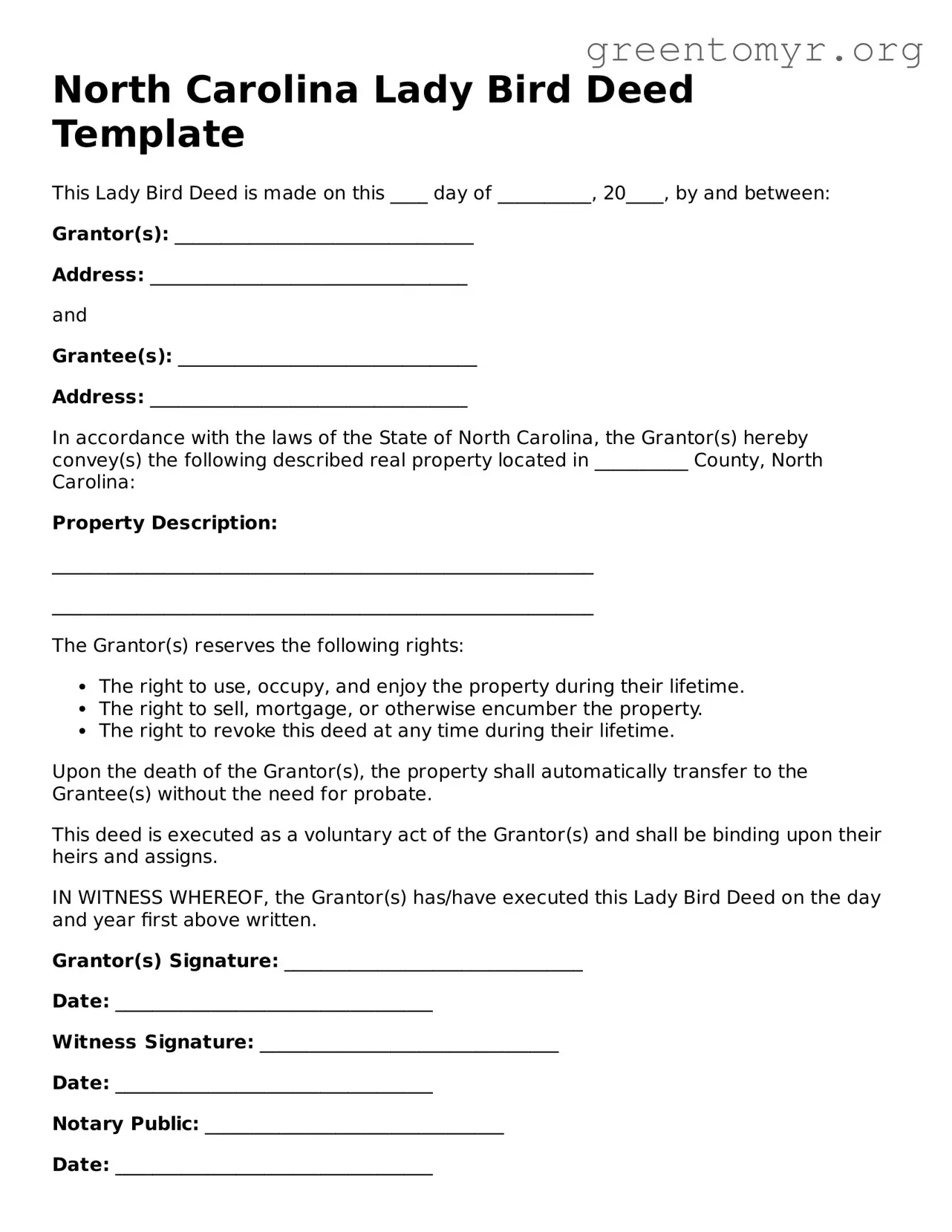
North Carolina Lady Bird Deed Template
This Lady Bird Deed is made on this ____ day of __________, 20____, by and between:
Grantor(s): ________________________________
Address: __________________________________
and
Grantee(s): ________________________________
Address: __________________________________
In accordance with the laws of the State of North Carolina, the Grantor(s) hereby convey(s) the following described real property located in __________ County, North Carolina:
Property Description:
__________________________________________________________
__________________________________________________________
The Grantor(s) reserves the following rights:
Upon the death of the Grantor(s), the property shall automatically transfer to the Grantee(s) without the need for probate.
This deed is executed as a voluntary act of the Grantor(s) and shall be binding upon their heirs and assigns.
IN WITNESS WHEREOF, the Grantor(s) has/have executed this Lady Bird Deed on the day and year first above written.
Grantor(s) Signature: ________________________________
Date: __________________________________
Witness Signature: ________________________________
Date: __________________________________
Notary Public: ________________________________
Date: __________________________________
My commission expires: ____________________________
| Fact Name | Description |
|---|---|
| Definition | The Lady Bird Deed allows property owners in North Carolina to transfer their property to beneficiaries while retaining control during their lifetime. |
| Governing Law | This deed is governed by North Carolina General Statutes, specifically under the laws of property transfer. |
| Retained Control | Property owners can continue to live in and manage the property, even after the deed is executed. |
| Beneficiary Designation | Owners can designate one or more beneficiaries to receive the property upon their death. |
| Tax Benefits | The Lady Bird Deed may help avoid probate, potentially saving time and money for heirs. |
| Revocability | Property owners can revoke or modify the deed at any time during their lifetime. |
| Medicaid Considerations | This deed may help protect the property from being counted as an asset for Medicaid eligibility purposes. |
| Execution Requirements | The deed must be signed, dated, and notarized to be valid in North Carolina. |
After obtaining the North Carolina Lady Bird Deed form, you will need to carefully fill it out to ensure that all necessary information is accurately provided. This process involves collecting specific details about the property and the individuals involved. Once completed, you will be ready to take the next steps for recording the deed with the appropriate county office.
A Lady Bird Deed, also known as an enhanced life estate deed, allows a property owner to transfer their property to a beneficiary while retaining the right to use and control the property during their lifetime. This type of deed is unique because it permits the property owner to sell, mortgage, or change the beneficiary without needing the beneficiary's consent. Upon the owner's death, the property automatically transfers to the named beneficiary, bypassing the probate process.
There are several advantages to utilizing a Lady Bird Deed:
To create a Lady Bird Deed in North Carolina, the following steps should be taken:
Yes, a Lady Bird Deed can be revoked or changed at any time by the property owner. This can be done by executing a new deed that either revokes the previous one or modifies the terms, such as changing the beneficiary. Since the property owner retains control over the property during their lifetime, they can make these changes without needing the beneficiary's consent.
While a Lady Bird Deed offers many benefits, there are some limitations to consider:
Filling out the North Carolina Lady Bird Deed form can be a straightforward process, but many individuals make critical mistakes that can lead to complications down the road. Understanding these common errors can help ensure that the deed is completed correctly and serves its intended purpose.
One common mistake is failing to include all necessary parties. When designating the property owner and beneficiaries, it’s essential to list everyone involved. Omitting a beneficiary can lead to disputes or unintended consequences after the property owner's passing.
Another frequent error is not clearly identifying the property. The deed should contain a precise legal description of the property being transferred. Vague descriptions can create confusion and may render the deed ineffective. Always ensure that the property details are accurate and complete.
Some individuals neglect to sign the deed in the presence of a notary public. A signature without proper notarization can invalidate the deed. It is crucial to follow the legal requirements for signing and witnessing to ensure the document holds up in court.
Additionally, failing to record the deed with the appropriate county office is a mistake that can have serious ramifications. Even if the deed is filled out correctly, it must be officially recorded to protect the rights of the beneficiaries. Without this step, the deed may not be recognized legally.
Another pitfall is not considering tax implications. The Lady Bird Deed can affect property taxes and estate taxes. It’s wise to consult with a tax professional to understand how this deed may impact your financial situation.
People often overlook the importance of reviewing the deed for errors before submission. Simple mistakes, such as typos or incorrect dates, can lead to significant issues. Taking the time to double-check the document can save headaches later on.
Some individuals also fail to communicate their intentions clearly to the beneficiaries. It’s important that all parties understand the purpose of the Lady Bird Deed. Open communication can prevent misunderstandings and potential conflicts in the future.
Another mistake is not updating the deed when circumstances change. Life events such as marriage, divorce, or the birth of a child can impact the beneficiaries. Keeping the deed current is essential to reflect your wishes accurately.
Finally, many people underestimate the value of seeking professional assistance. While it is possible to fill out the Lady Bird Deed form independently, consulting with an attorney can provide peace of mind. Legal expertise can help navigate any complexities and ensure compliance with North Carolina laws.
The North Carolina Lady Bird Deed is a unique estate planning tool that allows property owners to transfer their real estate to beneficiaries while retaining certain rights during their lifetime. When utilizing this deed, several other documents and forms may also be relevant to ensure a smooth transfer of property and clarify intentions. Below is a list of forms and documents often used in conjunction with the Lady Bird Deed.
Incorporating these documents alongside the Lady Bird Deed can help create a comprehensive estate plan. This ensures that both property and personal wishes are handled according to the individual's preferences, providing peace of mind for both the owner and their loved ones.
The Lady Bird Deed is a unique estate planning tool, but it shares similarities with several other legal documents. Each of these documents serves a specific purpose in managing property and ensuring a smooth transfer of assets. Here’s a look at seven documents that are similar to the Lady Bird Deed:
Understanding these documents can empower individuals to make informed decisions about their estate planning needs. Each option has its own benefits and considerations, so it’s essential to choose the right one based on personal circumstances.
When filling out the North Carolina Lady Bird Deed form, it’s important to get it right. Here are some things you should and shouldn’t do:
The North Carolina Lady Bird Deed is a useful tool for estate planning, but several misconceptions exist about it. Here are five common misunderstandings:
Understanding these misconceptions can help individuals make informed decisions about their estate planning options.
The North Carolina Lady Bird Deed is a useful tool for property owners who wish to transfer their property to a beneficiary while retaining certain rights. Here are some key takeaways to consider when filling out and using this form: