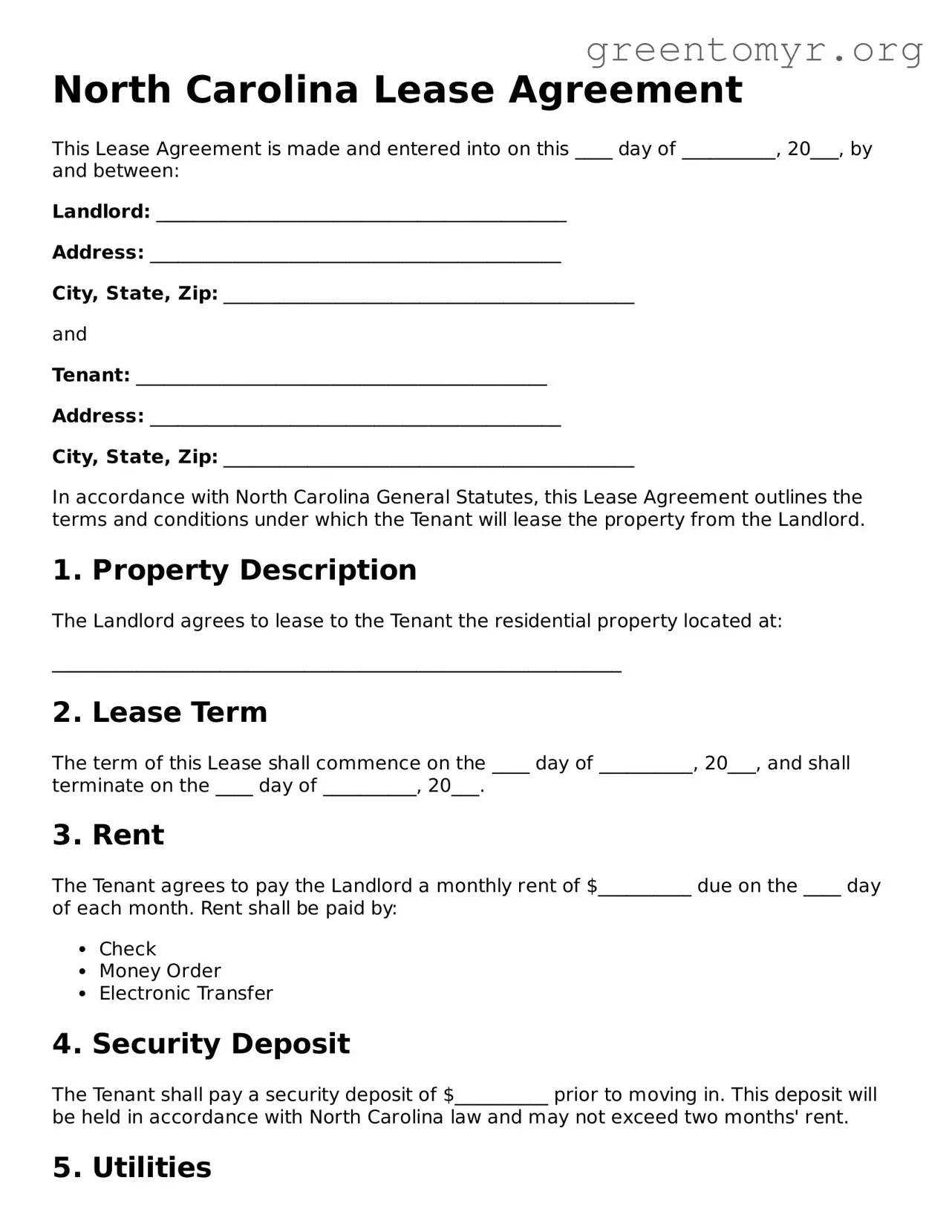
In North Carolina, a lease agreement serves as a vital document that outlines the relationship between landlords and tenants. This legally binding contract includes essential details such as the duration of the lease, rental amount, and payment terms. It also specifies the responsibilities of both parties, covering aspects like maintenance obligations and rules regarding property use. Tenants can expect to find clauses addressing security deposits, late fees, and the process for terminating the lease. Additionally, the form may include provisions for handling disputes and the conditions under which a tenant can sublet the property. Understanding these components is crucial for both landlords and tenants, as it helps ensure a smooth rental experience and protects the rights of all involved.
North Carolina Lease Agreement
This Lease Agreement is made and entered into on this ____ day of __________, 20___, by and between:
Landlord: ____________________________________________
Address: ____________________________________________
City, State, Zip: ____________________________________________
and
Tenant: ____________________________________________
Address: ____________________________________________
City, State, Zip: ____________________________________________
In accordance with North Carolina General Statutes, this Lease Agreement outlines the terms and conditions under which the Tenant will lease the property from the Landlord.
1. Property Description
The Landlord agrees to lease to the Tenant the residential property located at:
_____________________________________________________________
2. Lease Term
The term of this Lease shall commence on the ____ day of __________, 20___, and shall terminate on the ____ day of __________, 20___.
3. Rent
The Tenant agrees to pay the Landlord a monthly rent of $__________ due on the ____ day of each month. Rent shall be paid by:
4. Security Deposit
The Tenant shall pay a security deposit of $__________ prior to moving in. This deposit will be held in accordance with North Carolina law and may not exceed two months' rent.
5. Utilities
The Tenant is responsible for the following utilities:
6. Maintenance and Repairs
The Tenant agrees to maintain the property in good condition and to notify the Landlord of any necessary repairs. The Landlord shall be responsible for repairs not caused by the Tenant's negligence.
7. Termination
Either party may terminate this Lease Agreement by providing written notice at least ____ days prior to the intended termination date.
8. Governing Law
This Lease Agreement shall be governed by the laws of the State of North Carolina.
IN WITNESS WHEREOF, the parties hereto have executed this Lease Agreement as of the date first above written.
Landlord Signature: _______________________________
Date: ___________________________________________
Tenant Signature: ________________________________
Date: ___________________________________________
| Fact Name | Description |
|---|---|
| Governing Law | The North Carolina Lease Agreement is governed by the North Carolina General Statutes, particularly Chapter 42, which pertains to landlord-tenant relationships. |
| Types of Leases | This form can be used for various types of leases, including residential, commercial, and agricultural leases, allowing flexibility for different rental situations. |
| Security Deposit Regulations | North Carolina law limits security deposits to one and a half times the monthly rent for leases longer than one month, ensuring tenant protection. |
| Lease Duration | The lease agreement can specify various durations, including month-to-month or fixed-term leases, catering to the needs of both landlords and tenants. |
| Required Disclosures | Landlords must provide certain disclosures, such as information about lead-based paint for properties built before 1978, ensuring tenant safety. |
| Termination Notice | For month-to-month leases, either party must provide at least a 30-day written notice to terminate the lease, promoting clear communication. |
| Modifications and Addendums | The form allows for modifications and addendums, enabling landlords and tenants to customize terms to meet their specific needs. |
Filling out the North Carolina Lease Agreement form is an important step in establishing a rental relationship. This document outlines the terms of the lease, including the responsibilities of both the landlord and the tenant. To ensure clarity and avoid misunderstandings, it's essential to complete the form accurately.
After completing these steps, make sure to provide copies of the signed lease to both the landlord and tenant. Keeping a copy for your records is also advisable.
A North Carolina Lease Agreement is a legally binding contract between a landlord and a tenant. This document outlines the terms and conditions under which a tenant can occupy a rental property. It typically includes details such as the rental amount, duration of the lease, and responsibilities of both parties.
Key elements to include in a North Carolina Lease Agreement are:
In North Carolina, lease terms can vary widely. Common durations include:
Ultimately, the length of the lease is negotiable and should be clearly stated in the agreement.
Yes, North Carolina has specific laws that govern lease agreements. These laws cover various aspects such as security deposits, eviction procedures, and tenant rights. It is crucial for both landlords and tenants to be aware of these regulations to ensure compliance and protect their interests.
If a tenant breaks the lease, they may face several consequences, including:
It's advisable for tenants to communicate with their landlord to discuss possible solutions, such as subletting or an early termination agreement.
Generally, a landlord cannot increase the rent during a fixed-term lease unless the lease agreement specifically allows for it. For month-to-month leases, landlords may raise the rent with proper notice, typically 30 days in North Carolina.
While a written lease is not legally required for leases shorter than three years, it is highly recommended. A written agreement provides clarity and protects both parties by outlining the terms and conditions of the rental arrangement.
If a dispute arises, tenants should first attempt to resolve the issue directly with their landlord. If this does not lead to a satisfactory outcome, tenants may consider seeking mediation or legal advice. Keeping thorough documentation of all communications and agreements can be beneficial in resolving disputes.
When filling out the North Carolina Lease Agreement form, one common mistake is the failure to include all necessary tenant and landlord information. Both parties must provide their full names, addresses, and contact details. Omitting any of this information can lead to confusion and potential disputes down the line. It is essential to ensure that all details are accurate and complete to avoid complications.
Another frequent error involves not specifying the rental property address clearly. The lease should include the complete address of the rental unit, including unit numbers if applicable. Leaving out important details can create ambiguity regarding the property being leased, which may lead to misunderstandings between the landlord and tenant.
Many individuals also overlook the importance of clearly defining the lease term. The start and end dates of the lease should be explicitly stated. Failing to do so can result in uncertainty about the duration of the rental agreement, which can affect both parties’ expectations and responsibilities. A well-defined lease term helps ensure that everyone is on the same page.
Finally, tenants and landlords often neglect to read through the entire agreement before signing. This oversight can lead to unexpected obligations or rights that one party may not fully understand. Taking the time to review the lease thoroughly can prevent future disputes and ensure that all parties are aware of their commitments. Understanding the terms of the lease is crucial for a smooth rental experience.
When entering into a lease agreement in North Carolina, several other forms and documents may be necessary to ensure clarity and legal compliance. These documents help outline the responsibilities of both landlords and tenants, protecting their rights and interests throughout the leasing period.
Understanding these documents can facilitate a smoother leasing process. Each form plays a crucial role in establishing clear communication and expectations between landlords and tenants.
Rental Agreement: This document outlines the terms under which a property is rented. Like a lease agreement, it specifies the rental amount, duration, and responsibilities of both the landlord and tenant.
Sublease Agreement: A sublease agreement allows a tenant to rent out their leased space to another party. It shares similarities with a lease agreement, as it includes terms about rent, duration, and obligations.
Month-to-Month Rental Agreement: This type of agreement allows tenants to rent a property on a monthly basis. It is similar to a lease agreement but offers more flexibility regarding the duration of stay.
Commercial Lease Agreement: Designed for business premises, this document outlines the terms for renting commercial space. It mirrors a residential lease agreement in structure but addresses different legal and operational needs.
Room Rental Agreement: This document is used when renting a room within a property. Like a lease agreement, it specifies rent, duration, and the rights and responsibilities of both parties.
Tenancy Agreement: This is a broader term that encompasses various rental arrangements. It shares key elements with a lease agreement, such as payment terms and duration, while being applicable to different rental situations.
Lease Purchase Agreement: This document allows a tenant to rent a property with the option to buy it later. It contains elements of both a lease agreement and a purchase contract, detailing terms for both renting and potential buying.
When filling out the North Carolina Lease Agreement form, it’s essential to pay attention to specific details. Here’s a guide to help you navigate the process effectively.
Understanding the North Carolina Lease Agreement form is essential for both landlords and tenants. However, several misconceptions can lead to confusion. Here are nine common misunderstandings:
Being aware of these misconceptions can help both landlords and tenants navigate their rental agreements more effectively. Always read the lease carefully and seek clarification when needed.
When dealing with the North Carolina Lease Agreement form, there are several important points to keep in mind. Understanding these key takeaways can help ensure a smoother rental experience for both landlords and tenants.
By keeping these points in mind, both landlords and tenants can navigate the leasing process with greater confidence and clarity.