Content Navigation

The North Carolina Motor Vehicle Bill of Sale form serves as a crucial document in the process of buying or selling a vehicle in the state. This form captures essential details about the transaction, ensuring that both the buyer and seller have a clear record of the agreement. Key components include the vehicle's identification number (VIN), make, model, year, and odometer reading at the time of sale. Additionally, the form requires the names and addresses of both parties involved, along with their signatures, which solidifies the legitimacy of the transaction. By providing a written record, this document helps protect the interests of both the buyer and seller, offering a layer of security against potential disputes. Furthermore, it may be necessary for registering the vehicle with the North Carolina Department of Motor Vehicles (DMV), making it an indispensable part of the vehicle transfer process. Understanding the importance of this form can simplify the sale and ensure compliance with state regulations.

North Carolina Motor Vehicle Bill of Sale Example

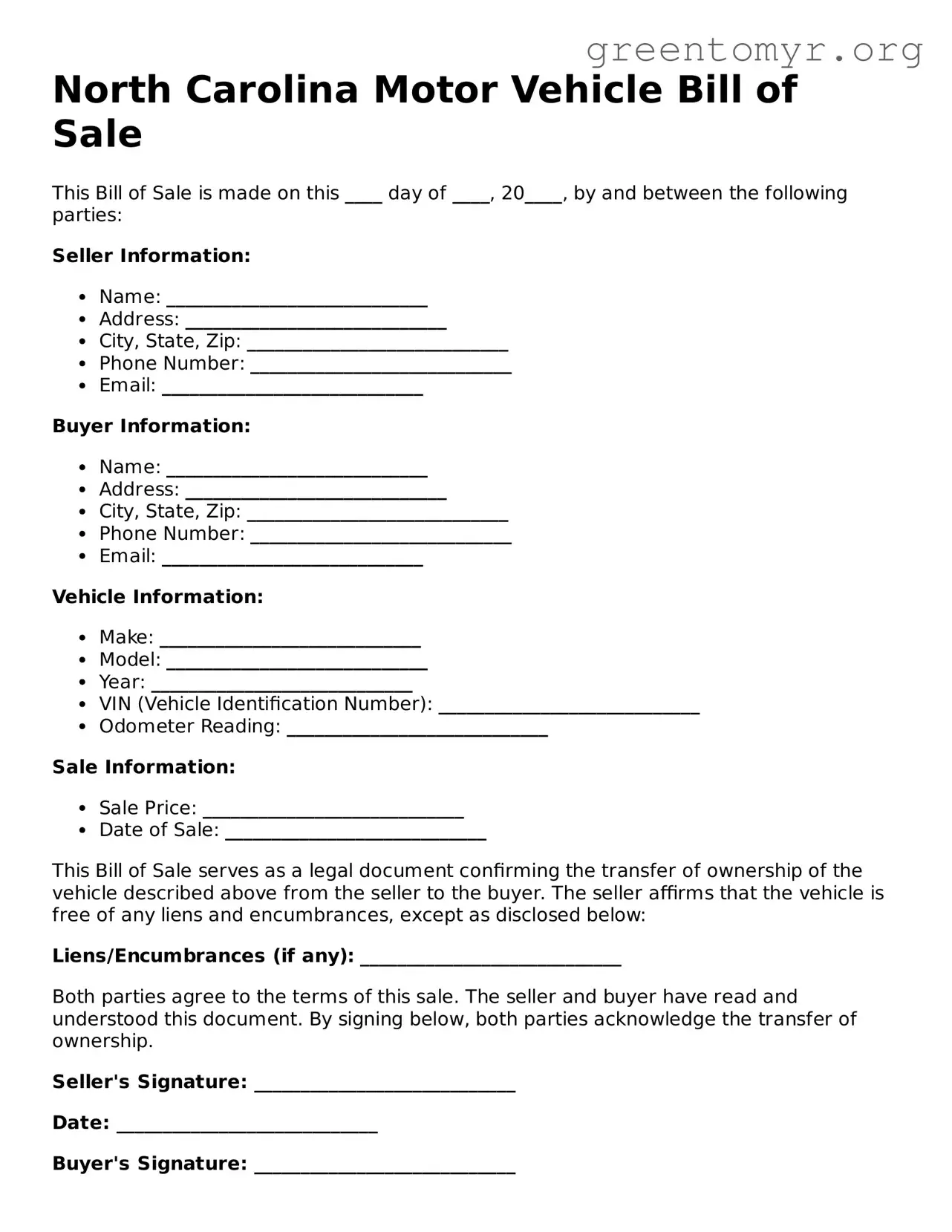
North Carolina Motor Vehicle Bill of Sale

This Bill of Sale is made on this ____ day of ____, 20____, by and between the following parties:

Seller Information:

  • Name: ____________________________
  • Address: ____________________________
  • City, State, Zip: ____________________________
  • Phone Number: ____________________________
  • Email: ____________________________

Buyer Information:

  • Name: ____________________________
  • Address: ____________________________
  • City, State, Zip: ____________________________
  • Phone Number: ____________________________
  • Email: ____________________________

Vehicle Information:

  • Make: ____________________________
  • Model: ____________________________
  • Year: ____________________________
  • VIN (Vehicle Identification Number): ____________________________
  • Odometer Reading: ____________________________

Sale Information:

  • Sale Price: ____________________________
  • Date of Sale: ____________________________

This Bill of Sale serves as a legal document confirming the transfer of ownership of the vehicle described above from the seller to the buyer. The seller affirms that the vehicle is free of any liens and encumbrances, except as disclosed below:

Liens/Encumbrances (if any): ____________________________

Both parties agree to the terms of this sale. The seller and buyer have read and understood this document. By signing below, both parties acknowledge the transfer of ownership.

Seller's Signature: ____________________________

Date: ____________________________

Buyer's Signature: ____________________________

Date: ____________________________

This Bill of Sale is governed by the laws of the State of North Carolina.

PDF Form Features

Fact Name Description
Purpose The North Carolina Motor Vehicle Bill of Sale form is used to document the sale of a motor vehicle between a buyer and a seller.
Governing Law This form is governed by North Carolina General Statutes, specifically under Chapter 20, which covers motor vehicle regulations.
Required Information Essential details such as the vehicle identification number (VIN), make, model, year, and odometer reading must be included.
Seller's Information The seller's name, address, and signature are required to validate the transaction.
Buyer's Information The buyer's name and address must also be recorded to establish ownership transfer.
As-Is Condition The form typically includes a statement that the vehicle is sold "as-is," meaning the seller is not responsible for future repairs.
Notarization While notarization is not mandatory, having the document notarized can provide additional legal protection.
Record Keeping Both parties should keep a copy of the completed Bill of Sale for their records, which may be needed for future reference.
Usage for Registration The completed form is often required when registering the vehicle in the buyer's name with the North Carolina Department of Motor Vehicles.

Guide to Using North Carolina Motor Vehicle Bill of Sale

Once you have the North Carolina Motor Vehicle Bill of Sale form in front of you, it’s important to fill it out accurately. This document will serve as proof of the sale and is necessary for transferring ownership of the vehicle. Follow the steps below to ensure you complete the form correctly.

  1. Begin by entering the date of the sale at the top of the form.
  2. Provide the full name and address of the seller. This is the person or entity selling the vehicle.
  3. Next, enter the buyer's full name and address. This is the individual or entity purchasing the vehicle.
  4. Fill in the vehicle details. Include the make, model, year, and Vehicle Identification Number (VIN).
  5. Indicate the sale price of the vehicle. Be clear and specific about the amount.
  6. Both the seller and buyer should sign the form. This confirms that both parties agree to the sale.
  7. Finally, make a copy of the completed form for your records before submitting it to the appropriate authorities.

Get Answers on North Carolina Motor Vehicle Bill of Sale

What is a North Carolina Motor Vehicle Bill of Sale?

A North Carolina Motor Vehicle Bill of Sale is a legal document that records the sale of a vehicle from one party to another. It serves as proof of the transaction and includes essential details such as the vehicle's make, model, year, Vehicle Identification Number (VIN), sale price, and the names and addresses of both the buyer and seller. This document is important for both parties to ensure a smooth transfer of ownership and to provide a record for future reference.

Is a Bill of Sale required in North Carolina when selling a vehicle?

While a Bill of Sale is not legally required in North Carolina, it is highly recommended. Having a Bill of Sale protects both the buyer and the seller by documenting the transaction. It can help resolve disputes regarding ownership or sale terms in the future. Additionally, when registering the vehicle in the buyer's name, the Bill of Sale can serve as proof of purchase, especially if the seller has lost the title.

What information should be included in the Bill of Sale?

To ensure the Bill of Sale is comprehensive, it should include the following information:

  • The full names and addresses of both the buyer and seller
  • The vehicle's make, model, year, and VIN
  • The sale price of the vehicle
  • The date of the sale
  • Any warranties or guarantees provided by the seller
  • Signatures of both the buyer and seller

Including this information helps establish a clear record of the transaction and can prevent misunderstandings later on.

How do I complete a Bill of Sale in North Carolina?

Completing a Bill of Sale in North Carolina is straightforward. Follow these steps:

  1. Obtain a Bill of Sale form. You can find templates online or create one that includes all necessary details.
  2. Fill in the required information, ensuring accuracy for all vehicle and personal details.
  3. Both the buyer and seller should review the document for completeness and correctness.
  4. Sign and date the Bill of Sale in the presence of each other.

Once completed, both parties should keep a copy for their records. This document will be useful for registration and any future transactions related to the vehicle.

Common mistakes

When completing the North Carolina Motor Vehicle Bill of Sale form, individuals often encounter pitfalls that can lead to complications down the line. One common mistake is failing to provide complete information about the vehicle. This includes not only the make and model but also the Vehicle Identification Number (VIN) and the year of manufacture. Omitting any of these details can create confusion and may result in delays during the registration process.

Another frequent error is neglecting to include the purchase price of the vehicle. This amount is essential for both the buyer and seller, as it establishes the value of the transaction. If the purchase price is left blank or inaccurately reported, it can affect tax calculations and may raise questions during future transactions.

Many individuals also forget to sign the form. Both the buyer and the seller must provide their signatures to validate the transaction. Without these signatures, the document lacks legal standing, which can complicate matters if either party needs to prove ownership or address disputes in the future.

Additionally, some people overlook the importance of including the date of the transaction. This detail is crucial for establishing a timeline, particularly if any issues arise later regarding the sale. A missing date can lead to misunderstandings about when the ownership transfer actually occurred.

Another mistake often made is not providing the correct contact information for both parties involved. Accurate contact details are vital in case follow-up communication is needed. If either party cannot be reached due to incomplete or incorrect information, resolving potential disputes or issues becomes significantly more difficult.

Lastly, individuals sometimes fail to keep a copy of the completed Bill of Sale for their records. This document serves as proof of the transaction and may be needed for future reference, such as when applying for title transfer or dealing with any legal matters. Retaining a copy ensures that both parties have access to the terms of the sale, which can be invaluable in case of any disputes.

Documents used along the form

When buying or selling a vehicle in North Carolina, the Motor Vehicle Bill of Sale form is an essential document. However, there are several other forms and documents that are often used in conjunction with this bill of sale to ensure a smooth transaction. Here are five important documents that you may need to consider:

  • Title Transfer Document: This document is crucial as it officially transfers ownership of the vehicle from the seller to the buyer. It must be signed by both parties and submitted to the North Carolina Division of Motor Vehicles (DMV) to update the vehicle’s registration.
  • Odometer Disclosure Statement: Federal law requires that the seller provide an odometer disclosure statement when selling a vehicle. This document records the vehicle's mileage at the time of sale, helping to prevent fraud related to odometer tampering.
  • Application for Title: If the buyer is applying for a new title after the sale, they will need to fill out this application. It includes details about the vehicle and the new owner, and it must be submitted to the DMV along with the title transfer document.
  • Vehicle History Report: While not a legal requirement, obtaining a vehicle history report can provide valuable information about the car’s past, including accidents, title issues, and service records. This report can help buyers make informed decisions.
  • Insurance Verification: Before registering a vehicle, the buyer must have insurance coverage. Providing proof of insurance is typically required by the DMV to complete the registration process.

These documents play a vital role in the vehicle transfer process. Ensuring that all necessary paperwork is completed accurately can help avoid complications and provide peace of mind for both the buyer and the seller.

Similar forms

  • Boat Bill of Sale: This document serves a similar purpose for the sale of boats. It includes details about the vessel, such as make, model, and hull identification number, and provides proof of ownership transfer.
  • Motorcycle Bill of Sale: Similar to the Motor Vehicle Bill of Sale, this document is used for motorcycles. It captures essential information about the motorcycle and the transaction, ensuring a clear transfer of ownership.
  • ATV Bill of Sale: This form is utilized for all-terrain vehicles. It documents the sale and transfer of ownership, including vehicle specifications and buyer-seller information.
  • Trailer Bill of Sale: Used for the sale of trailers, this document outlines the details of the trailer being sold and serves as proof of the transaction.
  • Mobile Home Bill of Sale: This document is similar in function and provides a record of the sale and transfer of ownership for mobile homes, including pertinent details about the property.
  • Aircraft Bill of Sale: This form is specifically for aircraft transactions. It details the aircraft's specifications and ensures the legal transfer of ownership between parties.
  • Personal Watercraft Bill of Sale: Used for jet skis and similar watercraft, this document serves to transfer ownership and includes necessary details about the watercraft.
  • Farm Equipment Bill of Sale: This document facilitates the sale of farm equipment, detailing the items sold and ensuring proper transfer of ownership.
  • Construction Equipment Bill of Sale: Similar to other bills of sale, this document is used for the sale of construction machinery, capturing essential information about the equipment and the transaction.
  • Vehicle Donation Receipt: While slightly different in purpose, this document provides proof of vehicle donation, similar to a bill of sale, outlining details about the vehicle and the donor.

Dos and Don'ts

When filling out the North Carolina Motor Vehicle Bill of Sale form, there are certain best practices to follow. Here’s a list of things you should and shouldn’t do to ensure the process goes smoothly.

  • Do provide accurate information about the vehicle, including the VIN, make, model, and year.
  • Do include the purchase price to establish a clear transaction record.
  • Do sign the document. Both the buyer and seller should sign to validate the sale.
  • Do date the bill of sale. This helps clarify when the transaction took place.
  • Do keep a copy for your records. It serves as proof of the sale for both parties.
  • Don’t leave any fields blank. Incomplete forms can lead to issues later on.
  • Don’t use white-out or other correction fluids. If you make a mistake, it’s better to cross it out and initial the change.
  • Don’t sign the form before filling it out completely. Ensure all necessary information is included first.
  • Don’t forget to include any additional terms or conditions of the sale, if applicable.
  • Don’t overlook local regulations. Some counties may have specific requirements regarding vehicle sales.

By following these guidelines, you can help ensure that your transaction is documented properly and that both parties have a clear understanding of the sale.

Misconceptions

The North Carolina Motor Vehicle Bill of Sale form is a crucial document in the process of buying or selling a vehicle. However, several misconceptions can lead to confusion for both buyers and sellers. Below are five common misconceptions about this form, along with clarifications.

  • The Bill of Sale is not necessary for vehicle transactions. Many believe that a verbal agreement suffices. In reality, a Bill of Sale provides legal proof of the transaction and protects both parties.
  • Only the seller needs to sign the Bill of Sale. Some individuals think that only the seller's signature is required. However, both the buyer and seller should sign the document to validate the sale.
  • The Bill of Sale is the same as the title. A common misunderstanding is equating the Bill of Sale with the vehicle title. The title proves ownership, while the Bill of Sale serves as a record of the transaction.
  • All vehicles require a notarized Bill of Sale. Many assume that notarization is mandatory for all vehicle sales. In North Carolina, notarization is not required for the Bill of Sale unless specified by the parties involved.
  • The Bill of Sale does not need to be filed with the DMV. Some people think that once the Bill of Sale is completed, no further action is needed. In fact, buyers must present the Bill of Sale to the DMV when registering the vehicle.

Understanding these misconceptions can help facilitate smoother vehicle transactions in North Carolina. Proper use of the Bill of Sale ensures that both buyers and sellers are protected and that the transfer of ownership is documented accurately.

Key takeaways

When it comes to transferring ownership of a vehicle in North Carolina, filling out the Motor Vehicle Bill of Sale form correctly is essential. Here are some key takeaways to keep in mind:

  • Accurate Information: Ensure that all details about the vehicle, such as the make, model, year, and VIN, are accurately recorded.
  • Seller and Buyer Details: Include full names and addresses of both the seller and the buyer to establish clear ownership transfer.
  • Sales Price: Clearly state the agreed-upon sales price. This amount may be important for tax purposes.
  • Signatures Required: Both the seller and buyer must sign the document. This confirms that both parties agree to the sale.
  • Date of Sale: Record the date when the transaction takes place. This helps establish the timeline for ownership transfer.
  • As-Is Condition: If the vehicle is sold as-is, it’s wise to note this on the form to clarify that the buyer accepts the vehicle’s current condition.
  • Keep Copies: After completing the form, both parties should retain a copy for their records. This serves as proof of the transaction.
  • Notarization Optional: While not required, having the bill of sale notarized can add an extra layer of authenticity to the document.

Filling out the Motor Vehicle Bill of Sale form accurately can save both parties from potential disputes down the line. Being thorough ensures a smooth transition of ownership.