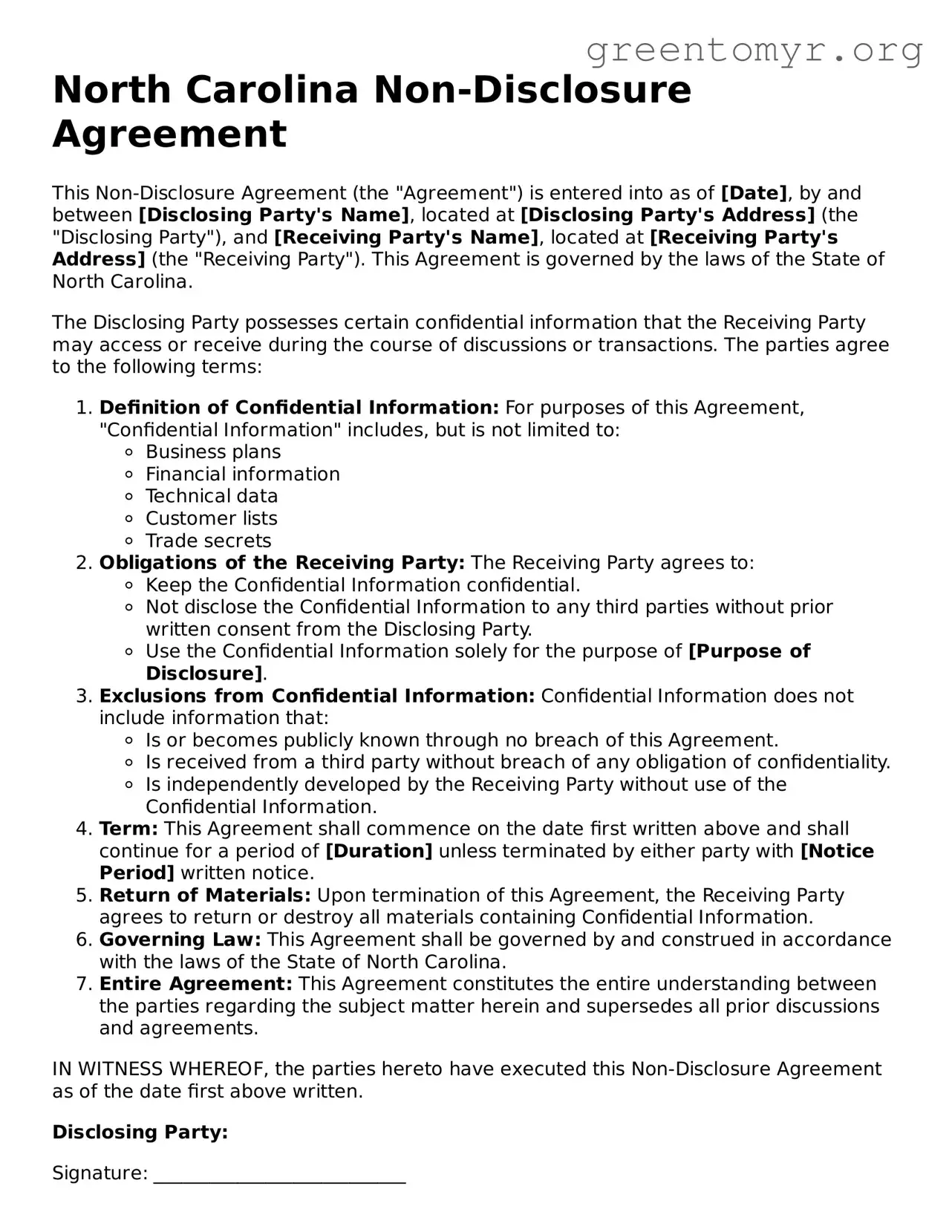
In the realm of business and professional relationships, confidentiality plays a crucial role in fostering trust and protecting sensitive information. The North Carolina Non-disclosure Agreement (NDA) form serves as a vital tool for individuals and organizations seeking to safeguard their proprietary data, trade secrets, and other confidential materials. This legally binding document outlines the terms under which parties agree to keep specific information private, ensuring that sensitive details remain secure from unauthorized disclosure. Key elements of the form include the definition of what constitutes confidential information, the obligations of the parties involved, the duration of confidentiality, and the consequences of any breaches. By clearly delineating these aspects, the NDA not only protects intellectual property but also establishes a framework for collaboration that can enhance business opportunities. Understanding the importance of this agreement can empower individuals and businesses to engage in fruitful partnerships while minimizing risks associated with information sharing.
North Carolina Non-Disclosure Agreement
This Non-Disclosure Agreement (the "Agreement") is entered into as of [Date], by and between [Disclosing Party's Name], located at [Disclosing Party's Address] (the "Disclosing Party"), and [Receiving Party's Name], located at [Receiving Party's Address] (the "Receiving Party"). This Agreement is governed by the laws of the State of North Carolina.
The Disclosing Party possesses certain confidential information that the Receiving Party may access or receive during the course of discussions or transactions. The parties agree to the following terms:
IN WITNESS WHEREOF, the parties hereto have executed this Non-Disclosure Agreement as of the date first above written.
Disclosing Party:
Signature: ___________________________
Name: [Name]
Title: [Title]
Receiving Party:
Signature: ___________________________
Name: [Name]
Title: [Title]
| Fact Name | Description |
|---|---|
| Purpose | A Non-disclosure Agreement (NDA) is used to protect confidential information shared between parties. |
| Governing Law | The NDA is governed by the laws of North Carolina. |
| Parties Involved | The agreement typically involves a disclosing party and a receiving party. |
| Duration | The confidentiality obligations can last for a specified period or indefinitely, depending on the terms agreed upon. |
| Enforceability | NDAs are enforceable in North Carolina as long as they are reasonable in scope and duration. |
| Common Uses | Businesses often use NDAs when discussing trade secrets, business plans, or proprietary information. |
After obtaining the North Carolina Non-disclosure Agreement form, you will need to carefully fill it out to ensure that all necessary information is accurately provided. This process is straightforward, but attention to detail is crucial. Following these steps will help you complete the form correctly.
A Non-Disclosure Agreement (NDA) is a legally binding contract that establishes a confidential relationship between parties. It is designed to protect sensitive information from being disclosed to unauthorized individuals. NDAs are commonly used in business settings to safeguard trade secrets, proprietary information, and other confidential data.
In North Carolina, an NDA can be crucial for various reasons, including:
Having an NDA in place can help prevent potential legal disputes and maintain trust between parties.
A well-crafted NDA should contain the following elements:
The duration of the confidentiality obligation can vary based on the specific agreement. In many cases, NDAs specify a time frame, which can range from a few years to an indefinite period. It is essential to clearly state this duration in the NDA to avoid misunderstandings.
Yes, using a template can be a helpful starting point for creating an NDA. However, it is important to customize the template to fit your specific needs and circumstances. Each situation is unique, and a one-size-fits-all approach may not adequately protect your interests.
If a party breaches the NDA, the affected party may seek legal remedies. This could include:
It is important to note that the specific remedies available will depend on the terms outlined in the NDA and applicable North Carolina laws.
While it is possible to draft an NDA without legal assistance, consulting with a lawyer is highly recommended. A legal professional can ensure that the NDA complies with North Carolina laws and adequately protects your interests. They can also help clarify any complex terms or provisions.
Yes, NDAs are generally enforceable in North Carolina, provided they meet certain legal requirements. The agreement must be reasonable in scope and duration, and it should not impose undue hardship on the parties involved. Courts typically uphold NDAs that are clear and specific in their terms.
Modifying an existing NDA is possible, but it requires mutual consent from all parties involved. Any changes should be documented in writing and signed by all parties to ensure that the modifications are legally binding. It's important to review the original NDA to ensure that the modifications do not contradict its terms.
When filling out the North Carolina Non-disclosure Agreement (NDA) form, many individuals make common mistakes that can lead to misunderstandings or legal issues down the line. One of the most frequent errors is failing to clearly identify the parties involved. Without proper names and addresses, the agreement may lack clarity, making it difficult to enforce.
Another mistake is not specifying the confidential information accurately. A vague description can create confusion about what is protected. It’s essential to outline exactly what information is considered confidential to avoid potential disputes later.
People often overlook the duration of the confidentiality obligation. The NDA should state how long the information must remain confidential. If this is not included, it may lead to unintended consequences, such as the information being disclosed after a certain period without clear guidance.
Additionally, many individuals neglect to include the purpose of the disclosure. Stating why the information is being shared helps clarify the context and limits the scope of the agreement. This can prevent misuse of the information in the future.
Another common error is not including the consequences of breaching the agreement. It’s important to outline what happens if someone violates the NDA. This can deter potential breaches and provide a clear path for resolution.
People sometimes fail to have the NDA signed by all parties involved. An unsigned agreement is not enforceable. Ensure that everyone who has access to the confidential information signs the document to protect all parties legally.
In some cases, individuals do not seek legal advice before finalizing the NDA. This can lead to overlooking critical elements that may be specific to their situation. Consulting with a legal professional can help identify potential pitfalls and ensure the agreement is comprehensive.
Finally, failing to keep a copy of the signed NDA is a mistake that can have serious implications. It’s crucial to retain a copy for personal records. This ensures that all parties have access to the terms agreed upon and can refer back to them if needed.
When entering into a Non-disclosure Agreement (NDA) in North Carolina, several other forms and documents may be beneficial to ensure comprehensive protection of sensitive information. Each of these documents serves a specific purpose and can complement the NDA in various business or legal contexts.
By utilizing these forms in conjunction with a Non-disclosure Agreement, individuals and businesses can create a robust framework for protecting sensitive information. Each document plays a unique role in safeguarding interests and fostering a secure environment for collaboration.
When filling out the North Carolina Non-disclosure Agreement (NDA) form, it is essential to follow certain guidelines to ensure clarity and legality. Here are some do's and don'ts to consider:
Non-disclosure agreements (NDAs) are crucial tools for protecting sensitive information in business relationships. However, several misconceptions can cloud understanding and implementation of these agreements in North Carolina. Here’s a closer look at ten common myths surrounding the North Carolina Non-disclosure Agreement form.
Understanding these misconceptions is essential for anyone looking to navigate the complexities of NDAs effectively. By addressing these myths, individuals and businesses can better protect their interests and foster trust in their professional relationships.
When filling out and using the North Carolina Non-disclosure Agreement (NDA) form, consider the following key takeaways: