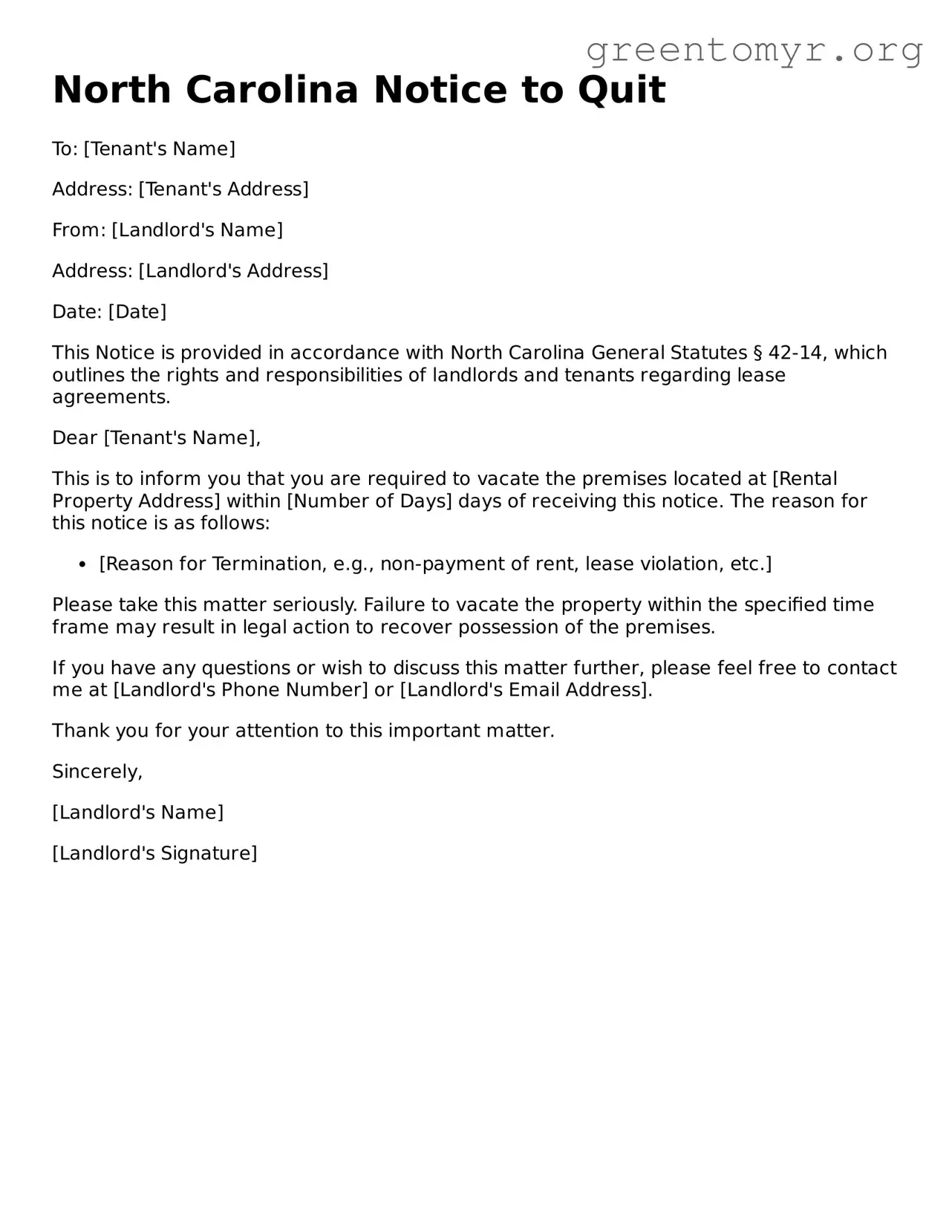
In North Carolina, the Notice to Quit form serves as a crucial tool in the landlord-tenant relationship, particularly when it comes to addressing lease violations or the need for eviction. This document notifies tenants that they must vacate the rental property, usually due to issues like non-payment of rent or breach of lease terms. It outlines the reasons for the eviction and provides a specific timeline within which the tenant must respond or leave. Understanding the requirements and implications of this form is essential for both landlords and tenants. For landlords, it is a necessary step in the eviction process, while tenants must recognize their rights and obligations upon receiving such a notice. Properly completing and delivering the Notice to Quit can help avoid potential legal disputes, making it a key element in maintaining a smooth rental experience. Whether you are a landlord preparing to issue a notice or a tenant seeking clarity on your rights, grasping the details of this form is vital for navigating the complexities of rental agreements in North Carolina.
North Carolina Notice to Quit
To: [Tenant's Name]
Address: [Tenant's Address]
From: [Landlord's Name]
Address: [Landlord's Address]
Date: [Date]
This Notice is provided in accordance with North Carolina General Statutes § 42-14, which outlines the rights and responsibilities of landlords and tenants regarding lease agreements.
Dear [Tenant's Name],
This is to inform you that you are required to vacate the premises located at [Rental Property Address] within [Number of Days] days of receiving this notice. The reason for this notice is as follows:
Please take this matter seriously. Failure to vacate the property within the specified time frame may result in legal action to recover possession of the premises.
If you have any questions or wish to discuss this matter further, please feel free to contact me at [Landlord's Phone Number] or [Landlord's Email Address].
Thank you for your attention to this important matter.
Sincerely,
[Landlord's Name]
[Landlord's Signature]
| Fact Name | Description |
|---|---|
| Purpose | The North Carolina Notice to Quit form is used to inform tenants that they must vacate the rental property. |
| Governing Law | This form is governed by North Carolina General Statutes, specifically § 42-14. |
| Notice Period | Typically, landlords must provide a 10-day notice for non-payment of rent. |
| Delivery Methods | The notice can be delivered in person, by mail, or posted on the property. |
| Tenant Rights | Tenants have the right to contest the notice in court if they believe it is unjust. |
| Form Requirements | The form must include the date, tenant's name, and property address. |
| Consequences of Non-Compliance | If a tenant does not comply, the landlord may initiate eviction proceedings. |
| Signature Requirement | The landlord or an authorized agent must sign the notice to make it valid. |
| Additional Information | Landlords should keep a copy of the notice for their records. |
Once you have your North Carolina Notice to Quit form ready, it's important to fill it out accurately. This form is a crucial step in the process of addressing tenancy issues. Below are the steps to complete the form correctly.
After filling out the form, it should be delivered to the tenant according to the legal guidelines. Proper delivery methods include personal service, certified mail, or posting it on the property. Ensure you keep a record of how and when the notice was delivered.
A Notice to Quit is a legal document that a landlord provides to a tenant when they wish to terminate a rental agreement. This notice informs the tenant that they must vacate the property by a specified date. In North Carolina, this form is crucial for landlords to follow the proper legal procedures before initiating eviction proceedings.
A landlord should use a Notice to Quit when they have valid grounds for terminating a lease. Common reasons include:
It's essential to follow the correct process to avoid legal complications down the line.
In North Carolina, the amount of notice required varies depending on the reason for the termination:
Ensure that the notice period aligns with the specific situation to comply with state laws.
A Notice to Quit should include the following key elements:
Providing clear and concise information helps prevent misunderstandings and ensures the notice is legally sound.
Yes, a tenant has the right to contest a Notice to Quit. They can respond to the notice by addressing the issues raised, such as disputing the reason for eviction or negotiating terms. If the matter escalates, the tenant may seek legal advice and prepare for a potential court hearing.
If the tenant fails to vacate the property by the date specified in the Notice to Quit, the landlord can proceed with eviction proceedings. This typically involves filing a complaint in court and may require a hearing. It is crucial for landlords to follow legal protocols to avoid complications.
While it is not legally required to have a lawyer to issue a Notice to Quit, consulting one is advisable. A legal professional can ensure that the notice complies with North Carolina laws and help landlords navigate any potential disputes or court proceedings effectively.
Filling out the North Carolina Notice to Quit form can be a straightforward process, but many people make common mistakes that can lead to confusion or delays. One frequent error is failing to provide complete information. It’s essential to include all required details, such as the tenant's name, address, and the specific reason for the notice. Omitting even one piece of information can result in the form being deemed invalid.
Another common mistake is not specifying the correct date for the notice to take effect. The Notice to Quit must clearly state the date by which the tenant must vacate the premises. If this date is unclear or incorrect, it can create misunderstandings and complicate the eviction process. Always double-check the timeline to ensure it aligns with local laws and regulations.
Many people also overlook the importance of signing the form. A signature adds legitimacy to the document and confirms that the notice is official. Without a signature, the Notice to Quit may not hold up in court, leading to further complications down the line. It’s a simple step that should never be skipped.
Additionally, individuals sometimes fail to provide proper delivery of the notice. Simply filling out the form is not enough; it must be delivered in accordance with state laws. Whether it’s hand-delivered, mailed, or posted on the property, the method of delivery matters. Ensure that you follow the legal requirements for serving the notice to avoid any potential issues.
Lastly, many people do not keep a copy of the Notice to Quit for their records. Having a copy is crucial for reference and can be helpful if disputes arise later. It serves as proof of the action taken and can provide clarity during any legal proceedings. Always retain a copy for your files to ensure you have the necessary documentation when needed.
When dealing with rental agreements and tenant issues in North Carolina, several forms and documents may accompany the Notice to Quit form. Each of these documents serves a specific purpose and can help clarify the situation for both landlords and tenants.
Understanding these documents can help both landlords and tenants navigate their rights and responsibilities effectively. Each form plays a crucial role in the rental process, ensuring clear communication and adherence to legal requirements.
The Notice to Quit form is an important document in the realm of tenancy and property management. It serves as a formal notification to a tenant, indicating that they must vacate the premises. There are several other documents that share similarities with the Notice to Quit form. Here’s a list of those documents and how they relate:
When dealing with the North Carolina Notice to Quit form, it's essential to approach the process with care. Below is a list of ten important dos and don'ts to keep in mind as you fill out this form.
By following these guidelines, you can navigate the process more effectively and ensure that your Notice to Quit is handled correctly. Take the time to do it right; it can save you significant headaches down the road.
Understanding the North Carolina Notice to Quit form is crucial for both landlords and tenants. Here are ten common misconceptions about this form:
Awareness of these misconceptions can help both landlords and tenants navigate the process more effectively and avoid unnecessary legal issues.
The North Carolina Notice to Quit form is an essential document in the landlord-tenant relationship. Understanding its key aspects can help both parties navigate the process more smoothly. Here are some important takeaways:
By understanding these key points, landlords and tenants can better manage their rights and responsibilities, ensuring a smoother transition during any rental disputes.