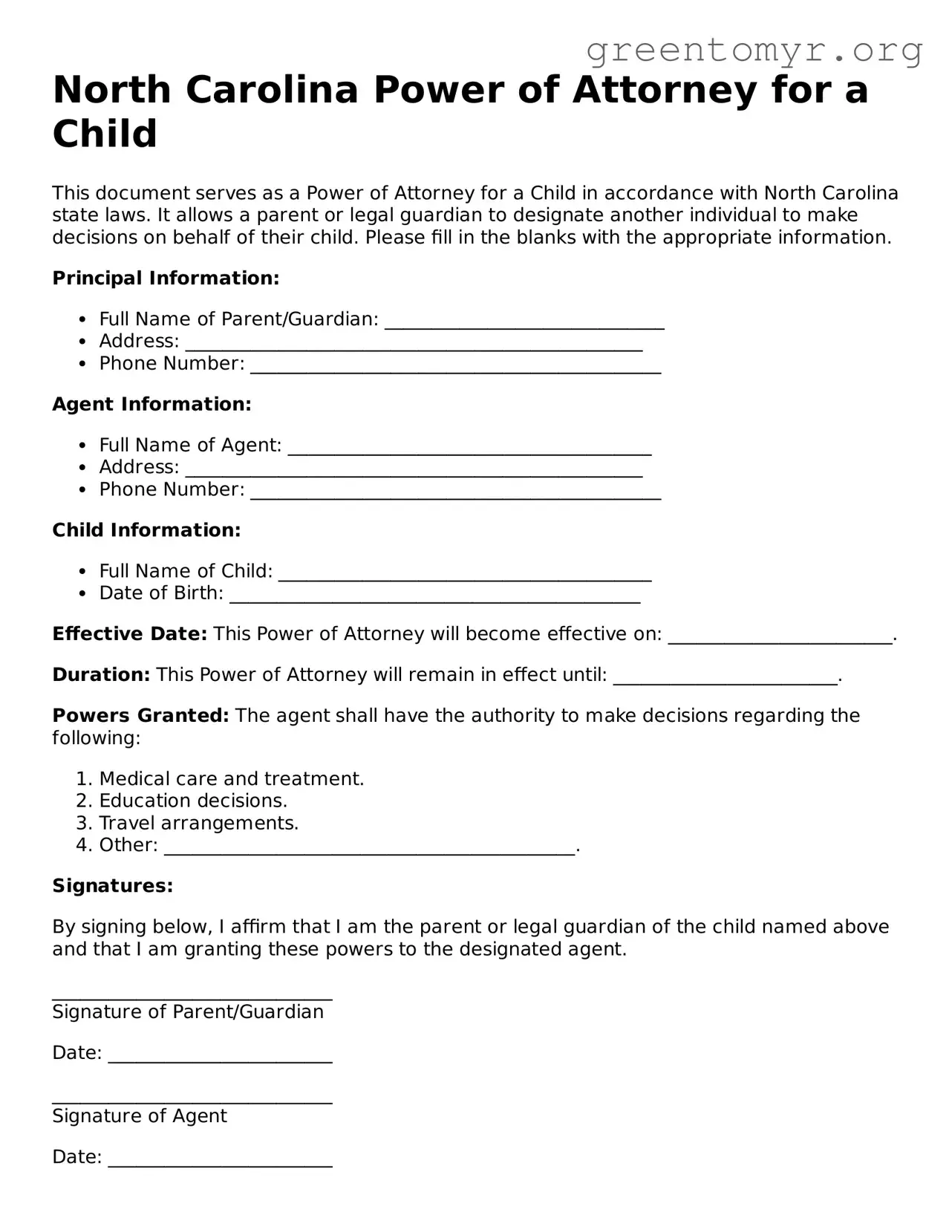
In North Carolina, the Power of Attorney for a Child form serves as a crucial legal document that allows a parent or guardian to designate another adult to make decisions on behalf of their child. This form is particularly important in situations where the parent is temporarily unavailable, such as during travel, illness, or other circumstances that may prevent them from being present. By granting this authority, the designated adult can manage various aspects of the child’s life, including making medical decisions, enrolling them in school, and handling day-to-day care. The form outlines the specific powers granted, ensuring that the appointed individual understands their responsibilities. It is designed to provide peace of mind to parents, knowing that their child will be cared for and that their best interests will be prioritized in their absence. Additionally, the form is straightforward and accessible, making it easier for families to navigate the process of securing temporary guardianship when needed.
North Carolina Power of Attorney for a Child
This document serves as a Power of Attorney for a Child in accordance with North Carolina state laws. It allows a parent or legal guardian to designate another individual to make decisions on behalf of their child. Please fill in the blanks with the appropriate information.
Principal Information:
Agent Information:
Child Information:
Effective Date: This Power of Attorney will become effective on: ________________________.
Duration: This Power of Attorney will remain in effect until: ________________________.
Powers Granted: The agent shall have the authority to make decisions regarding the following:
Signatures:
By signing below, I affirm that I am the parent or legal guardian of the child named above and that I am granting these powers to the designated agent.
______________________________
Signature of Parent/Guardian
Date: ________________________
______________________________
Signature of Agent
Date: ________________________
Notary Public:
State of North Carolina
County of ____________________
Subscribed and sworn before me this _____ day of ____________, 20__.
______________________________
Notary Public Signature
My Commission Expires: ______________________
| Fact Name | Description |
|---|---|
| Purpose | The North Carolina Power of Attorney for a Child form allows a parent or guardian to designate another person to make decisions for their child. |
| Governing Law | This form is governed by North Carolina General Statutes, specifically Chapter 32A. |
| Duration | The power granted can be temporary or ongoing, depending on the parent's wishes as stated in the form. |
| Revocation | The parent or guardian can revoke the power of attorney at any time, as long as they provide proper notice to the designated person. |
Filling out the North Carolina Power of Attorney for a Child form is a straightforward process. Once you have completed the form, you will be ready to submit it as needed. Make sure to keep a copy for your records and provide a copy to the designated agent.
A Power of Attorney for a Child in North Carolina is a legal document that allows a parent or legal guardian to grant another adult the authority to make decisions on behalf of their child. This can include decisions related to education, healthcare, and general welfare. It is particularly useful in situations where the parent or guardian may be temporarily unavailable, such as during travel or extended absences.
In North Carolina, the agent designated in the Power of Attorney for a Child must be an adult. This can be a relative, family friend, or any trusted individual who is willing to take on the responsibility of caring for the child. It is essential to choose someone who understands the child's needs and can act in their best interest.
The agent has several important responsibilities, including:
It is crucial for the agent to communicate regularly with the child's parent or guardian and to act within the scope of authority granted in the document.
The Power of Attorney for a Child can remain in effect for a specified period, as determined by the parent or guardian when completing the document. If no end date is specified, the authority typically lasts until the child reaches the age of 18 or until the document is revoked by the parent or guardian. It is advisable to clearly state the duration to avoid any confusion.
Yes, the Power of Attorney for a Child can be revoked at any time by the parent or legal guardian. To do this, a written notice of revocation should be provided to the agent and, if possible, any institutions or individuals who were informed of the Power of Attorney. It is important to keep a record of the revocation for future reference.
Filling out the North Carolina Power of Attorney for a Child form can be a straightforward process, but there are common mistakes that people often make. Understanding these pitfalls can help ensure that the document is completed correctly and serves its intended purpose.
One frequent error is failing to provide complete information about the child. It is essential to include the child's full name, date of birth, and any other identifying details. Omitting this information can lead to confusion and may invalidate the document.
Another mistake involves not clearly identifying the agent. The person appointed to act on behalf of the child must be named explicitly. Leaving this section blank or using vague language can create legal issues down the line.
Additionally, some individuals neglect to specify the powers granted to the agent. The form should detail what decisions the agent is authorized to make, such as medical or educational decisions. Without clear instructions, the agent may not be able to act effectively in the child's best interest.
People sometimes overlook the necessity of signatures. Both the person granting the power and the agent must sign the document. Failing to do so can render the form unenforceable, leaving the child without the intended support.
Not having the document notarized is another common oversight. In North Carolina, the Power of Attorney for a Child form requires notarization to be valid. Without this step, the document may not hold up in legal situations.
Some individuals forget to date the form. A date is crucial as it establishes when the authority begins. Without a date, there may be disputes about the timing of the powers granted.
Another mistake is using outdated versions of the form. Laws and requirements can change, so it is important to ensure that you are using the most current version of the Power of Attorney for a Child form to avoid any complications.
People may also fail to discuss the arrangement with the child. It is vital to explain the situation to the child, especially if they are old enough to understand. This can help ease any anxiety they may feel about the change in guardianship.
Lastly, some individuals do not keep copies of the completed form. After filling it out, it is wise to make copies for all parties involved. This ensures that everyone has access to the document and can refer to it when necessary.
By being aware of these common mistakes, you can approach the Power of Attorney for a Child form with greater confidence. Taking the time to fill it out correctly can provide peace of mind and ensure that the child's needs are met effectively.
When establishing a Power of Attorney for a Child in North Carolina, several other documents may be beneficial to ensure comprehensive legal coverage. Each document serves a specific purpose and can help clarify responsibilities and rights.
Incorporating these documents alongside the Power of Attorney for a Child can enhance clarity and provide a solid framework for the child's care and legal representation. This proactive approach can help avoid misunderstandings and ensure that the child's best interests are prioritized.
The Power of Attorney for a Child form allows a parent or guardian to designate another adult to make decisions on behalf of their child. This document shares similarities with several other legal forms that grant authority or rights concerning minors. Below are nine documents that are similar to the Power of Attorney for a Child form:
Each of these documents serves a unique purpose but shares the common goal of protecting the interests and well-being of a child when a parent or guardian is unable to act on their behalf.
When filling out the North Carolina Power of Attorney for a Child form, it’s important to follow certain guidelines to ensure the document is valid and effective. Here are seven things you should and shouldn't do:
Understanding the North Carolina Power of Attorney for a Child form is essential for parents and guardians. However, several misconceptions often arise. Here are four common misunderstandings about this important document:
Many believe this form is only relevant during unexpected situations. In reality, it can be beneficial for planned events, such as travel or temporary relocation. Having this document prepared in advance can provide peace of mind.
Some think that once the form is signed, the agent has complete control over the child’s life. However, the Power of Attorney specifically outlines the authority granted, which can be limited to particular decisions or time frames.
A common belief is that signing a Power of Attorney for a Child transfers parental rights permanently. In truth, this form is intended to supplement parental authority, not replace it. Parents retain their rights unless a court decides otherwise.
Some individuals assume that this document is only valid within state lines. While it is designed for use in North Carolina, it may also be recognized in other states, depending on local laws. Always check the regulations of the destination state.
When filling out and using the North Carolina Power of Attorney for a Child form, it is essential to keep the following key points in mind:
By following these guidelines, you can ensure that the Power of Attorney for a Child form serves its intended purpose effectively.