The North Carolina Real Estate Purchase Agreement form serves as a crucial document in the process of buying and selling property within the state. This agreement outlines the essential terms and conditions agreed upon by both the buyer and the seller, ensuring that each party understands their rights and obligations. Key elements of the form include the purchase price, financing details, and the closing date, all of which help to establish a clear timeline for the transaction. Additionally, the agreement addresses contingencies, such as inspections and appraisals, which protect the interests of the buyer while also providing the seller with a framework for a successful sale. Furthermore, the document includes provisions related to earnest money deposits, disclosures, and potential remedies in case of breach. By clearly delineating these aspects, the North Carolina Real Estate Purchase Agreement fosters transparency and trust between the parties involved, ultimately facilitating a smoother transaction process.
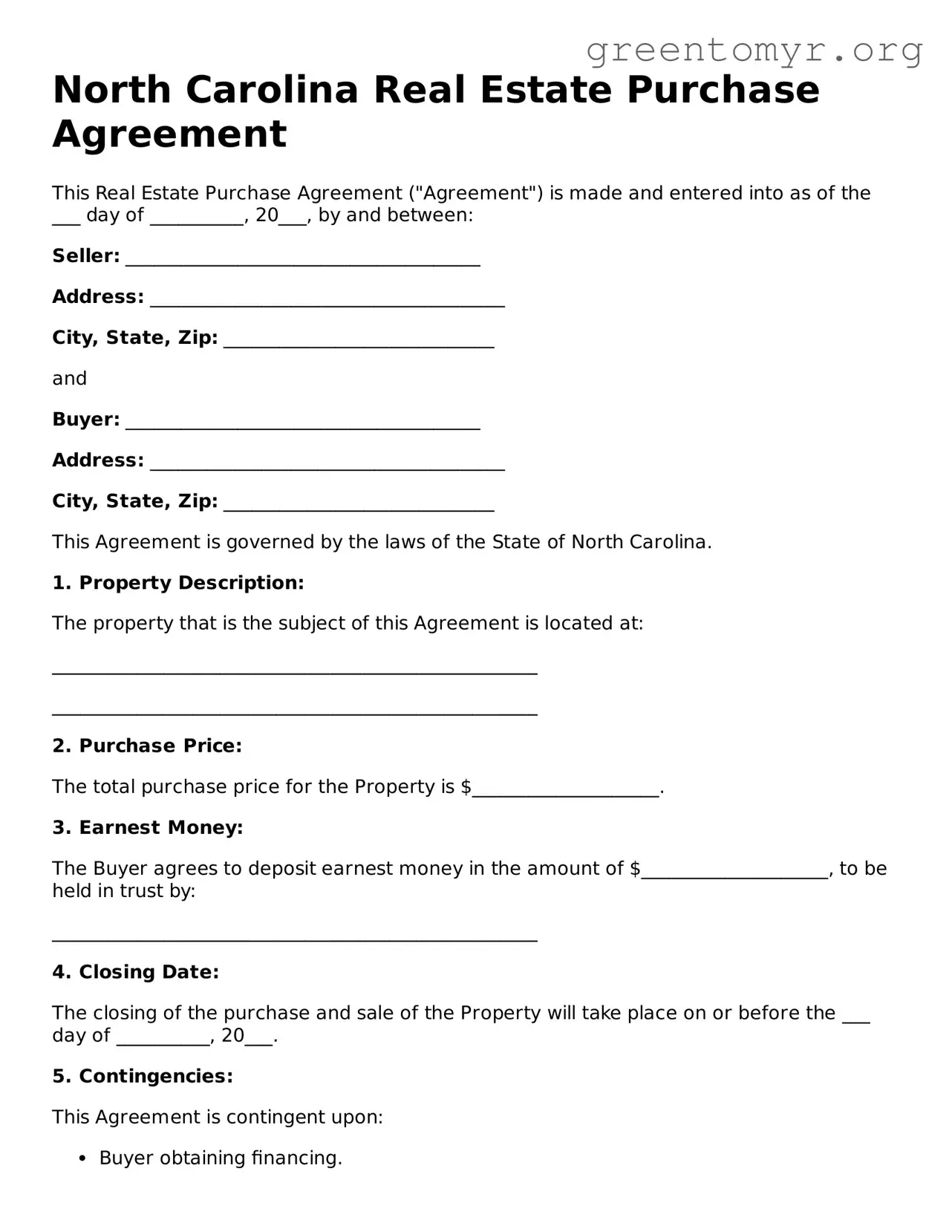
North Carolina Real Estate Purchase Agreement
This Real Estate Purchase Agreement ("Agreement") is made and entered into as of the ___ day of __________, 20___, by and between:
Seller: ______________________________________
Address: ______________________________________
City, State, Zip: _____________________________
and
Buyer: ______________________________________
Address: ______________________________________
City, State, Zip: _____________________________
This Agreement is governed by the laws of the State of North Carolina.
1. Property Description:
The property that is the subject of this Agreement is located at:
____________________________________________________
____________________________________________________
2. Purchase Price:
The total purchase price for the Property is $____________________.
3. Earnest Money:
The Buyer agrees to deposit earnest money in the amount of $____________________, to be held in trust by:
____________________________________________________
4. Closing Date:
The closing of the purchase and sale of the Property will take place on or before the ___ day of __________, 20___.
5. Contingencies:
This Agreement is contingent upon:
6. Disclosure:
The Seller agrees to provide the Buyer with all required disclosures as mandated by North Carolina law.
7. Signatures:
By signing below, both parties agree to the terms and conditions of this Agreement:
Seller's Signature: ____________________________ Date: _______________
Buyer's Signature: ____________________________ Date: _______________
This Agreement constitutes the entire understanding between the parties and supersedes all prior negotiations, representations, or agreements, whether written or oral.
| Fact Name | Details |
|---|---|
| Purpose | The North Carolina Real Estate Purchase Agreement is used to outline the terms of a real estate transaction between a buyer and a seller. |
| Governing Laws | This agreement is governed by the laws of the State of North Carolina. |
| Key Components | It typically includes details such as purchase price, closing date, and contingencies. |
| Signatures Required | Both the buyer and the seller must sign the agreement for it to be legally binding. |
| Standardized Form | The form is standardized to ensure consistency and clarity in real estate transactions across the state. |
Completing the North Carolina Real Estate Purchase Agreement form is an essential step in the home buying process. Once filled out, this form will help facilitate the transaction between the buyer and seller. Follow the steps below to ensure accuracy and clarity in your agreement.
After completing the form, it is advisable to review it carefully. Ensure that all information is accurate and complete before submitting it to the appropriate parties. This attention to detail will help prevent misunderstandings and facilitate a smoother transaction.
The North Carolina Real Estate Purchase Agreement form is a legal document used to outline the terms and conditions of a real estate transaction between a buyer and a seller. It serves as a binding contract that details the specifics of the sale, including the purchase price, financing terms, and any contingencies that must be met before the sale can proceed.
Several essential elements are included in the North Carolina Real Estate Purchase Agreement:
To fill out the North Carolina Real Estate Purchase Agreement accurately, follow these steps:
Once the North Carolina Real Estate Purchase Agreement is signed by both parties, it becomes a legally binding contract. However, changes can be made if both the buyer and seller agree to the modifications. It is advisable to document any changes in writing and have both parties sign the amended agreement to ensure clarity and avoid disputes.
If either party fails to meet their obligations under the agreement, it may result in a breach of contract. The non-breaching party may have several options, including:
While it is not mandatory to have a real estate agent when using the North Carolina Real Estate Purchase Agreement form, having one can be beneficial. A real estate agent can provide valuable guidance throughout the process, help negotiate terms, and ensure that all necessary documents are completed correctly. Their expertise can help prevent potential pitfalls and facilitate a smoother transaction.
A copy of the North Carolina Real Estate Purchase Agreement form can be obtained through various sources, including:
It is important to ensure that you are using the most current version of the form to comply with state laws and regulations.
Filling out the North Carolina Real Estate Purchase Agreement form can be a straightforward process, but many people make common mistakes that can lead to complications later on. One frequent error is not providing complete and accurate information about the property. Buyers and sellers must ensure that the property address, legal description, and any relevant details are clearly stated. Omitting or misrepresenting information can create confusion and may even result in legal disputes.
Another common mistake is failing to specify the terms of the sale clearly. This includes the purchase price, earnest money deposit, and closing date. Incomplete or vague terms can lead to misunderstandings between the parties involved. It is essential to outline all financial aspects and deadlines to avoid potential conflicts down the line.
People often overlook the importance of including contingencies in the agreement. Contingencies are conditions that must be met for the sale to proceed. For example, a buyer might want to include a contingency for obtaining financing or completing a satisfactory home inspection. Without these clauses, buyers may find themselves locked into a deal that doesn't meet their needs or expectations.
Lastly, many individuals neglect to review the agreement thoroughly before signing. It is crucial to read through the entire document, ensuring that all terms are understood and agreed upon. Mistakes can occur when people rush through the paperwork without fully comprehending their obligations. Taking the time to review the agreement can prevent future issues and ensure a smoother transaction.
In real estate transactions in North Carolina, several forms and documents complement the Real Estate Purchase Agreement. Each of these documents plays a crucial role in ensuring clarity and legal compliance throughout the buying process. Below is a list of commonly used forms alongside a brief description of each.
Understanding these documents can greatly assist buyers and sellers in navigating the complexities of real estate transactions in North Carolina. Each form serves a specific purpose, contributing to a smoother and more informed buying experience.
When filling out the North Carolina Real Estate Purchase Agreement form, it's important to be thorough and accurate. Here are some guidelines to help you navigate the process effectively.
Following these do's and don'ts can help streamline the process and ensure a smoother real estate transaction in North Carolina.
When it comes to the North Carolina Real Estate Purchase Agreement, several misconceptions can lead to confusion for buyers and sellers alike. Here are seven common misunderstandings:
This is not true. Both buyers and sellers must understand and agree to the terms outlined in the purchase agreement. It serves as a binding contract for both parties.
Many people think the purchase agreement is straightforward. However, it’s a legal document that can have significant implications. Having a lawyer review it can help ensure that your interests are protected.
This is a misconception. The terms of the agreement can be modified if both parties agree to the changes. It’s important to document any amendments in writing.
While there are common elements in real estate agreements, many terms are negotiable. Buyers and sellers can discuss and adjust terms to better suit their needs.
In North Carolina, a Real Estate Purchase Agreement does not need to be notarized to be legally binding. However, having it notarized can provide an extra layer of protection.
While the agreement includes many important details, it may not cover every aspect of the sale. Additional documents may be necessary for financing, inspections, or disclosures.
This is misleading. The Real Estate Purchase Agreement can be used for various types of real estate transactions, including commercial properties. Understanding the specific terms for each type is essential.
By clarifying these misconceptions, buyers and sellers can navigate the North Carolina Real Estate Purchase Agreement with greater confidence and understanding.
When dealing with the North Carolina Real Estate Purchase Agreement form, understanding the key elements can greatly enhance the experience for both buyers and sellers. Here are some important takeaways to consider:
By keeping these takeaways in mind, individuals can better prepare themselves for the process of buying or selling real estate in North Carolina.