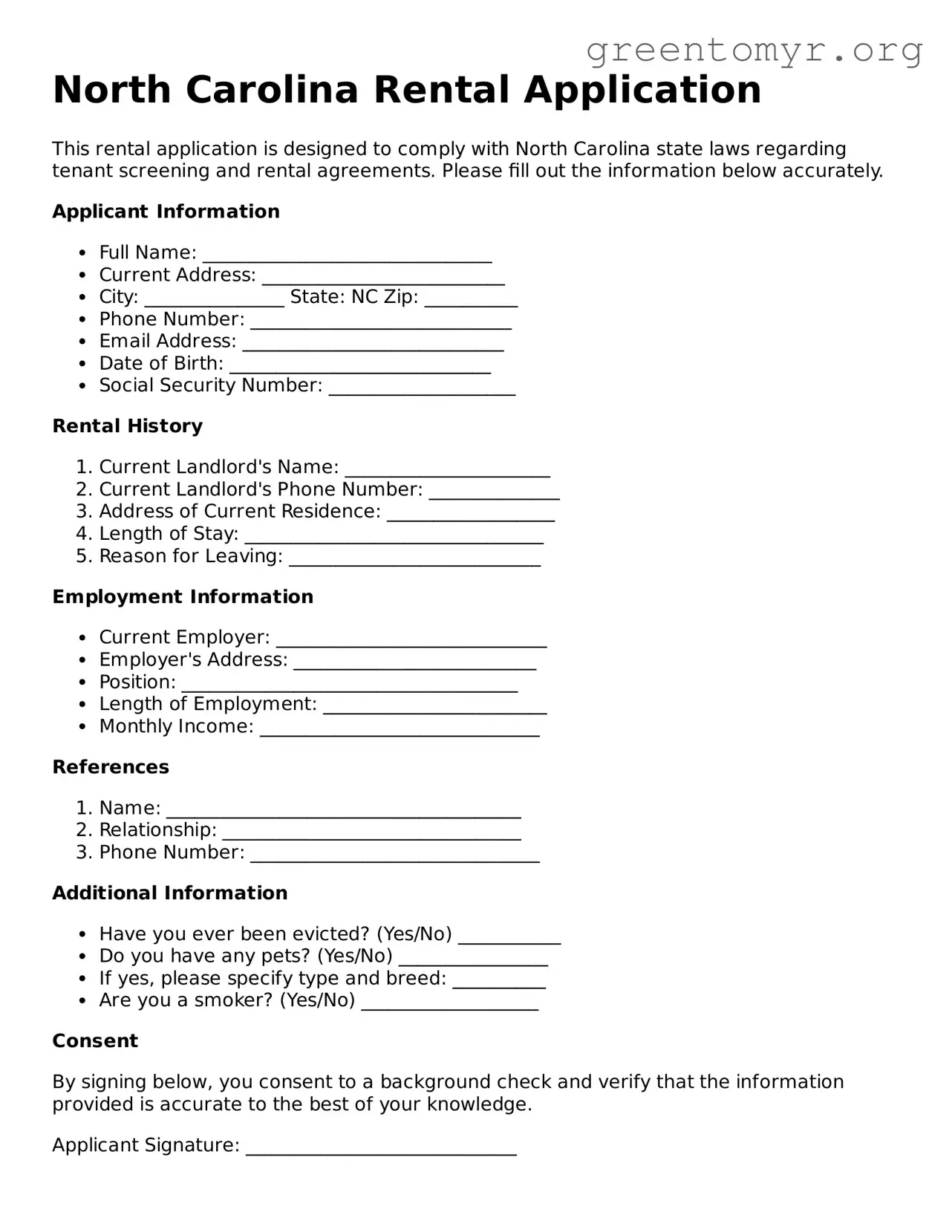
The North Carolina Rental Application form serves as a crucial tool for both landlords and prospective tenants in the rental process. This form typically gathers essential information about the applicant, including personal details, rental history, and employment information. It often requires applicants to provide references, which can help landlords assess the reliability and suitability of potential tenants. Additionally, the form may include questions about income and credit history, allowing landlords to evaluate an applicant's financial stability. By requiring consent for background checks, the application ensures that landlords can make informed decisions. Understanding the components of this form is vital for anyone involved in the rental market in North Carolina, as it lays the groundwork for a transparent and fair leasing process.
North Carolina Rental Application
This rental application is designed to comply with North Carolina state laws regarding tenant screening and rental agreements. Please fill out the information below accurately.
Applicant Information
Rental History
Employment Information
References
Additional Information
Consent
By signing below, you consent to a background check and verify that the information provided is accurate to the best of your knowledge.
Applicant Signature: _____________________________
Date: _________________________________________
| Fact Name | Details |
|---|---|
| Purpose | The North Carolina Rental Application form is used by landlords to screen potential tenants. |
| Required Information | Applicants must provide personal details, rental history, employment information, and references. |
| Application Fee | Landlords may charge a non-refundable application fee to cover the cost of background checks. |
| Governing Law | The use of rental applications is governed by North Carolina General Statutes, particularly Chapter 42 (Landlord and Tenant). |
| Fair Housing Compliance | Landlords must comply with the Fair Housing Act, ensuring no discrimination in the application process. |
| Confidentiality | Personal information collected during the application process must be kept confidential and secure. |
Completing the North Carolina Rental Application form is an essential step in securing a rental property. After filling out this form, landlords will review your information to determine if you are a suitable tenant. Be sure to provide accurate details to enhance your chances of approval.
The North Carolina Rental Application form is a document that prospective tenants fill out to apply for a rental property. It collects important information that landlords need to evaluate a potential tenant's suitability. This includes personal details, employment history, and references.
Filling out a rental application is crucial for several reasons:
A standard rental application usually requires the following information:
Landlords use the information provided to evaluate whether you are a good fit for their property. They may check your credit score, verify your employment, and contact previous landlords. This helps them determine your reliability as a tenant.
Many landlords charge an application fee to cover the costs of processing your application. This fee can vary widely, so it’s important to ask about it upfront. Some landlords may waive the fee, especially if you are a strong candidate.
After you submit your application, the landlord will review it. This process may take a few days, during which they will conduct background checks and verify your information. Once they have made a decision, they will inform you whether your application has been approved or denied.
Yes, you can apply for multiple rental properties simultaneously. However, keep in mind that each application may require a separate fee and different documentation. It’s a good idea to communicate openly with landlords about your situation.
If your application is denied, the landlord is required to provide you with a reason. Common reasons for denial include poor credit history, lack of sufficient income, or negative rental history. You can ask the landlord for specific details, and this information can help you improve your chances in future applications.
While there is no formal process for appealing a denial, you can reach out to the landlord to discuss your situation. If you believe there was an error in your application or background check, providing additional information or documentation may help your case.
Completing a rental application can be a straightforward process, but many applicants make common mistakes that can hinder their chances of securing a rental. One frequent error is providing incomplete personal information. Applicants sometimes forget to include their full name, current address, or contact information. This omission can lead to delays or even disqualification.
Another mistake involves inaccuracies in employment history. Applicants may list outdated job information or fail to include their current employer. Landlords often verify employment, so providing correct and up-to-date details is crucial. Failing to do so may raise concerns about reliability.
Financial information is also a critical aspect of the application. Some individuals neglect to provide their income details or misrepresent their earnings. This can create distrust and may result in rejection. It's essential to be honest and transparent about financial status.
References play a significant role in the rental application process. A common mistake is not providing sufficient or relevant references. Applicants should include contacts who can vouch for their character and reliability as tenants. Failing to do this can weaken an application.
Additionally, many applicants overlook the importance of credit history. Some individuals do not check their credit report before applying, which can lead to surprises if a landlord conducts a credit check. Understanding one’s credit standing can help address potential issues proactively.
Another error is neglecting to sign the application. A signature is often required to validate the information provided. Without it, the application may be considered incomplete, resulting in a missed opportunity.
Some applicants also fail to read the entire application thoroughly. Important clauses or requirements can be overlooked, which may lead to misunderstandings later. Taking the time to read and understand every section is vital.
Finally, submitting the application without proper documentation is a common mistake. Many landlords require additional documents, such as pay stubs or identification. Not including these can delay the process or lead to outright rejection. Ensuring that all necessary paperwork is attached is essential for a successful application.
When applying for a rental property in North Carolina, the Rental Application form is just one part of the process. Several other documents can help landlords evaluate potential tenants more thoroughly. Here are some commonly used forms that accompany the rental application.
Each of these documents plays a vital role in the rental application process. They help create a clearer picture of the applicant, ensuring that landlords make informed decisions. Being prepared with these forms can streamline the application process and increase the chances of securing a rental property.
Lease Agreement: This document outlines the terms and conditions of renting a property. Like the rental application, it collects essential information from the tenant, such as names, contact details, and rental history.
Employment Verification Form: This form is used to confirm a tenant's employment status and income. Similar to a rental application, it requires personal information and financial details to assess the tenant's ability to pay rent.
Credit Application: A credit application evaluates a tenant's creditworthiness. It gathers financial history and personal information, mirroring the rental application’s purpose of assessing the applicant's reliability.
Background Check Authorization: This document allows landlords to conduct a background check on potential tenants. It shares similarities with the rental application by requiring personal details and consent for information retrieval.
Tenant Screening Report: A tenant screening report compiles various data about an applicant, including credit history and rental history. Like the rental application, it aims to provide a comprehensive view of the applicant's suitability.
Pet Application: For tenants with pets, this form gathers information about the animal and its owner. It is akin to the rental application in that it collects relevant details to assess the compatibility of the pet with the rental property.
Guarantor Application: This document is used when a tenant requires a guarantor to secure the lease. It collects similar information about the guarantor's financial stability and personal background, paralleling the rental application’s focus on financial responsibility.
When filling out the North Carolina Rental Application form, it is important to approach the process with care. Here are some key things to keep in mind:
Conversely, there are also some pitfalls to avoid:
Many individuals have misunderstandings about the North Carolina Rental Application form. Here are nine common misconceptions and clarifications to help potential renters navigate the application process more effectively.
Understanding these misconceptions can help renters approach the application process with more clarity and confidence.
When filling out and using the North Carolina Rental Application form, keep these key takeaways in mind: