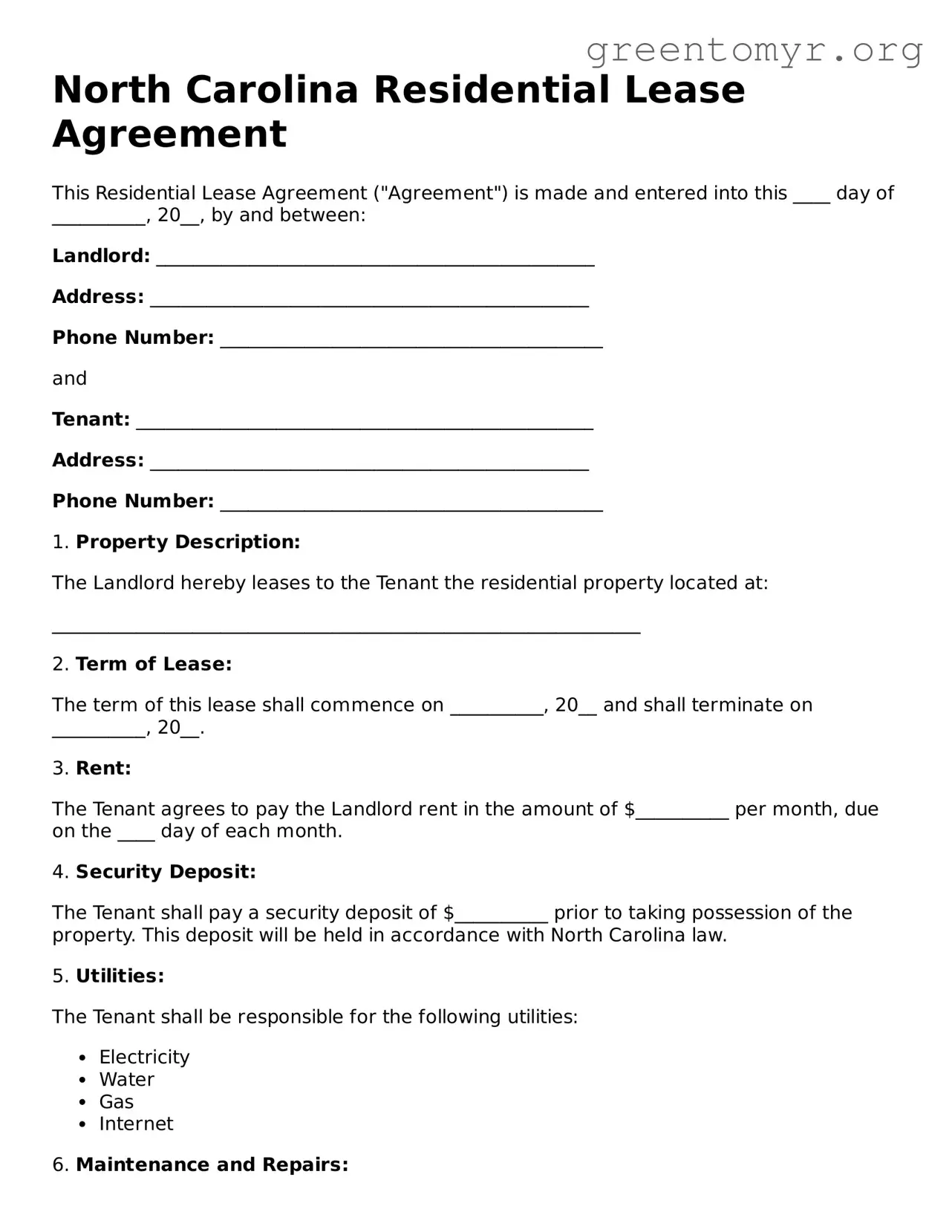
The North Carolina Residential Lease Agreement is a crucial document for both landlords and tenants, serving as a binding contract that outlines the terms of renting a residential property. This form typically includes essential details such as the names of the parties involved, the rental property's address, and the duration of the lease. It specifies the monthly rent amount, payment due dates, and any late fees that may apply. Additionally, the agreement addresses security deposits, maintenance responsibilities, and rules regarding pets and subletting. Understanding these components is vital for ensuring a smooth rental experience and protecting the rights of both parties. By clearly defining expectations and responsibilities, the North Carolina Residential Lease Agreement helps prevent disputes and fosters a positive landlord-tenant relationship.
North Carolina Residential Lease Agreement
This Residential Lease Agreement ("Agreement") is made and entered into this ____ day of __________, 20__, by and between:
Landlord: _______________________________________________
Address: _______________________________________________
Phone Number: _________________________________________
and
Tenant: _________________________________________________
Address: _______________________________________________
Phone Number: _________________________________________
1. Property Description:
The Landlord hereby leases to the Tenant the residential property located at:
_______________________________________________________________
2. Term of Lease:
The term of this lease shall commence on __________, 20__ and shall terminate on __________, 20__.
3. Rent:
The Tenant agrees to pay the Landlord rent in the amount of $__________ per month, due on the ____ day of each month.
4. Security Deposit:
The Tenant shall pay a security deposit of $__________ prior to taking possession of the property. This deposit will be held in accordance with North Carolina law.
5. Utilities:
The Tenant shall be responsible for the following utilities:
6. Maintenance and Repairs:
The Tenant agrees to keep the property in good condition and notify the Landlord of any needed repairs.
7. Use of Property:
The property shall be used solely for residential purposes. No illegal activities are permitted.
8. Termination:
Either party may terminate this Agreement by providing written notice at least 30 days prior to the end of the lease term.
9. Governing Law:
This Agreement shall be governed by the laws of the State of North Carolina.
IN WITNESS WHEREOF, the parties hereto have executed this Residential Lease Agreement as of the day and year first above written.
Landlord Signature: _______________________________
Date: ________________________________________
Tenant Signature: _______________________________
Date: ________________________________________
| Fact Name | Description |
|---|---|
| Governing Law | The North Carolina Residential Lease Agreement is governed by the North Carolina General Statutes, specifically Chapter 42, which outlines landlord-tenant laws. |
| Duration | This agreement typically specifies a lease term, which can range from month-to-month to several years, depending on the arrangement between the landlord and tenant. |
| Security Deposit | Landlords in North Carolina can require a security deposit, which is usually equivalent to one month's rent. The law requires it to be held in a trust account. |
| Written Agreement | While oral leases are valid for terms less than three years, a written lease is recommended for clarity and to protect both parties' rights. |
| Notice Requirements | North Carolina law mandates that landlords provide a written notice of at least 10 days before terminating a month-to-month lease. |
| Tenant Rights | Tenants in North Carolina have the right to a habitable living environment. This includes access to essential services like heat, water, and electricity. |
| Landlord Obligations | Landlords are required to maintain the property and address any necessary repairs in a timely manner, ensuring the premises are safe and livable. |
| Dispute Resolution | In case of disputes, North Carolina encourages mediation as a first step before pursuing legal action, promoting a cooperative resolution process. |
Filling out the North Carolina Residential Lease Agreement form is an important step in establishing a rental relationship. This document serves to outline the terms and conditions agreed upon by both the landlord and tenant. By carefully completing the form, you ensure that both parties are clear on their responsibilities and expectations.
Once the form is completed, both parties should retain a copy for their records. This ensures that everyone has access to the agreed-upon terms and can refer back to them if needed.
A North Carolina Residential Lease Agreement is a legally binding contract between a landlord and a tenant. It outlines the terms and conditions under which a tenant may occupy a rental property. This agreement typically includes details such as the rental amount, payment due dates, lease duration, and responsibilities for maintenance and repairs.
Essential terms to include in a North Carolina Residential Lease Agreement are:
In North Carolina, a lease can be terminated by either party under specific conditions. The tenant must provide written notice to the landlord, typically 30 days in advance, unless otherwise specified in the lease. Landlords can terminate a lease for reasons such as non-payment of rent or violation of lease terms. It’s important to follow the notice requirements outlined in the lease agreement to avoid potential legal issues.
If a lease is violated, the landlord has several options. They may issue a notice to the tenant outlining the violation and giving them a chance to remedy the situation. If the issue is not resolved, the landlord may proceed with eviction proceedings. Tenants should be aware that violations can include late rent payments, unauthorized pets, or illegal activities on the property. It’s crucial to address any lease violations promptly to avoid further complications.
When filling out the North Carolina Residential Lease Agreement form, individuals often overlook critical details that can lead to misunderstandings or disputes later on. One common mistake is failing to include all required personal information. This includes not only the names of all tenants but also accurate contact information. Omitting any tenant's name can result in complications regarding lease enforcement and responsibilities.
Another frequent error is neglecting to specify the lease term clearly. Whether the lease is for a fixed term or month-to-month, this information must be explicitly stated. If the lease term is ambiguous, it may lead to confusion about the duration of the tenancy, affecting both parties' rights and obligations.
People sometimes make the mistake of not detailing the rental amount and payment terms. The agreement should clearly outline the monthly rent, due date, and acceptable payment methods. Without this information, tenants may struggle to understand their financial obligations, and landlords may face challenges in collecting rent.
Additionally, failing to include the security deposit details is a common oversight. The lease should specify the amount of the security deposit, the conditions under which it may be withheld, and the timeline for its return. This clarity helps protect both tenants and landlords from disputes regarding the deposit.
Another mistake involves not addressing maintenance responsibilities. The lease should outline who is responsible for repairs and maintenance of the property. By clarifying these responsibilities upfront, both parties can avoid misunderstandings regarding property upkeep.
Lastly, individuals may forget to include any additional terms or conditions. If there are specific rules or restrictions, such as pet policies or smoking regulations, these should be documented in the lease. Failing to include such terms can lead to conflicts and dissatisfaction during the tenancy.
When entering into a rental agreement in North Carolina, several other forms and documents may be necessary to ensure clarity and protect the rights of both landlords and tenants. Below is a list of commonly used documents that complement the North Carolina Residential Lease Agreement.
These documents work together to create a comprehensive understanding between landlords and tenants, ensuring that both parties are aware of their rights and obligations. Properly preparing and maintaining these forms can lead to a more harmonious rental experience.
When filling out the North Carolina Residential Lease Agreement form, it's important to be thorough and accurate. Here are some key things to keep in mind:
Many people have misunderstandings about the North Carolina Residential Lease Agreement form. Here are five common misconceptions:
Understanding these misconceptions can help both landlords and tenants navigate their responsibilities and rights more effectively.
When filling out and using the North Carolina Residential Lease Agreement form, keep these key takeaways in mind: